Uganda’s decision to contract Citibank to mobilise funding for its Standard Gauge Railway (SGR) marks a significant turning point for a project that has faced years of delays, largely due to financing challenges.
The development was announced during a meeting of East African finance ministers on the sidelines of the 2026 IMF and World Bank Spring Meetings in Washington DC, where Kenya, Rwanda, and Uganda reviewed progress on the regional railway network.
In a statement posted on the Ministry of Finance X account, Permanent Secretary and Secretary to the Treasury, Ramathan Ggoobi, revealed government had contracted Citibank as the lead arranger to coordinate financing for the 270-kilometre Malaba–Kampala section.
“We have already contracted the construction of the 270km SGR line from Malaba to Kampala and also contracted Citibank to be the lead arranger and coordinator of the required financing,” Ggoobi said without giving further details.
The cost of financing
The cost of Uganda’s Standard Gauge Railway (SGR) remains substantial and is one of the key reasons financing has been complex.
Earlier government estimates have placed the Malaba–Kampala section (about 270km) at roughly $2.2 billion to $2.5 billion, depending on final design and financing terms.
When extended to the western borders toward Rwanda and DR Congo, the total investment could rise to over $6 billion.
The figures reflect not only construction costs, but also land acquisition, compensation, rolling stock, and supporting infrastructure.
The scale of funding required explains Uganda’s shift toward structured financing arrangements, such as engaging Citibank, to mobilise resources from multiple lenders rather than relying on a single financier, as was initially planned.
A project long delayed
Uganda’s SGR journey has been marked by repeated setbacks. Initially conceived as part of a regional plan to link the port of Mombasa to inland East Africa, the railway was expected to be financed largely through external borrowing, particularly from China’s Exim Bank, which funded Kenya’s SGR.
However, Uganda’s plans stalled after China declined to finance the Malaba–Kampala section under earlier terms, citing concerns over project viability and rising debt risks.
 Cash Is Expensive: Could Lower Mobile Money Taxes Save Uganda Billions?
This forced government to halt procurement processes and re-evaluate its financing strategy.
For years, progress remained slow, with work largely limited to preliminary activities such as land acquisition and route planning, while government searched for alternative funding sources.
Renewed momentum
By bringing in Citibank, Uganda is now shifting toward a more structured and diversified financing approach involving multiple lenders.
Ggoobi also highlighted ongoing engagement with development partners, noting that Uganda is in discussions with the World Bank to support the project.
Regional stakes
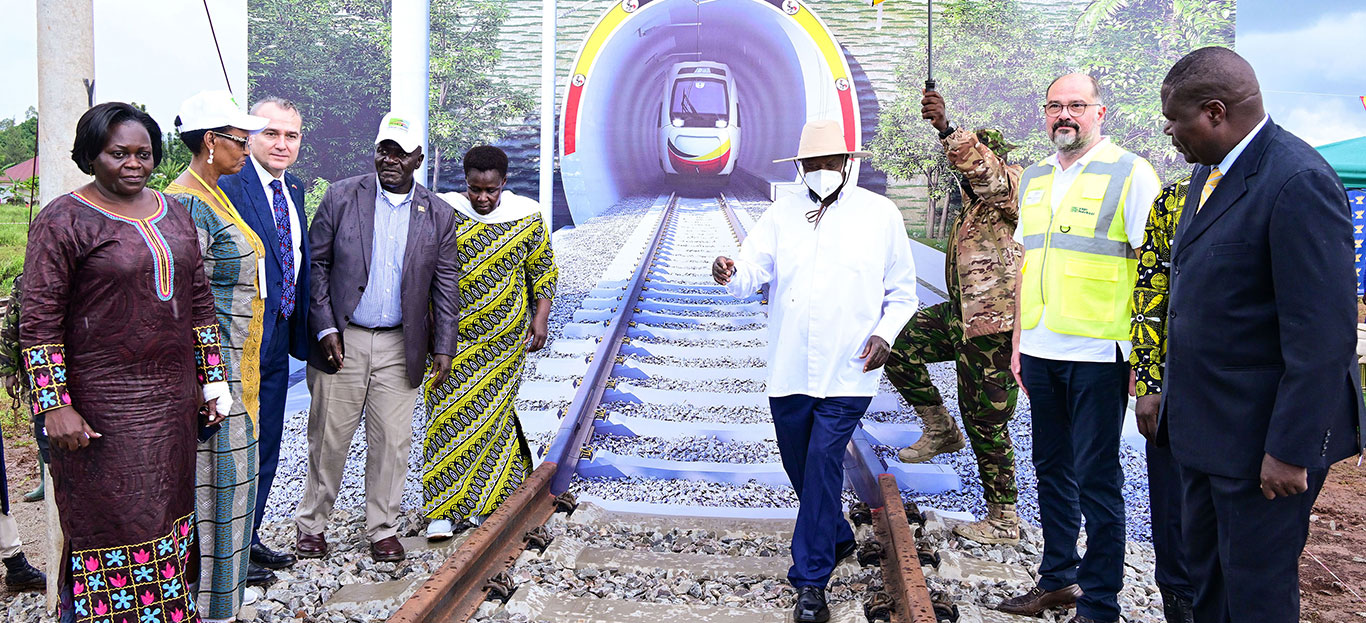
The SGR is seen as a cornerstone project for East Africa’s economic integration. Kenya is pushing to complete its section up to Malaba, while Rwanda has committed to extending the line from Uganda’s border when the time comes.
Speaking on the sidelines of the Spring Meetings, Minister of State for Finance, Henry Musasizi, stressed that the railway’s success depends on coordinated commitment across the region.
“The viability of this SGR depends on all of us committing to do the project,” he said, adding that Uganda plans to extend the line further to Rwanda and the DR Congo.
If financing is successfully secured, the SGR could finally move from years of uncertainty into full implementation.
The railway is expected to significantly reduce cargo transport costs, ease road congestion, and boost trade competitiveness across the region.
For Uganda, the partnership with Citibank represents not just a financing strategy but a renewed push to revive a long-delayed yet strategically vital project.