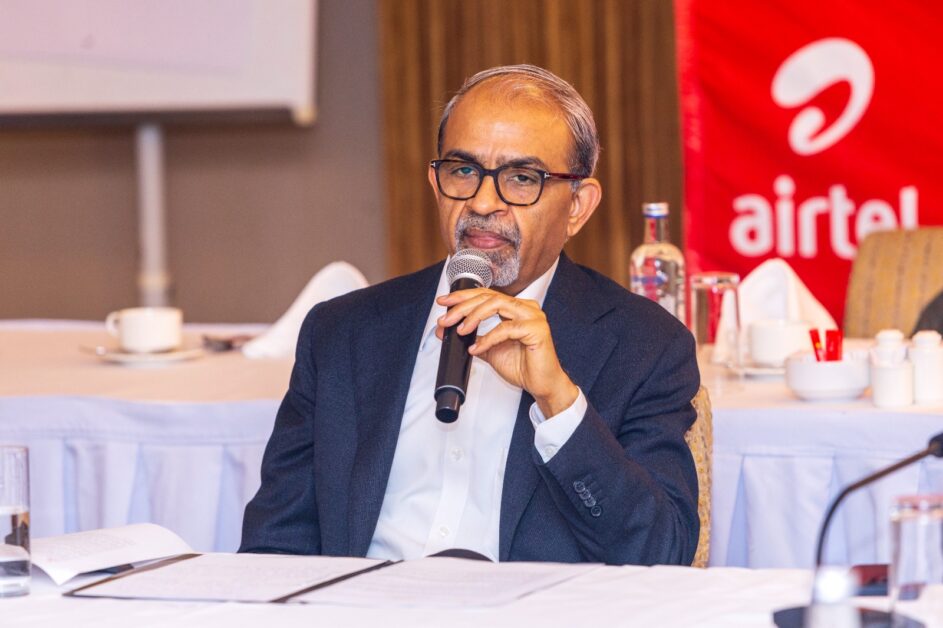
Airtel Africa is setting its sights firmly on Uganda as a key investment destination, with Group CEO Sunil Taldar signalling deeper capital deployment and continued technology rollouts in what he described as a “very, very, very important market” for the telecom giant.
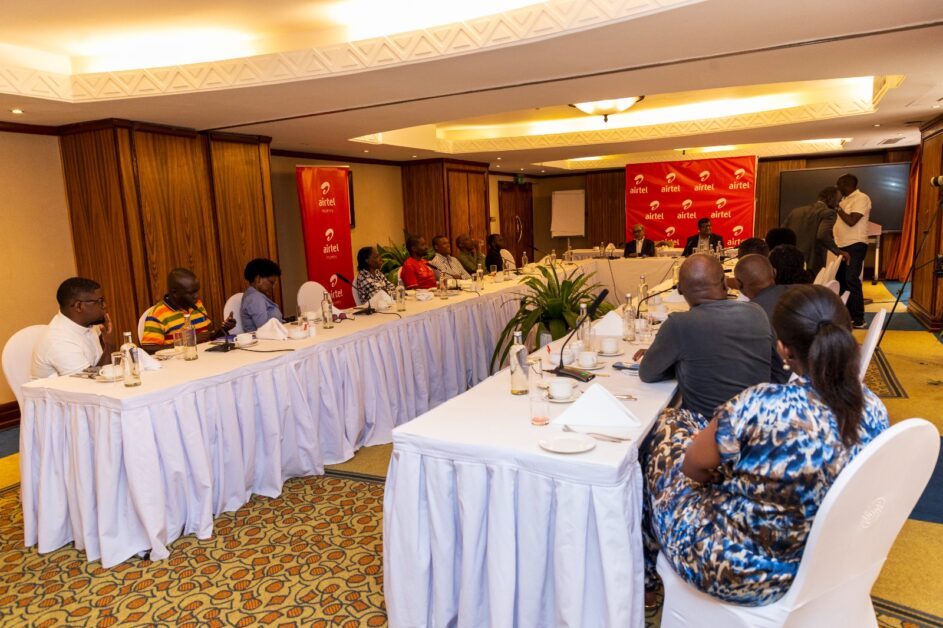
Speaking during a high-level media engagement at Kampala Serena Hotel over the weekend, Taldar outlined a strategy anchored on sustained investment, customer experience improvement, and long-term digital infrastructure expansion—positioning Uganda not just as a strong-performing subsidiary, but as a strategic growth engine within Airtel’s 14-market African footprint.
Uganda Emerges as a Strategic Growth Engine
With operations spanning 14 countries and serving nearly 180 million customers across Africa, Airtel Africa’s investment priorities are increasingly being shaped by markets that demonstrate both scale and efficiency—and Uganda is rising quickly on that list.
Uganda is emerging as one of Airtel Africa’s strongest-performing markets within its 14-country portfolio, where growth, efficiency, and rising data demand are shaping investment priorities across the group.
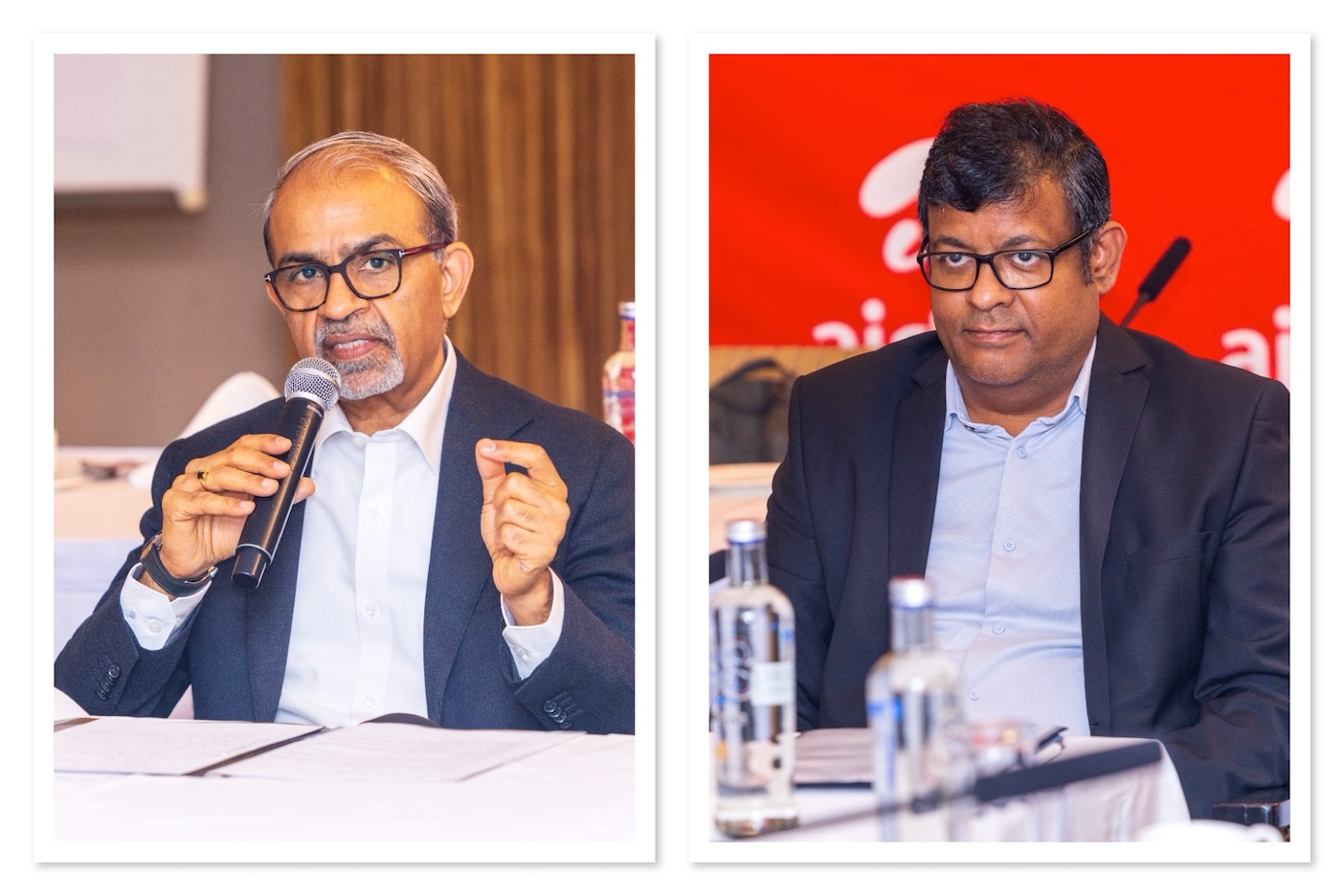
“Uganda is a very, very, very important market for us. I cannot overemphasise the importance of this market,” Taldar, who was flanked by Soumendra Sahu, the Airtel Uganda Managing Director, said, underscoring the country’s central role in the group’s future plans.
The numbers reinforce this positioning. Airtel Uganda grew its customer base by 13.9% to 19.2 million subscribers, while data customers rose by 19.6% to 8.7 million, reflecting strong demand for digital services.
Financially, the business delivered equally strong results. Revenues grew by 13.3% to Ushs 2.25 trillion, while profit after tax surged by 41.1% to Ushs 446.9 billion, supported by robust operating momentum and improved efficiency.
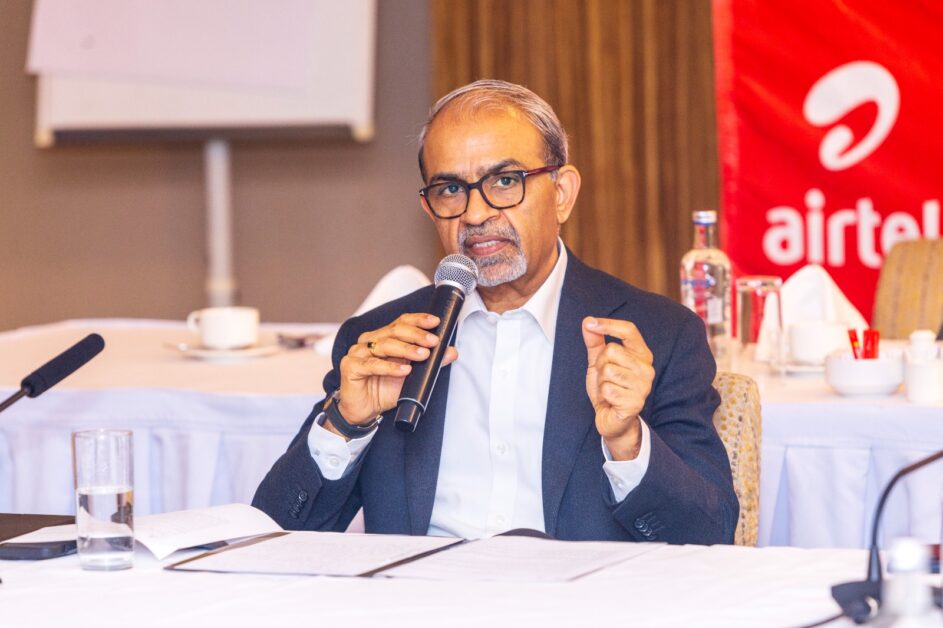
This performance, Taldar noted, reflects both strong customer uptake and disciplined cost management, creating a solid foundation for further investment, while also underscoring execution on the ground under Airtel Uganda Managing Director Soumendra Sahu, whose leadership has prioritised network quality, customer experience, and digital adoption.
While Taldar outlined the group’s broader investment direction, Sahu pointed to the growing role of data and financial services in shaping customer engagement, noting that mobile money usage and transaction data are increasingly enabling access to credit through evolving AI-driven models. “The more transactions you do, the more intelligence it will have… and more customers will be eligible for loans and finance,” he said, underscoring Airtel’s push to deepen financial inclusion.
From Coverage to Experience: A Strategic Shift
Beyond financial performance, Airtel’s renewed focus in Uganda reflects a broader strategic pivot across the group—from competing on price and coverage to competing on customer experience.
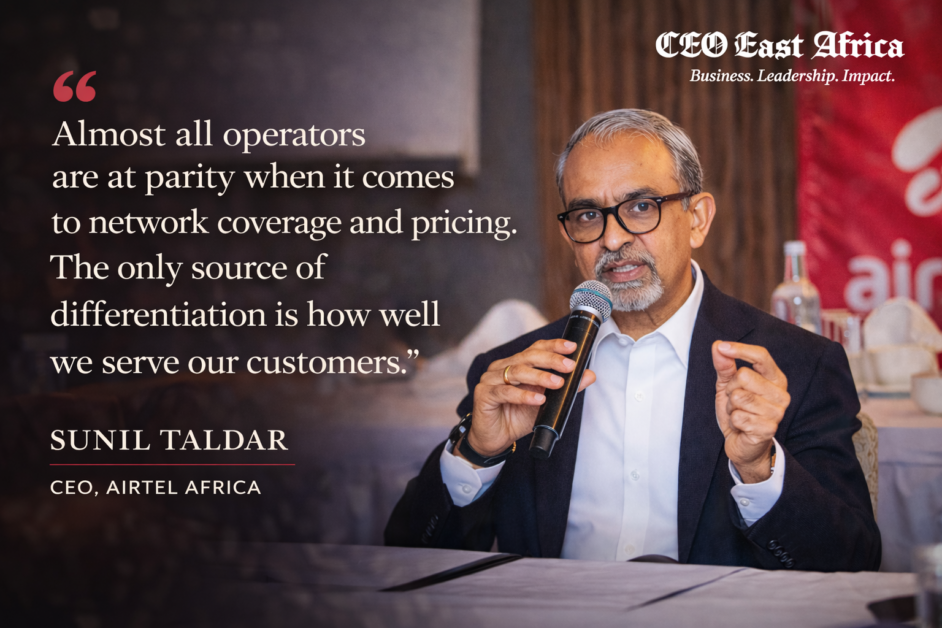
“Almost all operators are at parity when it comes to network coverage and pricing. The only source of differentiation is how well we serve our customers,” Taldar said.
This shift is already evident in Airtel Uganda’s operations. The company continues to invest heavily in network upgrades and service delivery, with all sites now 4G-enabled and an expanding 5G footprint aimed at improving speed and reliability.
As data consumption surges—data traffic alone grew by 46% over the past year—Airtel is prioritising infrastructure that can deliver a consistent, high-quality experience across its network.
Heavy Investment in Network Capacity and Resilience
Airtel Africa has backed its customer-experience-first strategy with sustained capital investment, particularly in Uganda, where demand is accelerating.
In 2025 alone, Airtel Uganda invested Ushs 252.5 billion in capital expenditure, supporting the rollout of 258 new sites, the addition of 164 new 5G sites, and the expansion of its fibre network by 1,600 kilometres.
These investments are aimed at both expanding coverage and strengthening capacity, ensuring the network can handle increasing data usage while improving service quality.
These investments in Uganda mirror a broader Airtel Africa strategy across its footprint, but the pace and scale of rollout in Uganda signal its elevated priority within the group’s capital allocation.
At the same time, Airtel is addressing one of the region’s most persistent challenges—network instability—by investing in resilience.
Frequent fibre cuts and environmental disruptions have historically affected service quality across Africa. To mitigate this, Airtel has entered into infrastructure-sharing agreements with other operators, allowing networks to serve as backups for one another during outages.
The result is a more stable and reliable network experience for customers—an increasingly critical factor as digital services become embedded in daily life.
Technology Investments to Fix Everyday Customer Pain Points
Airtel’s investment strategy is also focused on addressing practical, everyday frustrations faced by customers.
One of the most visible interventions has been the rollout of AI-powered spam and scam alerts. In Uganda alone, the company flagged approximately 2.5 million suspicious messages in February, a figure that translates to nearly 30 million alerts annually if sustained.
“We alerted 2.5 million customers… which means we avoided 2.5 million potential scams,” Taldar said.
 Ugandan Lawyer and Businessman Charles Odere Appeals USD400,000 Arena Mall Ruling
The impact has been significant. Across markets, Airtel reports a roughly 50% reduction in scam message volumes, as fraudsters retreat in response to increased detection.
At the network level, the company is deploying AI-driven monitoring tools that proactively detect service issues before customers lodge complaints—marking a shift from reactive to predictive network management.
Expanding Connectivity Through Satellite and 5G
Looking ahead, Airtel is preparing to introduce new connectivity solutions aimed at closing coverage gaps, particularly in rural and hard-to-reach areas.
A key initiative is its partnership with SpaceX, which will enable satellite-based direct-to-cell connectivity. Once regulatory approvals are secured, Airtel customers using standard 4G and 5G devices will be able to access network services even outside traditional terrestrial coverage zones.
“We should be able to solve this problem of connectivity when our customers are outside the terrestrial coverage area,” Taldar said.
In parallel, the company is rolling out 5G-powered fixed wireless access for home broadband, complete with battery backup systems to ensure uninterrupted service during power outages—a common challenge in Uganda.
Mobile Money and Financial Inclusion Take Centre Stage
Beyond connectivity, Airtel continues to deepen its investment in financial services through Airtel Money, which Taldar described as a critical pillar of both growth and inclusion.
“In rural markets, the first need of people is money… their ability to receive and send money, rather than connectivity,” he noted.
The company is expanding access to microloans and leveraging transaction data to build dynamic credit profiles for customers. Using AI-driven credit scoring models, Airtel is able to adjust loan limits based on usage patterns, enabling broader access to financial services—particularly for underserved populations.
The long-term ambition is to evolve the Airtel platform into a “super app” where customers can seamlessly manage communication, payments, credit, and other digital services in one place.
Investing for Africa’s Digital Future
Airtel’s Uganda strategy is closely tied to its broader continental ambitions. Anticipating a surge in demand driven by artificial intelligence and digital services, the group is investing in large-scale data infrastructure, including new data centres in Kenya, Nigeria, and the Democratic Republic of Congo.
These investments are designed to ensure that Africa is not left behind in the next wave of technological transformation.
“With the adoption of AI, there will be a need for large data storage and computing capacity in Africa,” Taldar said.
A Call for Stronger Infrastructure Protection
While expressing appreciation for government support across its markets, Taldar also called for stronger enforcement to protect telecom infrastructure, particularly fibre networks.
Telecommunications has increasingly been recognised as critical national infrastructure, but frequent disruptions continue to pose operational risks.
“The only request… is help us… if enforcement becomes even stronger, our infrastructure will remain intact, and we’ll be able to serve our customers better,” he said.
Outlook: Investment Meets Opportunity
For Airtel Africa, Uganda represents a convergence of opportunity and performance—a market where strong growth metrics align with significant unmet demand.
With data revenues now surpassing voice as the largest contributor—growing 22.4% year-on-year to over UGX 1.1 trillion—Airtel Uganda is increasingly positioning itself as a data-led digital services provider rather than a traditional telecom operator.
As Airtel balances investment across its African markets, Uganda stands out as a market where strong returns and accelerating digital adoption justify deeper and faster capital deployment.
As the company doubles down on investment, the focus is clear: deliver a more reliable, secure, and seamless customer experience while expanding access to digital and financial services.
In a sector where traditional differentiators are narrowing, Airtel is betting that sustained investment—targeted at fixing real customer challenges—will define the next phase of competition, both in Uganda and across Africa.