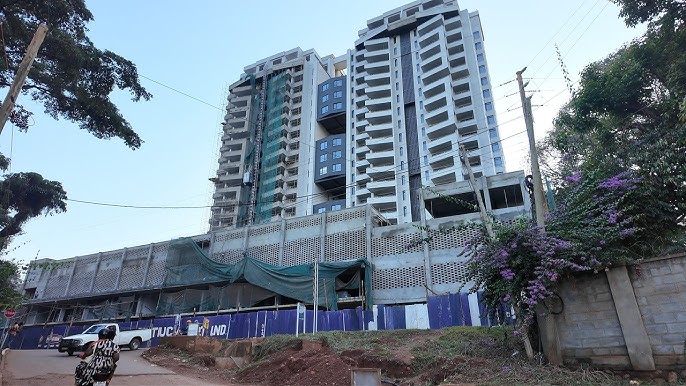
Against a backdrop of rapid urbanisation, rising population pressures, and a growing construction sector, government has introduced new reforms aimed at restoring order and safety in the country’s building industry.
The Building Control (Amendment) Act, 2026, which came into force on March 19 following President Museveni’s assent and gazettement in February this year, represents a decisive shift from reactive regulation to proactive risk management.
At the centre of this transformation is the National Building Review Board (NBRB), whose Executive Secretary, Eng Flavia Gutto Bwire, outlined in an interview this week a series of structural, legal, and operational changes designed to address long-standing weaknesses in compliance and enforcement.
For years, Uganda’s construction boom has been accompanied by troubling trends, including unsafe structures, the use of substandard materials, weak supervision, and, in some cases, fatal building collapses.
While earlier legislation, including the Building Control Act (Cap 136), laid the foundation for regulation, government says gaps in enforcement and institutional inefficiencies limited its impact.
The 2026 amendment seeks to close those gaps decisively.
Who and what has changed
According to Herbert Zziwa, Manager of Communications at the National Building Review Board, the three major reforms target governance.
“The NBRB’s membership has been streamlined from 16 to 9 members to improve efficiency and reduce operational costs, bringing together key government ministries and professional bodies in engineering, architecture, surveying, and physical planning.”
“Beyond structure, the Board’s powers have been significantly enhanced. Previously restricted to handling complaints tied to ongoing construction, it can now intervene in a broader range of building-related issues, including completed structures that pose risks. It can also issue stop-work and evacuation orders, enforce penalties, and escalate cases to the Uganda Police or professional bodies where necessary,” he says.
On the other hand, Eng Bwire emphasizes that these changes are not merely administrative, but are intended to save lives.
“Unsafe buildings should not only be considered a problem when they collapse,” she notes, underscoring the hidden dangers posed by structurally compromised developments.
Where enforcement meets local realities
At the local level, building committees, which serve as the first line of enforcement, have also been overhauled.
Their size has been reduced from 11 to five members and they are now composed strictly of technical experts, excluding politicians.
Leadership roles have been clarified, with engineering and physical planning officers taking charge.
Crucially, these committees now have the power to demolish illegal structures, a move that signals a tougher stance on non-compliance.
However, authorities insist that demolition will follow strict procedures to prevent abuse and public panic.
The law also introduces a clearer chain of accountability. Complaints must first be lodged with local government accounting officers, such as chief administrative officers or town clerks, before being escalated to the NBRB.
This step is aimed at strengthening local governance and reducing bureaucratic bottlenecks.
Why the law matters now
The urgency of these reforms is rooted in Uganda’s evolving risk landscape. As cities expand and construction intensifies, the consequences of regulatory failure have become more severe.
The amendment mandates strict adherence to the National Building Code, eliminating inconsistencies that previously arose when different standards were applied by developers and regulators.
It also introduces a forward-looking approach to innovation. New construction methods and materials must now undergo scientific assessment before approval, replacing the previous system, which often reacted only after failures occurred.
This shift is particularly significant in light of controversies surrounding unconventional building techniques, such as the steel-timber-concrete composite method.
Government clarified that while innovation is encouraged, safety must remain paramount.
How compliance will be enforced
Perhaps the most immediate impact of the new law will be felt through tougher penalties.
Constructing without a permit, for example, now attracts fines calculated per square metre, significantly increasing the cost of non-compliance.
Liability for building-related accidents has also been sharply increased, reinforcing accountability across the sector.
The Building Control (Amendment) Act, 2026 introduces significantly enhanced penalties aimed at deterring non-compliance and strengthening accountability across Uganda’s construction sector.
The revised sanctions reflect a shift toward stricter enforcement and proportional punishment based on the scale of violations.
A new penalty regime: From fixed fines to scaled financial risk
One of the most significant reforms introduced by the law is the transition from fixed penalties to a scale-based system of fines linked to project size, a shift that fundamentally reshapes the risk profile for developers.
 Ugandan Lawyer and Businessman Charles Odere Appeals USD400,000 Arena Mall Ruling
Under the previous regime, offences such as undertaking construction without a permit attracted relatively modest fixed fines.
However, the new framework departs from this approach by calculating penalties on a per-square-metre basis of built-up area, thereby exposing large-scale developments to substantially higher financial liabilities.
Under the new regime, constructing without a permit, regardless of the classification of the building, now attracts a penalty of two currency points per square metre, or imprisonment of up to five years, or both.
Previously, the offence attracted 50 currency points (approximately UGX 1 million) or two years’ imprisonment.
Similarly, the penalty for continuing construction after the expiry of a permit has been increased.
Previously, this offence attracted 25 currency points (approximately UGX 500,000), or imprisonment for 13 months, or both, plus an additional two currency points for each day the offence continued after notice was given. It now attracts a penalty of two currency points per square metre of the built-up area after the expiry of the building permit.
In addition, the penalty for building using prohibited methods has increased from 48 currency points, or two years’ imprisonment, or both, to five currency points per square metre of the built-up area constructed using a prohibited method.
Negligence now carries heavier consequences
The amendment significantly strengthens criminal liability provisions, particularly in cases where negligence results in accidents.
Under the revised framework, developers and contractors may now face penalties of up to 500 currency points (UGX 10 million), or 12 years’ imprisonment, or both.
This represents a substantial increase from the previous maximum of 288 currency points (UGX 5.6 million), clearly reflecting the government’s intent to treat construction-related negligence as a serious public safety offence rather than a mere regulatory breach.
Importantly, the scope of liability has been expanded beyond active construction sites to include completed structures.
Developers are therefore legally accountable for the structural integrity of their buildings even after project handover.
This reform effectively closes a long-standing regulatory gap, where responsibility often diminished once a building became occupied.
Compliance costs rise, but So Does Predictability
For developers, the implications are twofold: while compliance costs are likely to increase in the short term, the reforms promise enhanced stability and resilience across the sector in the long run.
The mandatory adoption of the National Building Code addresses the long-standing problem of fragmented standards, fostering greater consistency and improved quality control.
However, this shift also necessitates more rigorous design protocols, enhanced supervision, and comprehensive documentation throughout the project lifecycle.
Furthermore, the requirement for prior scientific evaluation of new construction technologies and materials introduces an additional approval layer.
Although this may slow the pace of innovation adoption, it serves a critical function in mitigating the risks of structural failure associated with untested or inadequately assessed methods.
New deadlines introduced
The amendment also imposes clearer timelines. Developers must act on deferred permits within 12 months.
It further mandates that construction must begin within one year of approval and that projects must be completed within five years.
Failure to comply may trigger penalties or require reapplication, discouraging speculative landholding and stalled developments.
Sector-wide impact: From informality to professionalisation
Taken together, these reforms are expected to significantly accelerate the formalisation and professionalisation of Uganda’s construction sector.
Key anticipated outcomes include a reduction in informal and unregulated construction activity, alongside a growing demand for certified professionals and compliance-related expertise.
While these changes are likely to enhance industry standards, they may also result in higher upfront project costs, particularly for small and mid-sized developers.
At the same time, the establishment of clearer regulatory frameworks is expected to strengthen investor confidence and contribute to a more predictable business environment.
Importantly, these reforms should also enhance public safety by reducing the incidence of building failures and improving overall construction quality.
However, the new regulatory environment may place considerable pressure on smaller contractors, many of whom operate with limited capital and technical capacity.
This could lead to increased market consolidation, with larger, well-resourced, and compliant firms gaining a competitive advantage.