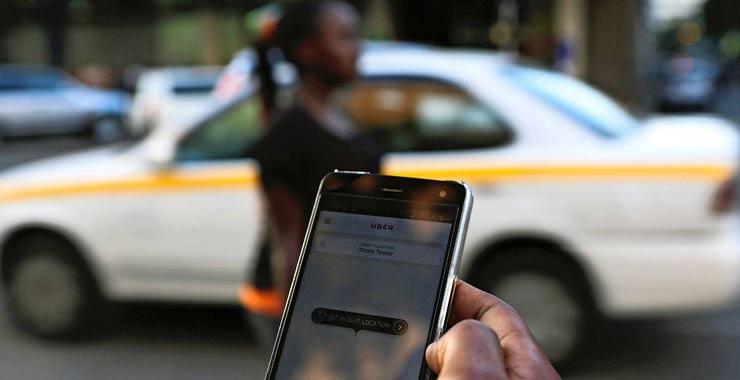
The last two years have seen the proliferation of online cab operators in Uganda’s transport milieu. It’s the digital era so a taxi should be at your palm, with bookings and often payments done using smartphones.
In June 2016, New York-based company, Uber, launched its services in Kampala. Uber started by giving out free rides in the city and it didn’t take it long to penetrate Uganda’s ‘special cars for private hire’ sector. Owing to its international reputation, Uber’s entry was well received by Ugandans, mainly the corporate. Many believed that with Uber, they would be saved from the hustle of hiring cars around the city centre and also would have guaranteed security when travelling in such cars.
Uber’s entry on the market was closely followed by other players, including former Kampala Mayor Nasser Ssebagala’s ‘Friendship Taxi and later Quick Taxi. At the end of 2017, another player, Taxify, an Estonian-based cab company, launched its operations in Uganda. The company started at a minimum fare of Shs4,500. However, in a bid to gain faster popularity, the company has recently reduced its minimum fare to Shs4,000.
Unlike traditional ‘special cabs’, online taxis are distinguished by both how they are booked and mode of payment. For instance, Uber and Taxify are pure app-based cabs with riders required to book them using their smart phones. Friendship and Quick Taxi are mainly hired through a call or USSD. Quick Taxi also has an APP alternative.
 Uganda Turns to Citibank After Years of SGR Delays Over Financing
On the other hand, all these operators have their fares automatically calculated basing on distance covered, time taken in the cab and traffic involved. As such, their clients usually incur lesser transport costs when compared to those that hire the traditional cabs that derive their transport fares from estimates of distance and locations of destinations.
Thanks to this mode of business, the popularity of online cabs has been fast growing in the last two years.
This is, however, no longer the case with several complaints of rip-off, delayed arrivals, and heated up arguments between passengers and drivers reported in the past few weeks. Some of the clients who feel ripped off by these service providers have vented their frustrations on social media.
“Uber Uganda, I was almost ripped off by your driver who refused to end the trip and asked for Shs90,000 from Kabalagala to Kiwatule but I insisted until I saw the Uber receipt and it was Shs31,000, which I paid but the driver complained that I didn’t pay which I did in front of multiple witnesses. When I reported to Uber, I received harsh responses and threats. Come on! Uber drivers have old screen shots from old trips and they flash them to you and make you pay more than your right fare,