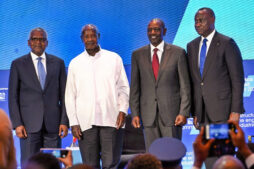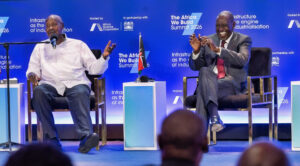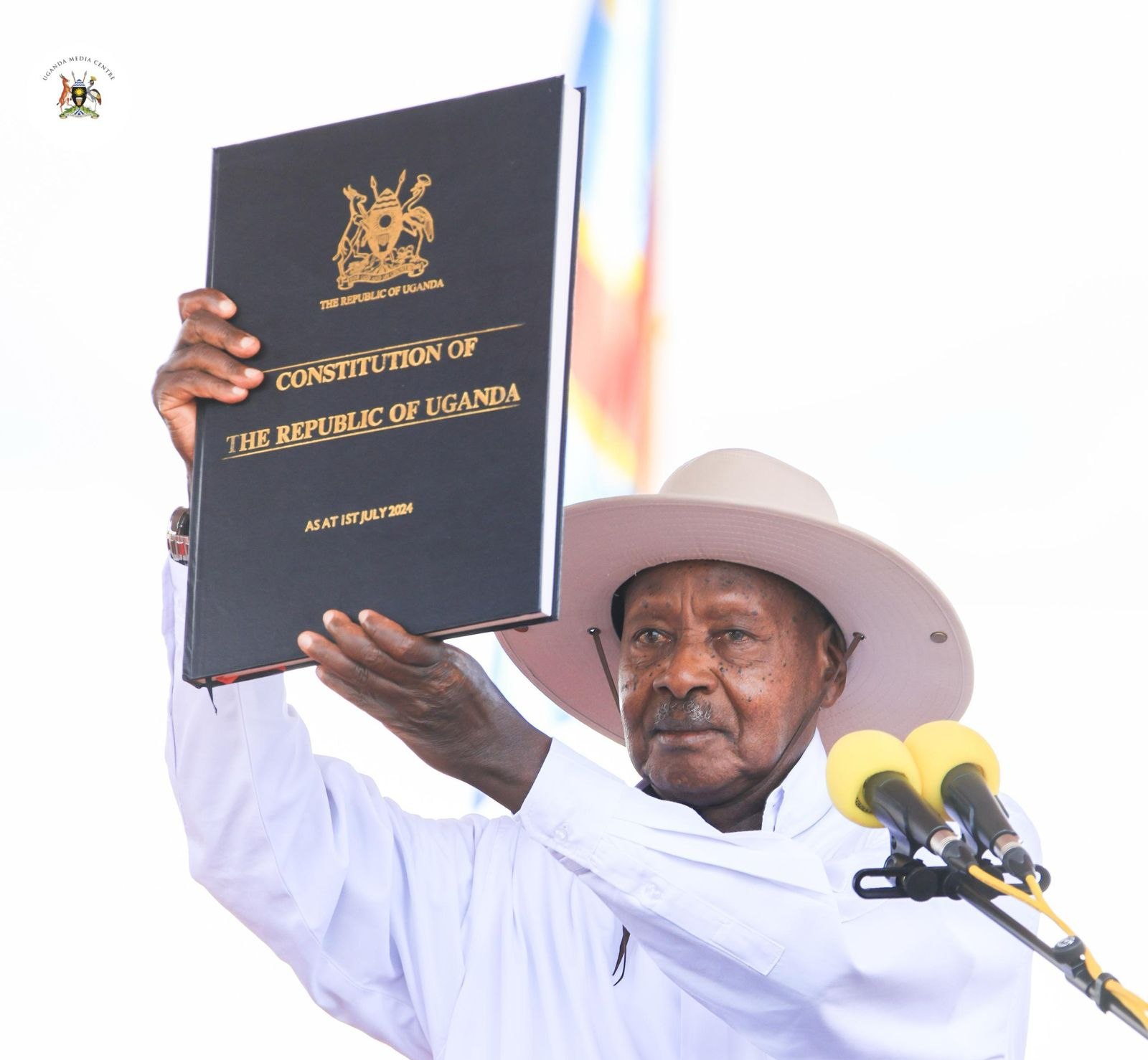
When President Yoweri Museveni was sworn in at Kololo Ceremonial Grounds on May 12, 2026; he used the occasion not merely to mark the beginning of another term, but to restate the economic doctrine that has shaped much of his leadership since 1986.
At 81 years of age, and taking oath for a record seventh consecutive term, Museveni spoke less like a leader unveiling a new manifesto and more like a political patriarch explaining the logic of his long project to a younger generation he repeatedly called the Bazzukulu.
The speech moved across history, liberation memory, infrastructure, household incomes, regional integration, value addition, education, jobs, environmental protection and Africa’s place in the global economy.
But its most memorable line came when Museveni declared that if he had been in the United States, he would already be a billionaire.
“The United States is a powerful country because they have got a big market. If I was in the USA, I would be a billionaire by now. You produce something in New York. It can be sold all the way to California, but in Africa, the market was fragmented,” Museveni said.
At first hearing, the line sounded like classic Museveni: confident, humorous and provocative.
But inside the speech, it was not a casual boast. It was the centre of a larger argument.
Museveni was saying that wealth is not produced by effort alone. It is produced when effort meets scale, when production meets markets and when a farmer, manufacturer, artisan or service provider can sell beyond a small local economy.
Museveni’s argument was that Africa’s historical disadvantage has been fragmentation.
Unlike the United States, where a producer in one state can sell across a vast internal market, African producers have often operated within small national economies created by colonial borders.
In his telling, this is why Uganda’s prosperity cannot be separated from the East African Community, COMESA, the African Union and the Continental Free Trade Area.
The market of Uganda alone is not enough. The market of East Africa, Africa and the wider world is what gives production real scale.
Liberation history as economic philosophy
Before he arrived at that argument, however, Museveni began with memory.
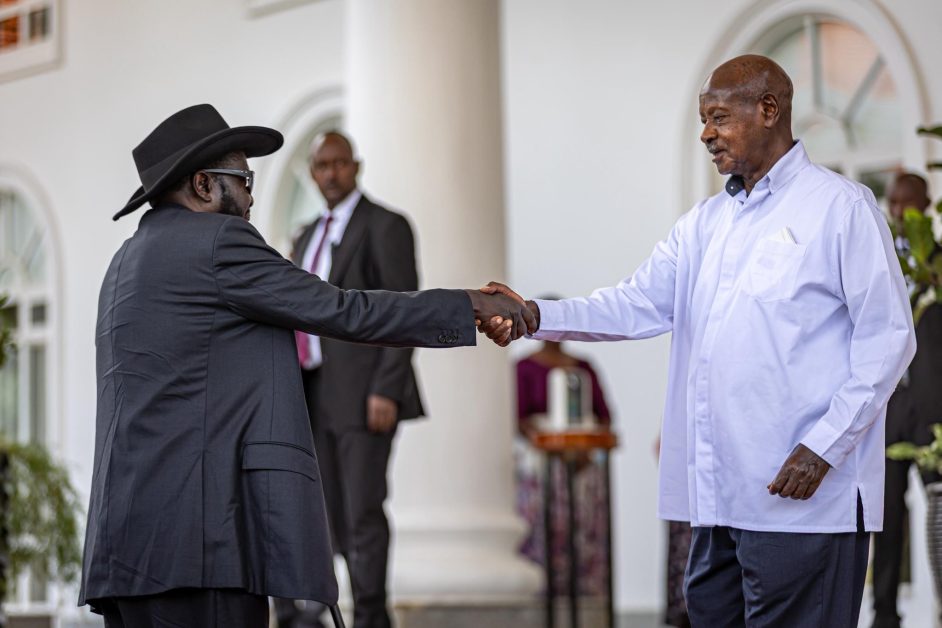
He thanked Tanzania, Mozambique and Kenya for the roles they played in Uganda’s liberation and survival. Tanzania, he said, gave Uganda the foundation. Mozambique helped train early fighters. Kenya became a refuge for many Ugandans during years of instability.
That opening was not merely ceremonial. It allowed him to frame Uganda’s present as part of a wider regional story, where political survival, military strength and economic ambition all depend on cooperation beyond national borders.
From there, Museveni moved into what he called the matafaari, the bricks that the NRM has put on the house of Uganda over the last 40 years.
The first brick, he said, was peace, brought about by rejecting sectarian politics based on tribe and religion and instead emphasising the interests of wealth creators.
The second was development in the form of economic and social infrastructure, including roads, electricity, piped water, railways, airports, telephones, schools and health centres.
The third was the wealth of individuals, families and companies that use peace and infrastructure to build incomes in the four sectors of commercial agriculture, manufacturing or artisanship, services and ICT.
The fourth brick was jobs, which Museveni insisted come from wealth creation rather than speeches or wishes.
The fifth was service delivery, including law and order, justice, education, administration and health.
The sixth was markets, both internal and external. The seventh was political integration, especially the Federation of East Africa, which he linked to both markets and strategic security across land forces, air forces, navy and space.
This structure matters because it shows how Museveni understands development. Peace is the foundation. Infrastructure is the enabling platform. Wealth creation is the engine. Jobs are the result. Services support producers. Markets absorb output. Political integration protects both commerce and security.
“No More Sleep” and the push into the money economy
That is why he described the new term as a Kisanja of “no more sleep for all Ugandans.”
In Museveni’s telling, government has already put in place the main foundations. There is peace. There is infrastructure. There is service delivery. There are markets through Uganda, the EAC, COMESA and the CFTA.
There is also what he called a nucleus of cheap capital through the Parish Development Model, Emyooga, Uganda Development Bank money and occasional grants of coffee seedlings, fruit seedlings and breeding stock under Operation Wealth Creation.
His message was direct: Ugandans must now do their part through wealth creation and job creation.
The speech became most concrete when Museveni turned to numbers. He said that at Independence in 1962, only 9.4 percent of homesteads in Uganda were in the money economy. By 2013, the figure had risen to 32 percent.
On account of Operation Wealth Creation and the Parish Development Model, he said, 67 percent of homesteads are now in the money economy, leaving 33 percent still outside.
For Museveni, this is one of Uganda’s most important economic battles. The issue is not merely GDP growth, but household conversion from subsistence to commercial participation.
Every family that joins the money economy becomes a potential producer, employer, consumer and taxpayer. Every household that remains outside it represents lost national capacity.
To illustrate that transition, Museveni cited several families who testified growing from small assets into commercially large incomes.
At industry level, he cited Madhvani Group engaged in sugar manufacturing in Kakira in eastern Uganda, which he said employs 14,000 people, adding overall, manufacturers are now employing 1.5 million Ugandans.
He pointed to hotels such as Sheraton, which employs 400 people, and to industrial parks such as Mbale, where workers shown in the speech booklet represented the employment potential of manufacturing.
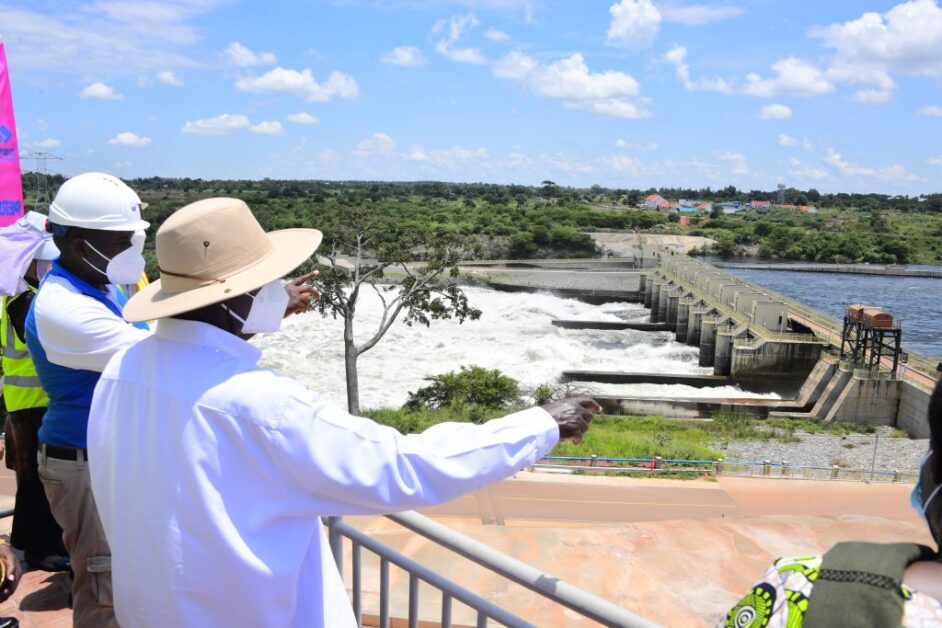
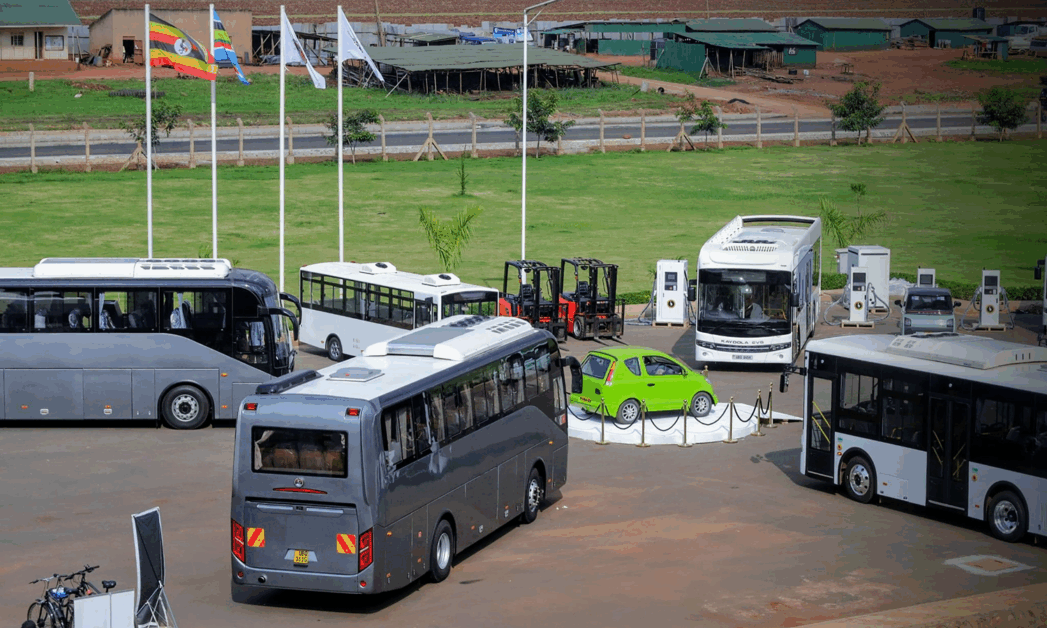
He also pointed to Karuma and Isimba hydropower dams and Kiira Motors as examples of high-skill employment involving Ugandan engineers and technical workers.
This is where the speech becomes richer than a simple agriculture message. Museveni’s model has two levels.
At the household level, he wants Ugandans to leave subsistence and enter commercial agriculture, services, artisanal manufacturing and ICT.
At the national level, he wants Uganda to deepen industrialisation through manufacturing, energy, automobiles, vaccines, pharmaceuticals, electronics and other value-added sectors.
He was clear that the four sectors of commercial agriculture, manufacturing, services and ICT contain both low-skill and high-skill jobs.
Education for production
Museveni then connected this to education. With more value addition in agricultural raw materials, mineral raw materials, forest raw materials and the knowledge economy, he said, there will be more people in manufacturing, services and ICT than in agriculture.
That is why Uganda must retune its education system to concentrate on skills needed in the labour market and scale down what he called random education, or at least make it clear to learners and parents that some courses may be pursued for interest but may not create jobs.
This was one of the strongest policy signals in the speech. Museveni was not simply calling for more education.
He was calling for education tied directly to production, labour demand, industrialisation and value addition.
The value addition section then widened the speech from Uganda to Africa.
Museveni argued that many African ruling elites have made a strategic mistake for the last 70 years by exporting unprocessed or semi-processed raw materials.
He used gold as an example. Exporting a kilogram of unprocessed gold at 84 percent purity, he said, earns about USD60,000. Processing it to 99.90 percent purity raises the value to USD168,000.
His point was not only about price. It was also about jobs. When Africa exports raw gold, coffee or other commodities, it does not only donate money to outsiders, he argued.
It donates refining jobs, processing jobs and industrial opportunities
From there, Museveni made a continental comparison. Africa, he said, is four times the land area of the United States and 12 times the land area of India.
It has a present population of 1.5 billion people, which he said will rise to 2.5 billion in the next 30 years.
Yet Africa’s total GDP is only USD3.6 trillion, compared with USD32 trillion for the United States, USD20.65 trillion for China and USD4.18 trillion for India.
For Museveni, this gap reflects Africa’s failure to fully industrialise and add value to its resources. He argued that Africa’s GDP should be at least USD60 trillion, if not more.
That is why he said Uganda has banned the export of unprocessed minerals and is pushing for value addition across raw materials.
This is where the “billionaire” line becomes more than a Uganda story. Museveni was making a Pan-African industrial argument.
Africa has land, population, minerals, agriculture and markets, but it remains economically underpowered because it exports too much value and imports too much finished wealth.
He then personalised the point in a striking way. “I regard myself as a clever capitalist,” he said. “I produce milk. I want many Ugandans and many Africans to buy my milk. However, they cannot buy my milk unless they have money in their pockets.”
It was a revealing line because it joined capitalism to mass purchasing power.
Museveni was saying that a producer benefits when consumers are richer. A poor population is not good for business. A wealthy population buys more milk, more goods and more services.
In his example, increasing household incomes would also raise milk consumption from the present 60 litres per capita toward the 210 litres recommended by the World Health Organization.
The speech also addressed labour migration and refugees.
Museveni argued that once all Ugandan families join the money economy in the four sectors, there will be so many jobs that Uganda’s nearly two million refugees from brother African countries will get jobs, and Uganda may even have to import other workers from neighbouring African countries.
He linked this to Uganda’s older colonial enclave economy of coffee, cotton, copper, tobacco, tea and tourism, which he said also attracted workers from Rwanda, Burundi, Kenya, South Sudan and Tanzania.
Toward the end, Museveni became more practical. He identified water as a major constraint for small-scale agriculture, especially zero grazing of chicken, pigs, goats, turkeys, sheep and cattle.
He cited a model by Hon. Joselyn Kamateneti, the Woman MP for Ntungamo, using solar-powered water pumps and wells in areas with springs at a cost of UGX8.1 million per village. Households can then use wheelbarrows to bring water to zero-grazing areas.
He also promoted fish farming at the edges of wetlands, saying government would help communities with earth-moving equipment to make fish ponds, solar-powered pumps to pump and aerate water with oxygen, and measures to protect fish from snakes and frogs.
He added that the issue of fish fries and fish feeds was being addressed.
The environmental section was equally direct. Museveni said rice growing and potato growing in swamps must stop.
Where terrain allows, he argued, rice should be replaced with fish farming at the edge of wetlands, which he described as more profitable.
Wetlands, he said, must recover because they support irrigation, indigenous medicine and rain formation.
Forests must also be restored because they protect river catchments, genetic materials, indigenous medicines and rainfall systems.
Taken together, the speech was a detailed restatement of Museveni’s economic worldview.
Uganda’s development, in his telling, rests on peace, infrastructure, wealth creation, jobs, services, markets and integration.