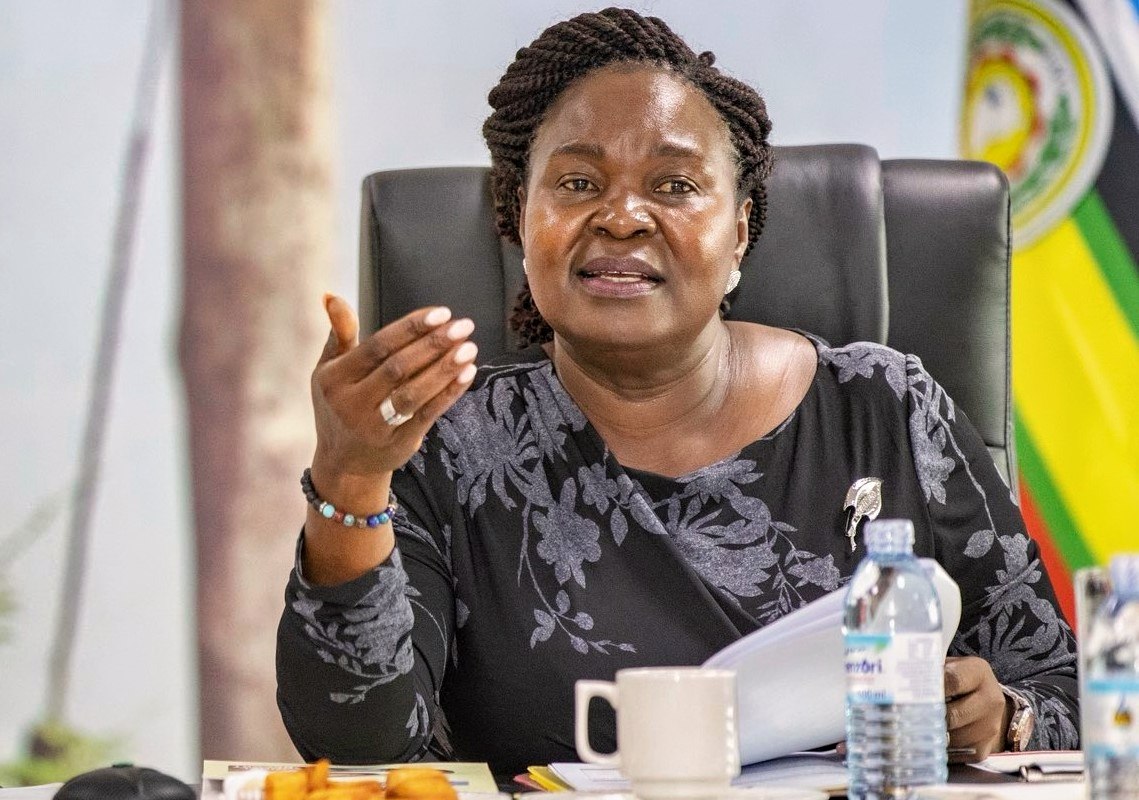
When the Ministry of Energy announced the dismissal of the UEDCL Board Chairperson and the forced leave of Acting Managing Director Paul Mwesigwa amid mounting public anger over persistent blackouts, operational failures and post-Umeme turbulence, the move was framed as a necessary governance intervention aimed at restoring accountability and stabilising Uganda’s fragile electricity transition.
To some observers, however, the sackings looked less like institutional correction and more like political damage control.
“In a very serious country, Ruth Nankabirwa should have been the first to resign,” one governance observer remarked privately after escalating power disruptions hit several parts of Uganda in late 2025 and early 2026.
The criticism may sound harsh, but it captures a growing tension surrounding one of the most visible and politically dominant ministers in President Museveni’s government.
For months, Minister of Energy and Mineral Development Ruth Nankabirwa positioned herself at the centre of Uganda’s electricity transition. From press conferences and parliamentary appearances to field inspections, television interviews and social media commentary, she became the unmistakable public face of the government’s takeover of electricity distribution from Umeme.
When Uganda Electricity Distribution Company Limited (UEDCL) formally assumed control of the national distribution network in March 2025 after two decades of private-sector management, it was Nankabirwa who reassured consumers that the government was fully prepared for the transition.
She defended the takeover repeatedly, guided customers through the migration from “Yaka” to “UEDCL Light,” chaired strategic meetings, presided over stakeholder engagements and projected confidence that Uganda’s electricity future was secure under state management.

Throughout the transition, the Minister became so publicly dominant that, at times, one could easily be forgiven for assuming she was the de facto Managing Director of UEDCL itself.
The company’s technical leadership, including senior engineers and Managing Director Paul Mwesigwa, often appeared secondary in the public conversation surrounding one of the most consequential infrastructure transitions in Uganda’s recent history.
Whether discussing outages, customer migration, network expansion, operational readiness or sector reforms, it was frequently the Minister — rather than the utility’s technical executives — who occupied the public spotlight.
To supporters, this reflected an unusually hands-on minister attempting to steady a fragile transition of national importance.
To critics, however, it signaled something more troubling: the gradual overshadowing of institutional leadership by political authority.
Yet barely months into the transition, the sector began showing signs of severe strain.
Power outages intensified across several regions. Load shedding returned in some areas. Customer complaints escalated. Infrastructure failures mounted. UEDCL struggled with inherited technical weaknesses, ageing distribution infrastructure, overloaded substations and growing operational pressure.
Investigations and internal sector assessments increasingly pointed toward a deeper structural problem: Uganda had invested heavily in power generation — particularly through Karuma and Isimba dams — without matching those investments with timely, large-scale strengthening of the transmission and distribution network needed to evacuate and distribute that power effectively.
The result was an electricity system expanding rapidly at generation level while critical parts of the distribution backbone remained overstretched, underfunded and deteriorating.
According to sector assessments, more than 47,000 electricity poles required replacement following years of underinvestment and deferred maintenance during Umeme’s final years. At least 13 major substations reportedly exceeded 80 per cent capacity utilisation, increasing the likelihood of overloads, forced load management and recurring outages.
Even government’s late effort to support UEDCL through a US$50 million financing package was criticised within parts of the sector as insufficient relative to the scale of inherited infrastructure decay and transition demands.
This is the contradiction now confronting Uganda’s energy leadership.
Never before has Uganda’s electricity sector operated under such visible political supervision.
And yet, rarely has the sector appeared so institutionally strained at precisely the moment government reclaimed full control of electricity distribution.
That contradiction lies at the heart of the growing governance debate surrounding Ruth Nankabirwa.
Is she a hardworking minister attempting to steady an extraordinarily difficult sector during a historic transition?
Is she overreaching into spaces that should ordinarily be occupied by boards, regulators and technical executives?
Is she playing to the gallery through hyper-visibility and political messaging while deeper institutional weaknesses remain unresolved?
Or is she, perhaps, all of the above?
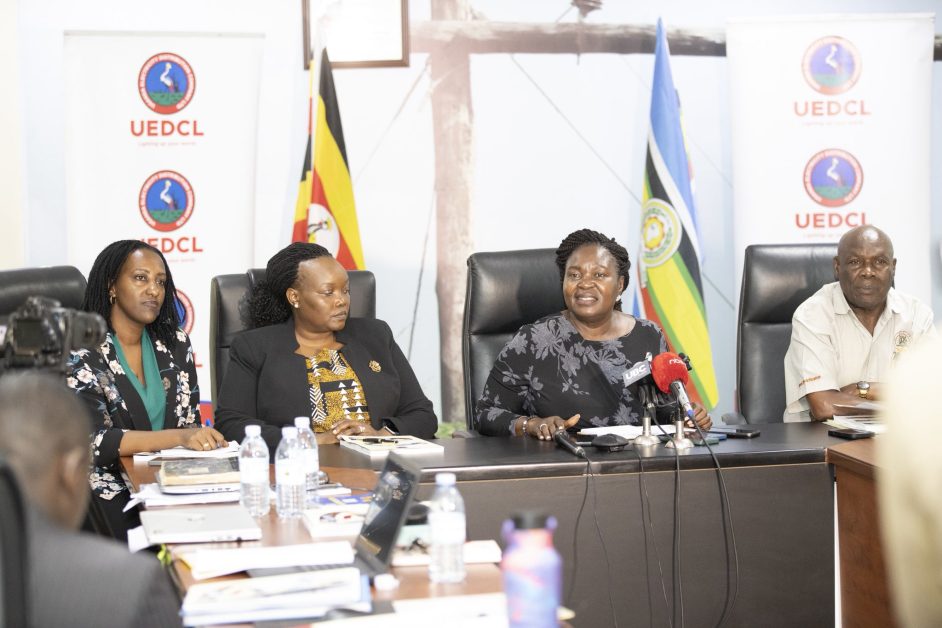
From Political Operator to Sector Commander
Ruth Nankabirwa’s dominance over Uganda’s energy conversation is not rooted primarily in technical expertise. It is rooted in political authority, institutional confidence and decades of experience navigating government power structures.
While sector knowledge and technical familiarity are often considered an added advantage in managing complex electricity and petroleum ecosystems, Nankabirwa’s own academic and political formation is markedly different. She holds a Bachelor of Arts Degree in Fine Art and a Master of Arts Degree in Conflict Studies from Makerere University.
Her greatest asset has never been technical depth. It has been political coordination.
Before becoming Minister of Energy and Mineral Development, she served in several influential government roles including Government Chief Whip, positions in the Office of the Prime Minister and leadership assignments within the Ministries of Defence, Agriculture and Finance.
That political experience has served her well, particularly in Uganda’s oil and gas sector.
Under her tenure, Uganda reached the long-awaited Final Investment Decision for its oil projects, unlocking the path toward commercial oil production. She became one of the government’s most vocal defenders of the East African Crude Oil Pipeline (EACOP), especially amid growing international criticism from climate activists and Western financiers.
At COP28 in Dubai, she led Uganda’s delegation in presenting the country’s energy transition plan while balancing petroleum development with renewable-energy commitments. She has also overseen production-sharing agreements under Uganda’s second oil licensing round and engaged financiers, investors and diplomatic missions around Uganda’s energy ambitions.
In oil and gas, her leadership style has largely revolved around political mobilisation, strategic communication and diplomatic coordination.
Electricity, however, is far less forgiving.
Oil projects can absorb delays quietly behind investor meetings and confidential negotiations. Electricity failures are immediate, public and politically explosive. Blackouts, outages, transformer failures and billing disputes affect households, factories, hospitals and businesses in real time.
That partly explains why Nankabirwa’s visibility intensified after the Umeme exit.
But it also raises questions about institutional balance.
Even within Uganda National Oil Company (UNOC), one of Uganda’s most technically sophisticated state enterprises led by petroleum technocrat Proscovia Nabbanja, ministerial visibility increasingly appears to overshadow operational communication from the company itself.
Whether discussing petroleum logistics, supply issues, strategic reserves or pricing concerns, it is frequently the Minister — rather than UNOC’s technical leadership — who dominates the public conversation.
Globally, most state oil companies maintain strong executive visibility independent of ministers. Uganda’s model increasingly appears more politically fronted.
And in electricity, that visibility carries even greater risk.
Because the more politically centralised the sector becomes, the more its failures inevitably attach themselves directly to the Minister herself.

Beneath the Visibility, A Sector Under Strain
Beneath Minister Ruth Nankabirwa’s confident public messaging and high visibility, that borders on posturing, Uganda’s energy sector carries deep structural vulnerabilities long before UEDCL formally took over from Umeme.
The scale of the transition itself was enormous. UEDCL inherited control of 99 per cent of Uganda’s electricity distribution network, growing its customer base from about 178,000 to more than 2.4 million. Its medium-voltage network tripled to 36,488 kilometres, low-voltage lines expanded to 55,877 kilometres, transformer numbers rose from 4,951 to 26,577, while staff numbers jumped from 480 to 2,378. Revenue simultaneously surged from UGX159 billion to UGX3.258 trillion.
This was not merely a utility takeover. It was effectively the nationalisation of Uganda’s electricity distribution backbone.
But the deeper the transition progressed, the clearer the underlying weaknesses became. UEDCL inherited ageing infrastructure, overloaded substations, deferred maintenance obligations and immense public expectations. ERA now expects the utility to reduce distribution losses from 14.59 per cent in 2025 to 12.31 per cent by 2027 while simultaneously expanding electricity access nationwide.
The strain extends well beyond distribution.
Despite expanded infrastructure and rising electricity demand, UETCL posted a staggering UGX293.1 billion net loss linked partly to receivables pressures, arbitration disputes and UGX575.5 billion in amounts withheld by Umeme. At UEGCL, revenue rose sharply following Karuma’s first full commercial year, but profit after tax simultaneously fell by 54 per cent due to financing costs, depreciation and operational expenses tied to the dam. UEGCL also disclosed low dispatch at Karuma, delayed maintenance funding for Namanve Thermal Plant and dam-safety concerns at Isimba requiring rehabilitation works.
Taken together, the figures describe a sector expanding rapidly while carrying significant operational, financial and governance stress beneath the surface.
Demand is rising, but so are losses and receivables. Generation capacity has increased, but profitability remains strained. Distribution has returned to state control, but the transition itself remains fragile.
And that is what makes the Minister’s hyper-visibility politically risky.
The more dominant she became in public communication, the more the sector’s failures increasingly became associated not with institutions like UEDCL, UETCL or ERA — but with Nankabirwa herself.
The Auditor General’s findings reinforce that contradiction further. A CEO East Africa Magazine analysis of the latest audit reports concluded that Uganda’s energy ambitions increasingly appear to be outpacing the institutional capacity required to sustain them. Auditors flagged persistent deficits at UECCCL, more than UGX1.48 trillion in receivables at UETCL, delayed projects, idle infrastructure and mounting operational pressures across the sector. The Auditor General also flagged delays affecting key oil and gas milestones under Tilenga, Kingfisher and EACOP despite their strategic importance.
Even more politically significant is that such concerns are no longer coming only from opposition critics, independent analysts or frustrated electricity consumers. They are increasingly being voiced by individuals widely perceived to be close to the centre of state power itself.
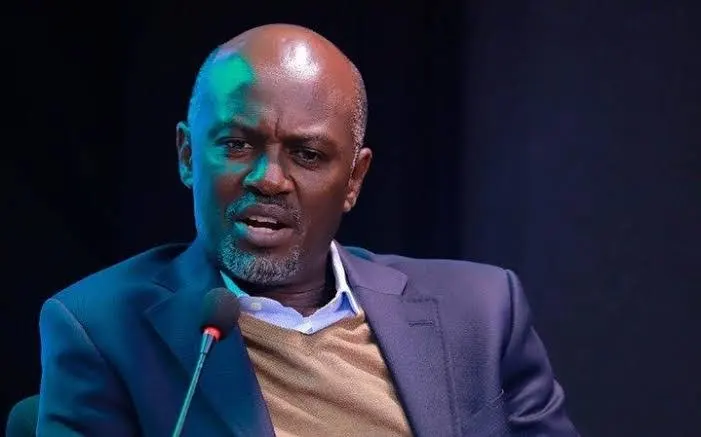
Speaking on the Bad Natives Podcast in December 2025, veteran journalist and political commentator Andrew Mwenda — long regarded as one of the most influential pro-establishment voices within Uganda’s political ecosystem — delivered an unusually stark assessment of governance and supervision weaknesses surrounding Uganda’s flagship hydropower projects, particularly Karuma and Isimba.
Mwenda alleged that both dams were facing serious technical and structural concerns linked to poor supervision, delayed corrective action and institutional decision-making paralysis. Referring to Isimba, he claimed that weaknesses affecting the spillway and foundations could eventually pose major structural risks if not urgently addressed, while Karuma, he argued, continued to face unresolved electrical and engineering defects years after completion.
“The state of Uganda is reflected in the state of our dams,” Mwenda remarked during the discussion.
Whether or not his technical claims ultimately withstand independent engineering verification may, in some ways, be secondary to the larger political significance of the moment itself.
For perhaps the first time, concerns about the competence, supervision and long-term sustainability of Uganda’s energy infrastructure investments were being raised publicly not by government critics, but by a figure widely seen as sympathetic to — and deeply connected within — the ruling establishment.
That matters.
Because it suggests that anxiety around Uganda’s energy sector is no longer confined to opposition politics or public frustration over blackouts. It is increasingly becoming an elite governance concern within circles that ordinarily defend the state’s strategic direction and infrastructure ambitions.
And that feeds directly into the broader question now confronting the sector:
whether political visibility, messaging and state control have expanded faster than the institutional systems required to sustain them.
The Regulator Sounds the Alarm, But Faces Questions Too
The strongest evidence that Uganda’s electricity challenges are systemic rather than isolated may now be coming from the regulator itself.
ERA is not an operator. It is the institution responsible for enforcing standards, protecting consumers and ensuring sector discipline.
Yet even the regulator is now flagging deep weaknesses across Uganda’s electricity ecosystem.
The latest audit identified coordination failures between ERA, MEMD and UETCL during project licensing and implementation, warning that “generation projects were commissioned before evacuation infrastructure was fully developed,” leading to rising deemed-energy compensation claims and stranded capacity. The report also noted that “power generated could not be fully evacuated due to inadequate transmission infrastructure.”
Transmission losses have steadily worsened, rising from 3.7 per cent in 2020 to 4.9 per cent in 2024 despite regulatory targets aimed at reducing them.
Quality-of-Service compliance deteriorated significantly as well. ERA noted that UEDCL’s compliance declined from 71 per cent to 66 per cent amid prolonged outages and delayed preventive maintenance linked to the Umeme transition.
Perhaps most revealingly, the Auditor General found limited evidence of aggressive regulatory sanctions despite worsening service standards.
That finding matters enormously.
Because it raises a difficult governance question:
Is the regulator sufficiently independent and assertive, or has the sector become too politically sensitive for strong enforcement?
And if the Minister has become the dominant public face, chief communicator and political defender of the sector, then to what extent does she also assume responsibility for its mounting operational failures and governance weaknesses?
But the audit findings also raise uncomfortable questions about ERA itself.
While the regulator has increasingly highlighted coordination failures, rising losses and declining service quality across the electricity ecosystem, the report suggests its own enforcement capacity and regulatory assertiveness may also be under strain.
In effect, ERA appears caught within the same institutional pressures affecting the wider sector — expected to enforce discipline within a politically sensitive and operationally fragile environment while simultaneously struggling with coordination, sequencing and implementation weaknesses of its own.
The report also identified twenty-three non-performing licensed generation projects affected by financing problems, evacuation constraints, delayed infrastructure and Power Purchase Agreement disputes.
In effect, the regulator itself appears to be warning that Uganda expanded generation capacity faster than it strengthened the institutional systems required to sustain that expansion.
And that raises an uncomfortable question for a sector operating under such visible ministerial leadership: If political supervision is this extensive, why do coordination failures remain so widespread?
Oversight, Intervention — or the Over-Centralisation of a Sector?
The legal question is not whether Ruth Nankabirwa has authority over Uganda’s energy sector. She clearly does.
As Minister of Energy and Mineral Development, she oversees strategic institutions including UEDCL, UETCL, UEGCL, ERA, UNOC and several petroleum and renewable-energy bodies. But these institutions were not designed merely to function as extensions of the Minister’s office. Most have boards, chief executives and technical management teams specifically intended to exercise institutional judgment, operational independence and professional oversight.
That is why the debate surrounding Nankabirwa is no longer simply about visibility.
It is about whether institutional leadership within Uganda’s energy ecosystem is becoming increasingly subordinate to political authority.
When ministers communicate policy, reassure consumers and demand accountability, that falls within the normal logic of political oversight. But when ministerial influence extends visibly into staffing decisions, operational directives, procurement oversight and board-level interventions, the distinction between oversight and encroachment becomes far less clear.
And increasingly, the public conversation surrounding Uganda’s energy sector appears to revolve around the Minister herself rather than the institutions formally mandated to run it.
That concern sharpened dramatically following the recent upheaval at UEDCL.
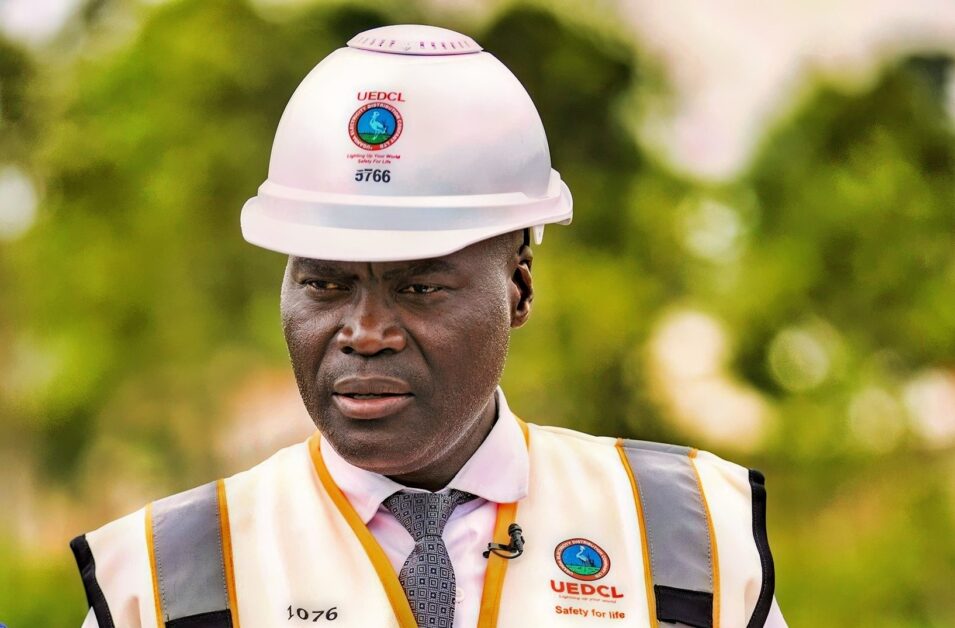
In May 2026, the Ministry announced the dismissal of the Board Chairperson and the forced leave of Managing Director Paul Mwesigwa pending a review of management and operations. Officially, the move was framed as an accountability intervention.
Politically, however, it was interpreted by many as an attempt to contain growing public frustration over outages, infrastructure failures and post-Umeme transition chaos.
The sackings may have been intended to restore confidence. Instead, they intensified questions about where accountability within Uganda’s electricity sector actually begins and ends.
The controversy deepened further when Prime Minister Robinah Nabbanja reportedly intervened to halt proposed large-scale terminations within UEDCL following a confidential ERA performance review. Nabbanja warned that destabilising management during transition risked worsening outages and undermining public confidence in the government takeover.
But Nankabirwa went ahead and did it anyway.
The episode exposed something deeper and more uncomfortable about Uganda’s electricity governance structure: Who is ultimately in charge?
The Minister?
The Board?
Cabinet?
The Prime Minister?
Or the Presidency?
The overlapping centres of authority illustrate the complexity — and fragility — of managing strategic state enterprises in politically sensitive sectors.
Months before UEDCL completed the takeover from Umeme, veteran journalist and political commentator Andrew Mwenda warned that once the utility controlled billions in electricity revenues and strategic national infrastructure, it would inevitably become a battleground for political interests, procurement pressures and competing centres of influence.
That warning now appears remarkably prophetic.
UEDCL is no longer merely a utility managing transformers, meters and power lines. It has become the arena where Uganda’s broader governance model is being tested in real time.
And this is where the contradiction surrounding Ruth Nankabirwa becomes impossible to ignore.
There is little doubt that she is hardworking. Few ministers in government appear more publicly engaged in their sectors. There is also little doubt that she possesses significant political skill. Her stewardship of Uganda’s oil and gas diplomacy demonstrates an ability to defend state interests, mobilise institutions and navigate difficult political terrain.
But visibility, control and constant public presence are not the same as institutional strength.
Because if the Minister has become the dominant public face, chief communicator, operational defender and political centre of Uganda’s energy sector, then to what extent must she also carry responsibility for its mounting failures?
Why is the sector still grappling with widespread outages, overloaded substations, weak transmission infrastructure, delayed projects, deteriorating service quality, rising losses and institutional confusion despite such extensive political supervision?
And what if the very centralisation intended to project control is itself contributing to institutional weakness?
What if boards, regulators and technical executives are becoming too overshadowed, too politically constrained or too dependent on ministerial direction to function confidently on their own?
Perhaps that is the deeper governance lesson emerging from Uganda’s troubled electricity transition.
Not simply whether Ruth Nankabirwa is overreaching, but whether Uganda’s energy sector has become too politically managed to operate as a stable, technically led institutional system.
In that sense, the criticism from one observer — that “in a very serious country, Ruth Nankabirwa should have been the first to resign” — may sound harsh, even unfair.
But it captures a growing public sentiment: that highly visible political ownership inevitably attracts highly visible accountability.
And that if ministers choose to dominate the stage, they may ultimately also inherit responsibility when the performance begins to falter.