Thought Leadership- Page 61

Leadership
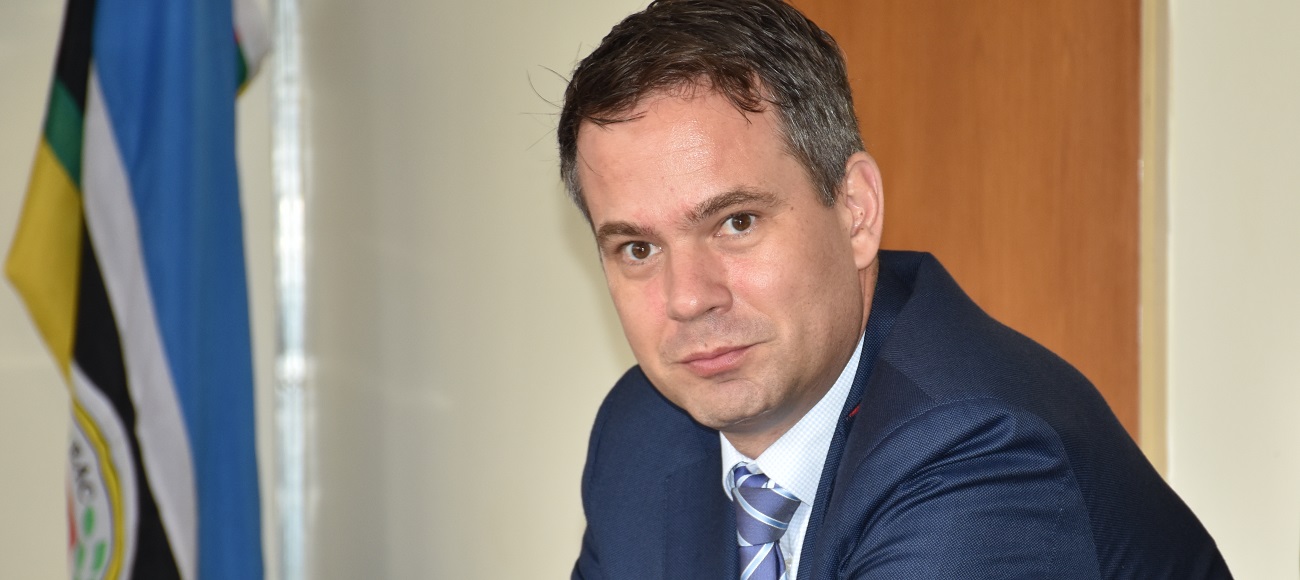
Sydney Asubo, the Executive Director of the Financial Intelligence Authority

REMAIN VIGILANT: Financial Intelligence Authority issues tips on spotting and avoiding financial crimes during Covid-19 pandemic

By Sydney Asubo With people facing confinement or strict social distancing measures, in-person banking and access to other financial services being difficult, and unnecessarily exposes people to the risk of infection. The
Geraldine Ssali is a former Managing Director of NSSF. She holds an MBA (Finance & Financial Professionals) from Manchester Business School Worldwide, University of Manchester) and a M.Sc. (Maths, Economics and Statistics) from Makerere University. She also holds a Bachelor of Science (Mathematics, Economics and Statistics) also from Makerere University. She is a Chartered Global Management Accountant (CGMA) and Chartered Institute of Management Accountants (CIMA) fellow

GERALDINE SSALI: NSSF should stop trying to save East Africa when the real owners of the money are crying for help

Good afternoon Sir. Yesterday you asked for my opinion on the letter NSSF wrote to the Minister with regards to the Covid-19 relief for its members: Paying of 20% of each member’s
The NSSF’s digitization agenda was a core focus in the Fund’s 10-year strategic plan ushered in by Richard Byarugaba in 2015, which sought to transform NSSF into a “social security provider of choice” and a “relevant partner through continuous innovation in social security.” The plan, among others, targeted to automate at least 75% of the Fund’s business processes automated by 2019/20 and 80% by 2024/25, up from 55% in 2014/15. PHOTO/Courtesy.

EDITORIAL: Enough of NSSF fearmongering over Covid-19 payout and time for more practical alternatives

Fearmongering or scaremongering is the deliberate act of spreading frightening and exaggerated information with an intention of arousing public fear or alarm about a particular issue. Those who engage in fearmongering, often
Tafumba Susan, an informal trader at her stall recently. Prolonged lockdowns will impact on such informal businesses and their ability to repay microfinance loans

OPINION: Can Microfinance Institutions (MFIs) survive the Covid19 onslaught?

The extended lockdown across the world may spell disaster for many of Micro-Finance Institutions’ clients with many of them having nothing to return to after the lockdown. This subsequently threatens their ability
Local Defence Forces (LDUs) prepare to distribute food to vulnerable populations, affected by the various Covid-19 travel and work restrictions. The food was sourced by government from local suppliers. Bitature says that Government with the support of Parliament needs to innovate around public procurement laws and fast-tracking payments to local contractors.

COVID-19: My 12 reasons why the distribution of relief food to vulnerable populations should be digitalised

By Joseline Kateeba As part of its emergency response to COVID-19 and to mitigate the impacts on the closure of certain workplaces and the restrictions on the movement of individuals, the Government
May 4, 2020
1 59 60 61 62 63 73


Follow

error: Content is protected !!