Mrs. Josephine Okuyi Ossiya, Ms. Elizabeth Namaganda, and Mrs. Alice Namuli-Blazevic prove that mentorship drives growth and productivity. Their stories show that men can be powerful allies in career success—while sometimes, it is women who become the glass ceiling.

Shantal was ready for the next move, having put in 15 years and saved the company a $2m loss, coupled with turning around a flailing portfolio.

During her tenure as Chief Finance Officer, the company cut regional costs by 15% and raked in profit for the first time in five years. She had surely put in some work.

Never playing politics, yet mentoring others in her department, for once, the finance department was pleasant to work in.

So, when the group finance officer position fell vacant, everyone knew that she was the best fit because she had paid her dues.

The interview panel also agreed with them, and all that was left was the board chairperson.

Shantal had long admired the idea of scaling the walls and sitting on the tables that Beryl sat on.

Her resolve was powered when Beryl, during a women’s summit a few years back, said: “We rise by lifting each other”.

Today seemed that she was closer to achieving her dream.

Stepping into her office, Beryl faced the window and did not do as much to acknowledge Shantal’s presence.

“Shantal, I have read your file, and the numbers are promising,” she said.

“Thank you, Beryl. And I look forward to learning from you on the new job,” Sheryl smiled.

Beryl nodded before saying, “Thank you for making time for this. I will get back to you.”

Sheryl was shocked at how fast she was dismissed, and even more so was that Beryl never got back to her, but the job went to Chris, who was three levels below Sheryl.

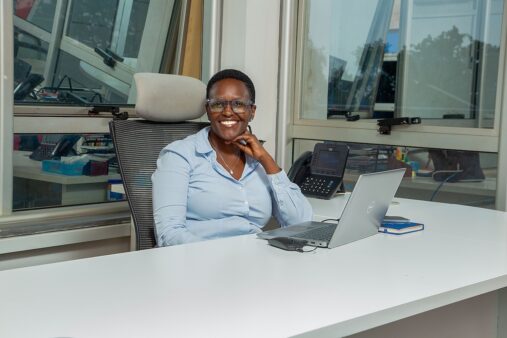
Mrs Josephine Okui Osiya, the Chief Executive Officer, Capital Markets Authority. She says that being aware that women can also deter other women is reason for female leaders to be intentional about how they lead.

Her experience

It has often been said that men and the patriarchal society have blocked women from rising.

However, Josephine Okui Ossiya, Chief Executive Officer of the Capital Markets Authority (CMA), does not agree.

“One of the most transformative allies in my professional journey was a male mentor during my early years at British American Tobacco.” 

“He was a senior executive, widely respected for his strategic vision and inclusive leadership style. At a time when few women held positions in audit, he saw beyond gender and recognised potential.

“He not only offered advice but actively advocated for me in key decision-making forums, ensuring that I was considered for high-visibility projects that would stretch my capabilities,” she shares.

Ossiya recalls a project she was hesitant to lead, fearing it was outside her expertise, coupled with having a toddler, yet she needed to be away for three weeks.

“He told me, growth isn’t born in comfort zones, but also offered to cover the cost for the baby.”

“That opportunity became a turning point in my career, enhancing my confidence and helping me develop a broader understanding of group corporate strategy and international operations.”

His mentorship taught me the value of empathy and advocacy, something I now pay forward to others on their leadership journeys,” she reminisces.

Alice Namuli-Blazevic, one of the partners at Katende and Ssempebwa Advocates, ties majority of her professional success to male colleagues. 

She speaks fondly of her direct supervisor, Sim Katende who nurtured her from an intern to partner.

“Besides support at the workplace, he supported me in so many spaces outside work.”

“For instance, my leadership journey in Rotary, Law Society (Uganda, East Africa and IBA), local community and global projects.”

“All these required a lot of my time and resources, however, he still supported me in pursuing them. Even when I had to travel out of country, he never stood in the way,” she shares.

Namuli also credits their founders of the firm for creating a work environment that enables every lawyer to grow holistically and do more than being lawyers.

Reflecting on her career journey, Elizabeth Namaganda, the head of marketing and communications at Pride Bank says one individual stands out as a pivotal supporter.

That is Tony Glencross, who served as the Managing Director at Nation Media Group during her tenure.

“His influence was profound and instrumental in my professional ascent. As a man in a senior leadership position, Glencross demonstrated belief in my abilities and untapped potential.”

“He actively supported and backed me, providing the necessary confidence and opportunities to excel in my role,” she says.

Ms Elizabeth Namaganda looks back on her marketing days at Nation Media Group with joy because she found an encourager in the then managing director, Mr Tony Glencross.
Ms Elizabeth Namaganda, the Head of Marketing and Communications Department, Pride Bank looks back on her days at Nation Media Group with joy because she found an encourager in the then managing director, Mr Tony Glencross.

Workplace ethics

For Namuli, the whole idea of toxic office politics was unheard of at her workplace because even the senior female lawyers, while she was a junior were very friendly and always willing to support both female and male colleagues.

“I believe that the makeup of the space makes it safe as everyone focuses on what they’re supposed to do without standing in another’s way.”

“Additionally, it is so flexible that moving from one department to another is not chaotic in comparison to other firms. In my case, I have seamlessly moved in different departments over the years.”

“That is because the firm’s focus is to get the best out of you (female or male) depending on your strengths and interests,” she says.

However, the bumps came when Namuli-Blazevic stood for vice president and president of the Uganda Law Society.

Her biggest shock was the animosity from fellow women. Later, she learnt that it is a very common experience for women who offer themselves for leadership, especially in a public arena.

She believes that the experience prepared her for more complicated leadership positions at regional and global levels.

What powers the ceiling?

Sometimes, the person who blocks you is your fellow woman. Not because you’re wrong or incapable. But because your presence unsettles the equilibrium she fought hard to keep.

Namaganda and Ossiya also attribute the competitive behaviours among women to a perceived scarcity of opportunities at higher levels.

However, some women block others without being intentional about it. They have no knowledge or control of their actions.

Namuli calls it unconscious bias.

“But that could also be tied to inherent unconscious biases due to culture or religious backgrounds, such as fear that women cannot perform well as men in top leadership positions, especially in intense circumstances,” she says. 

The other aspect is crab mentality, where some women resent or try to undermine the success of others, even if that success doesn’t negatively affect them.

“It is a destructive behaviour that says, ‘If I can’t have it, no one will,’ so the woman will pull down the other. That mirrors how crabs in a bucket might pull one that is trying to escape,” she explains.

Ossiya says it could be due to the struggles some faced in climbing the ladder, often driven by ‘survival conditioning’, hence ‘protecting’ their terrain.

“In male-dominated environments, some women learn to protect their positions by not appearing too ‘supportive of other women,’ fearing it might be seen as favouritism or weakness.”  

“Others operate under the mindset, ‘I fought hard to be here, so you must fight too,” she says.

Mrs Alice Namuli-Blazavic, a partner with Katende, Ssempebwa & Company Advocates. She says that some biases are unconscious. However, that is not an excuse for standing in the way of another woman’s success.

How do you navigate that minefield?

Understanding what powers this sabotage has been a great tool for Namuli, who says that the deep dive came during a C-suite leadership training (Tutu Fellowship) where they tackled why people sabotage others.

“Knowing how unconscious biases influence our decisions helps one to do or show up better in life.”

“We need to be intentional; otherwise, such biases can easily creep up on you in subtle ways. But it also allows you to give others grace.”

“That was why I ably understood the female animosity during my Law Society leadership journey,” she says.

Ossiya says she navigates these by anchoring herself in purpose and building strong professional networks that transcend gender dynamics.

“I learned to focus less on proving myself to everyone and more on demonstrating consistent value and delivering results. Resilience and strategic collaboration became key tools in my journey,” she says.

On the other hand, Namaganda has consistently remained focused on her performance and to demonstrably prove her capabilities through tangible results, allowing her work to speak for itself irrespective of the source of the resistance.

Unnecessary pressure

The pressure could also be because women have failed to appreciate that they are different from men.  Women are constantly running the male race.

Trying to achieve results with masculine approaches.

Namuli notes that when women embrace their feminine energy, they thrive. Feminine energy is internal, and when tapped into, greatness is manifested.

“Despite our differences, we are all essential in the life cycle and women have something incredible to offer,” she reminds women.

“I guess women today are responding to what the previous generations of women endured, where they focused on nurturing children, and after the departure of their male partners, suffered a great deal.

So, women are overcompensating to ensure that their families do not lack, but that has kicked the nurturing aspect to the corner to the detriment of children.

Children are now raising themselves on their terms, leaving parents with no control. There is a need to find a balance.”

“Understanding your season is key,” she says. “In your younger days, go all out. During childbearing years, look for work opportunities that allow you to nurture while remaining productive.”

She isn’t against working mothers, far from it.

“Work is good for a woman’s emotional, social, and financial well-being. But seasons change, and we must adapt. That way, we reduce burnout and still raise our families.”

She also urges organisations to support their employees, really support them to remain productive. That is where technology comes into play to allow for remote work and flexible hours.

Nonetheless, Namuli reminds women that nature is the biggest equalizer; no man or woman can stand in the way when nature takes its course on you. 

For instance, when women experience emotional scars and hormonal changes due to giving birth, most of the decisions made about work have very little to do with external factors.

“It’s an internal game that not even with the best working environment and benefits can outdo. When nature dictates that you slow down for a while to nurture your children, you can’t blame anyone for blocking your growth,” she says.

And here’s a radical idea: involve men in the conversation.

“Women are often talking to themselves, venting, and feeling victimised. Bring men into the room. Help them understand your challenges. That way, support becomes easier as it is a shared goal.”

How has this changed how you lead?

These diverse experiences have profoundly shaped Namaganda’s leadership philosophy to cultivate a style that prioritises empowerment and autonomy, encouraging team members to freely explore their limits and take ownership in executing tasks.

“I give people space to take initiative. It builds confidence, creativity, and allows them to stretch. I also make it a point to share knowledge openly, regardless of gender.”

Namuli has paid it forward, giving others an environment to enable them to grow.

“One of my mantras is ‘Pay it forward.  I have been very privileged to fly on other people’s giant wings to achieve holistic success.”

The best way to say “thank you” is by sharing what I have learnt with the next generation in every space I occupy.”

That’s why I started a mentorship platform called Coffee with Alice to help young professionals, both male and female, to bridge the gap between the theory taught in school and the practical skills needed to thrive in life,” she says.

As for Ossiya, her mantra is clear: intentional inclusion.

“I make sure all voices are heard, especially those often overlooked. I involve my team in decision-making and mentor emerging leaders—men and women alike. Diversity of thought is a driver of success.”

Her leadership blends empathy with accountability. “I value excellence, but I also recognise that people perform best when they feel safe, respected, and empowered.”

Support doesn’t always come from where we expect it. And sabotage doesn’t always look like a man in a grey suit. Sometimes, it wears heels and quotes “we rise by lifting others.”

Just make sure she doesn’t let go when you grab her hand.

Tagged:
beylikdüzü escort