Edna Torana, Scanad Uganda’s new Country Lead, did not come to the top of Uganda’s advertising industry by being parachuted into power. She came up the hard way — through client meetings that ran late, briefs that changed mid-stream, and campaigns that only succeed when both the numbers and the narrative work.
She entered advertising the way many great agency leaders do: close to the work and close to the client. Over the last 15 years, she has built her reputation across some of the most demanding sectors in the economy — finance, telecoms, FMCG, health and social marketing, insurance, construction, food and beverages — working on brands that do not tolerate guesswork: dfcu Bank, MTN, Airtel, Sanlam, the European Union, Unilever, Procter & Gamble, UBL, Letshego, Finance Trust Bank, Tropical Bank, UWA, UTDA and KCCA.
That exposure matters. It means Edna did not grow up inside one brand, one category or one comfort zone. She learned how different industries think, how different executives buy, and how different consumers respond — an education that now underpins her leadership of Scanad Uganda, a flagship agency within WPP Scangroup.
“I am a curious learner who never stops asking, ‘How can we make this better?’” she told CEO East Africa Magazine’s Muhereza Kyamutetera in her very first media interview.
“Professionally, I am an advertising leader shaped by both creative ambition and operational discipline. I am also a mother, a mentor, and a believer in purposeful leadership,” she adds.
That range matters. It means Edna did not rise through one vertical or one client relationship — she learned how different industries think, how different CEOs buy, and how different consumers respond.
Her professional story has three clearly defined phases.
“I started in account management as an Account Executive, and had to work on understanding clients, navigating briefs, and mastering execution. Here I worked with brands like MTN, UHMG and Tropical Bank. It was a very new but exciting work environment for me.”
That first phase taught her the most unforgiving lesson in agency life: you are only as good as what you deliver. Account management is where reputations are built or broken, and it is where she learned to translate client ambition into work that could actually be executed.
The second phase took her into leadership — not just of accounts, but of people and complexity.
“Managing larger portfolios, driving integration, and shaping strategy for complex clients. I have worked with cross-market teams that allowed me to manage in different markets and understand local nuances.”
One of the most telling moments in that phase was her experience running a large, diverse team.
“One of the projects I was involved in was managing a team of 30 that included Gen Z and others older than me.”
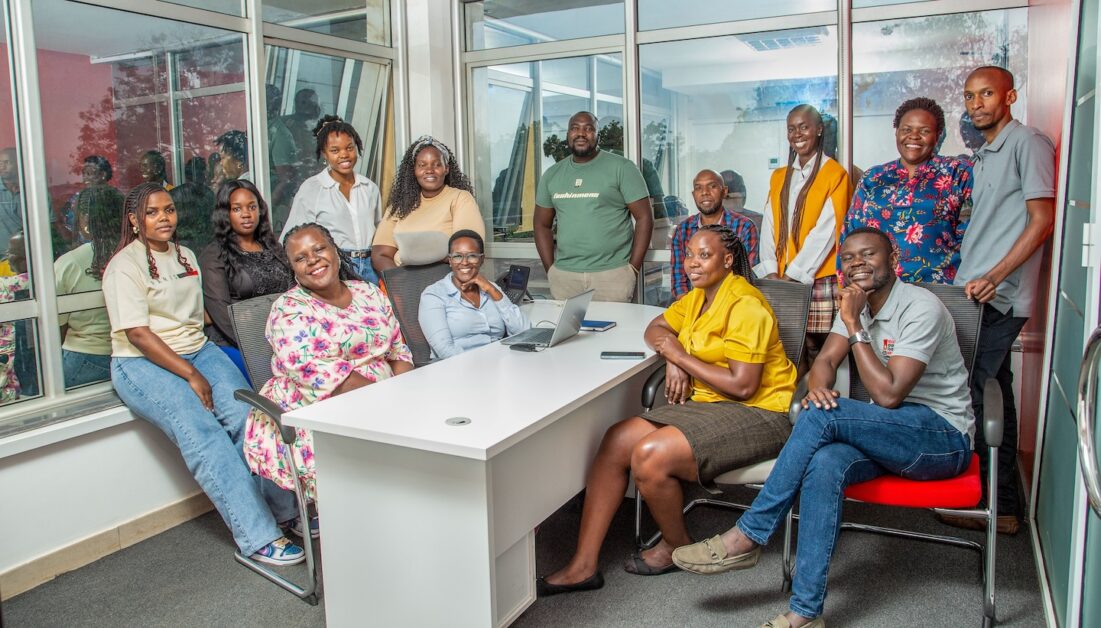
It was here that Edna’s leadership DNA was forged — not in theory, but in the reality of people who think differently, work differently, and bring very different expectations into the workplace.
The third phase is where she moved from doing work to shaping the organisation that does the work.
“Driving business direction: contributing to agency transformation and ensuring our work delivers measurable value. I have played this in my former role as Account Director here at Scanad and now in my new role as Country Lead.”
This is the moment she became something more than a client leader. She became what agencies increasingly need: an architect of systems, culture and commercial direction.
“Each stage has strengthened my voice, my confidence, and my clarity of purpose.”
What makes Edna’s journey especially credible inside a high-pressure agency like Scanad is that she was not carried to the top by hierarchy — she was shaped by it. She credits much of her growth to the people who pushed her before she was ready.
“My bosses across the agencies I have worked with were the biggest influencers because they saw the potential in me when I didn’t. They always pushed me by trusting me with responsibilities that pushed me out of my comfort zone. They taught me resilience, integrity, and the courage to lead.”
That grounding now informs how she approaches power.
Asked about the most important lesson on her path to the topmost role at the agency, she reflects: “You cannot lead if you cannot listen. Listening to clients, to people, to the market gives you clarity and that clarity enables decisive leadership.”
Scanad’s Strategic Reboot: From Kampala to the World — Inside Scanad’s WPP-Powered AI Reset
When Edna Torana speaks about Scanad Uganda, she does not speak about a company trying to find its place. She speaks about an institution that already has one — and now has to defend it in a radically changed market.
“Scanad is part of WPP Scangroup and a full-service creative transformation company, focused on building better futures for our clients,” she explains. “With outstanding creativity, deep insights and advanced technology, we bring together brilliant people to build dynamic, new and lasting relationships between our clients and their audiences.”
Founded in 1993, Scanad has for more than three decades been one of Uganda’s most influential advertising agencies.
“Scanad has been here since 1993 and has serviced and is still servicing some of the biggest brands in the market,” Edna says.
But the agency she now leads is not relying on history. It is being rebuilt for a world where clients demand speed, data, digital integration, content and measurable outcomes.
“Our DNA combines strong brand thinking, deep local insight, and the ability to execute at scale. The culture is collaborative, resilient, and proudly Ugandan yet global.”
That balance — between what made Scanad great and what will keep it relevant — is where Edna sees her mandate.
“By respecting what brought us here — strong strategy, client partnerships, and craft excellence — while injecting speed, digital-first thinking, and innovation into our processes,” she says. “Legacy gives us credibility; modernisation gives us growth.”
And Scanad is not attempting that transformation alone.

As part of WPP Scangroup, the agency is plugged into one of the world’s most powerful marketing ecosystems — one that brings together strategy, creativity, media, data, technology and global intelligence.
“We gain access to world-class tools, global talent pools, data and technology platforms, and specialised knowledge from across the WPP ecosystem. It gives Scanad the ability to compete not just locally, but regionally and globally.”
For Ugandan clients, that changes what an agency can deliver. When a bank, telco or FMCG brand works with Scanad, it is not just buying local execution — it is accessing global benchmarks, global consumer insight, global creative standards and global performance tools, applied through Ugandan cultural understanding.
At the centre of that capability sits WPP Open, the AI-powered marketing platform that Edna sees as the backbone of modern agency work.
“Scanad is ready for the expected speed and digital integration. We have an AI platform called WPP Open for marketing. It connects marketing professionals, data, tools and AI in a single place.”
But in her view, WPP Open is far more than software.
“WPP Open is not just a tool, it’s an engine for marketing services transformation, combining WPP’s decades of marketing expertise with cutting-edge AI to deliver smarter, faster and more effective marketing outcomes at scale.”
And it gives Scanad something most local agencies cannot match.
“Unlike competitors focused on point solutions, WPP Open connects strategy, creative, media and intelligence into one unified system.”
That system is what allows Scanad Uganda to function as part of a regional and global production network. Campaign ideas, data models, creative frameworks and strategic thinking can move across East Africa and beyond, be tested in multiple markets, and refined at scale.
“Shared creative hubs, knowledge transfer, joint pitches, regional talent exchanges, and integrated teams across markets — WPP Scangroup gives us a unique advantage here.”
But Edna is equally clear that global power only works if it is grounded locally.
“By utilising our global tools, resources and frameworks with deep cultural understanding. You take the structure from global networks, but the soul must be local.”
That philosophy places Scanad in a rare strategic position: big enough to access the world — and close enough to understand home.
And it positions Edna Torana not just as the steward of a 30-year-old agency, but as the operator of a new operating system — one that fuses Uganda’s creative heritage with WPP’s data, AI and global intelligence to drive growth for East African brands.
In her view, Scanad’s past gives it authority and new leadership — and WPP’s technology will determine whether it owns the future.
The New Agency Economics: From Pretty Ads to Measurable Impact
For much of its history, advertising has been judged by what it looks like — not what it does. Beautiful campaigns won awards, agencies won prestige, and clients hoped sales would follow. That model is no longer sustainable, and Edna Torana knows it.
In her view, the future of agencies like Scanad Uganda depends on whether they can prove commercial relevance, not just creative flair.
“Agencies must show not just what they did but what changed because of it.”
That single sentence captures a profound shift taking place inside the industry. Clients are no longer paying for outputs — they are paying for outcomes. They want to know what moved: brand equity, foot traffic, digital engagement, customer acquisition, or revenue.
This shift is being driven by hard economic realities.
Uganda’s advertising market is under pressure from shrinking budgets, the rise of in-house marketing teams, and the relentless pace of always-on digital communication. Brands now have more data, more platforms and more internal capability than ever before — which means agencies are constantly being asked a brutal question: What value do you really add?
Edna believes the answer lies in integration and accountability.
“How should agencies respond to more demanding, results-driven clients?”
“By embracing transparency, performance measurement, and integrated thinking.”
For her, it is no longer enough to produce a campaign and walk away. Agencies must be able to track what happened next — and why.
“They must show not just what they did, but what changed because of it.”
This is why she is pushing Scanad to think beyond isolated creative projects and toward business partnerships.
 Airtel Africa CEO Sunil Taldar Targets Uganda for Increased Investment, Citing Strong Growth and Strategic Importance
“What type of partnerships do you want with clients?”
“Strategic partnerships built on clarity, honesty, and shared ambition. The ‘Scanad way’ means being proactive, insight-led, and fiercely committed to delivering measurable business outcomes.”
That language — measurable business outcomes — is not accidental. It signals a break from an era where agencies were judged by awards and visibility, toward one where they are judged by growth, efficiency and return on investment.
It also reflects a broader truth about how marketing now works. Digital platforms have made it possible to see almost everything: who clicked, who watched, who bought, and who dropped off. That transparency means agencies can no longer hide behind creative mystique.
For Edna, that is not a threat — it is an opportunity.
When agencies can prove their impact, they stop being suppliers and start becoming strategic partners. And in a market as competitive as Uganda’s, that shift may determine which agencies survive — and which quietly fade away.
Scanad’s transformation, under her leadership, is therefore not just about keeping up with trends. It is about redefining what it means to be worth paying for in the modern marketing economy.
The Price of Survival: Why Uganda’s Ad Industry Must Change
Edna Torana joins more than a dozen agency leaders that CEO East Africa Magazine has spoken to in recent months about the deep structural issues facing Uganda’s advertising industry — and the growing recognition that what is broken must be fixed for the mutual benefit of the entire ecosystem. Like many of her peers, she is clear-eyed about the challenges eroding value across the market, and unafraid to name the forces that are quietly undermining its long-term sustainability.
At the top of her list is undercutting — agencies racing each other to the bottom in pursuit of short-term wins.
“It weakens the entire industry.”
For Edna, this is not just a commercial issue — it is an existential one.
“Agencies must adopt shared ethical standards and prioritise long-term value over short-term wins. We need to come together as agencies and standardise prices so that we all thrive.”
That call for pricing discipline is rare in a competitive market, but she argues it is essential if agencies are to remain viable businesses rather than struggling production shops.
Her diagnosis goes deeper. She also points to pricing erosion, where clients no longer understand — or are no longer willing to pay for — the true cost of strategic and creative work.
To reclaim value and pricing discipline, Edna believes agencies have to ” educate clients on the true cost of quality, standardising scopes, and refusing to undervalue strategic and creative capabilities.”
But Edna is equally concerned about the future workforce that will have to sustain that industry.
To rebuild and sustain the talent pipeline, agencies, according to Edna, must “strengthen training programs, partner with universities, revive internship structures, and ensure senior leaders remain actively involved in grooming future talent.”
And when it comes to Gen Z, the newest and most disruptive cohort entering agency life, she is clear that old models no longer work.
“Agencies need to rethink how they develop Gen Z talent by offering faster growth pathways, real mentorship, hybrid work flexibility and meaningful projects. This generation wants purpose, autonomy and progress — not red-tape process.”
The New Creative Equation: Humans, Data and Machines
In a global industry gripped by anxiety about automation, Edna Torana is strikingly calm about what artificial intelligence will — and will not — do to advertising.
For her, AI is not a threat to creativity. It is a tool that finally allows creativity to breathe.
“AI and automation will handle the repetitive and optimise the predictable, freeing creatives and strategists to focus on what machines can’t replicate — emotion, cultural nuance and big ideas.”
That distinction is critical. Edna does not believe the future belongs to machines, nor does she believe it belongs to unstructured creativity. She believes it belongs to the marriage of data and imagination.
Modern advertising, as she defines it, is no longer guesswork.
“It means data-informed creativity, integrated storytelling, omnichannel thinking, culturally relevant content, and agile execution.”
In that world, AI becomes the engine that makes speed and precision possible — while humans remain responsible for meaning, empathy and narrative.
This is why Edna resists the false choice between technology and culture.
For East African brands in particular, she believes technology should amplify — not erase — local voice, something she calls culturally grounded storytelling.
And for Uganda in particular, she says, culturally grounded storytelling can be enhanced by ” investing in insight generation, embracing local nuance, empowering creatives to immerse themselves in culture, and celebrating authentic voices.”
Local truth is the foundation of powerful work,” she reckons.
In Edna’s model, AI does not dilute creative truth; it sharpens it — allowing agencies to analyse more data, move faster, test ideas more intelligently, and deploy creative work more efficiently.
This then allows human teams to focus on what really moves people.
In that sense, Edna is not building a future where algorithms replace artists. She is building one where machines do the heavy lifting — and humans do the meaning-making.
Data plus culture. Speed plus soul. Automation plus imagination.
That, in her view, is how modern agencies survive — and how great work is born in the AI age.
Women in Power: Turning “Misconceptions” into Competitive Advantage
In African boardrooms and agency corridors alike, women who rise to the top are often met with the same tired labels: too emotional, too cautious, not strategic enough. Edna Torana has spent long enough inside leadership circles to know that these stereotypes are not only wrong — they are deeply misleading.
“When we discuss the landscape of leadership within agencies,” she says, “it’s not uncommon to encounter lingering, and frankly, quite outdated, perceptions about women in executive roles.”
What some still call weaknesses, Edna sees as modern leadership assets.
“There’s a persistent narrative suggesting that women might be ‘overly emotional,’ ‘too cautious,’ or ‘less strategically inclined’ compared to their male counterparts. However… these supposed ‘misconceptions’ are, in fact, frequently their greatest strengths, brilliantly reframed.”
What is often dismissed as emotion, she argues, is actually emotional intelligence — the ability to read people, understand clients, and build relationships that last.
“What some might misinterpret as an ‘emotional’ approach, we recognise as profound emotional intelligence — a critical ability to truly understand client needs, build deep, empathetic relationships, and foster an incredibly cohesive and motivated team environment.”
Likewise, caution is not hesitation. It is strategic foresight.
“The notion of being ‘too cautious’ is often a mischaracterisation of thoughtful diligence and meticulous planning. It reflects a strategic foresight that ensures robust, sustainable campaigns… built for long-term success rather than fleeting gains.”
And the idea that women are less strategic? Edna dismisses it outright.
“As for being ‘less strategic,’ nothing could be further from the truth. Women leaders consistently demonstrate an exceptional ability to connect disparate ideas, envision the bigger picture, and bring fresh, innovative perspectives that often lead to groundbreaking solutions.”
In Edna’s view, this combination — empathy, diligence and systems thinking — is not just good leadership. It is exactly what modern organisations require in volatile, data-driven markets.
A Humanised Leader in a High-Pressure Industry
Advertising is not a gentle profession. It is built on deadlines, pressure, public scrutiny and constant reinvention. Yet what gives Edna Torana her steadiness inside that storm is not found in boardrooms or briefs — it is found far from them.
When asked what inspires or keeps her grounded outside work, Edna Torana points to “my family, my faith, and the quiet moments in the countryside where I unwind and connect with nature,” adding that these are what stabilise her and remind her of the reason she works in the first place.
“My family, my faith, and the quiet moments in the countryside where I unwind and connect with nature. These stabilise me and remind me of the reason I work in the first place.”
Those words reveal something deeply important about her leadership. She does not see work as the whole of life. She sees it as part of a wider human story — one that includes care, belief, rest and perspective.
In an industry where burnout is common and egos are loud, that grounding matters. It allows her to lead with patience instead of panic, and with purpose instead of noise.
It also explains why her leadership style is not performative. She does not chase dominance. She builds belonging.
“My goal is to cultivate an environment where our talented professionals feel safe enough to be bold to propose daring concepts, challenge the status quo, and experiment with new approaches… and disciplined enough to deliver.”
That balance — between courage and control, between ambition and empathy — flows directly from how she lives.
She is a mother navigating complexity. A woman of faith navigating uncertainty. A leader who understands that even in a hyper-digital industry, human beings still need space to breathe.