Uganda is often praised as the Pearl of Africa—a land of breathtaking landscapes, diverse wildlife, and rich cultural heritage. However, despite our unmatched potential, our tourism sector continues to be underfunded, under-prioritized, and overlooked. The recently proposed 40% budget cut to the tourism sector in the FY 2025/26 National Budget Framework Paper is yet another sign that the government is failing to match its rhetoric with action. While we talk about tourism as one of the pillars of our economic transformation, our financial allocations tell a different story. It is high time the government put its money where its mouth is and treated tourism as the economic powerhouse it truly is.
A Paradox of Priorities
The government’s own development blueprint, the Fourth National Development Plan (NDP IV), has identified tourism as one of the four priority sectors—alongside agro-industrialization, minerals, and science and technology—that will drive Uganda’s transformation into a middle-income economy by 2029/30. The plan is ambitious, aiming to grow sector earnings from USD 1 billion to USD 4 billion and increase per visitor spending from USD 1,550 to USD 2,500 over the next five years.
These are commendable aspirations. But how does the government plan to achieve them when it is slashing tourism funding from UGX 298 billion in FY 2024/25 to UGX 176 billion in FY 2025/26? That is a staggering 40% cut at a time when we need to increase investment in destination marketing, infrastructure, and workforce development.
To put this into perspective, the government wants to quadruple tourism earnings but only increase its investment in the sector by 83.2% over five years. In other words, we expect a 300% increase in returns with minimal input. This is unrealistic and counterproductive.
The Case for More Investment, Not Less
Tourism is not just about leisure; it is a strategic economic driver. According to the World Bank, every USD 1 spent by a foreign tourist generates USD 2.5 in GDP. Additionally, attracting 100,000 more international leisure tourists would boost Uganda’s GDP by 1.6%, and if each tourist stayed just one more night, earnings would rise by 7%.
Tourism is also a major job creator, employing over 610,000 Ugandans, with 60% of jobs held by women and 72% by youth. Yet, we continue to underfund the sector while expecting it to perform miracles.
 Rhinos Return to Ajai After 40 Years, Opening New Tourism Frontier in West Nile
Compare Uganda’s approach to that of our regional competitors. Rwanda, for instance, has spent over £70 million (UGX 330 billion) since 2018 just to sponsor Arsenal Football Club for global tourism branding. That is more than Uganda’s entire annual budget for the Uganda Tourism Board (UTB), the agency responsible for marketing our country. Kenya and Tanzania have also heavily invested in their tourism brands, and the results are clear: in 2023, Tanzania’s international leisure arrivals increased by 49%, while Uganda’s struggled to return to pre-pandemic levels.
The Consequences of Budget Cuts
The planned budget cut will have far-reaching consequences for the tourism sector:
- Reduced Global Competitiveness: Uganda already ranks 112th in the World Economic Forum’s Travel & Tourism Competitiveness Index, behind Kenya (82nd), Tanzania (95th), and Rwanda (107th). Cutting funds will only widen this gap.
- Weak Destination Branding and Marketing: With fewer resources, the UTB will struggle to market Uganda effectively in key source markets like Europe, North America, and Asia, where we are already underperforming. We cannot compete on an international stage with a shoestring budget.
- Stunted Product Development and Infrastructure: The lack of funding will mean poor road networks to national parks, underdeveloped tourism sites, and fewer investments in new products like cultural and adventure tourism.
- Missed Revenue and Job Creation Opportunities: Uganda has the potential to attract high-value tourists who spend more and stay longer. However, without the right investments, we will continue attracting budget-conscious travelers while our competitors rake in the premium clientele.
- Weaker Public-Private Sector Collaboration: The private sector is a key driver of tourism in Uganda, contributing to formal employment and tax revenue. However, with minimal public investment, private sector players struggle to innovate and expand.
A Call to Action: What Needs to be Done
The Uganda Tourism Association (UTA) is calling on the government to reconsider the proposed budget cuts and instead increase investment in the tourism sector. Our recommendations include:
- Increase Tourism Funding to at Least 1% of the National Budget by 2030: The current allocation is only 0.4%, far below what is needed to achieve NDP IV targets.
- Operationalize the Tourism Development Levy: This would create a sustainable funding mechanism for marketing, infrastructure, and workforce development, reducing reliance on annual budget allocations.
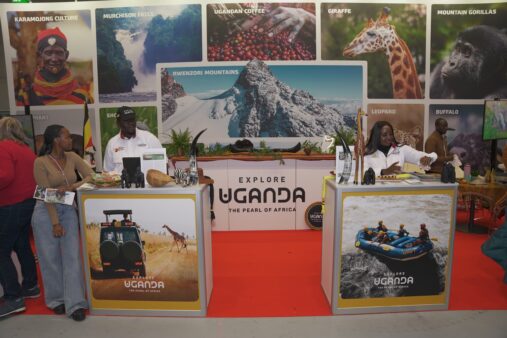
- Expand Destination Marketing Efforts: Uganda must compete aggressively in the global tourism marketplace. This requires a significant increase in UTB’s budget to enhance branding, digital marketing, and presence at major tourism expos.
- Improve Tourism Infrastructure: Investments in roads, air connectivity, and digital services are essential for enhancing the visitor experience and attracting more tourists.
- Strengthen Public-Private Partnerships: The government should work closely with private sector players to co-fund marketing campaigns, develop tourism products, and expand training programs.
Conclusion
If Uganda is serious about making tourism a pillar of economic transformation, then it must back its words with action. Slashing tourism funding while expecting record-breaking growth is an exercise in futility. The government must put money where its mouth is—invest in tourism, support the private sector, and build Uganda’s global brand. Only then can we truly unlock the immense potential of our Pearl of Africa.