In October 2025, eleven officials from the Uganda Wildlife Authority (UWA) were charged before the Anti-Corruption Court in Kampala for allegedly defrauding the government of more than Shs 9.3 billion in revenue from gorilla and chimpanzee tracking permits.
The group appeared on October 23rd, 2025, before Chief Magistrate Racheal Nakyazze and denied the charges, after which they were remanded to Luzira Prison. Prosecutors allege that between July 2020 and September 2023, the accused irregularly issued and validated hundreds of fraudulent permits, causing substantial financial loss to the authority.
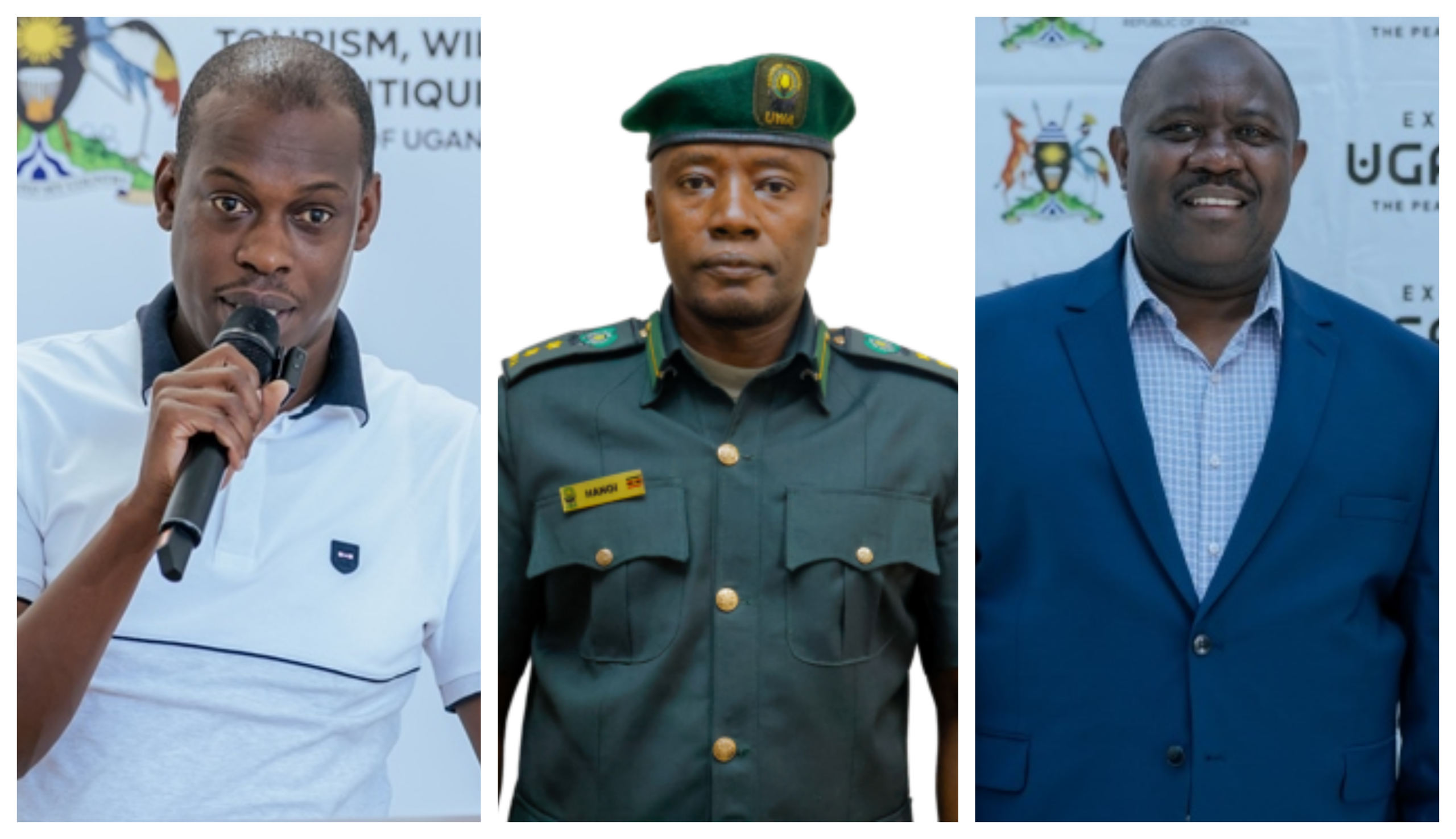
Those charged were senior officials, including Stephen Sanyi Masaba, Director of Tourism and Business Development, Jimmy Mugisa, Director of Finance and Administration, Robert Maani, Senior Warden, Alfred Emmanuel Ndikusooka, ICT Manager, and Leslie Muhindo, former Head of Reservations.
Also charged were sales executives Gad Ekochu, Susan Ayupa, Josephine Kayonza, Rose Namutebi, and Grace Mubeezi. However, four suspects, including Gilbert Mwesigwa, Brian Ankunda, Micheal Goobi, and Bosco Mwondha, did not appear in court, prompting the issuance of criminal summons for their attendance at the next hearing.
The accused faced 24 counts, including corruption, causing financial loss under the Anti-Corruption Act, and conspiracy to defraud under the Penal Code Act. Prosecutors contend that the officials manipulated UWA’s “Go Chimp” electronic booking system to generate invalid permits, which were allegedly used by tourists to access national parks such as Bwindi and Mgahinga without proper authorization, depriving the government of significant revenue.
However, to date, the UGX9.3 billion gorilla permits scandal continues to reignite scrutiny over Uganda Wildlife Authority finances, forcing renewed public debate about accountability, conservation funding, and who truly benefits from gorilla tourism revenues.
When news of irregularities linked to gorilla permit revenues surfaced, it touched a national nerve. Gorilla trekking is not just another tourism product, it is Uganda’s conservation crown jewel and flagship selling tourism product across the world. The endangered mountain gorilla is both a fragile ecological treasure and a powerful economic engine. So, when questions arise over how permit money is minted and managed, they quickly evolve into broader questions about trust, transparency, and stewardship.
Yet beyond the scandal lies a deeper and more important issue: where does a gorilla permit shilling actually go?
The Value of a Gorilla Permit
Uganda currently charges USD 800 for a gorilla permit for foreign non-residents, USD 700 for foreign residents, USD 500 for the rest of Africa, and UGX300,000 for East African citizens, significantly lower than Rwanda’s USD 1,500. The Democratic Republic of Congo (DRC) charges less than Uganda, but persistent security concerns affect its tourism competitiveness.
The pricing difference reflects positioning rather than quality. Rwanda markets itself as a luxury, high-end destination with shorter treks and premium lodges. Uganda offers what many conservationists describe as a more immersive wilderness experience with longer forest hikes in Bwindi Impenetrable National Park and Mgahinga Gorilla National Park, richer biodiversity encounters, and strong cultural tourism integration, including Batwa heritage experiences.
According to Bashir Hangi, Assistant Commissioner & UWA Spokesperson, ‘’a gorilla permit is not just a ticket for an adventure. It is a direct investment in protecting mountain gorillas and supporting the communities that live near the parks.
‘’Keeping gorillas safe is costly. We must fund ranger patrols, veterinary care, habitat conservation, research, and community benefits. The permit price reflects the real cost of ensuring that gorillas survive and that people benefit from living alongside them. The economics behind that investment are substantial’’, he adds.
Where the Money Goes
Each gorilla permit supports three broad pillars, including conservation operations, community development, tourism management, and national development.
A large share of finances goes to ranger patrols, anti-poaching intelligence, veterinary interventions, ecological monitoring, and habitat protection. Protecting gorillas is costly as rangers patrol dense forests daily, veterinary teams respond to disease outbreaks, and conservation research is continuous.
Uganda is home to more than half of the world’s remaining mountain gorillas, with specific estimates placing the current figure at approximately 53.9% (51%), and so, sustaining and growing that population requires sustained funding.
Equally significant is the community component. Under Uganda’s Revenue Sharing Regulations, communities receive 20 percent of park entry fees. Additionally, every gorilla permit includes a USD 10 levy that goes directly to communities around Bwindi and Mgahinga. Of that levy, 95 percent funds are used for projects at the community level, while 5 percent supports district supervision and monitoring.
In June 2025 alone, UWA disbursed UGX 2.197 billion to frontline districts around Bwindi and Mgahinga for approved projects. Earlier, in June 2022, UGX 3.388 billion had been released.
Bashir Hangi further emphasizes that the impact of revenue-sharing projects is both visible and measurable. He points to tangible developments, including the construction of classroom blocks in Kanungu and Rubanda, maternity wards in Kisoro, installation of water tanks in Ruhija, distribution of tea seedlings as buffer crops, construction of bridges and access roads, livestock distribution initiatives, and the establishment of eco-lodges.
In Kanungu District, revenue-sharing funds facilitated the construction of classroom blocks at Rubona Primary School and the rehabilitation of several community access roads, improving both education infrastructure and connectivity. In Kisoro District, the funds supported the construction of a maternity ward at Nyamasinda Health Centre and financed goat and sheep distribution schemes aimed at strengthening household incomes. Meanwhile, in Rubanda District, communities benefited from the installation of water tanks and the completion of multi-classroom school blocks.
For many villages bordering the national parks, gorilla tourism is far from an abstract concept. Its benefits are concrete and immediate, as reflected in a graded road, a newly installed water tank, or a heifer delivered to a household.
Human Stories Behind the Numbers
For rangers in Bwindi, permit money pays salaries and funds boots, radios, and patrol equipment. For former Batwa forest dwellers, tourism has created dignified livelihoods through cultural trails. For mothers in Kisoro, a revenue-funded maternity ward means safer childbirth.
Hangi describes sitting meters away from a silverback in 2023; he calls it “a privilege and an eye-opening conservation journey.” For many Ugandans who trek for the first time, the experience transforms national pride into personal ownership of conservation.
The Bigger Picture
Uganda’s tourism sector remains a strategic pillar within the country’s national development framework, recognized for its potential to drive sustainable economic growth. At the same time, the 2025 Auditor General’s report underscores the fiscal pressures confronting government, including rising public debt and persistent challenges in domestic revenue mobilization.
Within this context, tourism revenue assumes even greater importance. Unlike extractive industries, tourism is a renewable and non-extractive source of income, capable of generating long-term value when properly managed. Every shilling earned from a gorilla permit is not an abstract figure in a ledger; it directly supports conservation operations, sustains community livelihoods, and finances national tourism management systems.
However, recent concerns over missing gorilla permit revenues amounting to Shs9.3 billion serve as a powerful reminder that conservation finance ultimately depends on trust.
If each gorilla permit represents a promise to the gorilla, to surrounding communities, and to the nation, then protecting that promise requires more than effective conservation alone. It demands uncompromising accountability and financial integrity.
Uganda’s mountain gorillas have endured poaching, habitat loss, and regional instability. Securing their future now depends not only on ecological protection, but equally on strong governance systems and sustained public confidence.