The first three parts of MadMen, Dreamers and Deal-Makers were about how the machine was built, broken, and survived. This part is about who is going to drive it next.
Not the men who stumbled into advertising from pharmacies, cricket grounds, and cyber cafés. Not the founders who mortgaged their futures on six-month UMA leases and second-hand laptops. They are still here, still at the wheel, but there is a new crowd climbing aboard.
They were born after the first MTN billboard went up. They grew up with Facebook, not 30-second TV spots. They have never known a world where you wait for a radio DJ to play your favourite song.
They design on phones. They shoot on phones. They build audiences before they build CVs.
They are the Gen Zs and young millennials walking into Uganda’s agencies with ring lights, side hustles, therapy language, and a very different expectation of what work should feel like.
This is the story of that collision, and the fragile, exciting possibility it holds for the future of Uganda’s advertising industry.
The new kids on the agency floor
If you stand in the open-plan of a Kampala agency at 5 pm today, you will still recognise some things from the 1990s: pizza boxes, last-minute briefs, a designer zoomed into 6400% on a key visual. But look more closely at the faces.
The people on those iMacs and laptops are often half the age of the brands they work for. Many were in primary school when Pakalast was running on the radio. Some discovered Alemu Emuron not as a colleague but as a YouTube panellist. They call your heroes “Uncle” on LinkedIn.
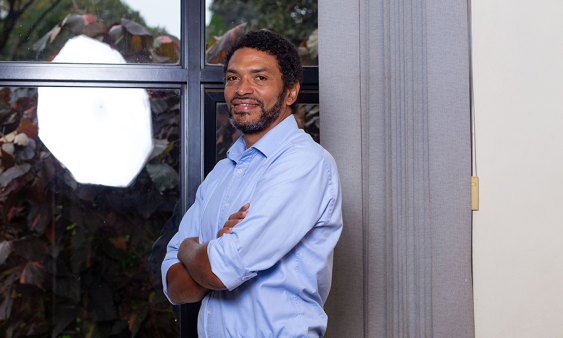
To people like Joshua Kamugabirwe, Regional Manager at TROI Media, this generation is both a puzzle and a power source.
“Gen Z has surprised us; they can be unpredictable,” he says. “They have a description for almost every life challenge; if leadership complains twice, they are labelled ‘toxic’. If a client rejects work, they become ‘difficult’.”
Then he flips the coin. “Gen Z also brings unmatched energy, bold creativity and digital fluency. Managing them may be challenging, but harnessing their strengths is what keeps agencies like ours fresh and future-ready.”
That’s the central tension of the future: the traits that frustrate older leaders, sensitivity to language, refusal to tolerate abuse, and insistence on purpose, are the same traits that will keep the industry relevant in a world where audiences sniff out inauthenticity in seconds.
The question isn’t whether Gen Z fits the industry. It’s whether the industry will evolve fast enough to let Gen Z help it survive.
Raised on fire, managing ones who refuse to burn
To understand the clash, remember how today’s leaders were raised professionally.
Daniel Ligyalingi, who came into MCL in 1998 and later co-founded Maad, still remembers the pressure cooker. “Long hours were the norm,” he says. “There were days I worked 24-hour shifts… then returned to deliver presentations.”
His boss, Mike Daugherty, shouted over spelling mistakes. Every slide was inspected. Errors were public. Stress was oxygen.
At QG Saatchi & Saatchi, David Galukande recalls the same intensity camouflaged as glamour: tight deadlines, major accounts, long nights, pressure turned into fuel.
To be “good” in that world was to endure. To complain was to admit you didn’t belong. So when that generation rose into leadership, they carried the only model they had seen.
“At the start, my management style was quite aggressive,” Ligyalingi admits. “It worked with my generation… but millennials and Gen Zs often found it uncomfortable.”
In other words, the old machine was calibrated for people who accepted pain as part of the deal. The new workforce is unwilling to sign that contract.
They talk openly about burnout and boundaries. They name “toxic” workspaces. They post about mental health. They will tell you in a one-on-one that a client’s tone is unacceptable. They are more likely to quit than quietly absorb abuse for the sake of a portfolio.
For leaders forged in “keep quiet and grind,” this feels like insubordination. But underneath the irritation is a simple truth: the way they were raised nearly killed them.
What Gen Z is doing instinctively, refusing to be sacrificed, is what the bodies of their bosses have already proven necessary. The machine can’t run that hot forever.
The digital natives rewrite the brief
When older leaders talk about what excites them about the new workforce, the answer often starts with technology and quickly becomes something deeper.
At Blue Flamingo, Seanice Kacungira built a business on the realisation that digital was not just a cheaper media channel; it was a different language altogether.
Today, her teams are full of people who grew up speaking that language as a mother tongue.
Right now, she says, Blue Flamingo is driven by “data, creative, and now tech… stories are just pieces of data put together in a poetic way that has emotion behind it.”
To do that work well, you need people comfortable with dashboards and dopamine, who can read sentiment in comments, spot patterns in analytics, and translate both into ideas.
For them, the “campaign” isn’t a 60-second TV ad. It’s a living organism: stories, reels, threads, challenges, live streams, memes. It breathes. It mutates.
Rommel Jasi, Managing Director of Saladin Media and Chair of the Uganda Advertising Association, notes that the old model, spend weeks and big budgets crafting one “glorified” TV ad and expect it to do everything, is dead.
Today, you’re expected to produce multiple iterations across multiple formats, in real time.
That is precisely the kind of work Gen Z is wired for. They test content on their own pages, iterate in comments, and remake a video three times to get the rhythm right. They understand algorithm logic intuitively. They may not write long brand architectures, but they know what the internet will ignore.
The opportunity is obvious: if agencies give them room, this generation can pull Ugandan brands into cultural conversations they are currently missing.
The risk is just as obvious: if you treat them as execution labour, “the kids who do the social stuff”, instead of strategic partners, they will do what they do best with anything that bores them: swipe away.
Talent, training, and the broken pipeline
Uganda has never had a proper advertising school.
The first real “faculty” was MCL, where Mike Daugherty unknowingly built an academy that trained the entire industry. As Ligyalingi puts it: “MCL was not just an agency, but also a training ground and incubator.”
Decades later, Maad played a similar role, hiring fresh graduates and teaching media, creative, and client service from the inside out. At one point, Maad was less an agency and more a talent farm for the market.
That informal pipeline is now under strain.
On one side, the business model is thinner. Retainers have shrunk. Payment cycles are longer. Under that pressure, training is often the first thing to be cut. You need all hands billable. You need today’s deadlines met, not tomorrow’s leaders incubated.
On the other side, the young workforce has more options. A talented designer can freelance for Nairobi and London from a bedroom in Kyanja.
A copywriter can build a personal brand on TikTok and never write a bank ad. A motion artist can spend their best hours on passion projects, not corporate explainers.
The result is a fragile pipeline: agencies desperately need young talent to survive, but have less money and time to develop it, while young people have less incentive to endure the slow, painful apprenticeship older generations accepted.
Some leaders are trying to patch the gap.
At Maad, training was formalised into initiatives like Iron Sharpens Iron, where young creatives bring work to be critiqued. At TROI, Kamugabirwe sells exposure: serious brands, across markets, with people who understand media at depth.
At The Quollective, Alemu’s “culture safaris” and deep research introduce young creatives to the craft behind the magic, showing them that creativity is not just vibes; it’s a method.
What is emerging, slowly, is a hybrid university: agencies as schools, older leaders as reluctant professors, young staff as students willing to learn—but only if the learning doesn’t come wrapped in humiliation and poverty.
The future will be decided by which agencies take that teaching role seriously, and which ones treat young people as expendable.
 Stanbic’s Five-Year Scorecard: How Profit Growth, Deposits, Lending and Dividends Reshaped Performance
Work, meaning, and the new deal
If there is one area where the generational gap is clearest, it is the question: what is work for?
For the accidentals who built this industry, work was survival plus self-discovery. They wanted to escape boredom and find something that could stretch them.
If it also paid, great. For many, meaning came later, when they heard people repeating their lines. For the new generation, meaning is not a bonus. It’s a starting condition.
They want to know why they are doing what they’re doing, and for whom. They care about the values of the brands they work on. They want their own names, not just the agency’s. They expect feedback that is firm but respectful. They want their weekends.
To veterans raised on 24-hour shifts, it can sound like entitlement. But listen closely, and you will hear something familiar: a desire not to waste their lives.
When Alemu talks about ambition, he is speaking to them. “The global stage is open to you,” he says. “What you must do is have a dream … Have the impossible dream … The problem is, people dream too small.”
Then comes the line that should be printed on every agency wall: “You don’t rise to the level of your ambition; you fall to the level of your systems.”
For Gen Z creatives, this cuts both ways. It’s a challenge: big dreams aren’t enough if your habits are sloppy and your craft inconsistent.
But it’s also an indictment of the institutions around them: if agencies continue to run on broken payment systems, abusive cultures, and random training, dreams will keep smashing into the ceiling.
The new deal is simple and difficult at the same time: young talent must bring discipline to match their ambition, and agencies must build systems worthy of the talent they are asking for.
Without both, the future will be full of sad LinkedIn posts and empty offices.
Standards, ethics, and the world watching
The industry’s reputation is no longer a local rumour. It’s on display.
Bad billboards are photographed and mocked. Tone-deaf campaigns are dragged. Exploitative work cultures are whispered about in closed WhatsApp groups and surfaced, sometimes, in public threads.
Rommel has spent years fighting the slow erosion of standards, not just in aesthetics, but in behaviour.
“All of this stems from unsustainable practices,” he says. “Over the last 18 years, it’s mostly been a steady decline.”
Part of that decline has been driven by older players: fee-cutting, kickbacks, backdoor deals, agreeing to “free” work to keep a client, then making up the difference in shady places.
But part of it now sits with the new wave too: loosely formed collectives, freelancers, “we do everything” outfits with Instagram pages, no contracts, and no guardrails.
“You come across some really strange billboards,” Rommel says, “and wonder, was this done by an agency or directly by a client? It just doesn’t meet the quality standards we used to hold ourselves to.”
The future workforce will inherit not just the work, but the responsibility to clean up this mess. That is why things like the Silverback Awards matter more than trophies: they are attempts to reintroduce a shared idea of excellence; to show young creatives what “good” looks like in a world saturated with content.
The quiet hope is that Gen Z, with its intolerance for nonsense and its public microphone, will do for ethics what social media has done for customer service: make it harder to hide.
If they can combine their instinct for calling things out with the older generation’s hard-earned understanding of how the business actually works, Uganda could end up with something rare: an industry where standards rise because everyone is tired of the embarrassment.
Africa’s young, creative advantage
Step back from the daily drama, the budgets, the memes, the late invoices, and something bigger comes into view.
Uganda is a young country in a young continent. Its biggest export may never be copper or coffee. It might be stories.
The world has already begun to notice: African music moves global charts; African fashion walks global runways; African memes travel faster than corporate brands can keep up.
In that context, advertising is not just a service industry. It is a training ground for the people who will shape how Africa tells its own story.
People like Alemu and Amani have seen what happens when African creatives believe that the global stage is not a visitor’s pass, but a permanent address.
“If you want to win a Cannes Lion, dream of winning 100,” Alemu says. “Because the same amount of energy and time it takes to dream small is the same it takes to dream big.”
For Gen Z, this isn’t a metaphor. They are already in Discord servers with Brazilians, in group chats with Kenyans, in Figma files with Ghanaians. Their peer group is continental, not just Kampala Road.
The challenge for agencies is to turn that raw, borderless creativity into something sustainable: environments where a 22-year-old can work on a pan-African brief without being destroyed by it; pathways where a junior art director can grow into a regional CCO without leaving the country; companies where young strategists can experiment with AI, data, and culture without feeling like they are smuggling their real interests into a “serious” job.
If they can do that, the “future workforce” stops being a soft HR phrase and becomes what it actually is: Uganda’s competitive advantage.
Designing a machine that deserves its drivers
At the start of this series, we said Uganda’s advertising industry was like a battered Coaster assembled from borrowed parts, still somehow making its way down Jinja Road.
The accidentals, the founders, the madmen and madwomen who turned chance into institutions have kept that Coaster running through recessions, new networks, lost accounts, pandemics, and everything in between.
Now, a new set of drivers is boarding. They carry phones instead of storyboards, therapy words instead of “toughen up,” and global references instead of local monopolies.
They are impatient. Idealistic. Sometimes naïve. Often right.
The future of this industry will not be decided by whether Gen Z “toughens up” enough to resemble their bosses.
It will be decided by whether agencies and the leaders who built them dare to do three hard things at once.
They must let go of the worst parts of their past: brutality disguised as “feedback,” late payments normalised as “the way things are,” shortcuts framed as “hustle,” and race-to-the-bottom pricing that makes good work impossible.
They must protect the best parts of their heritage: the obsession with craft, the belief that African stories deserve world-class execution, and the camaraderie that made all-nighters feel, at least sometimes, like shared adventure.
And they must build systems where young talent can do the best work of their lives without breaking: payment systems that don’t make founders pay tax on money they haven’t seen; HR systems that take mental health seriously; learning systems that treat agencies as schools, not sweatshops; leadership systems that demand excellence without humiliation.
Because Alemu is right: you don’t rise to the level of your ambition; you fall to the level of your systems.
If Uganda’s advertising industry continues to run on improvisation, heroics, and “we’ll figure it out,” it will keep burning out its brightest and pushing its youngest to look elsewhere.
If, instead, it decides, deliberately, to build a machine worthy of the people about to inherit it, something extraordinary could happen: Gen Z’s energy could fuse with Gen X’s experience, digital fluency could sit on top of financial discipline, and impossible dreams could be backed by boring, reliable structures.
And this improbable, patched-together Coaster that started with one American covering a boxing match and a handful of kids who didn’t know what “copywriting” meant might not just keep moving.
It might actually arrive somewhere none of them, accidentals or Gen Zs, dared to write in their first career plans.
A future where Uganda doesn’t just consume global creativity, but exports it, designed, written, shot, and strategised by a workforce that refused to believe that “this is how it has always been” is a good enough reason for it to stay that way.