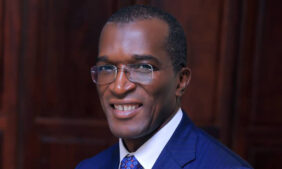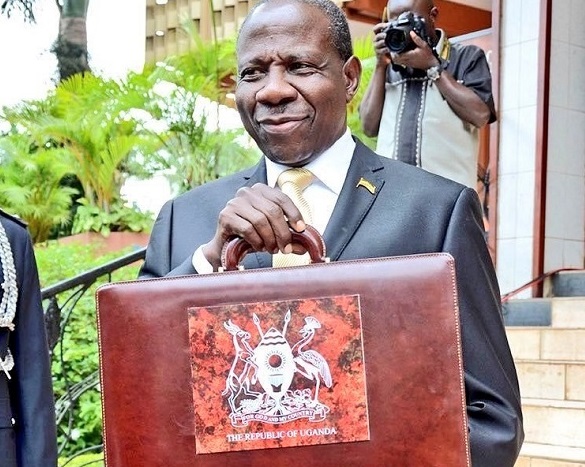
Finance Minister, Matia Kasaija has revealed that in September this year, Uganda will launch, into the lower Earth Orbit, its first-ever satellite.
“The data from this satellite will be used for meteorology, environmental monitoring and disaster management, among others.”
The minister was on Tuesday afternoon reading Uganda’s UGX48.1 trillion national budget for the Financial Year 2022/2023.
Kasaija said that the size of Uganda’s economy is projected to expand to UGX 162.1 trillion.
Addressing the House at Kololo ceremonial grounds, Kasaija revealed that the economic activity has been more buoyant at a growth rate of 4.6% per annum up from 3.5% last year.
“Due to the resilience of the economy induced by our deliberate and prudent economic policies, Uganda’s GDP per capita has increased to USD 1,046 which is equivalent to UGX 3.7 Million per person, per year.”
He said that the revenue collection target in the current financial year, which ends on June 30 was UGX 22.4 trillion against what was actually collected UGX 21.48 trillion, leaving a shortfall of UGX 939 billion.
The minister, however, revealed that the domestic revenue has improved compared to the previous FY.
“During the 10 months from July 2021 to April 2022, there was a 38% increase in taxpayers with 686,000 new taxpayers being added to the register.”
He also noted that the salaries of medical workers, scientists, and science teachers have been enhanced, saying that it will help to improve the functionality of education and health facilities by addressing absenteeism and low morale of personnel.
“To the Ugandan scientists and health workers, the government has fulfilled its commitment to enhancing your pay. Ugandans expect better services in return.”
According to budget documents, the Government anticipates to generate UGX25.7 trillion from revenue collections and the remaining UGX22.4 trillion will come from internal and external borrowing.
The government also anticipates country’s economic growth rate to rise from the current 3.8% to 6% next financial year.
Education, health eat big
The Human Capital Development Programme, which comprises education and health sectors has had its budget increased from UGX7.5 trillion, allocated in the current financial year, to UGX8.7 trillion in the budget for the next financial year.
This is mainly because of UGX495b provided for increasing salaries for medical workers and other scientists, including science teachers.
Other programmes that have received big portions of the national budget include governance and security (UGX7 trillion), integrated transport infrastructure (UGX4.1 trillion), energy development (UGX2.5 trillion) and agro-industrialisation (UGX1.2 trillion).
Debt payment
The biggest portion (UGX17 trillion), which is 35.3% of the total national budget, is earmarked for interest and debt payment.
In their statements on the national budget for the next financial year, opposition leaders in Parliament are concerned that increasingly, the biggest portion of the national budget is going to interest and debt payment, which leaves limited resources for service delivery.
According to the finance ministry, interest and debt payment budget increased from UGX8.5 trillion in the 2017/2018 financial year to sh15.1 trillion in the 2021/2022 financial year.
The 2022/2023 budget will mark the third financial year of implementing the National Development Plan Three (NDP III). It is anticipated that at the end of it, 60% of the targets in NDP III will have been realised.
One of the key NDP III targets is to increase the per capita income (average amount of money earned by every Ugandan) from the current $879 (UGX3.2m) to $1300 (UGX4.8m) by 2025.
SACCOs
The Government has earmarked a total of sh1,711b as wealth creation funds through various programmes. Here, the Parish Development Model (PDM), has been allocated sh1.059 trillion.
Through PDM, the Government will be investing in organised groups such as SACCOS and co-operatives, which are involved in agricultural production at parish level.
A total of UGX72.7b has been allocated to the Microfinance Support Centre (MSC) to give low-cost credit to SACCOS. In its reallocations in the budget, Parliament gave an extra UGX35b to MSC to give out grants/donations to beginning and struggling SACCOS.
The Government has also allocated an additional sh100b towards Emyooga programme to continue giving out funds to SACCOS, especially in urban areas or groups of people involved in similar economic activities.
Other economic empowerment funds in the budget include UGX30b to Uganda Coffee Development Authority for distribution of free coffee seedlings and sh30b for cattle restocking in Lango, Acholi and Teso sub-regions.
Another UGX20b is for co-operatives, sh120b for the elderly persons, sh50b for Agriculture Credit Facility, UGX48.7b to Uganda Development Corporation for establishment of factories, UGX34b for Women Entrepreneurship Programme and UGX85b for Uganda Development Bank (UDB).
As part of interventions for resuscitating Uganda’s economy from the effects of COVID-19, the Government in 2020 allocated over UGX530b to UDB to give low-cost credit to private businesses.
According to UDB executive director Patricia Ojangole, UDB’s capital base has now reached UGX1.1 trillion.
Expert opinion
Stephen Kaboyo is Managing Director Alpha Capital Partners- an indigenous Ugandan firm focusing on sovereign asset management, providing forex solutions to institutions, investors and markets, and says this is the first post lockdown budget, which comes against a backdrop of economic contraction dictated by mainly by exogenous factors.
He says: “In the prevailing circumstances, we must recognize the limited fiscal space we have in the country. This means there is very limited headroom to act decisively at the pace and scale required to move the economy forward. In light of that we must that a relook on the government consumptive expenditure and compare it with capital investment expenditure. The ratio of 70:30 is not the most appropriate at this time of economic hardship.”
Adding: “The key test we face is how do we adopt to shocks and this calls for economic policies centred around improving resilience and capability to sustain economic growth.”