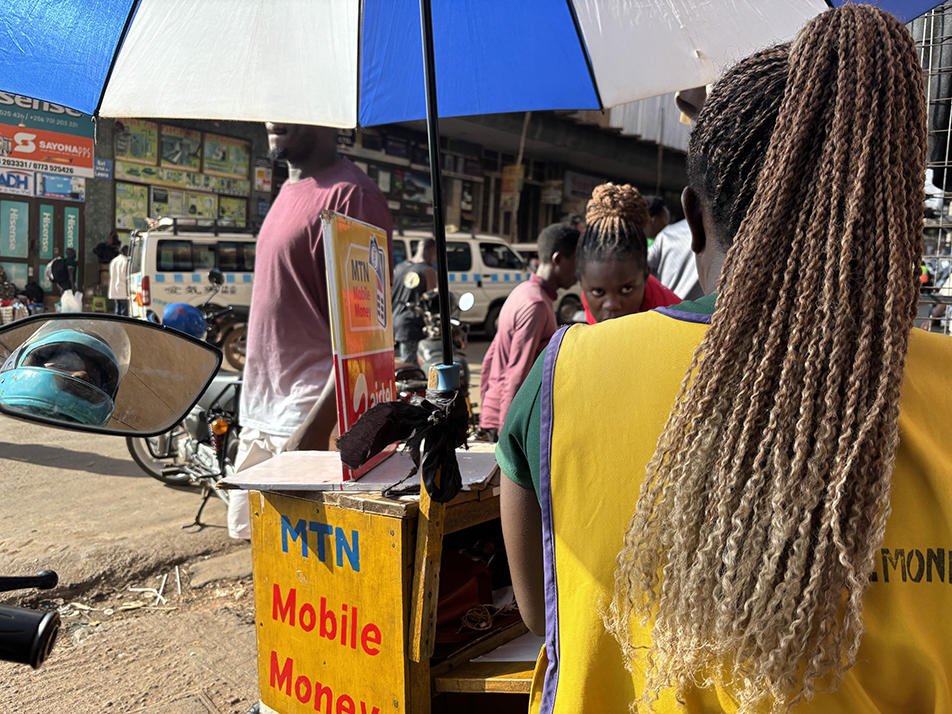
On the surface, withdrawing money from a mobile wallet appears to be a straightforward transaction. You request cash from an agent, pay a fee, and walk away.
But behind that single charge lies a complex distribution of costs that is increasingly drawing scrutiny, particularly the portion that goes to the government in the form of taxes.
What seems like a simple service fee is, in reality, layered with multiple charges that reflect the structure of Uganda’s digital financial ecosystem.
Understanding how that fee is broken down not only clarifies where the money goes, but also raises deeper questions about the cost of accessing digital finance in a country where mobile money has become essential to everyday life.
The hidden tax in every withdrawal
Consider a typical withdrawal of UGX 150,000 on MTN Mobile Money. The total charge for this transaction is UGX 4,325.
For many users, the instinct is to attribute most of this cost to telecom operators, assuming that mobile network providers are the primary beneficiaries.
Yet a closer look reveals a different reality. Roughly UGX 1,216 of that fee, about 28%, goes directly to government.
This amount is made up of UGX 750 collected as a 0.5% levy on the withdrawal amount itself, as well as UGX 466 charged as excise duty, which is calculated at 15% of the service fee.
This means that before any of the ecosystem players are paid, a significant portion of the transaction cost has already been absorbed by taxation.
The remainder is then distributed among the participants who make the transaction possible.
Mobile money agents take the largest share, earning about UGX 1,600 from the transaction. This reflects the central role they play in Uganda’s financial system.
With a nationwide network exceeding 200,000 agents, they form the human infrastructure behind mobile money, facilitating deposits and withdrawals in both urban centers and remote areas where traditional banking services are limited or nonexistent.
Crucially, these agents operate using their own capital. They must ensure that they always have enough cash on hand to meet customer demand, effectively managing liquidity risks on a daily basis.
Their commissions are therefore not just a payment for service, but compensation for financial exposure and operational effort.
MTN, the dominant mobile money operator, receives about UGX 1,509 from the same transaction, roughly 35% of the post-tax remainder.
However, this share does not translate directly into profit. It is spread across the costs of maintaining network infrastructure, running secure transaction platforms, complying with regulatory requirements, and managing administrative operations.
When viewed in this context, the cost of a withdrawal reflects not just a service fee, but a combination of taxes, operational costs, and commissions across an entire ecosystem.
This breakdown shifts the conversation away from a simple narrative of high telecom charges and toward a broader question: why are customers paying multiple layers of tax to access their own money?
Taxing access to already-taxed income
For many Ugandans, mobile money is not merely a convenience. It is the primary means of storing, receiving, and transferring income.
A worker who earns UGX 500,000 through mobile money, for instance, is likely dealing with income that has already been taxed at source.
Yet accessing those funds triggers an additional 0.5% levy on the withdrawal amount. On top of that, the service fee incurred during the withdrawal is itself subject to excise duty.
The result is a system in which money is effectively taxed when it is earned and then taxed again when it is accessed.
This layering of taxes is increasingly viewed as counterproductive, particularly in a country that has embraced mobile money as a cornerstone of financial inclusion.
For millions of users without access to traditional banking, mobile money is not optional, it is the financial system.
Higher withdrawal costs can discourage usage, especially among low-income users and small-scale traders who depend on frequent, small transactions to manage their daily cash flow.
Even small increases in cost can have a cumulative effect, making digital transactions less attractive and pushing some users back toward cash-based alternatives.
At the same time, there is little appetite to eliminate service fees themselves. These charges sustain a vast network of agents and fund the infrastructure that keeps mobile money systems running reliably.
The more focused debate is around the 0.5% withdrawal tax, which critics argue directly penalizes access rather than value creation.
Instead of taxing economic activity, it taxes the act of accessing money that already belongs to the user.
The bigger policy debate
MTN’s recent submission to the Ministry of Finance ahead of the 2026/27 budget goes beyond a routine tax proposal. It presents a broader economic argument that Uganda’s fiscal approach to the digital economy may be misaligned with its own development ambitions.
At the centre of this argument is a comparison between Uganda’s tax regime and those of other African markets.
Uganda imposes a 0.5% excise duty on the full value of mobile money cash withdrawals, in addition to a 15% tax on service fees.
No comparable market in the region taxes the transaction value itself. Kenya, Nigeria, and South Africa do not impose such a charge, while Tanzania applies only a modest flat fee.
This places Uganda in a unique position, where users are taxed not just on the service provided, but on the value of the money being accessed.
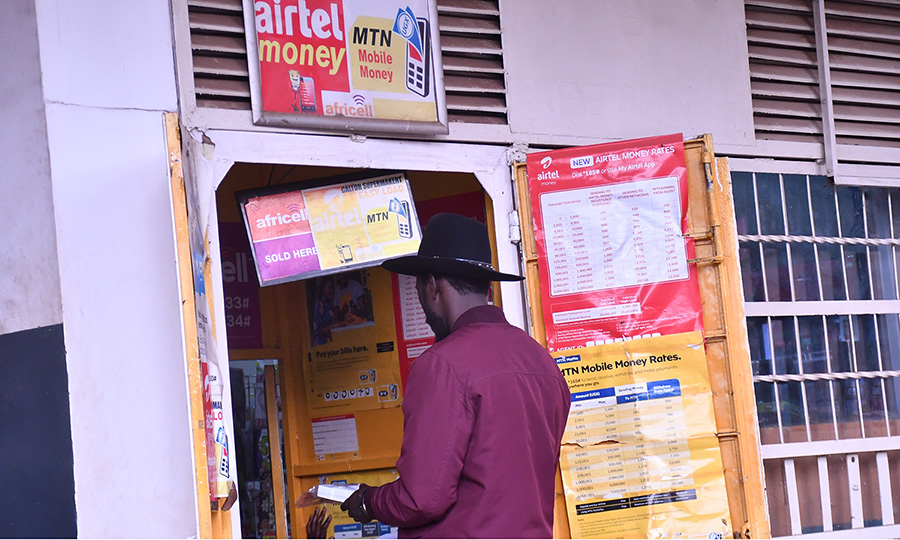
Impact of past tax changes
MTN’s argument is supported by historical data that illustrates how sensitive the digital ecosystem is to policy changes.
Between 2015/16 and 2017/18, mobile money cash withdrawal values grew steadily from UGX 9.86 trillion to UGX 12.99 trillion.
This upward trajectory was interrupted in 2018 when government introduced an excise duty of 1% on transaction values, later reduced to 0.5% after public backlash.
The immediate effect was a contraction in transaction volumes. Withdrawals fell to UGX 12.04 trillion in 2018/19, a drop of nearly UGX 950 billion.
Although the sector recovered in subsequent years, reaching UGX 29 trillion in 2024/25, this rebound has been attributed partly to external factors such as Covid-19, which accelerated the shift toward digital payments.
MTN’s underlying contention is that the tax continues to act as a drag on growth, suppressing what could have been a faster and broader expansion of digital transactions.
At the same time, government revenue from the tax has increased significantly. Excise duty collections from mobile money withdrawals rose from UGX 37.5 billion in 2018/19 to UGX 145 billion in 2024/25.
This creates a clear policy tension. While the tax generates immediate revenue, it may also be limiting the long-term growth of the digital economy from which future revenues could be drawn.
The long-term trade-off
At its core, the debate is about balancing short-term fiscal gains with long-term economic expansion. MTN frames the issue as a strategic choice.
The current system delivers predictable tax revenue, but potentially at the cost of slower ecosystem growth.
Between 2015 and 2024, MTN itself paid a total of UGX 6.177 trillion in taxes, averaging about UGX 618 billion annually.
Corporate income tax rose from UGX 103.5 billion in 2015 to UGX 268.9 billion in 2024, reflecting business expansion rather than increases in tax rates.
This pattern suggests that growth in the digital economy can translate into higher tax revenues over time, even without increasing the tax burden at the transaction level.
The smartphone barrier
Another key constraint on growth is smartphone affordability.
Uganda remains predominantly a feature phone market, with 32.2 million feature phone subscriptions compared to 20 million smartphones as of late 2025.
Only 43.3% of Ugandans aged ten and above own a mobile phone, and in rural areas, ownership drops to 37%.
This gap is not driven by preference but by cost, which continues to limit access to digital services.
Proposed solutions
To address these challenges, MTN proposes reducing the excise duty on mobile money withdrawals from 0.5 percent to 0.25%, with a cap of UGX 5,000 per transaction.
It also suggests eliminating import duty and VAT on entry-level smartphones to improve affordability.
Under this scenario, mobile money cash withdrawal transactions are projected to grow significantly, from UGX 31.96 trillion in 2025/26 to UGX 63.39 trillion by 2029/30.
Even with a lower tax rate, excise duty collections are expected to increase from UGX 80 billion to UGX 158 billion due to higher transaction volumes.
MTN also models a scenario in which increased activity leads to a 150% uplift in the tax base.
In this case, total excise collections between 2026 and 2030 could reach UGX 1.496 trillion, compared to UGX 1.198 trillion under the current rate.
Beyond tax revenue, the broader economic impact could be substantial. Mobile money customers are projected to grow from 16.3 million to 24.2 million, while the agent network could expand from 266,000 to 424,000.
Why it matters
Mobile money has already transformed financial access in Uganda. Account ownership increased from 35% in 2014 to 54% in 2021, driven largely by mobile money.
Women’s participation has also risen significantly, and by 2023, mobile money usage had reached 64% of the population.
These gains highlight the central role of mobile money in the country’s economic development.
The policy choice now is not simply about taxation, but about the future trajectory of Uganda’s digital economy.
Maintaining the current system ensures steady short-term revenue. However, reducing the tax burden at the point of access could stimulate growth in transactions, expand financial inclusion, and ultimately create a broader and more sustainable tax base.
As Uganda continues to digitize its financial systems, the balance between revenue generation and economic expansion is coming under sharper focus.
The question is no longer just how much tax is collected, but whether the cost of accessing mobile money is becoming a barrier to its full potential.