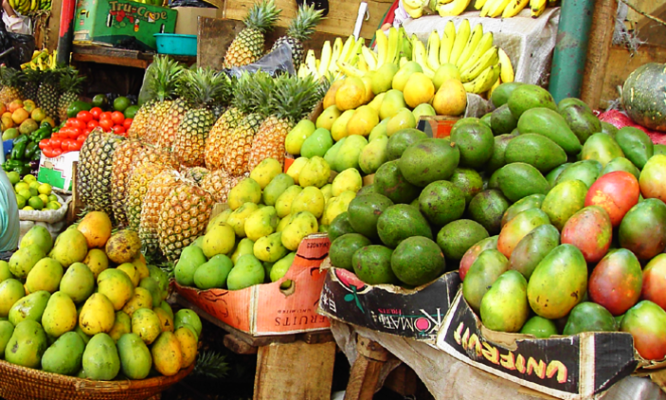
The Annual Food Crops and Related Items Inflation decreased to minus 0.7% for the year ending February 2018 compared to 1.4% for the year ended January 2018. According to the Uganda Bureau of Statistics, this drop was due to Annual Vegetables Inflation that registered minus 0.9% for the year ending February 2018 compared to 2.7% recorded for the year ended January 2018.
Inflation on the decline
March 2018 started off cold and wet and this is usually good news for the farmers and economy at large as food price stability is always expected. The weather broadly has been favourable as exhibited by The Annual Food Crops and Related Items Inflation decreased to minus 0.7% for the year ending February 2018 compared to 1.4% for the year ended January 2018.
According to the Uganda Bureau of Statistics, this drop was due to Annual Vegetables Inflation that registered minus 0.9 percent for the year ending February 2018 compared to 2.7% recorded for the year ended January 2018.
In addition, annual fruits inflation registered minus 2.3% for the year ending February 2018 compared to minus 1.8% for the year ended January 2018.
Combined with Annual Core Inflation declining to 1.7% for the year ending February 2018, when compared to the 2.6% recorded for the year ended January 2018, overall Annual Headline Inflation for the year ending February 2018 has been recorded at 2.1% compared to the 3.0% registered during the year ended January 2018.
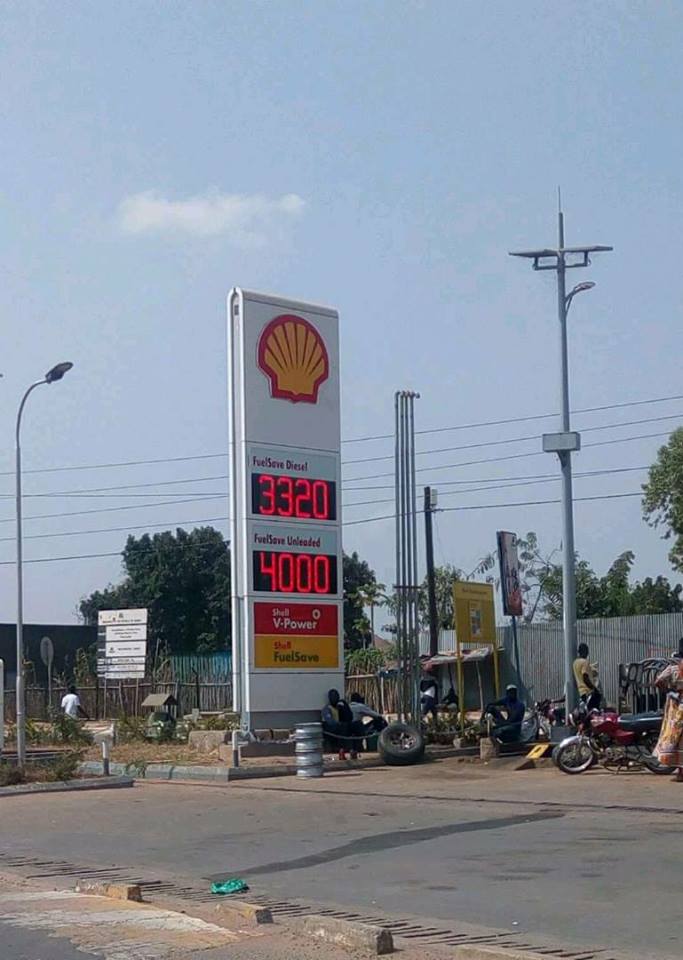
However, Annual Energy, Fuels and Utilities (EFU) Inflation increased to 11.2% for the year ending February 2018 compared to 9.8%recorded for the year ended January 2018.
The increase was due to Annual Inflation for Liquid Energy Fuels that registered at 7.3% for the year ending February 2018 compared to 5.2% recorded in January 2018.
Also, the Annual Inflation for solid fuels (charcoal & firewood) rose to 20.4% for the year ending February 2018 compared to 17.1% recorded for the year ended January 2018.
The Monthly Headline Inflation for February 2018 stabilised at 0.0% from the earlier 0.3% drop recorded in January 2018. The Monthly Core Inflation decreased by 0.3% during the month of February 2018 from the earlier drop of 0.5% recorded in January 2018.
This was offset by the Monthly Food crops inflation that increased by 1.3% in February 2018 from the 0.5 percent rise recorded in January 2018. In addition, Energy Fuel and Utilities Inflation increased by 1.4% in February 2018 from the 0.8% rise recorded in January 2018.
The continued favorable inflation outlook is mirrored in the recent Bank of Uganda reduction of the Central Bank Rate to 9% in February 2018. More inflation data can be found on
Financial markets turnover improved
For the week ending March 2, equity turnover surged to UGX1. 73 billion compared to UGX148 million for the week ending on the February 23, 2018.
The upsurge is largely attributed to the UMEME trade of UGX1.38 billion in turnover as its share price dropped to UGX 405 per share. However, its share price closed off at UGX410 by end of week. Only seven of the sixteen listed stocks on the Uganda exchange market traded over the counters.
These DFCU, Stanbic Bank, Bank of Baroda, UMEME, NIC Holdings, Uganda Clays and Centum Investments (Kenya’s cross-listed). The prices remained relatively stable, with Baroda and centum registering some slight up and down movements in share price.
The three trading banks (DFCU, Stanbic Bank, Bank of Baroda) jointly account for over a third of the banking sector (by profit or assets). All the listed companies are expected to publish the financial statements in tandem with statutory requirement of March 31, 2018.
Poverty and inequality on the rise: In the Sauti za Wananchi or Voices of the Citizens survey by Twaweza, it is revealed that shows that poverty and food insecurity are the main problems that households in the country are facing at the moment. Data were collected from 1,925 respondents in the first round of calls to the Sauti za Wananchi panel, conducted between October 6 and 13, 2017.
A mobile phone was placed in 2,000 households around the country and on a monthly basis; data was recorded about their financial situation at the given time.
Other key findings include: 1) the most serious problems facing Ugandan households today are financial. 1 of 4 citizens (26%) say the most serious problem facing their own household is poverty / inequality 2) 5 out of 6 Ugandans are dissatisfied with how the national economy is being managed 3).
Half the population have gone a whole day without eating in the past three months 4) Food stress is markedly higher in Uganda than in neighbouring Kenya 5) Food stress varies greatly by location 6) 1 out of 6 citizens have a bank account 7) 1 out of 3 citizens have borrowed money in the past five years 8) 2 out of 3 citizens use mobile money services.
Uganda National Household Survey 2016/17
The survey was formally published on the February 19, 2018. the official statistic on poverty: based on the 2016/17 UNHS, it is estimated that 21.4% of Ugandans are poor, corresponding to nearly eight million persons lower than the 9.34 million poor people in 1991 but higher than 6.7 million people in 2012/13 and 7.5 million poor people in 2009/10.
However, the final UNHS poor people have been revised downwards from the 1st publication of September 2017. The explanation has not been provided. According to the Survey 2016/17, 2.9% of population (37.7 million) owned vehicles. This translates to 1.1 million.
This is 30% over and above actual number. This therefore suggests that 15,636 households sampled may have been from a relatively higher income bracket thus discounting some of parameters like poverty.
Trade agreement
The Economic Partnership Agreement between the European Union and the East African community continues to face hurdles as only Kenya and Rwanda have signed and ratified the agreement.
This followed the East African Community (Burundi, Kenya, Rwanda, Tanzania, and Uganda) finalising the negotiations for a region-to-region Economic Partnership Agreement (EPA) with the EU in 2014. In the recent development,
The East African Court of Justice has dismissed an appeal filed by Castro Pius, a Tanzanian national, seeking to block the East African Community from signing the Economic Partnership Agreement (EPA) with the European Union.
Castro had also sought the countries which had already penned their signatures to the agreement be stopped from carrying out any further procedures and processes. The negotiations continue on whether to sign or not by the remaining countries.
The EPA deal is fully in line with the EAC Common External Tariff – banning unjustified or discriminatory restrictions on imports and exports, which contribute to the EAC’s efforts to eradicate non-tariff barriers (NTBs) in intra-EAC trade. It supports the EAC’s ambitious regional integration project and has what it takes to foster development.