Bank of Uganda (BoU) has warned that the proposed Protection of Sovereignty Bill, 2026, if passed in its current form, could trigger far-reaching economic disruption, deepen financial instability, and reverse decades of economic progress.
The warning adds to growing resistance from key sectors, including Uganda Law Society, Uganda Bankers Association, telecommunications companies, academia, law experts, and lawyers, all of whom have raised concerns over the Bill’s legal, financial, and operational implications.
Presenting a detailed technical assessment to Parliament, the central bank cautioned that the Bill introduces what it describes as “radical uncertainty” and “voluntary shocks” into the economy, risks that could destabilize Uganda’s macroeconomic foundation.
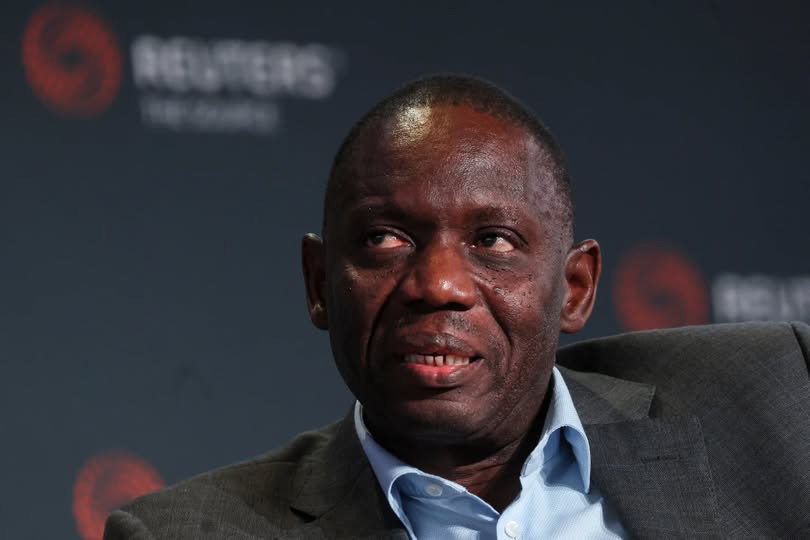
Appearing before the Defence and Legal Affairs Committees, Bank of Uganda Governor Michael Atingi-Ego, said the Bill could disrupt foreign inflows, which could present an economic disaster to the country.
“Chairman, a country without reserves is not sovereign,” he said.
“Last financial year, we recorded a balance of payments surplus of $1.5 billion, which enabled us to increase our reserves to nearly $6 billion. These inflows are critical. The moment you tamper with them, we risk running down our reserves, and that is economic disaster for a country.”
At the core of the Bank’s concern is the Bill’s potential to disrupt foreign exchange inflows that underpin Uganda’s balance of payments.
According to BoU’s assessment, Uganda’s external position is heavily supported by foreign direct investment (about $3.4 billion), portfolio flows ($2.1 billion), remittances ($1.5 billion), and NGO funding.
The Bill’s broad definition of “agents of foreigners” and strict funding caps risk sweeping in banks, NGOs, fintechs, and even Ugandans in the diaspora, potentially disrupting remittances that many households rely on.
The central bank warns that such disruptions would reduce foreign exchange liquidity, weaken the shilling, and trigger a cascade of economic effects.
“Because of the depreciation of the currency that is likely to occur as an unintended consequence of this Bill, the pass-through from imported goods into domestic prices will raise inflation significantly,” Atingi-Ego said.
Inflation, interest rates, and hard trade-offs
BoU cautioned that a weaker currency would translate directly into higher domestic prices, reversing recent gains in inflation control.
Uganda’s inflation has remained relatively stable at around 3%, but the Governor warned that this could quickly change.
“We will then face a difficult choice, either tighten monetary policy further by raising interest rates, or allow inflation to rise beyond our 5% target,” he said.
The Bank emphasized that either option carries consequences, including higher borrowing costs or reduced purchasing power for households.
Financial sector risks
Beyond macroeconomic pressures, the central bank flagged serious structural concerns within the Bill itself.
The proposed law introduces a parallel regulatory regime, placing oversight of “foreign agents” under the Ministry of Internal Affairs, potentially overlapping with and undermining the Bank of Uganda’s constitutional mandate over monetary policy and financial supervision.
This could lead to dual licensing of financial institutions, delays in transactions as ministerial approvals become mandatory, de-risking by global banks, and disruption of correspondent banking relationships that are critical for trade and payments.
BoU warns that such measures could paralyze financial sector operations and even halt transactions overnight due to a lack of transition mechanisms.
Impact on the digital economy
Telecommunications companies have also raised an alarm, warning that the Bill threatens mobile money, one of the pillars of Uganda’s digital economy.
BoU’s assessment reinforces these concerns, noting that Uganda processes about 27 million mobile money transactions daily across over 36 million accounts.
The Bill’s manual approval and reporting requirements are incompatible with real-time digital financial systems, potentially slowing or disrupting transactions.
Additionally, the proposed cap on foreign funding, approximately UGX 400 million per year, could severely restrict capital flows into banks, fintechs, and startups, undermining investment and innovation.
Legal and economic uncertainty
The Bank also warned of broader legal and economic risks, including contract disruption, particularly for ongoing foreign-financed projects, investor flight driven by uncertainty and capital controls, rising debt costs as investors demand higher risk premiums, and potential violations of international obligations, including IMF and East African Community frameworks.
BoU further highlights that up to UGX 5 trillion in external funding and tens of thousands of jobs could be at risk if organisations affected by the Bill scale down or exit the country.
Growing opposition
The Bank’s position aligns with concerns from multiple stakeholders.
Uganda Law Society has questioned the Bill’s constitutional implications, Uganda Bankers Association has warned of risks to financial stability and investor confidence, and telecommunications companies have raised fears over disruptions to mobile money and international partnerships.
Together, these voices point to a growing consensus that the Bill, while intended to protect sovereignty, could instead isolate Uganda economically.
In its conclusion, Bank of Uganda underscores a critical point: true sovereignty is rooted in economic strength.
The current framework, built over decades of financial liberalisation and policy predictability, has supported stability and growth. But the proposed Bill, as currently drafted, risks reversing those gains.
“True national sovereignty is built on economic strength and financial independence,” BoU notes.