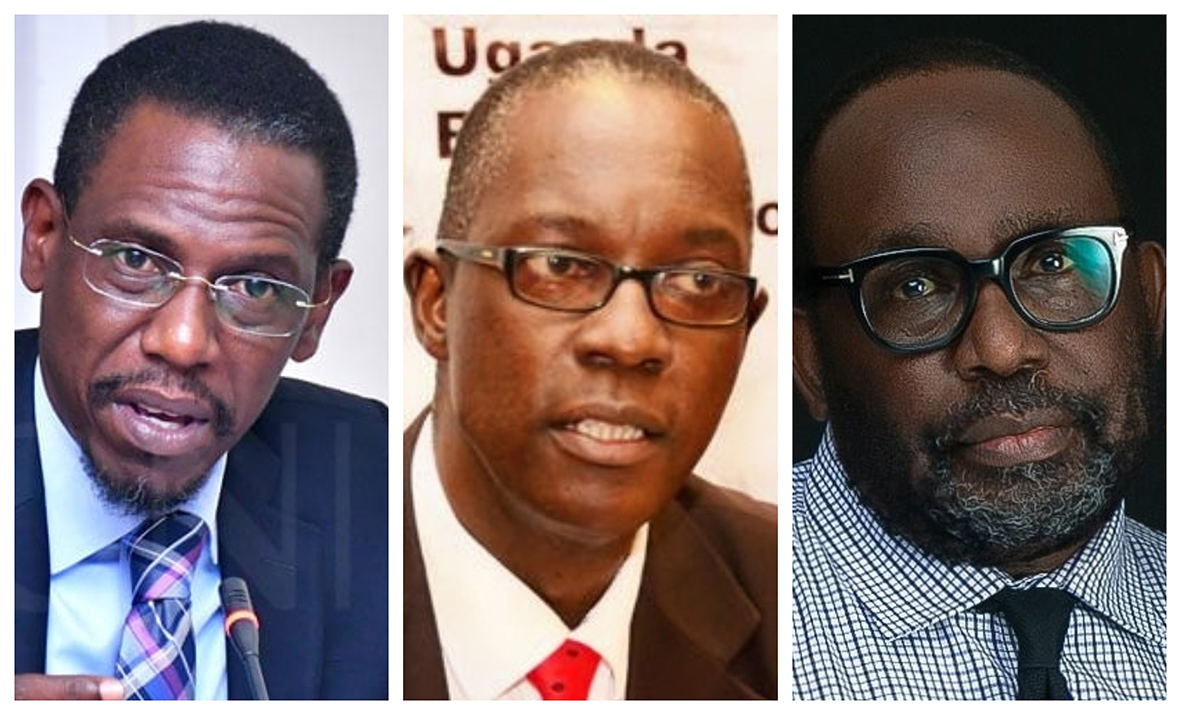
The proposed Protection of Sovereignty Bill, 2026, is emerging as one of the most contested legislative efforts in recent years; praised by backers, especially government officials, as a necessary safeguard for Uganda’s independence.
However, others, such as bankers through Uganda Bankers Association, lawyers through Uganda Law Society, and sections of the public, view it as a potential threat to capital flows, constitutional order, and everyday economic life.
At its core, the Bill seeks to regulate foreign influence across Uganda’s political, economic, and civic spaces.
Backers argue that in an increasingly interconnected world, sovereignty must be actively defended against covert financing, geopolitical pressure, and external manipulation.
However, critics warn that the mechanisms proposed may be too expensive, raising the risk that a law intended to protect the state could also reshape how citizens interact economically and socially, both within and beyond Uganda’s borders.
Economic concerns
The financial sector, led by Uganda Bankers Association and its Executive Director Wilbrod Owor, has raised concerns that the Bill could disrupt capital inflows.
A central issue is the proposed cap on foreign funding, approximately UGX 400 million within 12 months, beyond which ministerial approval would be required.
Bankers argue that such thresholds, combined with broad definitions of what constitutes foreign funding, could slow investment approvals, complicate cross-border transactions, and introduce regulatory uncertainty.
In an economy where diaspora remittances, development financing, and foreign-backed private investment play a significant role, even limited friction could have disproportionate effects.
The concern extends beyond large-scale investors. Everyday financial flows, such as remittances sent by family members abroad, informal capital injections into small businesses, or diaspora-backed enterprises, could fall within the regulatory framework.
This raises the possibility that the Bill may not only shape macroeconomic trends but also influence household-level financial behaviour.
Redefining “foreigner” and “agent”
Beyond economic implications, the Bill introduces definitions that some sections of the public argue could fundamentally alter how citizenship and participation are understood.
Commentators have pointed to the classification of Ugandans living abroad as “foreigners,” suggesting that such a definition carries far-reaching consequences.
Writing on X (formerly Twitter), veteran journalist Charles Onyango-Obbo described the proposal as “the only law in the world” attempting something so sweeping – classifying Ugandan citizens residing abroad as “foreigners.”
This definition, he wrote, carries far-reaching implications, and by extension, individuals who receive financial support from abroad, even from family members, could be categorised as “agents of a foreigner” if they are directly or indirectly funded.
This, Obbo writes, goes deeper, with a mother in Mbale receiving school fees from London, a boda boda rider in Gulu financed from Dubai, or a small shop in Mbarara stocked through diaspora capital, could, in theory, fall within the regulatory net.
The classification of “agent” goes further, potentially encompassing journalists, researchers, and NGO workers whose institutions receive any degree of foreign funding, regardless of control or direction.
This expansive framing, he says, has raised concerns that the Bill could blur the line between legitimate international engagement and regulated foreign influence, effectively bringing ordinary social and economic interactions into the sphere of state oversight.
The legal fault lines
The Uganda Law Society has taken a firm stance against the Bill, urging Parliament and Ugandans to reject it because certain provisions could undermine constitutional safeguards.
Particular concern centres on Clause 13, which introduces the offence of “economic sabotage” by criminalising the publication of information deemed harmful to the economy.
Uganda Law Society argues that such language, if interpreted broadly, could affect journalists, analysts, and researchers even when presenting accurate data.
Similarly, Clause 5 prohibits activities that promote foreign interests “against the interests of Uganda,” but does not clearly define what those interests are.
Legal experts caution that this ambiguity creates room for subjective enforcement, potentially limiting legitimate public discourse and weakening institutional independence.
Government’s framing
Attorney General Kiryowa Kiwanuka, Media Centre Executive Director Allan Kasujja, and ICT and Information Minister Chris Baryomunsi were contacted for comment, but had not responded by press time to concerns raised by Uganda Law Society and Uganda Bankers Association.
But Kiwanuka, in his New Vision write-up, offers a more nuanced framing of the Bill, shifting the debate from restriction to regulation.
Rather than portraying the legislation as a rejection of foreign engagement, he emphasises that its primary target is covert, coercive, or deceptive influence that operates outside transparent and accountable channels.
Kiwanuka’s argument rests on a key distinction: not all foreign influence is harmful. In his view, international cooperation, investment, and partnerships remain essential to Uganda’s development.
The problem, he suggests, arises when such engagement becomes opaque or is used to shape domestic outcomes in ways that bypass democratic processes.
Related
 Bank of Uganda kicks off domestic gold purchase from licensed miners in three-year pilot programme
By focusing on transparency rather than prohibition, the Bill is positioned as an attempt to bring hidden influence into the open.
Kiwanuka situates the proposed law within a broader global context, pointing out that established democracies such as the US and Australia already operate similar regulatory regimes.
These frameworks, he argues, are not designed to isolate those countries from the world, but to ensure that foreign involvement in domestic affairs is clearly disclosed and subject to oversight.
In this sense, Uganda’s approach is framed as part of an evolving international norm rather than a departure from it.
Central to Kiwanuka’s reasoning is the idea of transparency as a “middle ground.” The Bill, in his interpretation, does not seek to ban foreign funding outright but to require disclosure, registration, and clarity of intent.
This includes identifying foreign agents, tracking funding sources, and ensuring that political and advocacy activities linked to external actors are visible to regulators and the public.
However, his argument also implicitly acknowledges the risks raised by critics. If the definitions used in the law are too broad or the thresholds poorly calibrated, measures intended to target hidden influence could instead capture legitimate economic and social activity.
In this regard, Kiwanuka’s emphasis on clarity and precision becomes critical, not only as a legal principle but as an economic and governance necessity.
He further anchors his defence of the Bill in the concept of sovereignty as a foundational and non-negotiable principle.
Unregulated external financing, he argues, has the potential to shape national discourse, influence electoral processes, and distort policy outcomes in ways that undermine democratic self-determination.
From this perspective, the absence of regulation is itself a risk to sovereignty.
Yet, the paradox highlighted by critics remains: excessive regulation could also weaken sovereignty by eroding institutional trust, constraining freedoms, and discouraging investment.
Kiwanuka’s position, therefore, does not eliminate the tension but reframes it as a design challenge: how to create a system strong enough to deter harmful influence yet restrained enough to preserve openness and legitimacy.
Protection versus overreach
The Bill ultimately sits at a delicate intersection between competing risks. On one side is the vulnerability to external manipulation in an increasingly globalised environment.
On the other is the danger that overregulation could constrain economic activity, limit freedoms, and weaken public trust in institutions.
Analysts argue that the challenge is not whether to regulate foreign influence, but how to do so without undermining the very systems the law seeks to protect.
Poorly framed provisions could create uncertainty, discourage investment, and complicate coordination within government, while overly aggressive enforcement could erode public consent.
The politics in the Bill
The Bill is being debated in a political environment where accusations of foreign influence have long shaped public discourse.
Over the past decade, critics of government policy have often been labelled as foreign-funded or agents of foreign interests or plainly “unpatriotic actors”.
This context influences how the Bill is interpreted. For some, it represents a formalisation of existing narratives about external interference.
For others, it is a legitimate attempt to introduce transparency and accountability into areas that have remained largely unregulated.
Implementation: The real test
Across the debate, there is broad recognition that the Bill’s ultimate impact will depend on how it is implemented.
The clarity of definitions, the consistency of enforcement, and the restraint exercised by regulators will determine whether the law functions as intended.
Even backers acknowledge that ambiguity is a central vulnerability. If terms such as “foreign influence” and “agent” are not carefully defined, the law risks extending beyond its intended scope, affecting areas of economic and social life that were never meant to be regulated.
The unresolved question
As Parliament prepares to debate the Bill, the central issue is no longer whether sovereignty should be protected, there is broad agreement on that principle.
The real question is whether this particular framework can strike the right balance: filtering harmful external influence without disrupting beneficial economic flows, constitutional freedoms, and the lived realities of citizens.
The answer will determine whether the Protection of Sovereignty Bill becomes a durable safeguard or a source of continued tension in Uganda’s political and economic landscape.