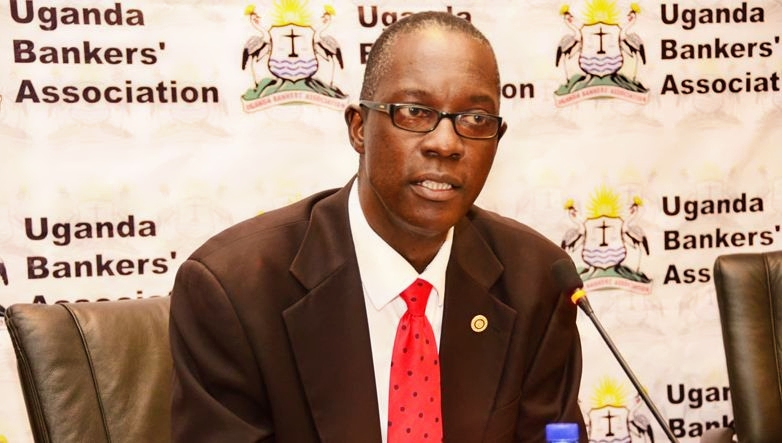
Uganda’s banking industry has mounted a formal and detailed opposition to the proposed Protection of Sovereignty Bill, 2026, warning that its provisions could disrupt financial intermediation, deter foreign investment, and undermine the country’s broader economic growth strategy.
In a letter dated April 13, 2026, the Uganda Bankers Association (UBA) wrote to the Attorney General outlining its concerns and recommendations regarding the draft law.
The communication, signed by Executive Director Wilbrod Humphreys Owor, was widely circulated across key government institutions, with official stamps indicating receipt on April 14, 2026 by the Bank of Uganda, Ministry of Finance, Ministry of Justice and Constitutional Affairs, and other state offices, underscoring the urgency and gravity of the industry’s position.
The intervention came just ahead of the Bill’s formal introduction in Parliament, where it was presented for first reading by State Minister for Internal Affairs, Gen. David Muhoozi, on April 15, 2026. The legislation proposes sweeping controls on foreign funding, including criminal penalties of up to 20 years’ imprisonment for violations linked to undisclosed or “disruptive” financial support.
From the outset, the bankers’ submission situates the Bill within the context of Uganda’s economic ambitions, cautioning that several of its provisions “work directly against the banking industry’s response plan to support Government’s ATMS strategy for tenfold GDP growth.”
The banking industry notes that this strategy, already shared with the Ministry of Finance, Planning and Economic Development, depends fundamentally on “marshaling more capital/funding through various sources and instruments” to expand private sector credit over the plan period.
Against this backdrop, the bankers’ association urges government to “seriously consider the implications of this Bill to the investment climate for Uganda,” recommending, at a minimum, explicit safeguards for licensed financial institutions, alignment with existing regulatory frameworks, and exemptions for routine banking transactions.
The association then lays out its opposition across seven distinct grounds, each addressing a specific provision of the Bill and its implications for the banking sector.
First, the bankers challenge the Bill’s definition of an “agent of a foreigner,” describing it as excessively broad. The proposed wording includes any person whose activities are “directly or indirectly supervised, directed, controlled, financed, or subsidised by a foreigner.”
According to UBA, this could inadvertently classify foreign-owned or part-foreign-owned banks as agents of foreigners, given that their parent companies provide direction, financing, and oversight.
It could also extend to correspondent banking relationships, where Ugandan banks process transactions on behalf of foreign banks, as well as to international development finance routed through commercial institutions.
Second, under Clause 22, the Bill introduces strict restrictions on foreign funding, prohibiting any person or agent of a foreigner from obtaining financial support exceeding 20,000 currency points—approximately UGX 400 million (USD 107,000)—within twelve months without written ministerial approval.
The UBA describes this threshold as “extremely low” relative to standard banking operations, warning that it would capture virtually all foreign capital inflows.
The implications include delays and uncertainty for foreign lines of credit from institutions such as the International Finance Corporation and African Development Bank, restrictions on capital raising from shareholders or private equity investors, and obstacles to issuing Eurobonds or securing syndicated loans.
The provision requiring forfeiture of funds obtained without approval further introduces what the bankers call an “existential risk” for institutions that may inadvertently fall afoul of the rules.
Third, the Bill places additional obligations on supervised financial institutions under Clause 25, effectively turning banks into reporting agents.
It requires them to verify ministerial authorisation before paying out funds to any agent of a foreigner, ensure declarations of the source of funds are provided, and submit monthly reports to the Minister.
Failure to comply carries a civil penalty of 200,000 currency points, equivalent to about UGX 4 billion, a figure the association notes would be particularly punitive for smaller institutions. In practice, banks warn that processing international remittances, NGO payments, and diaspora transfers would become significantly more complex, introducing operational delays and exposing institutions to liability for compliance errors.
The requirement to report separately to the Ministry of Internal Affairs, in addition to existing reporting lines to the Bank of Uganda, is seen as creating a duplicative and potentially conflicting regulatory regime.
Fourth, the UBA raises concerns about Clause 21, which mandates declarations of the source of foreign funding.
While banks already conduct Know Your Customer and source-of-funds checks under the Anti-Money Laundering framework supervised by the Financial Intelligence Authority, the association argues that the Bill creates a parallel system that could conflict with existing obligations.
Of particular concern is the provision allowing public inspection of funding declarations upon payment of a fee, which raises serious confidentiality and data protection issues that may contradict banking secrecy requirements.
The introduction of criminal liability, including potential imprisonment of up to five years for false statements, is also flagged as exposing compliance officers to heightened personal risk.
Fifth, the industry takes issue with Clause 13, which introduces an “economic sabotage” offence.
The clause criminalises any act or publication that “weakens or damages the economic system or viability of the country.”
The UBA describes this language as vague and overly broad, warning that it could capture legitimate activities such as credit rating communications, investor briefings, analyst reports, and even internal whistleblowing on financial vulnerabilities.
 UNOC’s Big Leap: Profits, Pressure, and the Race Against Time
 Routine treasury and foreign exchange market communications could similarly fall within its scope, creating significant legal uncertainty for institutions engaged in normal financial operations.
Sixth, the Bill’s provisions on influencing government policy are seen as far-reaching and potentially restrictive.
Clauses that regulate individuals or entities who “influence the development of the policy of Government” or “influence the public to oppose the policy of Government” could, according to the UBA, directly affect industry associations, including itself, particularly where such bodies receive foreign funding.
The same provisions could extend to donor-funded financial sector reform programmes involving institutions such as the World Bank and IMF, as well as to banks benefiting from technical assistance aimed at improving governance, compliance, and financial inclusion.
Seventh, the requirement for registration under Clause 14 further compounds the industry’s concerns.
Any entity classified as an agent of a foreigner would be required to obtain certification from the Department of Peace and Security before operating.
For banks, this introduces what the UBA describes as “dual licensing complexity,” since institutions are already regulated by the Bank of Uganda.
The certificates would be valid for only two years and could be suspended or revoked, creating business continuity risks.
Additional provisions requiring suitability assessments, including considerations of the mental and physical health of directors, are seen as going beyond established corporate governance standards and potentially deterring qualified foreign executives from taking up roles in Ugandan banks.
The possibility of revocation on grounds that an entity poses a “security threat” is viewed as subjective and open to misuse, particularly during periods of political tension.
Taken together, the bankers warn that the Bill, in its current form, could have far-reaching consequences for the economy.
They caution that it is likely to have a chilling effect on foreign direct investment at a time when banks are under pressure to meet Basel III-aligned capitalisation requirements and finance a growing economy.
Correspondent banking relationships, already fragile, could come under further strain if international partners become wary of being linked to entities classified as agents of foreigners.
The Bill’s allocation of oversight powers to the Minister of Internal Affairs is also seen as conflicting with the established authority of the Bank of Uganda, raising the risk of regulatory fragmentation and inconsistent directives.
Moreover, the industry highlights the potential impact on Uganda’s engagement with development finance institutions.
Ongoing programmes involving concessional financing, technical assistance, and policy reform could be disrupted if they fall within the Bill’s restrictions on foreign funding and influence.
In response to these concerns, the Uganda Bankers Association makes a series of pointed recommendations to government, urging a reconsideration of the Bill’s most far-reaching provisions to safeguard financial sector stability and investor confidence.
Central to its proposals is the call to “carve-out for financial institutions licensed by the Central Bank of Uganda & Capital Markets Authority as well as Development Finance Institutions operating in Uganda from the ‘agent of foreigner’ definition.”
The bankers argue that without such an explicit exemption, the Bill risks inadvertently classifying core financial institutions, many of which rely on foreign ownership structures or cross-border partnerships, as regulated foreign agents, thereby constraining their normal operations.
The association further emphasises the need to preserve regulatory clarity and institutional independence within the financial system. It recommends that government should “include a clear primacy clause affirming that Bank of Uganda’s regulatory authority governs the banking sector supported by the Financial Intelligence Authority.” In the same vein, the UBA cautions against the creation of overlapping compliance regimes, urging policymakers to “align foreign funding oversight with the existing AML/FIA framework rather than creating a parallel regime.”
According to the industry, duplicative supervision, particularly involving the Ministry of Internal Affairs, could lead to conflicting directives, increased compliance burdens, and operational inefficiencies across the sector.
Finally, the bankers call for a practical reassessment of the Bill’s financial thresholds and transactional scope, warning that the current limits are incompatible with standard banking practice.
They recommend that authorities should “establish a significantly higher foreign funding threshold or blanket exemption for transactions within the normal course of regulated banking activity.”
This, they argue, would ensure that routine activities such as correspondent banking, trade finance, and capital raising are not subjected to unnecessary approvals or penalties, while still allowing government to monitor genuinely high-risk or non-standard financial flows.