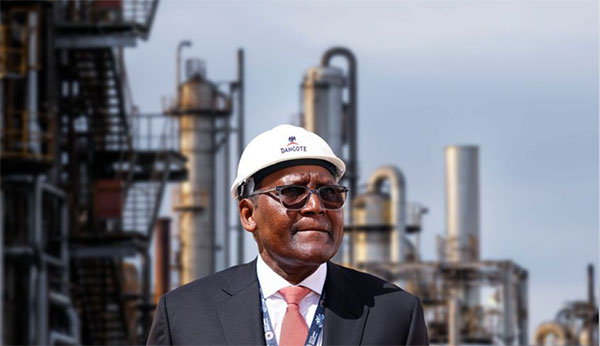
Nigerian billionaire and industrialist Aliko Dangote is shifting plans for a major East African oil refinery to Kenya, in a move that appears to sideline earlier proposals centred on Tanzania’s port city of Tanga.
Dangote revealed in an interview with the Financial Times that he is now leaning towards Mombasa as the preferred location for a proposed 650,000-barrel-per-day refinery, citing the Kenyan port city’s infrastructure advantages and market size.
“I’m leaning more towards Mombasa because Mombasa has a much larger, deeper port,” Dangote said.
He added that Kenya’s stronger consumer market made it more commercially attractive than Tanzania.
“Kenyans consume more. It’s a bigger economy,” he said, while indicating that the final decision would depend on Kenyan President William Ruto and his administration.
“The ball is in the hands of President Ruto. Whatever President Ruto says is what I’ll do,” Dangote stated.
The proposed refinery is expected to cost between $15 billion and $17 billion and could become one of East Africa’s largest industrial and energy infrastructure investments.
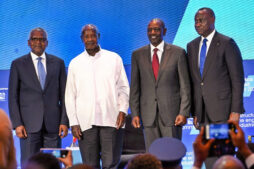
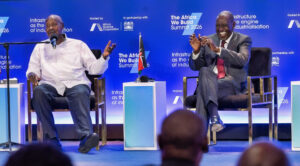
Dangote’s latest position marks a significant shift from earlier regional discussions that had placed Tanzania at the centre of the project. Last month, President Ruto announced plans for a joint refinery in Tanga during the Africa Infrastructure Summit hosted by the Africa Finance Corporation in Nairobi.
Ruto said the proposed refinery was intended to serve Tanzania, Kenya, Uganda and South Sudan as part of a broader regional industrialisation strategy focused on local resource utilisation.
“Because the building of a refinery is a big opportunity, it is a big opportunity for business, for industrialisation, for petrochemical industries, fertiliser, plastics industries,” Ruto said at the summit.
However, the announcement triggered diplomatic discomfort in Tanzania after President Samia Suluhu Hassan publicly stated that she had not been consulted about the proposed Tanga refinery despite the project being announced as a regional initiative.
At a joint press conference during Ruto’s state visit to Dar es Salaam, Suluhu disclosed that she had questioned her Kenyan counterpart over the announcement.
“While we were speaking inside, I pressed Ruto and asked him, ‘You went ahead and announced a refinery in Tanga, which I wasn’t aware of?’ He will explain himself why he made that announcement,” Suluhu said.
In response, Ruto defended the proposal, saying discussions around the refinery had emerged from consultations among East African leaders, including Ugandan President Yoweri Museveni, on how the region could jointly use its oil, mineral and agricultural resources to drive industrialisation and job creation.
“Whatever raw materials we have, whether natural resources or energy, should be used for the industrialisation of our region so that we can create wealth here,” Ruto said.
The controversy appears to have influenced the changing direction of the refinery project, with Kenya now emerging as Dangote’s preferred destination.
East Africa currently imports nearly all of its refined petroleum products, largely from the Middle East, exposing regional economies to supply disruptions and volatile global fuel prices. Analysts say a regional refinery would reduce import dependence, strengthen energy security and support industrial growth across the region.
The Dangote Group recently commissioned the world’s largest single-train refinery in Lagos, Nigeria, with a processing capacity of 650,000 barrels per day. The facility is expected to significantly reshape Africa’s fuel supply chain by reducing the continent’s dependence on imported petroleum products.
If constructed in Mombasa, the refinery would position Kenya as a major regional petroleum processing and logistics hub while reinforcing Nairobi’s ambitions to become East Africa’s leading industrial economy.