Seven years ago, in February 2019, Parliament launched one of the most consequential investigations ever conducted into Uganda’s financial sector.
The probe by the Committee on Commissions, Statutory Authorities and State Enterprises (COSASE) scrutinised Bank of Uganda’s handling of the controversial closure and resolution of several commercial banks, raising serious questions about transparency, asset valuation, and protection of depositors’ interests.
When the report was tabled in 2019 after months of dramatic hearings, it delivered a rare public rebuke of the country’s banking regulator, pointing to weak documentation, unclear resolution procedures, and governance failures in the way distressed banks had been handled.
In response, COSASE laid out a series of reforms intended to strengthen supervision and resolution of financial institutions and restore confidence in the regulatory process.
But the banking sector has not stood still since then.
In the years following the report, the Central Bank has closed two more financial institutions, raising fresh questions about whether the institutional lessons identified by Parliament have been fully absorbed.
In January 2024, Bank of Uganda closed EFC Uganda, a microfinance deposit-taking institution, after it failed to meet minimum capital requirements and placed it under liquidation.
Just months later, in June 2024, the central bank revoked the Tier II credit institution licence of Mercantile Credit Bank, citing insolvency, undercapitalisation, and poor corporate governance before placing the institution under liquidation.
These closures inevitably raise a broader question: has Bank of Uganda fundamentally strengthened how it supervises and resolves troubled financial institutions since the COSASE probe?
To find out, CEO East Africa reached out to the central bank’s supervision leadership seeking clarity on what reforms have been implemented since Parliament’s investigation and whether the resolution framework has materially changed.
Among the issues put to the regulator were whether Bank of Uganda has since introduced formal resolution guidelines for distressed financial institutions, whether independent valuation of assets and liabilities is now mandatory before entering purchase-and-assumption transactions, and whether the central bank has implemented COSASE’s recommendation to separate the supervision and bank resolution functions to reduce conflicts of interest.
Instead of addressing the questions directly, Bank of Uganda said some of the issues raised relate to matters currently before court and, therefore, could not be commented on.
The central bank referred this publication to updates on its website detailing the liquidation status of several defunct financial institutions.
The response leaves a central question lingering seven years after Parliament’s probe: has Uganda’s banking regulator truly internalised the lessons from one of the most significant oversight investigations in the country’s financial history, or are the same institutional questions still unresolved?
The COSASE bombshell: What parliament uncovered
When COSASE tabled its report in February 2019, it delivered one of the most consequential institutional critiques ever directed at Bank of Uganda.
The investigation, triggered by a special audit by the Auditor General, examined the central bank’s handling of the closure and resolution of several commercial banks over nearly three decades.
Among the institutions scrutinised were Teefe Trust Bank, Greenland Bank, Cooperative Bank, International Credit Bank, Global Trust Bank, National Bank of Commerce, and Crane Bank.
To establish what had happened, COSASE summoned current and former central bank officials, shareholders of the defunct institutions, and senior government officials, including Finance Minister Matia Kasaija, alongside regulators and banking executives involved in the closures.
What emerged from months of hearings and document reviews raised profound questions about the governance of Uganda’s banking regulator.
One of the committee’s most serious findings was that in several bank resolutions, the central bank did not prepare proper inventories of assets and liabilities before disposing of the institutions, contrary to the requirements of Section 89(3) of the Financial Institutions Act.
Without such inventories, the regulator could not accurately determine the value of what it had taken over and subsequently sold.
The case of Crane Bank, which had been placed under statutory management in October 2016 before being sold to dfcu Bank in January 2017, became one of the most prominent examples cited in the report.
COSASE found that although the bank was taken over on October 20, 2016, auditors were appointed only days later, and the inventory report establishing the bank’s assets and liabilities was produced in January 2017, after the central bank had already invited bids for the bank’s assets and liabilities and received offers from potential buyers.
In effect, Parliament concluded that the bidding process had begun before a verified inventory of the bank’s financial position had been completed.
Similar procedural concerns were raised in earlier bank closures. In the case of Global Trust Bank, the institution was closed and sold on the same day, with auditors appointed only weeks later, and the inventory report prepared months after the sale had already been concluded.
Beyond procedural lapses, COSASE also raised serious concerns about the pricing of assets disposed of during bank resolutions.
The committee found that assets belonging to several defunct banks were sold at steep discounts, sometimes raising questions about whether the central bank had maximised value for creditors and depositors.
For example, loan portfolios from International Credit Bank, Greenland Bank, and Cooperative Bank, with a combined book value of about UGX 135 billion, were sold at an average discount of around 80%, yielding only about UGX 32 billion in proceeds.
Some of the loans included in these portfolios were secured facilities backed by legal mortgages on real property worth approximately UGX 34.5 billion, yet they were reportedly sold to the acquiring entity, Nile River Acquisition Company, at discounts of up to 93%.
The committee noted that the minutes explaining the valuation assumptions and negotiations behind these transactions were not provided, making it difficult for auditors to determine the basis on which such steep discounts had been agreed.
The investigation also raised troubling questions about potential conflicts of interest in the disposal of assets from failed banks.
COSASE found that Bank of Uganda had hired a consultant, JN Kirkland and Associates, to help design and implement the asset disposal strategy for several defunct financial institutions.
However, the same consultant later became the local agent of Nile River Acquisition Company, the entity that ultimately purchased large portfolios of loans from the failed banks.
Nile River Acquisition Company had been established by Octavian Advisors, the firm identified during the disposal process as the buyer of the assets.
In effect, COSASE observed that a consultant involved in structuring the asset sale later ended up working for the acquiring entity and managing the recovery process on the loan portfolios.
The governance concerns were further amplified by the deep discounts at which the assets were disposed of.
When viewed alongside the committee’s findings about the role played by advisors who later became linked to the acquiring entity, lawmakers questioned whether the disposal process had been structured in a way that maximised value for creditors and depositors.
For COSASE, the combination of extreme asset discounts, incomplete documentation of negotiations, and blurred lines between advisors and buyers became one of the most controversial aspects of the entire bank resolution saga.
COSASE also questioned elements of the purchase and assumption agreement involving Crane Bank, including the handling of a UGX 200 billion deferred consideration arrangement between the Bank of Uganda and the acquiring institution.
The committee concluded that actions taken by central bank officials in structuring parts of the transaction had potentially occasioned losses to both Crane Bank and the regulator itself.
The cumulative picture presented by the investigation was deeply troubling.
Assets worth hundreds of billions of shillings had been transferred or sold under circumstances where the committee concluded that documentation was incomplete, valuations were uncertain and procedural safeguards required under banking law had not been consistently followed.
For many observers, the report marked a rare moment when Parliament publicly challenged the internal decision-making processes of one of the country’s most powerful financial institutions.
And at the centre of the controversy lay a fundamental question: had Uganda’s banking regulator followed the law, and protected the value of bank assets, when resolving failed financial institutions?
The reform agenda: What COSASE said had to change
Beyond documenting procedural failures and questionable asset disposal practices, COSASE also attempted to chart a reform path for Uganda’s bank resolution framework.
The committee warned that unless the structural weaknesses exposed during the investigation were addressed, the country risked repeating the same governance failures whenever financial institutions collapsed.
Related
 Who Will Be the Next Insurance Regulatory Authority CEO: Or Will Lubega Be Granted a Fourth Term?
At the centre of the reform agenda was the need to restore transparency and procedural integrity in how the central bank intervenes in distressed financial institutions.
One of COSASE’s most important recommendations was that once a financial institution is taken over by regulators, Bank of Uganda must immediately prepare a verified inventory of the bank’s assets and liabilities before taking any further steps to dispose of the institution.
Such inventories, the committee argued, are essential for establishing the true financial position of a distressed bank and ensuring that creditors and depositors are treated fairly during the resolution process.
Closely linked to this was the recommendation that independent valuations must be conducted before the sale or transfer of assets, particularly in purchase-and-assumption transactions where another institution takes over parts of a failed bank’s balance sheet.
The committee also called for the development of formal guidelines and operational procedures governing the resolution of financial institutions, arguing that many of the decisions examined during the investigation appeared to have been taken on a discretionary basis without a clearly documented framework guiding regulators’ actions.
Another significant proposal was the institutional separation of the bank supervision and bank resolution functions within the Bank of Uganda.
COSASE argued that concentrating both responsibilities within the same structures could create conflicts of interest, particularly in situations where regulators responsible for supervising banks were also involved in deciding how those banks would be resolved once they failed.
The report also emphasised the need for stronger record-keeping and documentation standards within the central bank.
COSASE noted that in several transactions examined during the probe, critical negotiation records, valuation assumptions, and board deliberations were either incomplete or unavailable, making it difficult for auditors and investigators to determine how key decisions had been reached.
Finally, the committee recommended greater accountability for officials involved in flawed bank resolution processes, arguing that institutional credibility could only be restored if responsibility for past failures was clearly established.
Taken together, the recommendations were intended to strengthen the resilience of Uganda’s financial system by ensuring that future bank failures would be handled through clear rules, transparent procedures and stronger institutional oversight.
At the time, the report triggered intense debate about the governance of Bank of Uganda and the broader integrity of the country’s financial supervision regime.
For many observers, the reforms proposed by COSASE represented an attempt not only to correct past mistakes but also to ensure that the country’s banking regulator could maintain public confidence in a sector where trust and stability are fundamental to economic growth.
The concerns raised by COSASE were later reinforced in court. In 2017, Bank of Uganda, acting as receiver of Crane Bank, sued the bank’s former owner, Sudhir Ruparelia and his company, Meera Investments, seeking to recover about UGX 397 billion that it alleged had been improperly withdrawn from the bank.
But in a landmark ruling in 2019, the High Court dismissed the case, finding that Crane Bank in receivership lacked the legal capacity to bring the suit.
The decision was later upheld by higher courts, with judges ruling that the central bank had pursued a case that was legally defective from the outset and ordering it to pay legal costs.
For critics of the bank resolution process, the ruling reinforced many of the governance and procedural concerns that COSASE had already highlighted.
Seven years later: Two more bank failures put reforms to the test
The reforms proposed by COSASE were intended to ensure that the procedural failures and governance weaknesses uncovered during Parliament’s investigation would not recur in future bank resolutions.
Seven years later, however, the real test of whether those reforms have taken root lies not in policy statements but in how more recent bank failures have been handled.
Since the COSASE report was tabled in 2019, Bank of Uganda has EFC Uganda and Mercantile Credit Bank, offering a practical window into how the country’s bank resolution framework now operates.
To understand whether the lessons identified by Parliament have translated into institutional change, CEO East Africa reached out to the central bank’s supervision leadership for clarity on what reforms have been implemented since the COSASE probe.
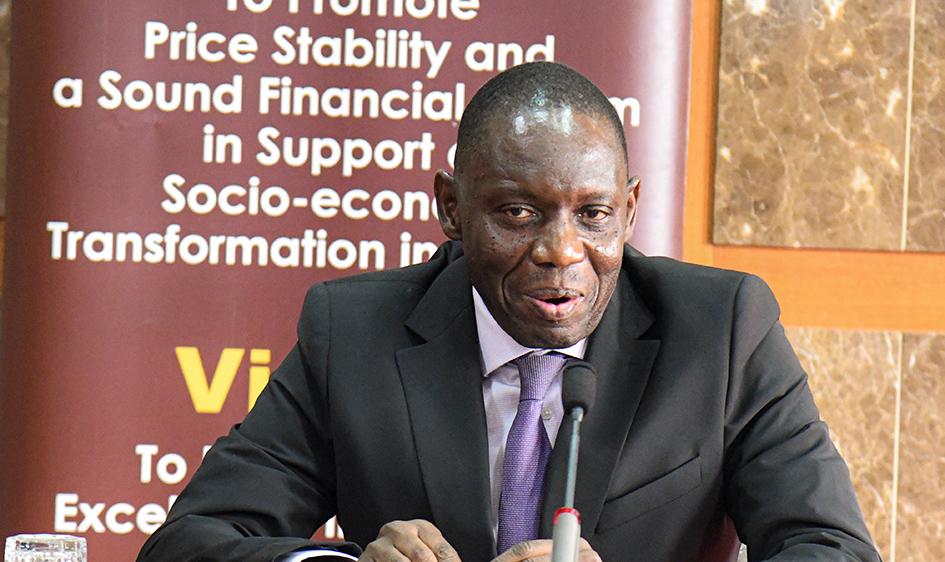
However, David L. Kalyango, the Bank of Uganda Executive Director for Supervision and Regulation, said: “I wish to advise that some of the questions relate to matters that are in court. We are therefore not at liberty to comment on matters before court.”
Bank of Uganda Head of Media Relations, Ishta Atukunda, referred this publication to updates available on the Bank of Uganda website detailing the liquidation status of several defunct financial institutions.
While those updates provide some insight into how the latest bank failures are being managed, the information released so far remains largely quantitative and procedural, offering limited visibility into whether the internal processes that COSASE identified as weaknesses in the earlier bank resolution framework have since been strengthened.
One of the cases involves EFC Uganda, a microfinance deposit-taking institution closed in January 2024 after failing to rectify significant undercapitalization.
Following the closure, government reimbursed uninsured depositors amounting to about UGX 43 billion, effectively assuming their position in the creditor hierarchy while recoveries from the institution’s assets continue to reduce that claim.
Loan recoveries have so far generated about UGX 10.4 billion, with the central bank pursuing additional recoveries and foreclosure proceedings against defaulting borrowers while managing a portfolio of litigation linked to the institution’s loan book.
The second case involves Mercantile Credit Bank, whose licence was revoked in June 2024 after the institution failed to resolve persistent undercapitalization.
Since the closure, the central bank, acting as liquidator, has recovered approximately UGX 21.5 billion from the bank’s loan portfolio, enabling it to reimburse depositors up to 45% of their unprotected deposits through successive distributions.
These cases illustrate the complex and often lengthy process that follows the failure of a financial institution, involving asset recoveries, creditor verification, litigation management and phased reimbursement of depositors.
Yet they offer limited insight into the valuation methods, negotiation records and decision-making safeguards that COSASE had specifically identified as critical weaknesses in Uganda’s bank resolution framework.
The lack of detailed responses from the central bank leaves a gap between the reform blueprint articulated by Parliament in 2019 and the practical evidence available today about how the system has evolved.
That gap is further underscored by the long tail of unresolved bank failures, with several institutions closed well before the COSASE probe, such as Greenland Bank and National Bank of Commerce, still under liquidation years, and in some cases decades, after their collapse.
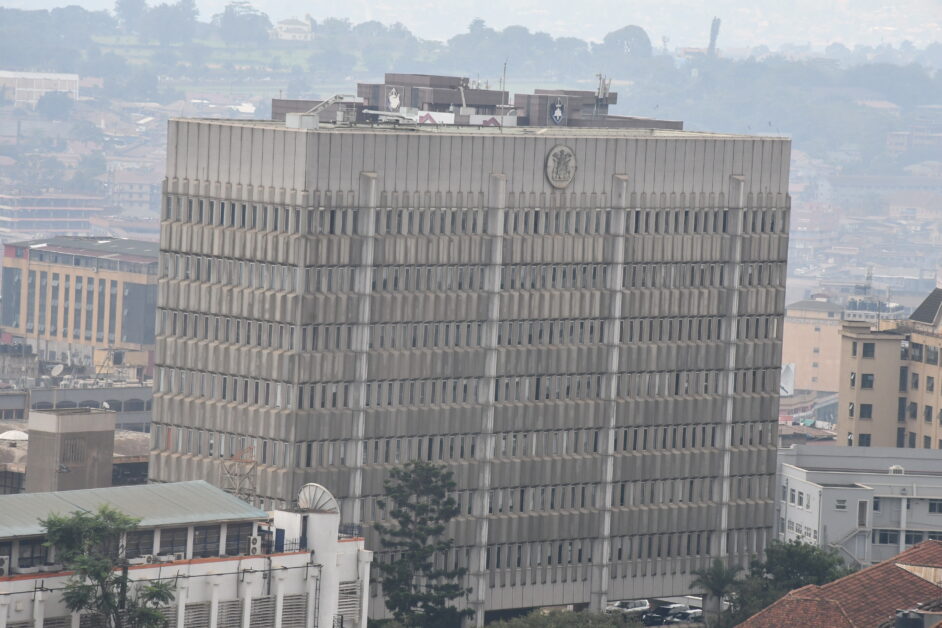
Confidence, accountability and the future of bank resolution
For depositors, investors and policymakers, the issue at stake is not merely historical.
Bank failures and how they are handled go to the heart of confidence in the financial system.
A resolution framework that is transparent, predictable, and fair strengthens trust in the banking sector. Conversely, lingering questions about how banks are closed, how assets are valued, and how creditors are treated can undermine public confidence in the institutions responsible for safeguarding financial stability.
The COSASE probe sought to confront those risks by recommending stronger safeguards around the supervision and resolution of financial institutions, including clearer procedures, improved documentation, independent valuations, and stronger internal accountability within Bank of Uganda.
Seven years later, however, the status of those reforms remains a matter of continuing public interest, particularly as Uganda’s financial system evolves and the occasional failure of smaller institutions continues to test the resilience of the regulatory framework.
The controversy surrounding the closure and sale of several banks also left a lasting mark on the legacy of the late Prof Emmanuel Tumusiime-Mutebile, who served as governor for two decades.
While widely credited with steering Uganda’s monetary policy and financial sector reforms for much of that period, the disputes arising from some of the bank resolutions, including litigation and the COSASE investigation, cast a shadow over the institution during the latter part of his tenure.
Today, the responsibility for navigating that legacy rests with the current governor, Dr Michael Atingi-Ego.
How the central bank handles the liquidation of previously closed institutions, addresses the procedural concerns raised by Parliament, and manages any future bank failures will inevitably shape perceptions of whether the lessons from the COSASE probe have been fully absorbed.
And future failures cannot be ruled out. Banking is an inherently cyclical sector, and as regulatory capital requirements tighten and economic conditions evolve, weaker institutions can come under pressure.
In that context, the credibility of Uganda’s bank resolution framework, and the transparency with which it is applied, will remain central to maintaining confidence in the country’s financial system.
Seven years after Parliament’s investigation, the question, therefore, persists: has Uganda’s banking regulator truly learned from the past, or are the institutional lessons from the COSASE probe still waiting to be fully embedded?