
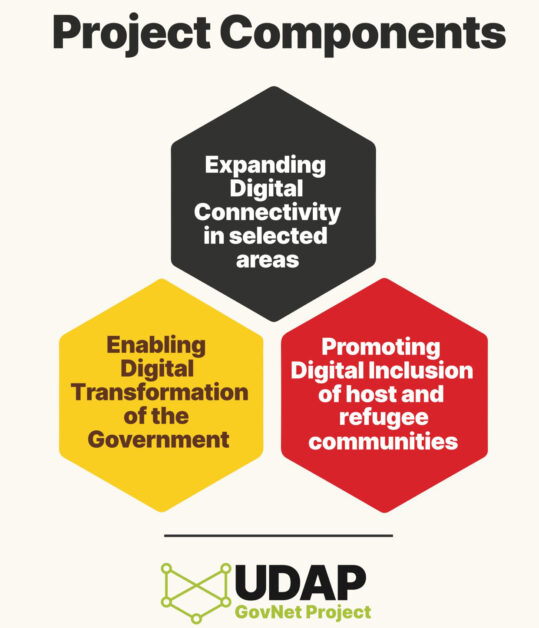
Uganda’s digital transformation is entering a new phase of acceleration under the Uganda Digital Acceleration Project – Government Network (UDAP-GovNet), a flagship national initiative expanding high-speed connectivity across government institutions and underserved communities.
Spearheaded by the National Information Technology Authority – Uganda (NITA-U), the project is not only lowering the cost of internet access for public institutions but also embedding data-driven systems at the core of public service delivery.
From reducing hospital waiting times through digital health records to enabling refugee youth to participate in the global freelance economy, UDAP-GovNet is gradually redefining how government services are delivered to citizens.
In this interview, NITA-U’s Executive Director, Dr Hatwib Mugasa, reflects on the milestones achieved so far, the challenges encountered along the way, and the broader vision of building a smart and inclusive digital Uganda.
The Uganda Digital Acceleration Project – Government Network (UDAP-GovNet) aims to expand high-speed internet access in selected areas. What would you consider the most significant achievements so far?
One of our most significant achievements has been the pre-purchase of bulk internet bandwidth, which is poised to substantially reduce connectivity costs and speed for government entities.
This strategic move will enable more institutions to come online affordably and sustainably.
Additionally, the Digital Village Register has mapped the specific needs of rural communities, ensuring that our expansion efforts are data-driven and inclusive.
We are also finalising last-mile connectivity projects that will bring internet access to millions of Ugandans, particularly in hard-to-reach areas such as refugee-hosting communities across the country.
How has improved UDAP-GovNet connectivity translated into measurable efficiency gains in public service delivery across key sectors?
The transformation is best described as a shift from long queues to the click of a button. In the health sector, improved connectivity has enabled the pilot implementation of digital health records, reducing patient waiting times by nearly 40% in connected facilities.
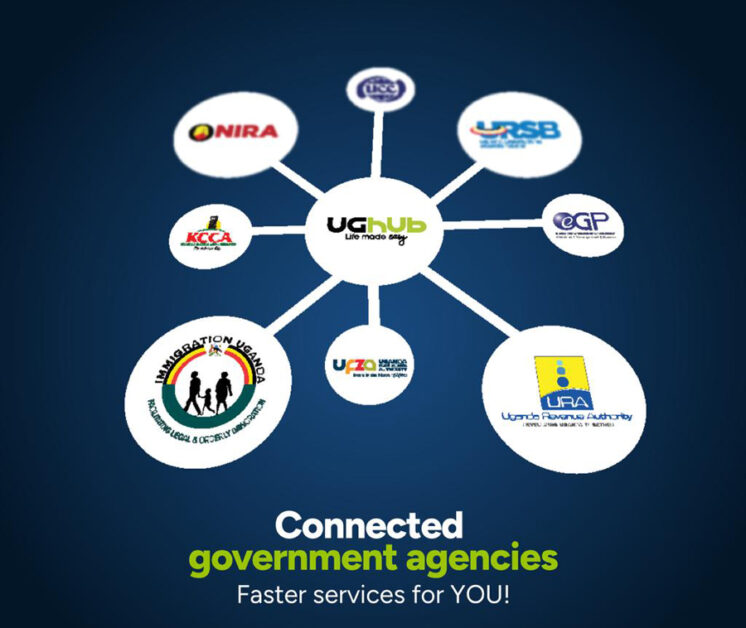
Within local governments, integration through UGHub has accelerated processes such as business licensing.
Beyond serving as government’s IT authority, we act as an efficiency partner across ministries and agencies. In just the last six months, our integration platform, UGHub, has processed over 26 million transactions, demonstrating tangible improvements in service delivery.
What compelling impact story can we expect from host communities or refugee settlements that demonstrate the project’s real-life transformation?
Working with the Office of the Prime Minister and other development agencies, we are establishing nearly 20 community telecentres that enable refugee youth to access international freelance opportunities.
In the near future, we expect to see a young person who previously had no connection to the global marketplace providing graphic design services to clients in Europe and beyond.
What we are providing is more than just internet access; it is a gateway to the global economy, proving that opportunity is no longer limited by geography.
In what ways will the expanded digital infrastructure stimulate innovation, entrepreneurship, or socio-economic inclusion, particularly for youth, women, and vulnerable groups?
What we are doing is democratizing opportunity. Through our Digital Skills Acceleration Program, we specifically target women entrepreneurs, equipping them with the skills to leverage e-commerce platforms and access markets beyond their local communities.
For instance, the e-commerce platform for crafts and souvenirs that we are developing in partnership with the Ministry of Tourism, Wildlife and Antiquities will enable a mother in Bwindi to sell her products online and earn income for her family.
In terms of education, we are supporting the upgrade of the U-Learn platform, an e-learning platform that facilitates continuous professional development for teachers.
Through the Uganda Digital Acceleration Project (UDAP-GovNet), this upgrade will expand the U-Learn platform to serve up to 10,000 teachers, offering more interactive, engaging, and diversified digital learning content to enhance their professional growth and classroom effectiveness.
True inclusion means ensuring that a woman operating in a rural market has access to the same digital tools as anyone else in the capital.
The project integrates strong environmental safeguards. How has NITA-U balanced rapid digital infrastructure expansion with environmental protection and regulatory compliance?
Digital transformation must go hand in hand with environmental responsibility. At NITA-U, Environmental and Social (E&S) safeguards are embedded across the entire project lifecycle.
 Driving Transformation: Mercy Kainobwisho’s Five-Year Turnaround Has Transformed URSB From Legacy to a Digital Powerhouse
All our procurement processes integrate E&S requirements at the bidding stage, ensuring that contractors and service providers fully comply with environmental and social standards before implementation begins.
For civil works–related subprojects such as the Service Uganda Centres (SUC), all required environmental and social instruments are prepared, reviewed, approved, and publicly disclosed in line with regulatory requirements.
We also require mandatory E&S training for all contractors and suppliers to ensure responsible implementation. In addition, we actively engage surrounding stakeholders, including refugees and host communities, by sensitising them about project activities and providing clear grievance management mechanisms.
On environmental management, we enforce a strict e-waste disposal policy to ensure obsolete equipment is handled responsibly.
We are also in the process of establishing a national E-Waste Management Centre to strengthen the country’s capacity to manage electronic and electrical waste sustainably.
Furthermore, Environmental Impact Assessments guide the deployment of digital infrastructure. These assessments have enabled us to redesign or reroute infrastructure to protect fragile ecosystems such as wetlands, national parks, and floodplains.
What have been the most significant implementation challenges, technical, environmental, or institutionaland how have they been addressed?
We refer to it as the “triple challenge”: geography, rights of way, and digital literacy.
Uganda’s terrain, while beautiful, presents logistical challenges for fibre deployment in terms of reach and rights of way. To address this, we shall use a hybrid connectivity model that combines fibre with satellite technology.
The geography also presents power challenges. To manage this, we are relying primarily on green energy solutions, particularly in hard-to-reach areas, which is a sustainable approach even after implementation.
On rights of way, we have partnered with relevant authorities, including leveraging road reserves, to streamline deployment.
To tackle digital literacy gaps, we launched the “Beera Ku Guard” campaign, promoting the safe and confident use of digital tools among citizens.
How is NITA-U ensuring sustainability, both financially and operationally, beyond the initial project lifecycle?
NITA-U operates under a commercialisation model that generates revenue from both public and private sector entities through a range of services, including internet access, lit capacity, dark fibre, and colocation on the National Backbone Infrastructure (NBI).
This model generates over UGX 60 billion annually, which supports network maintenance, upgrades, and expansion to connect more institutions and users.
To ensure long-term sustainability, NITA-U also periodically reviews its business models, pricing frameworks, and service portfolio to align with evolving market dynamics, increase infrastructure uptake, and introduce new services.
This approach supports the development of a self-sustaining digital infrastructure ecosystem.
What governance and monitoring mechanisms are in place to ensure accountability, quality control, and adherence to environmental and social standards?
We operate under a Results-Based Framework, where every disbursement is tied to clearly defined milestones to ensure accountability and measurable progress.
Before project implementation, Environmental and Social Impact Assessments (ESIAs) are conducted to identify potential risks and define appropriate mitigation measures throughout the project life cycle.
To ensure compliance, we have dedicated Monitoring and Evaluation, Environmental, and Social Development specialists who conduct regular field monitoring to verify that safeguards are fully implemented.
We have also established a grievance redress mechanism to ensure that concerns arising from project implementation are addressed transparently and promptly.
In addition, our IT Certification Office ensures that all contractors and service providers meet internationally recognised ISO standards, maintaining quality and compliance across the project.