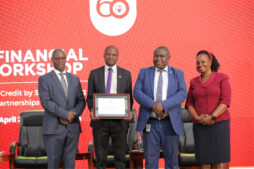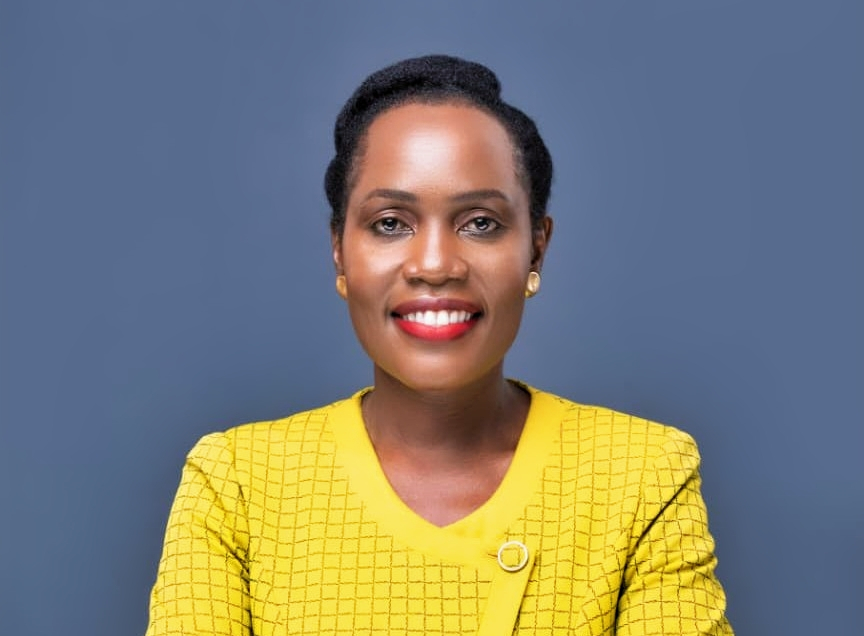
“Pressure and results don’t have to come at the expense of humanity; they can be amplified by it,” says Irene Mwoyogwona, the award-winning CFO of Pride Bank Limited and winner of the Leadership Award 2025 at the 9th edition of the Chief Financial Officer Awards 2025– an initiative of ACCA Uganda and Deloitte Uganda.
Irene sits down with CEO East Africa Magazine’s Paul Murungi to discuss what true leadership means in the high-stakes world of finance.
She explains that her greatest fulfilment comes from creating spaces where people flourish and capacity is multiplied, proving that profitability and purpose can coexist.
She delves into the pivotal moments—from implementing new core systems to navigating the COVID-19 pandemic—that shaped her belief that sustainable results start with investing in people and leading with empathy and accountability.
Irene, congratulations on this leadership honour. What does this recognition mean to you personally — especially in a space where leadership is often defined by pressure and results?
This recognition is deeply humbling because it represents more than individual achievement; it reflects the collective effort of an incredible team at Pride Bank. In finance, we’re often measured by numbers and quarterly targets, but true leadership is about the people behind those numbers. This award validates that sustainable results come from investing in people, fostering trust, and leading with purpose. Personally, it reminds me that pressure and results don’t have to come at the expense of humanity; they can be amplified by it.
What inspired you to enter finance, and when did you begin to see it as a calling for service and transformation rather than just numbers?
I was initially drawn to finance because of its precision and logic—the way numbers tell stories about businesses and economies. But the transformation happened when I witnessed firsthand how financial inclusion could change lives. At Pride Bank, we’re not just managing balance sheets; we’re transforming lives and enabling dreams—a woman starting her first business, a farmer expanding operations, a family building security. That’s when I realised finance is a powerful tool for social impact. The numbers matter, but they’re a means to a much greater end: dignity, opportunity, and transformation for communities.
What moments in your journey most shaped your leadership philosophy — the ones that made you the kind of leader you are today?
One pivotal moment was when the company was implementing a new core banking system at Pride Microfinance Ltd before transforming into Pride Bank. I learned that a leader achieves results through people and that it was triple important to assign your best staff to critical projects and focus the entire staff on that one thing for its success. Another defining moment came during the COVID-19 pandemic. I learned the need for quick flexibility even in adverse circumstances and that change management isn’t about perfect strategy, it’s about bringing people along, addressing their fears, and co-creating the vision. These experiences taught me that leadership is less about being the smartest person in the room and more about creating space where everyone can contribute their best thinking.
True leadership requires both empathy and accountability. How do you balance those qualities in your daily decisions?
I’ve learned that empathy and accountability aren’t opposing forces; they’re complementary. Empathy helps me understand the context behind performance issues or challenges, while accountability ensures we maintain standards and integrity. In practice, this means having honest conversations rooted in care. If someone is underperforming, I approach it with curiosity first: What obstacles are they facing? What support do they need? But I’m also clear about expectations and consequences. People respect leaders who care enough to be honest with them. The balance comes from remembering that accountability without empathy is harsh, but empathy without accountability is enabling—neither serves the person or organisation.
Legacy can mean many things — systems, culture, or values. What kind of legacy do you want to leave at Pride Bank and in Uganda’s financial sector?
I want to leave behind a culture where financial excellence and social impact are inseparable—where we prove that profitability and purpose can coexist. At Pride Bank, I hope my legacy is a stronger, more resilient institution with systems that outlast any individual leader. More broadly, I want to contribute to a financial sector that sees its role in nation-building, that embraces innovation while maintaining ethical grounding, and that creates pathways for diverse talent—especially women—to lead. If I can help shift the narrative from “finance as extraction” to “finance as enablement,” that would be meaningful.
What keeps you grounded when the demands of leadership become overwhelming — where do you draw strength from?
My faith in God and trusted family & friends are my anchors. They remind me of what truly matters when the pressures of leadership threaten perspective. I also draw strength from the very people we serve—when I meet a client whose life has been transformed through access to financial services, it reconnects me to purpose. Additionally, I’ve learned the importance of community—surrounding myself with mentors and fellow leaders who understand the journey, who can offer wisdom in difficult moments. And honestly, I’ve learned to embrace vulnerability. Admitting it when I’m stretched thin or seeking help isn’t weakness; it’s wisdom.
What reforms, initiatives, or cultural shifts under your leadership do you feel most proud of, and why?
I’m most proud of leading the transformation committee that saw the institution change from Pride Microfinance Ltd to Pride Bank Ltd in May 2025. I’m also proud of our strengthened risk management framework and governance structures, which have positioned Pride Bank for sustainable growth. But beyond systems, I’m proud of mentoring and nurturing young professionals to bring out their best, propose innovations, even make mistakes as part of learning and pursue their dreams in fulfilling their destiny. These initiatives matter because they ensure the institution isn’t dependent on any single individual and because they represent investing in Uganda’s next generation of financial leaders.
How have your personal experiences — as a woman, a professional, or a mentor — influenced how you lead and inspire others?
Being a woman in finance leadership has given me both challenges and insights. I’ve navigated spaces where I had to prove myself repeatedly, where my voice was sometimes overlooked. Those experiences made me determined to create environments where talent is recognised regardless of gender. As a mentor, I’ve learned that representation matters—young women need to see it’s possible and not limit themselves. I lead with intentional inclusion, ensuring diverse voices are heard in decision-making. My experiences also taught me resilience and the importance of lifting others as you climb. I don’t just want to occupy leadership space; I want to expand it for others.
What do you find most fulfilling about leading a team — seeing results, watching people grow, or something deeper?
While results matter, my greatest fulfilment comes from watching people discover capabilities they didn’t know they had. There’s something profound about creating conditions where someone can flourish, stepping back and watching them exceed even their own expectations. I love it when a team member who was once hesitant begins to confidently lead initiatives, or when someone tells me that something I said or did helped them navigate a difficult moment. Leadership is ultimately about multiplication—multiplying impact, capacity, and possibility. That’s deeply fulfilling because it extends far beyond my individual contribution.
What advice would you give to women and young professionals who want to rise with integrity and make a meaningful difference in finance?
First, invest in deep competence—excellence is non-negotiable. Master your craft, understand the fundamentals, and never stop learning. Second, find your voice and use it. Don’t wait until you feel perfectly ready; confidence often comes through action, not before it. Third, build genuine relationships. The best opportunities often come from people who’ve witnessed your character and capability. Fourth, define success on your own terms; don’t let others’ metrics dictate your sense of fulfilment. Finally, remember that integrity isn’t about perfection; it’s about consistency between your values and actions, even when it’s costly. The finance sector needs leaders who can deliver results while maintaining moral clarity.
Years from now, when people talk about your leadership, what do you hope they’ll remember — not just about what you did, but about how you made them feel?
I hope they remember that I saw them—truly saw their potential, their struggles, their humanity. I hope they remember being challenged to bring out the best in them, feeling appreciated and valued, not as resources or means to an end, but as whole people with dignity and worth. I’d want them to say, “She challenged us to be better while making us feel capable of rising to that challenge. She created a space where we could be excellent and human at the same time.” If I can be remembered as someone who combined high standards with deep care, who led with both conviction and humility, and who left people feeling more empowered than when they met, that would be a legacy worth leaving.