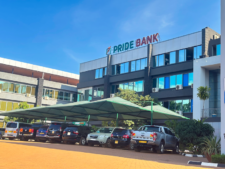
Pride Bank Limited has taken a decisive step into the future of sustainable finance, becoming the first Tier II financial institution in Uganda to secure the Sustainability Standards Certification (SSCI), a globally recognised framework developed by the European Organisation for Sustainable Development.
The milestone signals more than just compliance—it reflects a deeper institutional transformation that positions the bank at the forefront of a rapidly evolving financial ecosystem where sustainability is no longer optional, but strategic.
At a time when Uganda’s banking sector is aligning with global sustainability and climate disclosure frameworks, Pride Bank’s certification places it ahead of the curve, setting a new benchmark for mid-tier financial institutions navigating this transition.
From Compliance to Transformation
For Pride Bank, the SSCI certification is not merely a badge of honour but a reflection of a deliberate shift in how the institution defines growth, manages risk, and creates value.
Edward Mutyaba, Head of Risk Management, describes the certification as a turning point in the bank’s operational philosophy.
“This certification is a recognition of compliance with sustainability standards and represents profound institutional transformation. Management aligned the institution’s strategy, operations, and culture with sustainability principles that ensure Pride creates long-term value for stakeholders and communities,” he said.
This transformation has seen the bank embed sustainability into its core decision-making processes—redefining everything from lending practices and risk management to internal culture and stakeholder engagement.
The outcome is a more resilient institution, better equipped to navigate economic shocks, technological disruptions, and emerging environmental risks, while simultaneously delivering inclusive growth.
A Strategic Bet on Sustainable Value Creation
Central to Pride Bank’s sustainability journey is the adoption of a comprehensive Value Creation Model that integrates technology, human capital, and business processes into a cohesive system designed to drive both operational excellence and long-term impact.
This model is anchored on three High Impact Goals aligned with the United Nations Sustainable Development Goals (SDGs). These include Improving quality of life through safer, better-paying jobs, Promoting entrepreneurship and innovation and Expanding inclusive prosperity, particularly in underserved and structurally weak regions.
This strategic alignment reflects a broader shift within financial services—from profit-centric models to purpose-driven banking that balances financial returns with social and environmental impact.
In practical terms, this positions Pride Bank to deepen its footprint in Uganda’s MSME sector, rural economies, and emerging entrepreneurial ecosystems—segments that are increasingly critical to national economic growth but often underserved by traditional banking models.
Backed by Global Standards and Local Partnerships
The certification process was supported by key development partners, notably the Uganda Development Bank (UDB), which has been instrumental in promoting sustainability standards across the country’s financial sector.
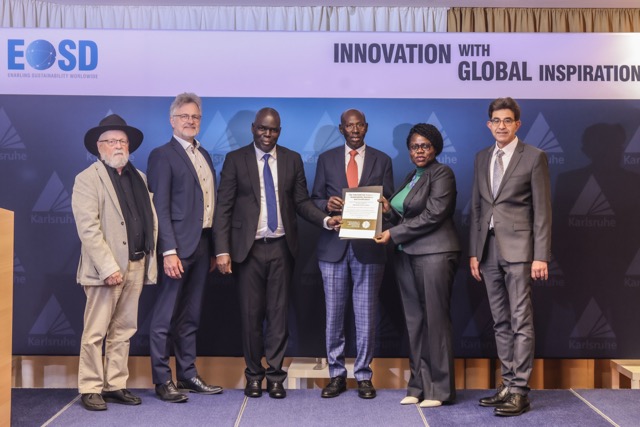
At the official handover ceremony, Arshad Rab, CEO of the European Organisation for Sustainable Development, commended Pride Bank’s forward-thinking approach.
“Pride Bank has demonstrated compliance with international standards and a forward-looking approach to value creation and resilience in emerging markets,” he noted.
This endorsement not only validates Pride Bank’s internal reforms but also enhances its credibility in the eyes of international investors, development finance institutions, and global partners.
Riding the Wave of Regulatory Change
Pride Bank’s achievement comes at a critical juncture for Uganda’s banking industry.
Starting in 2025, financial institutions are required to adopt IFRS S1 and S2 standards—global frameworks that mandate the disclosure of sustainability and climate-related risks. At the same time, alignment with international regulations such as the EU Corporate Sustainability Reporting Directive (CSRD) is becoming increasingly important for institutions seeking access to global capital markets.
In this context, Pride Bank’s early adoption of internationally recognised sustainability standards provides a significant competitive advantage.
It not only ensures regulatory readiness but also positions the bank as a credible player in cross-border financial ecosystems, where ESG (Environmental, Social, Governance) compliance is rapidly becoming a prerequisite for participation.
A First-Mover Advantage in Tier II Banking
While several Tier I banks in Uganda have begun integrating sustainability into their operations, Pride Bank’s SSCI certification distinguishes it within the Tier II segment—a category traditionally focused on microfinance and retail banking.
By achieving this milestone, Pride Bank has effectively redefined expectations for mid-tier financial institutions, demonstrating that sustainability leadership is not the preserve of large commercial banks alone.
This first-mover advantage could translate into tangible business benefits, including: Enhanced access to concessional and green financing, Stronger partnerships with development finance institutions, Increased customer trust and brand differentiation and Improved risk management and long-term profitability.
In an industry where margins are tightening and competition is intensifying, these advantages could prove decisive.
Translating Certification into Impact
While the certification marks a significant achievement, the real test lies ahead.
Pride Bank’s next phase will focus on translating sustainability principles into measurable outcomes—through innovative financial products, deeper community engagement, and continued investment in technology and talent.
This includes expanding inclusive financial solutions tailored to underserved populations, supporting climate-resilient enterprises, and embedding ESG considerations into lending and investment decisions.
The bank’s leadership has made it clear that sustainability is not a one-off project but an ongoing journey—one that will require continuous adaptation, innovation, and accountability.
A New Chapter for Pride Bank
Formerly Pride Microfinance (MDI), the institution transitioned to Tier II status in November 2025, becoming Pride Bank Limited. This structural evolution has been accompanied by a broader strategic repositioning—from a microfinance institution to a fully-fledged bank with national reach and expanded capabilities.
The SSCI certification now adds another layer to this transformation, reinforcing the bank’s purpose of “transforming lives responsibly” and its commitment to building a resilient, inclusive, and sustainable financial future.
The Bigger Picture
Pride Bank’s milestone reflects a broader shift within Uganda’s financial sector—one where sustainability is increasingly seen as a driver of competitiveness rather than a compliance burden.
As global capital flows become more ESG-sensitive and regulatory expectations continue to rise, institutions that move early to embed sustainability into their DNA are likely to emerge as long-term winners.
For Pride Bank, the certification is both a culmination and a starting point—a signal that the institution is ready not just to participate in the future of banking, but to help shape it.