Without customers, no business survives. In telecoms, especially, where switching costs are low and competition is relentless, loyalty cannot be assumed; it must be earned daily.
Customers are not merely users of airtime, data, or mobile money; they are the ultimate arbiters of trust, the heartbeat that determines whether a network grows or bleeds.
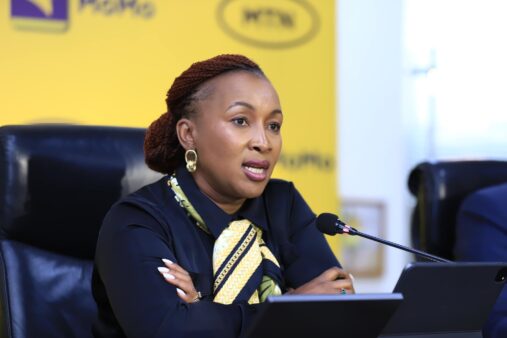
In conversation with CEO East Africa Magazine, Helen Wanyana Ddungu reflects on her journey, her leadership philosophy, and what customers can expect in her first 90 days as Director of Customer Experience at Airtel Uganda.
Your journey began in banking. How did that prepare you for this role?
I began my career 20 years ago as a bank teller. Starting at the front line taught me something that has never left me: everything revolves around the customer. In banking, products are often similar. What distinguishes one institution from another is the experience delivered around those products.
Customers are not concerned with our internal processes, system constraints or organisational structures. They simply want efficient, respectful service. That early lesson shaped my thinking. Even when a customer raises a complaint, that is not an inconvenience; it is a defining moment. It is when you must be at your best.
Over the years, I have led large teams managing end-to-end customer operations, focusing on first-contact resolution, digital enablement and service improvement driven by customer feedback. I have always believed in solving root causes rather than applying temporary fixes.
Now, at Airtel Uganda, I bring that same philosophy into telecoms, where experience is arguably even more visible and immediate. I see an opportunity to make every customer interaction seamless, transparent, and trustworthy.
The reality is that switching providers costs in both banking and telecoms are low. Customers will vote with their feet. Therefore, empathy, clarity and accountability are not optional; they are essential.
What has consistently defined your career?
Accountability.
I hold myself accountable to myself and to my team. When I let people down, it genuinely affects me.
At the end of each day, I ask myself whether I was a good leader. Could I have handled something better? Did I show up in the way I expected my team to? That discipline of self-reflection has shaped my growth, especially during the early years of my leadership journey when not everything went right.
If I expect punctuality, professionalism and customer focus from my team, I must model it. Leadership credibility is built in small, daily behaviours. Accountability is not something I demand; it is something I practise.
When you speak about “customer experience” at Airtel Uganda, what do you mean in practical terms?
Customer experience is not a department. It is an organisational culture. Every function, from retail and billing to network operations and digital teams, serves a customer, directly or indirectly.
In practical terms, it means three things.
First, it means understanding and meeting expectations. That requires active listening, anticipating needs and resolving issues quickly and effectively. It also means offering customers multiple accessible channels. That includes shops, call centres, social media and digital platforms and ensuring those channels work consistently.
Second, it means delivering reliability and convenience. In telecoms, this begins with network stability. Customers must be able to connect, transact and communicate without friction. Digital tools must be intuitive, and support must be straightforward.
Finally, customer experience has an emotional dimension. It is not enough for a transaction to be technically successful; the customer must also feel valued and respected. When customers walk away feeling confident in Airtel that is when experience becomes loyalty.
What are the most urgent customer pain points you are determined to address?
One major concern is repeat contact. When customers call multiple times about the same issue, it is a clear sign that something is fundamentally broken. Either the issue was not properly resolved, or ownership was unclear.
Reducing repeat calls is not just about efficiency; it is about restoring confidence. In the next 90 days, I pledge that there will be fewer handoffs and faster resolution, where customers will feel more reliability.
Another issue is inconsistency. Customers should not receive different standards of service depending on which channel they use, which location they visit or which agent they speak to.
Trust is the foundation of retention and growth. However, inconsistency erodes trust quickly because it creates unpredictability, hence high client turnover.
Slow response and resolution times are also critical. Today’s customers equate speed with respect. Even when a solution takes time, timely acknowledgement and clear updates can significantly reduce frustration.
The longer customers wait, the more likely they are to disengage or explore alternatives. I want customers to believe that when they contact Airtel, their issue will be resolved. Not “we will call you back” repeatedly. I pledge that customers will feel heard faster and kept informed, even when solutions take time.
Finally, there is a need for more proactive communication. Organisations often communicate reactively, after a problem arises or when promoting a product. We must instead anticipate needs. If there is a network outage, customers should hear from us before they feel compelled to contact us. Proactive communication strengthens relationships.
I pledge that there will be regular touchpoints built into the customer lifecycle, early-warning signals for service breakdown. That is coupled with communication that anticipates needs instead of reacting to complaints, and Customers will feel understood, valued, and supported, not managed.
Within the first 90 days, customers should feel greater clarity about what to expect, faster acknowledgement when they raise issues, and clearer ownership of their concerns.
The objective is not instant perfection, but visible momentum. Customers should clearly sense that Airtel Uganda is listening, acting, and aligning around their experience.

What fundamentally determines whether Airtel delivers exceptional customer experience?
In telecoms, the network is non-negotiable. Coverage, speed and stability are the foundation of trust. If the network fails, no amount of service recovery can fully compensate. That is why proactive communication during outages and transparency during disruptions are critical.
Equally important is reducing friction in everyday interactions. Recharging, changing plans, resolving complaints or visiting a shop should feel simple. Complexity is often an internal creation, and it is our responsibility to remove it.
First-contact resolution is another decisive factor. Customers must not chase us for solutions. Clear ownership and effective collaboration across teams are essential. When customers say, “When I call, it gets fixed,” that is when we are succeeding.
Finally, an exceptional experience requires anticipation. Rather than waiting for complaints, we must use data and insight to engage customers before issues escalate. When customers feel understood rather than managed, loyalty deepens.
 Nicholas Mukasa Appointed Bank of Namibia Deputy Governor
Self-service is the future, but customers still want humans when things go wrong.
How do you balance digital convenience with human support?
Self-service is undoubtedly the future. Routine transactions such as balance enquiries or bundle purchases should be simple and fully resolved digitally. Undoubtedly, digital channels drive efficiency and convenience when they work well.
However, human support remains indispensable, particularly in moments of complexity or emotion, such as billing disputes, fraud concerns or service disruptions. In those moments, customers are not just seeking information; they want reassurance.
The key is seamless transition. If a customer moves from a chatbot to a human agent, context must follow. There should be no need to repeat information. When digital and human channels operate as one continuous experience, customers stop thinking about the channel and simply feel supported.
At Airtel, the strategy is not “reduce human contact.” But to “increase resolution efficiency while preserving empathy.”
If done right, customers won’t think about the channel. They’ll just feel that Airtel makes things easy when they CAN, and personal when they MUST.
Airtel Money is now a financial service. How are you strengthening trust?
Trust in financial services rests on visibility, speed and transparency. Moreover, Airtel Money is competing with banks.
Customers must feel protected. That means real-time transaction alerts, visible fraud education and simple mechanisms to block accounts when necessary. Fraud prevention is not just technical; it must also be reassuring.
Speed in reversals and dispute resolution is equally important. When money is delayed or sent incorrectly, anxiety rises quickly. Clear service-level agreements, immediate reversals for qualifying transactions and timely updates are critical. Customers should feel that even if something goes wrong, it will be corrected swiftly.
We must:
- Through * 185*10# self-help menu for a reversal.
- Below 50k, we reverse immediately.
- Clear Service Level Agreements (SLAs) for reversals are in place and communicated to the customer.
- The customer is updated when the reversal is completed.
Transparency around fees and limits is another cornerstone. Fees must be clearly displayed before confirmation, limits must be easy to understand, and customers should receive instant digital receipts. Financial trust collapses when customers feel surprised.
Within 90 days, customers should believe that Airtel Money is not just convenient but safe, reliable, and accountable. We believe that when customers trust us with their money, loyalty deepens far beyond telecom.

What is your view on AI in customer support?
AI is a powerful enabler when used responsibly. It is particularly effective in handling high-volume, predictable queries and providing 24/7 availability. It can also assist with intelligent routing, ensuring customers are directed to the correct team more efficiently. It also allows staff to focus on complex issues.
What is working (AI strengths for Airtel Uganda)?
1. Automated self-service for routine queries: AI-powered bots are successfully handling high-volume, low-complexity tasks such as balance inquiries, plan details and eligibility and simple FAQs. This reduces wait times and improves responsiveness.
This works because these are predictable, repeatable interactions that don’t require emotional judgment or complex reasoning.
2. 24/7 availability: Customers expect instant service any time of day. AI provides continuous support without staffing constraints and immediate responses outside business hours. This increases perceived reliability.
3. Contextual routing and triage: AI can analyse early input and route customers to the right human queue. For example, billing issues, technical network complaints and Airtel Money support. This reduces transfers and improves first-contact resolution.
What is not working with AI?
- Handling complex, emotional, or financial disputes: AI still struggles when context matters, and empathy is required.
Customers with billing disputes, fraud concerns, or network complaints still prefer real human interaction, and rightly so.
- Language, nuance and local context: In Uganda, customers speak multiple languages and dialects, and phrasing varies widely.
Current AI often misinterprets local expressions. This breaks trust instead of building it.
In summary, AI at Airtel Uganda should deliver speed without sacrificing trust, automation without frustration, and efficiency without losing the human touch.
The goal is not AI for its own sake. It is AI that works in the service of the customer, enhancing reliability, empathy, and outcome clarity.
Therefore, AI must complement, not replace, human judgment. Its purpose is to increase efficiency without sacrificing empathy.
What metrics matter most to you?
- Net Promoter Score (NPS) – The loyalty signal: NPS tells us whether customers would actively recommend Airtel. However, I don’t treat NPS as a vanity score, but as a diagnostic tool…
- What’s driving promoters?What’s creating detractors?
- Which touchpoints are hurting us most?
- Customers should feel: “Airtel is genuinely improving.”
- First-Contact Resolution (FCR) – The effort indicator: If customers must contact us twice, we have failed, which directly correlates with satisfaction and cost efficiency. Therefore, the focus is to reduce repeat calls. Customers should feel: “It gets resolved the first time.”
- Complaint Resolution Time – The trust builder: In telecom and financial services, time equals anxiety. Especially for billing disputes, Airtel Money reversals and network-related complaints
- The target mindset is having clear SLAs, reduced average resolution time, and proactive status updates. Ultimately, the customers should feel: “Even when there’s an issue, it’s handled quickly.”
- Churn Rate – The ultimate truth metric: Churn is the most honest metric in telecom. If customers leave, it reflects network experience, pricing perception, service quality and trust. The target is to reduce avoidable churn by attacking root causes, especially repeat complaints. Customers should feel: “There’s no reason to leave.”
- Digital containment with satisfaction: Self-service matters, but only if it works. I track the percentage of issues resolved digitally, digital CSAT and bot-to-agent escalation rates. High containment with low satisfaction is not success. Customers should feel: “Digital works when I use it.”
Beyond the numbers, the real question is whether customers trust us enough to stay, spend and recommend.
What Airtel customers should expect under my leadership?
Internally, I will push for fewer repeat issues, root-cause elimination, and not temporary fixes.
Because ultimately, the metric that matters most is simple: Do customers trust us enough to stay, spend, and recommend? If we improve reliability, reduce effort, and resolve issues quickly, the scores will follow.
If we meet again in 12 months, what would success look like?
Operationally, success would mean improved loyalty indicators, reduced repeat complaints, faster resolution times and measurable improvements in network reliability and digital effectiveness.
But numbers alone are insufficient.
I would want customers to say that the network is reliable, that it is easier to deal with Airtel, that problems are fixed quickly, and that they trust Airtel Money. Most importantly, I would want them to say that Airtel listens.
If customers begin recommending us not because of promotions but because of experience, then we will have achieved something meaningful and sustainable.