Slightly over one year since Uganda Electricity Distribution Company Limited (UEDCL) took over the country’s electricity distribution network from Umeme in April last year, the state-owned utility has plunged into one of the most sweeping internal reorganisations in its recent history.
At least seven senior officials have been replaced in just less than a week in a shake-up that lays bare the turbulence inside the company.
What began last week as a government intervention at the very top of the institution has now cascaded through nearly every critical department of the utility.
The events expose an organisation still struggling to steady itself after inheriting Uganda’s power distribution system.
For many inside the sector, the developments reflect more than a routine restructuring. They reveal the mounting pressure on a company that took over amid enormous public expectations but has since faced relentless scrutiny over persistent outages, operational disruptions, and growing public frustration.
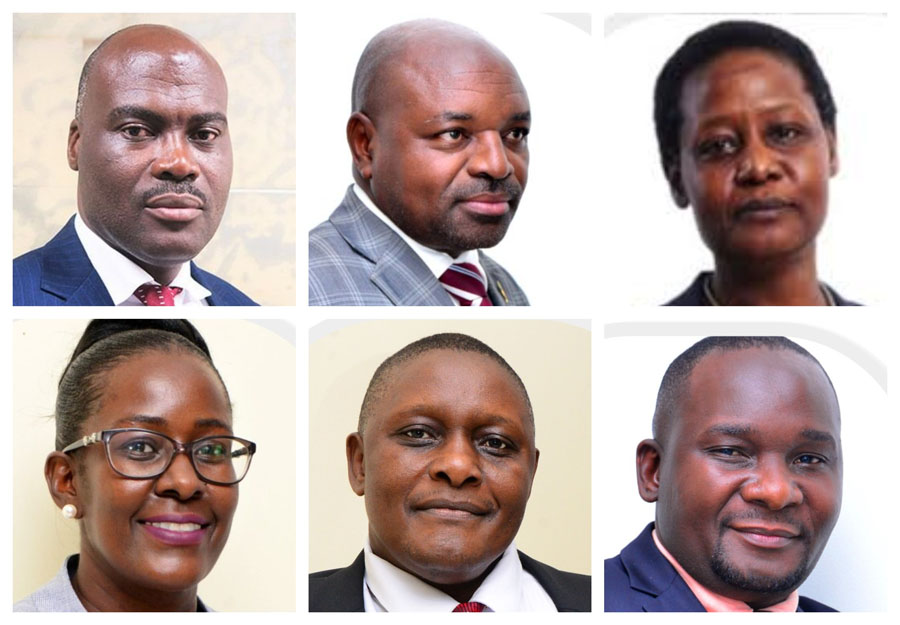
The latest acting appointments, announced on Thursday through an internal memo issued by Acting Managing Director Joselynne R. Rwakakooko, have affected nearly every critical arm of the utility, including engineering, commercial operations, internal audit, corporate affairs, legal affairs, and human resource management.
At the centre of the changes is a broader governance review initiated by government after mounting concerns over UEDCL’s operational performance and management structure.
The reorganisation began days earlier when the Ministry of Energy relieved board chairperson Lydia Ochieng-Obbo of her duties and sent Managing Director Paul Mwesigwa on forced leave pending investigations and what officials described as a comprehensive governance review.
Government subsequently moved quickly to install Stella-Marie Biwaga Cingtho as interim board chairperson, while Rwakakooko was elevated to acting managing director, effectively triggering a wider restructuring process across the institution.
The latest appointments have now extended the restructuring deeper into senior management. Eng Sylver Hategekimana was named acting chief engineering and technical services officer on Thursday, replacing Eng Protaze Tibyakinura.
Isaac Katewanga was appointed acting chief commercial and operations services officer, replacing Rwakakooko after her elevation.
Samuel Omoding replaced Boniface Barongo as acting head of human resources and administration, while Stephen Ilungole took over from Jonan Kiiza as acting head of corporate and stakeholder affairs.
Nickson Ahabwe was appointed acting head of internal audit, replacing Justine Nakagiri Ssemwanga, while Dorothy Mubiru replaced Esther Naikoba Mulyagonja as company secretary.
The changes mean that within days, UEDCL has effectively replaced or reassigned seven senior officials overseeing some of the company’s most sensitive operational and governance functions.
In the memo to staff, Rwakakooko said the leadership changes were intended to strengthen operations and ensure continuity as the company pursues its mandate of delivering “reliable, affordable, and sustainable electricity supply.”
However, the scale of the reorganisation has reinforced perceptions of a utility under intense pressure as government tightens oversight over the company.
The restructuring follows months of growing scrutiny from the Ministry of Energy and the Electricity Regulatory Authority (ERA), which have raised concerns about operational performance amid persistent power outages and customer complaints.
In December, the ministry directed the UEDCL board to investigate the conduct and performance of top management following issues highlighted in ERA’s performance assessment.
Although the Ministry of Energy initially described the process as a routine internal review, tensions escalated after reports emerged that several senior managers faced possible dismissal.
The matter became politically sensitive enough for Prime Minister Robinah Nabbanja to intervene, cautioning against what she described as “massive termination” of managers during a critical period for the electricity sector.
The latest shake-up now appears to confirm that government’s concerns about UEDCL’s governance and operational direction never fully subsided.
The reorganisation also comes at a difficult moment for the company, which has struggled to stabilise electricity supply since taking over the distribution network from Umeme on April 1, 2025.
When government declined to renew Umeme’s 20-year concession, UEDCL inherited the responsibility of managing Uganda’s electricity distribution system.
But as soon as it took over power, blackouts became routine, blaming the ageing infrastructure, overloaded substations, deteriorating poles, and growing consumer demand.
While the company has pointed to inherited network defects and infrastructure weaknesses as major contributors to persistent outages, public frustration over unreliable power supply has continued to grow.
UEDCL has maintained that it inherited infrastructure defects estimated at $85m and has defended its performance by citing gains such as new electricity connections and reduced technical losses.
But the operational challenges have increasingly exposed internal tensions within the sector, particularly between UEDCL and ERA over accountability for the continuing supply disruptions.
The sweeping management changes now place additional focus on whether the utility can restore stability both inside the organisation and across the electricity distribution network.
Frequent leadership changes, especially in acting capacities, risk creating uncertainty in an institution already facing enormous operational and political pressure.
For government, the stakes remain high because the transition from Umeme to UEDCL was one of the most consequential policy decisions in Uganda’s energy sector in two decades.
For consumers, however, the real measure of success will not be management reshuffles but whether the company can finally deliver a stable and reliable electricity supply.