By Zianah Nyiramanza Muddu
The Protection of Sovereignty Bill, 2026, speaks to a real concern. But, as written, it reaches into the daily financial lives of ordinary Ugandans and conflicts with the laws already governing the sector. There is a better way forward.
On any given day in Uganda, a mother receives money from her son working abroad, a small trader secures a digital loan to restock her shop, and a young entrepreneur pays a supplier across the border using nothing more than a phone. These moments are no longer unusual; they are part of everyday life, made possible by a financial system that has steadily connected people to opportunity, to each other, and to the wider world.
The bill’s intention is to shield Uganda from foreign interference. The intention speaks to a real and important concern.
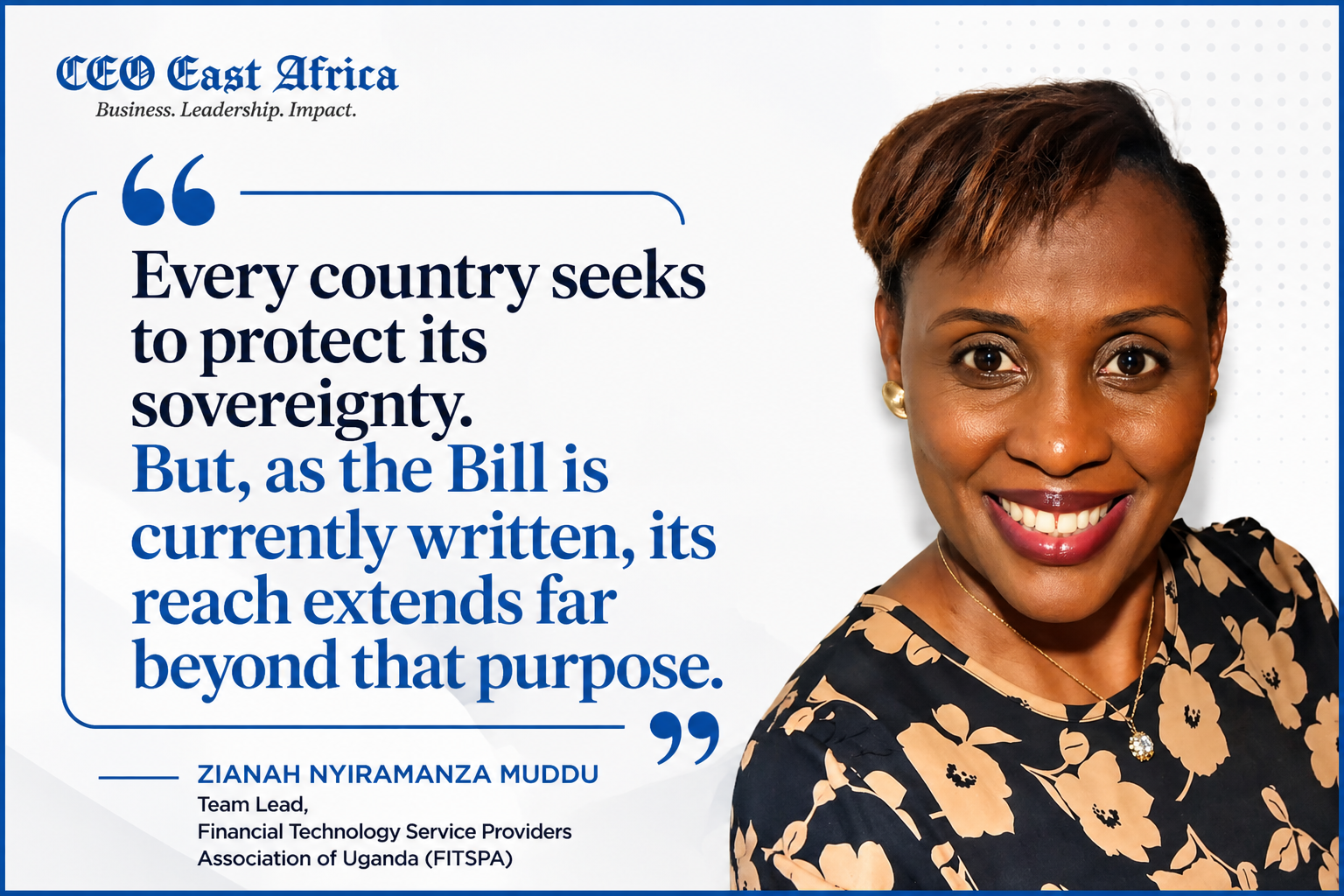
Every country seeks to protect its sovereignty. But, as the Bill is currently written, its reach extends far beyond that purpose. It reaches into the daily financial lives of ordinary Ugandans, into the operations of licensed financial institutions, and into the systems that move more than two billion dollars in remittances into households across the country each year.
Uganda’s digital financial sector does not operate in isolation. The country has built a legal and regulatory framework that governs how financial institutions are licensed, how transactions are monitored, how customer information is protected, and how financial risks are managed. Laws such as the National Payment Systems Act, the Financial Institutions Act, the Anti-Money Laundering Act, the Data Protection and Privacy Act, and the Investment Code Act were designed to work together, creating a system that balances oversight with growth and innovation.
For instance, the National Payment Systems Act places the supervision of cross-border payments under the authority of the Bank of Uganda, ensuring that these transactions are managed within a clear and technically grounded framework. The Bill introduces a parallel requirement, placing similar oversight under the Ministry of Internal Affairs and requiring prior ministerial approval before certain transactions can take place. This creates a situation where two different authorities are expected to regulate the same activity in different ways, leaving institutions unable to comply with both at the same time.
Regulatory Conflict and Legal Uncertainty
The same tension appears in how information is handled. Existing laws require financial institutions to protect customer data and maintain strict confidentiality. The Bill, however, introduces provisions that would require disclosure of foreign funding sources in ways that could expose sensitive information. In trying to comply with one law, institutions would risk breaching another.
There is also a direct impact on investment. The Bill introduces new restrictions and approval requirements that could criminalise transactions that are currently lawful, creating uncertainty in a space where predictability is essential.
At the centre of these issues is the definition of an “agent of a foreigner,” which is so broad that it captures almost any entity that has received foreign funding or is connected to an international partner. In a sector like fintech, where growth has been driven by cross-border investment and collaboration, this effectively places most operating companies within the scope of the Bill.
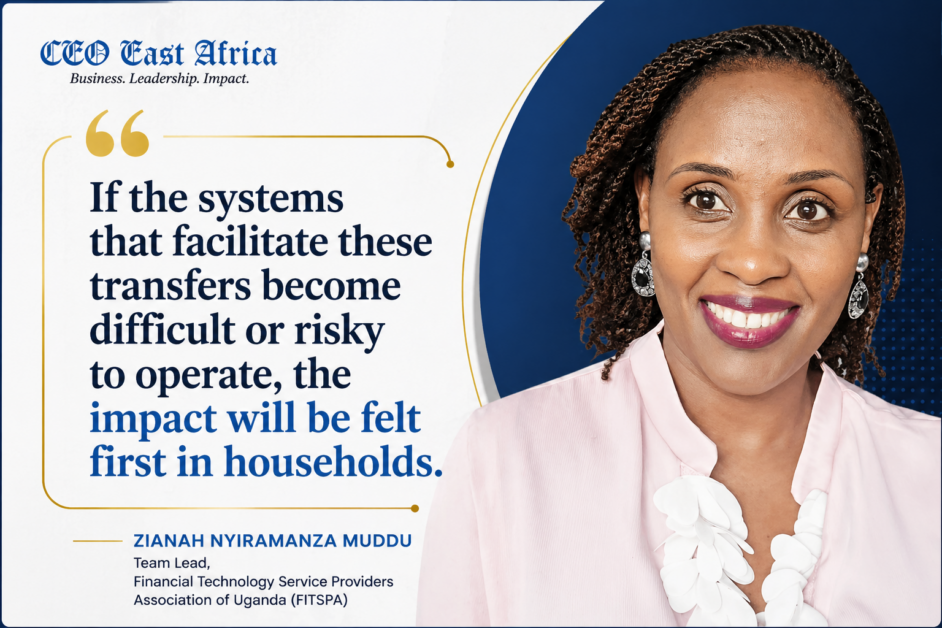
Each year, Uganda receives between two and two-point-four billion dollars in remittances. This money pays school fees, supports families, keeps small businesses running, and sustains livelihoods across the country. If the systems that facilitate these transfers become difficult or risky to operate, the impact will be felt first in households. It will mean delays, uncertainty, and higher costs for people who rely on these funds.
The Real Economic Cost: Households, Businesses, and Remittances
In practical terms, this could translate into delayed school fees, interrupted household income, reduced access to credit, and increased costs for everyday transactions.
There is also a fundamental operational reality that cannot be ignored. Cross-border payments are processed in real time, often settling in seconds across international networks. Requiring prior approval before such transactions can take place is not simply an administrative step; it is incompatible with how these systems function. There is no operational scenario in which both requirements can be met; one will inevitably give way to the other. A more practical approach would be to rely on timely reporting from already supervised institutions, rather than pre-approval of every transaction.
Beyond the immediate effects, there are broader implications for Uganda’s position in the region and the global financial system. The country is part of agreements and frameworks that support the free movement of capital and facilitate trade. It participates in regional payment systems and aligns with international standards designed to ensure transparency and stability. Introducing overlapping and politically driven approval processes risks placing Uganda in conflict with these commitments and weakening its ability to engage effectively within these systems.
Balancing Sovereignty with Economic Stability
When regulatory environments become unpredictable or inconsistent, international partners often respond by reducing their exposure. This can make cross-border transactions more expensive, slower, and less accessible, affecting both businesses and individuals.
None of this suggests that the goal of protecting sovereignty should be set aside. It simply means that the approach must be carefully aligned with the systems that already exist and the realities of how they operate.
There is room to address the concerns the Bill seeks to solve without disrupting the financial infrastructure that millions depend on. The definitions can be refined to focus on genuine risks without capturing legitimate business activity. Institutions that are already regulated can remain under the oversight of the authorities best equipped to supervise them. Cross-border transactions that comply with existing laws can continue without unnecessary barriers. Provisions that create uncertainty can be clarified to ensure that normal financial activities are not unintentionally criminalised.
Uganda has built a financial system that has expanded access, supported businesses, and connected people in ways that were not possible a generation ago. This progress reflects years of effort, policy decisions, and collaboration.
The path forward lies in careful consideration and adjustment, ensuring that the country can protect its sovereignty while preserving the systems that support its people and its economy. The decision at this stage will determine whether the gains made over the years are strengthened or placed at risk.
The writer Zianah Nyiramanza Muddu is a fintech ecosystem builder. She is also the Team Lead at the Financial Technology Service Providers Association of Uganda (FITSPA)