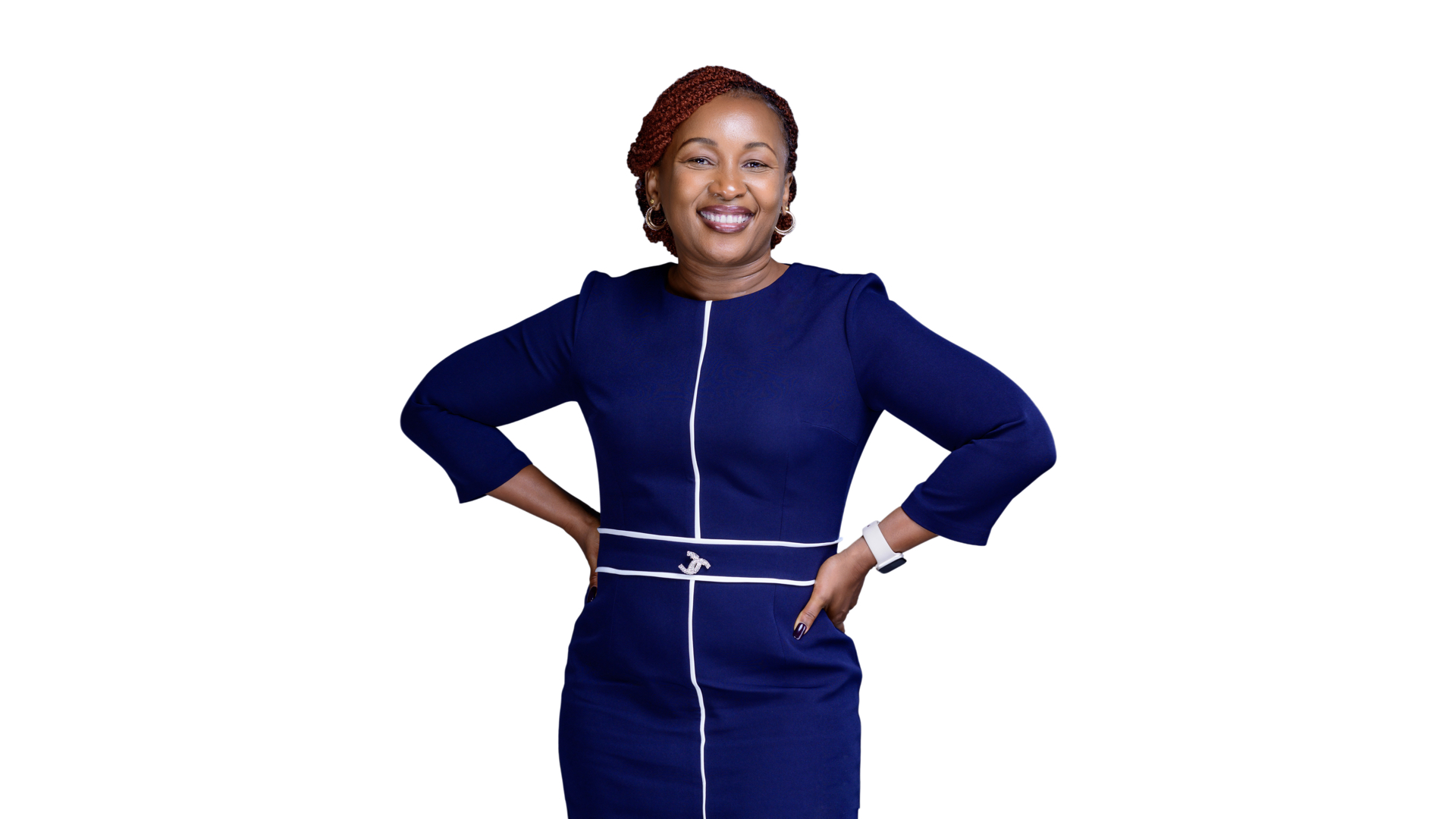
More and more leaders are openly acknowledging the role of faith and prayer in their daily lives and leadership journeys. I’ve also seen you share reflections around this especially on your social channels as well as public fora. Could you speak to how faith and prayer have shaped your approach to leadership and decision-making, both at MTN Uganda and throughout your professional career?
Okay, so the perspective I have about anything that people set out to do is that it has to start from a place of identity. Who are you—without the title? What are your values? What are the things that you believe in? What helps you to steward and navigate the everyday of life?
People are motivated by different things—some by family, others by career growth. For me, I’m motivated by purpose. And I believe that the purpose which drives me comes from understanding who I am and why I was created. Why am I here on this earth?
I view the journey of life—and the journey of leadership that I’ve been on—as an assignment. And that assignment stems from the One who created me. I am His hands and His feet—He sends me. If you look at my social media handles and the descriptors I use, I often say: I live for the audience of One. The Lord is my stage, and the Lord is my audience.
That perspective gives me grounding in how I view everything—work, family, spiritual matters. It’s the lens that colors my world. And for me to connect with my audience of One, that’s where prayer comes in.
I’m a firm believer that God created work. He designed us for work. For those who read the Bible, when God created man, He gave him work. So, the work we do is in fulfilment of a higher purpose. And having that sense of connection—that you’re a dot among many other dots—makes it all feel more fulfilling, because you’re contributing to a greater evolution of what God wants to see on this earth.
So that’s the first part: leadership coming from a place of identity and purpose.
The second part is the awareness that God Himself is a leader. And I look to Him for wisdom. Leadership can be a very lonely journey. Often, you don’t have people you can consult. More often than not, people are looking to you—to guide them, to draw energy from you, to steer them in uncertain situations. Everyone is drawing from you.
So for me, prayer is going to the One I believe is the greatest leader—and asking Him for wisdom and counsel: How exactly should I do this?
Some people call that meditation, right? But I choose to believe that there is a Being higher than myself—who created me—and I can draw from Him. Whether it’s wisdom or just comfort in a lonely season, I find that in Him, in my private space.
And that helps me. It stewards me. It keeps me anchored. And when my cup is refilled, I’m able to pour into others.
Looking back on your recent professional life—or even earlier—are there moments where you paused and thought, ‘That had to be God; it couldn’t have been just me’? Could you share an example of a moment where your faith gave you the strength and clarity to navigate a challenge?
Yeah—many. I have so many of those moments. Personal ones where I just smile and say, “Thank you, God—you delivered me out of that one.” And then there are the big ones, where I’m standing in the face of adversity, with everyone looking to me, and I’m asking, Where are we going to go from here?
I’ve knelt down many times. In fact, I’ve even knelt down in my boardroom, in front of my team, just giving thanks. For me, I’m not ashamed of it. I come from the perspective that if I’m not ashamed of God, He will not be ashamed of me.
And the people around me—they know about my faith. It’s not something I hide. Because I’m deeply conscious of where I’ve come from, of the battles I’ve had to fight. Even getting to where I am today is, in itself, an absolute miracle.
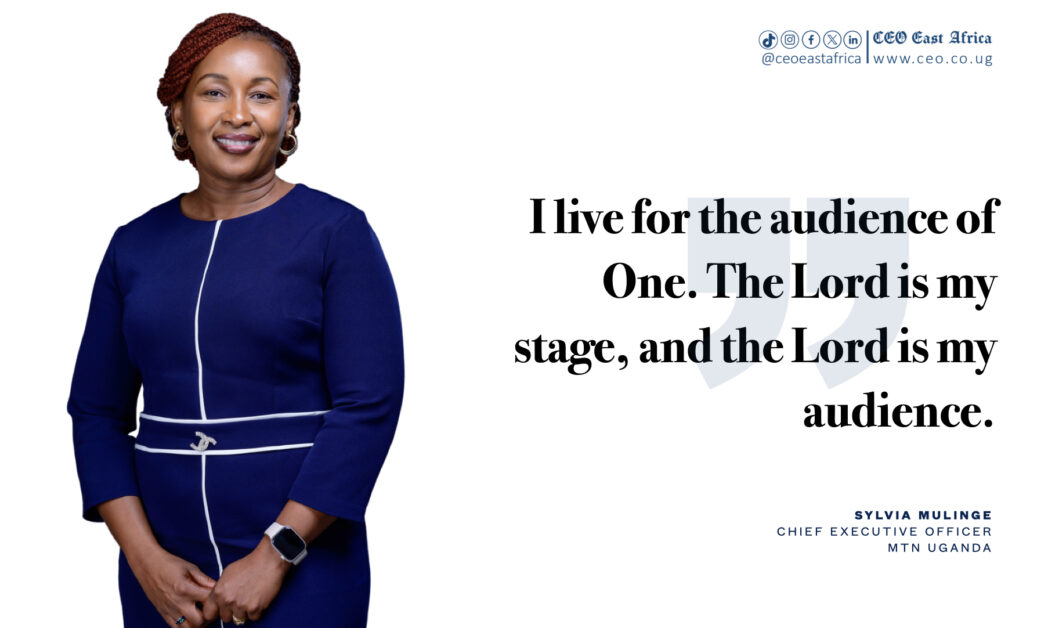
I look at some of the people I went to high school and university with—and our paths could have turned out so differently. Why does God orchestrate one person’s path to be so different from another’s? I’ll never be able to fully answer that. But what it does is keep me grounded—in constant recognition that, for this season, He has me doing this job. And I want to do my very best for Him. Because He is my audience of One.
I’ve seen Him guide me. And no—He never promises that you won’t go through adversity. But we grow at the edges of discomfort. Generals are made in the battlefield, right? Not sitting on the shores or staying in the barracks. And He needs strong generals to go out and fight the battles.
At the end of the day, God loves people. He’s concerned about people. But how can He reach them if He doesn’t have people who are willing to be His hands and feet? That’s why, for me, this is a divine assignment. And I carry it with deep humility and gratitude.
When it comes to bringing prayer into the boardroom—especially in such a public leadership role—do you ever get frowned upon or receive strange looks? How do you handle moments when your expression of faith is misunderstood or questioned?
I don’t—let me be clear—I don’t force it down anyone’s throat. It’s my faith, and it’s the way I express myself. But I don’t expect everyone to agree with me. Everyone has a choice, and this is mine.
The way I see it, for example, if you’re Muslim, it’s widely accepted today that when Muslims are fasting, they may step away from work or, on Fridays, leave the office to go and pray. During Ramadan or any fasting season, we respect that and give them the space to practice their faith.
That’s a form of inclusivity. And just as we make room for them, I believe we should also make room for Christians who are bold enough to express their faith. If a Muslim leader expresses their faith—or chooses to come to work dressed in religious attire like a bui bui—we don’t see that as being exclusive. It’s part of who they are. And we accommodate that, even in our call centers or service shops. If someone’s uniform needs to be adjusted to honor their faith, especially for Muslims, we make that provision.
Why? Because we’re building a workplace where people can express their diversity and where inclusivity is real.
In the same way, people of Christian faith shouldn’t feel they need to hide just because they’re in leadership. We don’t come into the boardroom preaching “Christianese.” No. But we should have the freedom to express our faith without fear or shame, just like anyone else. That’s probably the best way I can explain it.
You’ve mentioned that leadership at the top isn’t always as glamorous as it seems—there are moments of loneliness, pressure, and even breaking down. From your personal experiences, what lessons or insights would you share with other leaders who might be going through similar challenges? Specifically, how can turning to faith and prayer help them navigate such moments, both mentally and emotionally?
 Faith, Integrity and the African Marketplace: Can Ethical Entrepreneurs Survive the System? NFT Group’s Elizabeth Ntege’s Story
I think ultimately, everybody needs to find out what grounds them. There are people who are grounded by meditation. There are people who are grounded by running—fitness—so somebody will get up and run 20 kilometres.
I think the critical thing is that every leader needs to think about: how are they creating room for themselves to be able to refill their cup, as I said earlier?
Now, faith is one such, right? Because faith allows you to be able to connect with your personal values and the identity of who you are.
And I think ultimately, we all have to realize that as human beings, we are made up of our physical self, we are made up of our mental self, we are made up of our spiritual self, and we are also made up of our emotional self. And all of those require that you develop your muscle in each of them.
Why do people go to gyms? Because you want to develop your physical body, and you need the strength to be able to do the assignment that is ahead of you as a leader. And you can’t do that if you’re unhealthy. So you must do that.
Why do you exercise mental fitness? How do you do that? You read. You get involved in conversations or in roundtables with people who help your mental faculty to grow.
How do you exercise and grow your emotional muscle—in terms of how you relate with people? How do you improve your emotional IQ? Either from what you read or what you study or how you’re schooled.
So the other question then is the last one: how do you grow your spiritual muscle?
So all of those make us whole. And I think for somebody to operate as the best version of themselves, they can’t say that they’ll focus on one at the expense of the other.
It’s just that in today’s world, we amplify physical fitness. We probably amplify mental equity and mental fitness more than we amplify spiritual—and maybe even emotional.
So all we are calling for is a balanced human being. And when you’re a balanced human being, then you show up as the best version of yourself. And in that way, you’re able to become a leader that people can emulate or follow. You go beyond creating followers to actually creating other leaders.
How does the spiritual wholeness of a leader—if I may call it that—contribute to shaping the values and culture of an organisation? And by extension, in what ways do you believe faith can influence business growth and help build a strong, values-driven organisation?
I think ultimately—it’s… well, the way I would put it is this: if you lead with values, then the how ends up impacting the what. And the what becomes your outcomes—in terms of business performance and everything else.
But the how is really about the climate you create. What is the climate you’re creating for people? How are you building relationships with your different stakeholders? Who is the person—who is the leader—showing up in front of your team every day?
How do you navigate the organization to become the greatest version of itself? You can’t do that if you’re not grounded as a person.
And that’s where rooting, understanding, and the strength you have in your inner man comes in. Because really, it’s about building your spirit man—to handle the challenges, the opportunities, to marshal the teams and everything else.
That inner capacity—the strength that you grow in your spirit—is what helps you drive the organization toward the outcomes that are so deeply desired. You can’t have a weak spiritual link in leadership. We deal with too many things. We deal with too many uncertainties. You have to make decisions without enough information. You’re facing adversity, unexpected headwinds.
And if you’re not able to rule your spirit—if you don’t have a strong spirit man—it becomes very difficult to succeed.
That’s where the role of faith comes in—especially for me.
Is there anything I haven’t asked that you feel is important to add or emphasize before we wrap up?
Ah, no—nothing else really, but I’d probably just look at it from this perspective: He who created you has a blueprint for your life. So you can’t really orchestrate your life if you don’t understand that blueprint. You have to go back to the One who has it.
It’s just like when you buy something—a tool, a car, any item—it comes with a manual that tells you how to operate it. So how do you operate your life if you don’t go back to speak to the One who created it?
That, for me, really summarizes it.