“I am extremely disappointed. No body gains from the paralysis of these Brexit like discussions.”
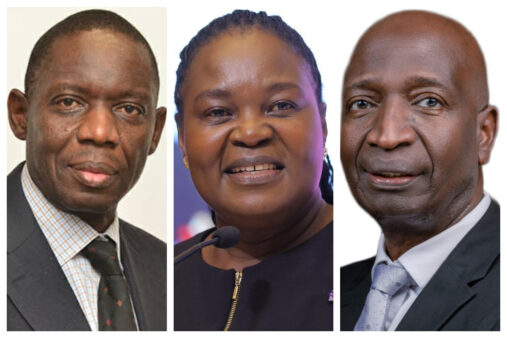
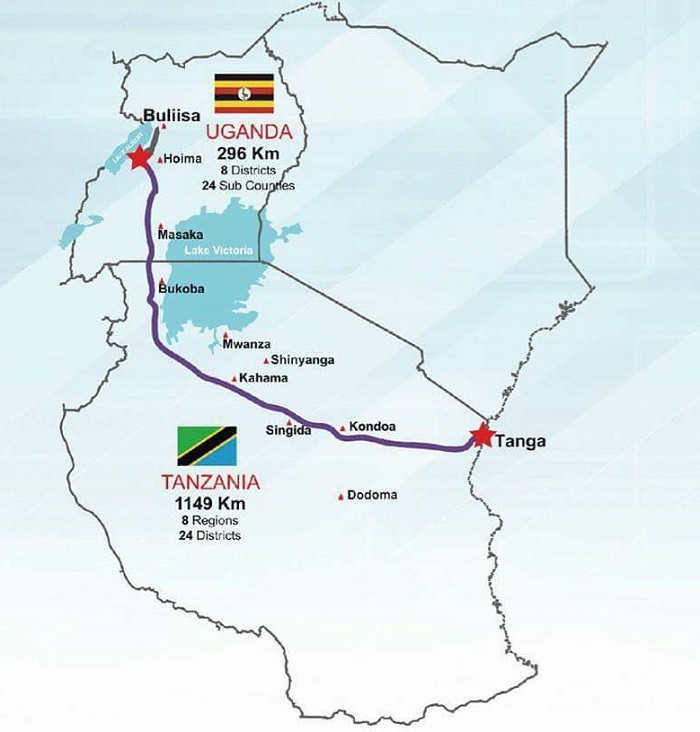
These were the words of Dr. Elly Karuhanga, the Chairman, Uganda Chamber of Mines & Petroleum in response to news that French oil giant, had suspended indefinitely all planned activities on the $3.5 billion and 1,445 km East Africa Crude Oil Pipeline (EACOP).
Total SA is yet to release a formal statement, but an email from Total SA to Main Logistics Contractors on the EACOP, seen by this website, informed them that the “Project is now on hold as bid activity has been suspended indefinitely by Total.”
According to insider sources, privy to the deal, Total’s suspension is related to tax disputes related to the planned acquisition by Total SA & CNOOC of a significant portion of Tullow Oil’s shares.
On January 9, 2017, Total and Tullow entered into a Sale and Purchase Agreement (SPA) whereby Total would acquire 21.57% out of Tullow’s 33.33% interest in the Lake Albert licenses. CNOOC however exercised its right to pre-empt 50% of the transaction and as a result, Total and CNOOC each agreed to acquire 50% of the stake offered by Tullow, which would have each increase their interest to 44.1% while Tullow would have kept 11.8%.
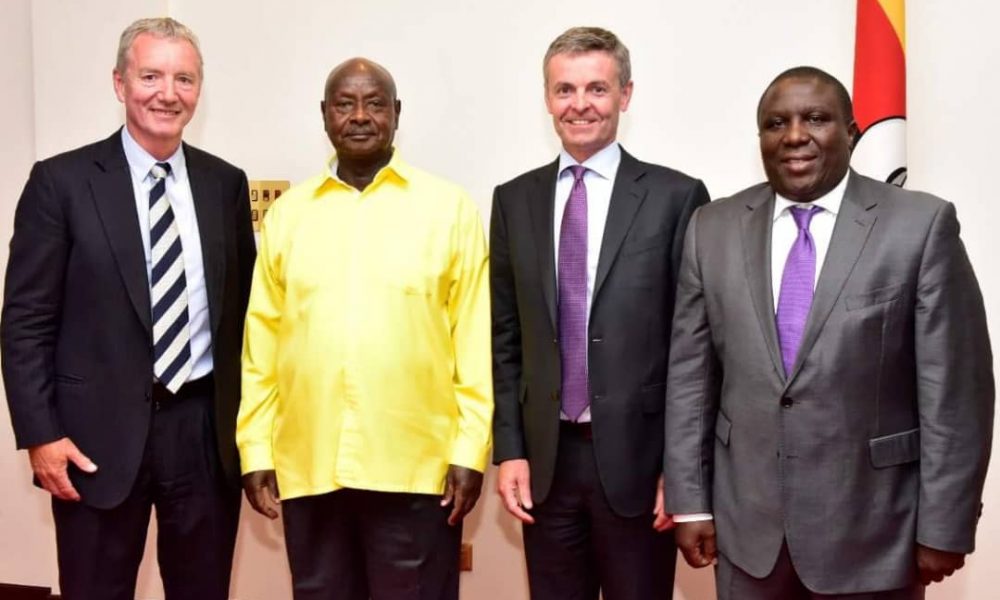
However a spirited tax dispute ensued on Capital Gains Tax payable on the $900 million transaction- an estimated USD167 million (UGX600billion. Again according to insider sources, while an agreement was reached on the CGT- Total and CNOOC offered to foot USD82 million of Tullow’s tax bill, leaving USD85 million for Tullow, one teething issue remained: Government of Uganda refused to allow Total SA and CNOOC to claim this cost as a deductible expenditure for income tax purposes.
This became a deal breaker and after several deadline extensions and a meeting with President Museveni in June 2019, the final deadline for closing the transaction, reached on August 29, 2019, and as such, the Acquisition Agreement had to automatically be terminated- according to statements separately released by both Tullow Oil and Total.
Despite the termination of this agreement, Total in an August 29th statement by Arnaud Breuillac, President Exploration & Production, said that they and their partners (CNOOC and Tullow Oil) were still interested and would continue to focus all their efforts on progressing the development of the Lake Albert oil resources.
“The project is technically mature and we are committed to continuing to work with the Government of Uganda to address the key outstanding issues required to reach an investment decision,” said Arnaud Breuillac.
He however warned that “a stable and suitable legal and fiscal framework remains a critical requirement for investors” moving forward.
Government, on their part, through a statement by Robert Kasande, the energy and minerals ministry Permanent Secretary said that” “Government will continue to work with the Joint Venture Partners (JVPs) to ensure the Final Investment Decision (FID) is achieved at the earliest and in a manner that safeguards the country’s interests and sovereignty, while delivering a healthy return on investment for the licensees. “
Mistrust, shifting agendas and the Museveni Factor
But away from the diplomatic over-the-table statements, according to a soruce familiar with the negotiations, the problem underlying the successive tax disputes between Government of Uganda (GoU) and the three joint venture partners remains the determination by GOU compounded by an overly cautious and sometimes hard-line stance by President Museveni to frontload Uganda’s gains at the expense of the oil companies.
Consequently the oil companies are frustrated by GoU’s desire to secure large financial windfalls from the project prior to the engineering, procurement and construction (EPC) and production phases through whatever means available to them. The oil companies on the other hand insist that both sides should benefit post- EPC and production stages, as per the terms of the Production Sharing Agreement.
 Aga Khan Fund Exits Troubled Nation Media Group After 66 Years, Sells Controlling Stake to Tanzanian Billionaire
“This misalignment has caused a 7-year delay (and counting). Clearly the 3 upstream JV partners have decided to let the farm-down agreement expire to paralyze momentum to Final Investment Decision (FID),” said the source adding that given that 2021 is a campaign year, failure to resolve the deadlock by end of 2019, dims the prospects for a resolution before late 2021.
“It is very difficult to focus government leaders in an election year,” said the source.
Detailing the Museveni factor on the oil negotiations, the expert said that all the previous tax disputes have had a shared pattern, characterised by a standoff that lasts one and a half to three years+; then GOU caves in or an agreement is reached, often at the behest of President Museveni for about half the disputed tax to be paid.
The source also alluded to an “all too apparent” fear amongst the involved GOU technocrats and ministers to take any step or position, albeit reasonable for fear of being accused or suspected of harbouring private interests.
“No one in government can make a $20bn decision freely. Officials would rather play delay tactics until they are sure of the President’s position. Unless Mr. Museveni himself intervenes, you shouldn’t expect a decision soon,” said the source.
“In summary, it is a trust issue. Museveni’s advisers, many of whom are not competent enough to understand the industry or ballsy enough to tell the president any view contrary to his own, have continuously told him not trust anyone on oil issues. As it is, President Museveni does not trust the International Oil Companies and they too do not trust him- they have been shifting goal posts on demands and they seem to want to delay the project until after 2021 when the political future is clearer,” said the source, adding that any delays could cost the country further.
“Uganda continues to lose out big on the delay- we have so far lost about $3 billion in upfront revenue and 3 or so years to first oil. Add that to the fact that most of Uganda’s borrowing and economic growth projections have been pegged to oil, then you see the real impact of this Total SA decision,” said the source.
Local companies to count losses
In an e-mailed response to CEO East Africa Magazine, Emmanuel Mugarura, the Chief Executive Officer of the Association of Uganda Oil and Gas Service Providers (AUGOS) told us that the suspension by Total, was “a very big setback for the industry and for the country.”
“Almost all our members are affected in one way or the other. We have been spending money to build capacity, to build systems, to train and buy equipment in readiness for the industry. Now all that is put to waste until when, I don’t know,” he said.
“We urge the government and IOCs to come back to the negotiating table to save the industry and the country. Many people, both employed directly by IOCS and the service providers will definitely lose jobs and source of income. It is a bleak situation but government and the IOCS can salvage the situation’” said Mugarura.
Elly Karuhanga, on his part expressed measured optimism saying: “We are doing everything possible to get the parties on the drawing board again…Fortunately the oil is still there.”