Government of Uganda is to borrow up to USD1.51 billion (UGX5.7 trillion) from various multilateral lenders, once Parliament approves the motions tabled before it.
According to a parliament brief to the Finance Committee that CEO East Africa has seen, this includes the USD491.5 million already approved by the IMF Executive Board for Uganda and is now awaiting Parliament’s ratification. In fact, according to an April 2nd 2020 motion to Parliament, government had initially planned to borrow USD 250 million from the IMF but following the May 6th 2020 decision by the IMF, the Ministry of Finance withdrew the first USD250 million motion and yesterday, May 20th 2020, tabled a fresh USD491.5 million one.
The IMF loan is to be used for balance of payments support to the Bank of Uganda and budget support and carries 0% interest rate, a grace period of 5 years and 6months and shall mature in 10 years.
Altogether, the Ministry withdrew and re-tabled 3 other motions- all but one, increasing its planned borrowings.
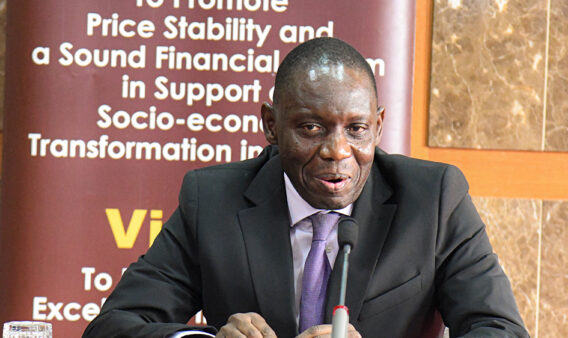
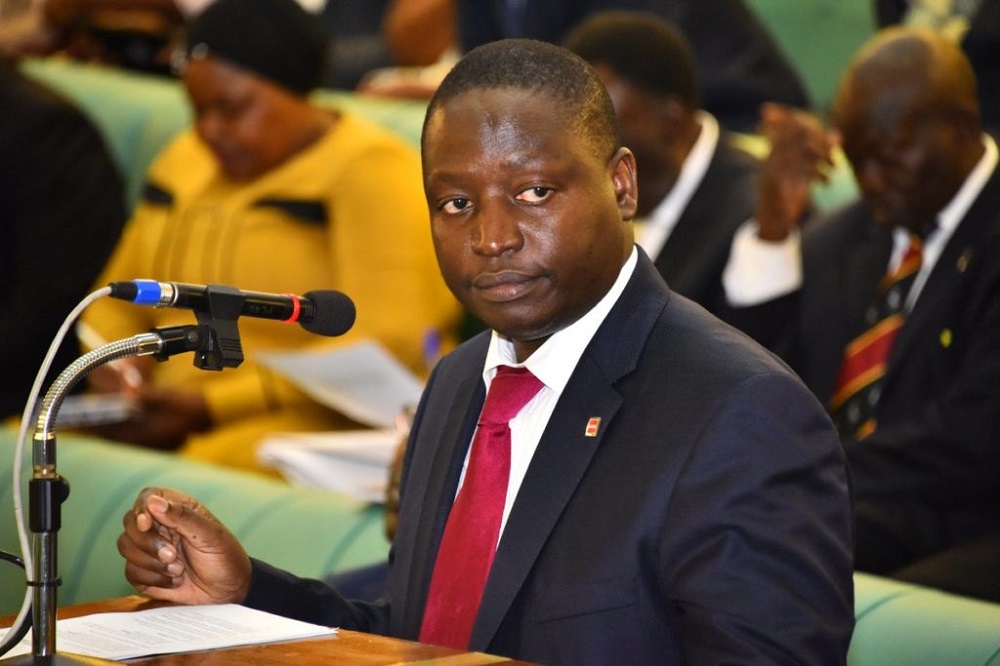
According to motions presented yesterday, May 20th 2020, by the State Finance Minister for Planning, Hon. David Bahati, Uganda is to borrow USD300 million (UGX1. trillion) from the World Bank’s International Development Association (IDA), an increase from the planned USD190 million for budget support for FY2019/20 and FY2020/21. Apparently the World Bank Group’s IDA told Uganda, she could borrow up to USD300m for FY2019/20 alone, an option Uganda took.
The World Bank loan is for a period of 38 years and has a grace period of 6 years. It comes with a 0.75% interest per annum on the withdrawn credit balance and a 0.5% interest per annum on the unwithdrawn financing balance.
Government also re-tabled motions to borrow USD224 million from the African Development Bank (AfDB) in place of the earlier requested USD219 million as well as USD51 million instead of USD55.6 million from the African Development Fund (AFD) for the Kampala City Roads Rehabilitation Project (KCRRP). The terms of the AfDB and AFD loans were not immediately available.
In another motion presented to Parliament on 11th March 2020, government plans to borrow USD 229.47 million from the African Development Bank (AfDB) and Euro 90 Million (equivalent to USD 105 Million) from the Agence Francaise De Development (AFD) to finance the construction of Kampala – Jinja Expressway (KJE) Project.
Government also on 19th March 2020, tabled a motion to borrow up to Euro 10.0 Million (USD11 million) from the Government of the Republic of Italy to finance the Karamoja Infrastructure Development – Phase II Project under the Health Sector Development Plan (HSDP).
On 22nd April, yet another motion was tabled before parliament to borrow USD 99.8 million, in additional financing from the International Development Association to finance the Competitiveness and Enterprise Development Project [CEDP-AF].
All motions are before parliament’s finance committee for consideration.
According to a source in the committee, the report on the Karamoja loan is ready and will be tabled in the house, “sooner than later”.
Covid-19 borrowing: USD300m to finance health, manufacturing, tourism, agriculture and social protection.
 Could Museveni’s Election as EAC Chair Renew Push for Accelerated East African Integration?
The USD300 million from the World Bank, according to the motion tabled yesterday, will be used for Budget Support for FY 2019/20- largely “to provide sufficient financial resources to the Health Sector and to mitigate negative effects of COVID 19 on the economy of Uganda.”
“The loan (USD 300m million) is at the core of the bank’s response to help Government manage the crisis and is structured around three pillars: crisis response and fiscal management; supporting faster economic recovery; and (protecting the most vulnerable. The loan will therefore help Government to maintain macroeconomic stability and mitigate the growth and social impact of the economic crisis caused by COVID 19 in the Uganda,” says Ministry of Finance.
“The second pillar, supporting a faster recovery, aims to support businesses and inject liquidity in to the economy by: improving the cash flow of firms in the sectors of the economy that have been heavily affected by the crisis (e.g. manufacturing, tourism and horticulture), so they remain operational and limit layoffs; ensuring adequate availability of credit through commercial banks and non-bank financial institutions, and allowing restructuring of loans on a case by case basis for the borrowers that have been affected by the pandemic; and improving the productivity and resilience of agricultural sector by improving access to higher quality agriculture in puts,” further explained Ministry of Finance.
| LENDER | PROJECT | AMOUNT TO BE BORROWED | DATE OF TABLING BEFORE PARLIAMENT |
| African Development Bank (AfDB) | Kampala – Jinja Expressway (KJE) Project. | USD 229.47 million | 11th March, 2020 |
| French Development Agency (AFD) | Kampala – Jinja Expressway (KJE) Project | USD 105 million | 11th March, 2020 |
| Government of the Republic of Italy | Karamoja Infrastructure Development – Phase II Project under the Health Sector Development Plan (HSDP) | USD 11.0 Million | 19th March, 2020 |
| International Development Association [IDA] of the World Bank Group | Provide sufficient financial resources to the Health Sector and mitigate negative effects on the economy due to COVID-19 | USD 300 million | (First tabled 2nd April, 2020 and revised 20th May 2020) |
| 20th May 2020 | Balance of Payments Support to the Bank of Uganda and budget support | USD 491.5 Million | (First tabled 2nd April, 2020 and revised 20th May 2020) |
| International Development Association [IDA] of the World Bank Group | Competitiveness and Enterprise Development Project [CEDP-AF] | USD 99.8 Million | 22nd April, 2020 |
| African Development Bank (AfDB) | Kampala City Roads Rehabilitation Project (KCRRP) | USD224 million | (First tabled 22nd April, 2020 and revised 20th May 2020) |
| African Development Fund | Kampala City Roads Rehabilitation Project (KCRRP) | USD51 million | (First tabled 22nd April, 2020 and revised 20th May 2020) |
| TOTAL | USD1,511.77 million |
The loan period is for 38 years, has a grace period of 6 years. It comes with a 0.75% interest per annum on the withdrawn credit balance and a 0.5% interest per annum on the unwithdrawn financing balance.
On the other hand, government is to use the USD491.5million borrowed from IMF to help Bank of Uganda in bridging the gap in the balance of payments position in the FY 2019/20 (USD340 million) and USD31.5 million to finance Government’s responsese plan to the pandemic, including acquiring necessary health supplies (diagnostics kits, masks, personal protective equipment) and supporting the vulnerable population. USD120 million is to be used to support the private sector that has been affected by the pandemic largely by recapitalizing Uganda Development Bank.
Is Uganda’s borrowing sustainable?
Justifying the two loans, Bahati said that the additional borrowing will in total increase Uganda’s debt for FY2019/20 by 1.58% of GDP and will slightly result in an increase in interest payments for FY2019/20.
The stock of total public debt (domestic and external) grew from US$ 12.55 billion at the end of June 2019 to USD13.33 billion by the end of December 2019 (UGX 48.91 Trillion). This represents an increase in nominal debt to GDP from 36.1per cent in June 2019 to 36.97per cent in December 2019. The new loans, therefore increase Uganda’s debt to well over USD14.8 billion.
The nominal total public debt is projected to increase to 40.9per cent of GDP in FY2019/20, before peaking at 49.5per cent in FY2023/24.
The Auditor-General, in his report to Parliament for the Financial Year ended 30th June 2019 said that Uganda’s debt situation was becoming worrying, with 97 per cent of all the new money borrowed, going to servicing maturing obligations and interest.
In the recently passed FY2020/21 National Budget, interest payments for Uganda’s burgeoning debt took up the third-largest chunk- UGX4.1 trillion, up 32.5 per cent from UGX3.1 trillion.