By Joseline Kateeba
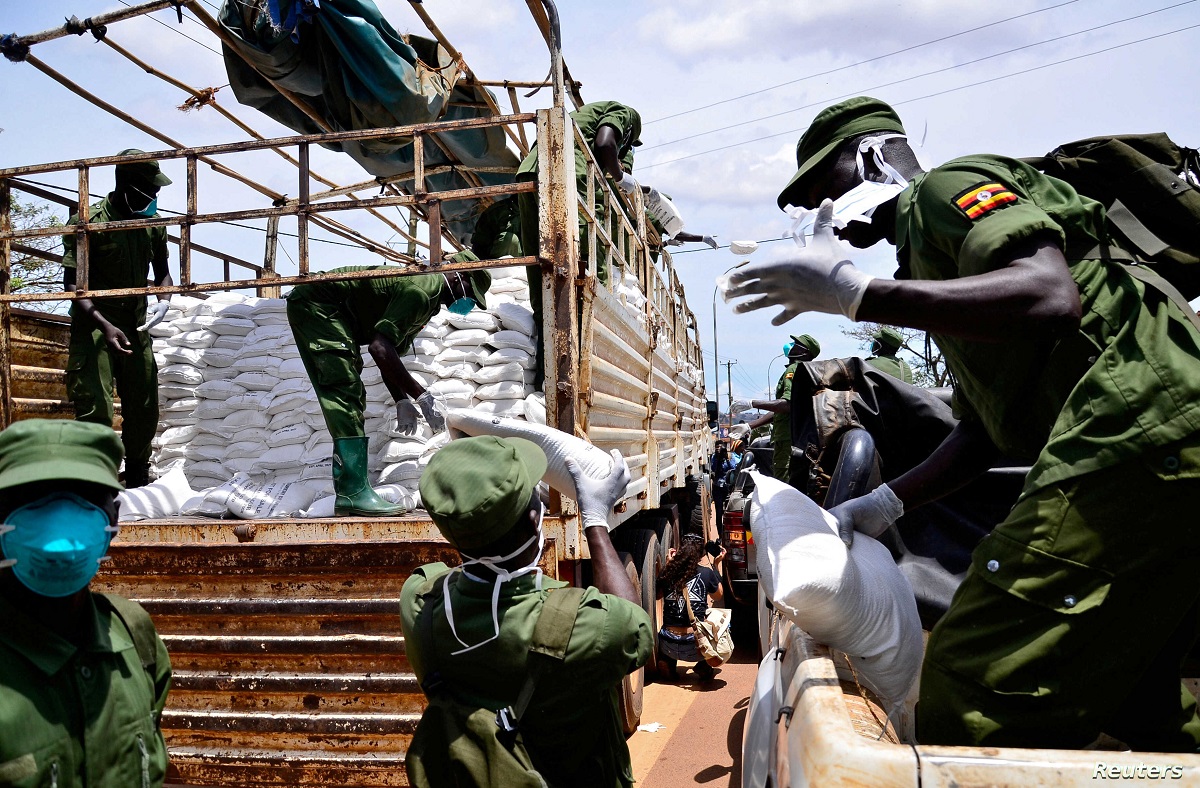
As part of its emergency response to COVID-19 and to mitigate the impacts on the closure of certain workplaces and the restrictions on the movement of individuals, the Government of Uganda commenced the distribution of food to vulnerable populations.
According to H.E. the President, food relief is intended for those persons who were doing ‘leja leja’ work, earning a daily subsistence like salon and bar workers who are now unable to earn. Under the leadership of the Minister for State for Disaster Preparedness Hon. Musa Ecweru, a huge relief effort is underway entailing the mobilisation of funds to purchase food items, receiving direct private-sector donations followed by the huge logistical operation of manual identification of the vulnerable and doorstep deliveries.
The operation has had mixed success- from slow delivery to wrong identification of beneficiaries, to Government officials in prison over alleged impropriety, allegations over price hikes and poor food quality. The distribution team comprises an inter-agency task force from Uganda Peoples Defence Force, Uganda Prisons, Uganda Police, local administrations, Red Cross and several volunteers. The coordination of such an operation as well as ensuring the safety of the large teams is itself a challenge. According to media reports, only 50% of the targeted beneficiaries in Kampala have been reached, distribution in Wakiso has just commenced while Mukono is pending.
The rationale for the direct food relief is sound. According to the State of Uganda Population Report, 2018 poverty has been on the rise in recent years – rising from 19.5% in 2012/13 to 21.4% in 2016/17. The coronavirus pandemic will exacerbate this situation. With no income due to the lockdown, many families are at risk of falling back below the poverty line, reversing the gains of the last few years.
Distribute cash directly to vulnerable people via mobile money.
According to the Uganda Communications Commission, as of December 2019, Uganda had 25.6 million mobile phone users, more than 50% of the Country’s population. A data analytics exercise run across the telecom mobile platforms, financial institutions like Centenary Bank with a wide and digital reach to the lower market end, would easily identify active vulnerable populations by transaction volumes however defined. This data collection and analysis is permissible under the Data Privacy and Protection Act where the Government needs to perform a public duty.

Digital distribution of relief, by cash-based interventions, has been tried and tested in Uganda by United Nations High Commissioner for Refugees on refugee populations in Bidibidi with over 1,350,000 refugees over 250 sq km. Organisations like Lutheran World Federation, USAID, Save the Children, World Vision, Mercy Corps, Care International among others have all monetized and digitalized their relief efforts.
What are the advantages?
- Stimulates aggregate demand for a variety of food products from rural smallholder farmers with beneficiaries having a choice of food and from whom to buy. The cash option also allows beneficiaries to access items like milk for babies, fruit and vegetables and otherwise afford a balanced diet and avert nutrition deficiency-related diseases. According to the World Food Programme, cash assistance allows families to determine the make-up of their meals – an important social psychological and cultural anchor for families living in uncertain times;
- Creates a grass-root multiplier effect as the beneficiaries will spend in the open food markets closest to their location and positively impacts rural smallholder farmers. A 2016 study by the University of California showed a multiple of USD 1.5 for every USD 1;
- Eliminates the corruption-prone Government procurement processes and allegations around the quality of food distributed and price hikes by selected suppliers;
- Efficiency in reaching the citizens quickly where they are, eliminating delays and crowding;
- Eliminates risks of relief food deterioration arising from delayed distribution;
- Empowers the beneficiaries with a choice to allocate their money to the most pressing need (healthcare, medicine, electricity, rent etc.), eliminating any black market in food relief items. A beneficiary may choose to use some of the money to pay for their micro-insurance or service their credit facilities;
- Easier accountability with a clear trace of beneficiaries;
- Frees Government resources and time to other priority issues such as test kit purchases, contact tracing, isolation and national security;
- Discrete distribution affords the beneficiaries dignity of the person allowing them to face their destiny. It also averts likely resort to harmful coping strategies such as survival sex, child labour, family separation and forced marriage;
- Promotes transition to a safer cashless society, by utilization of digital channels for business. This will have a positive knock-on effect post-Covid-19;
- Digitalized distribution of relief can be done by everyone to supplement the Government efforts;
- Telecom costs would be waived, increasing the cost efficiency of this distribution channel. Telecoms could also carry health messages directly to these identified people.
But there are some limitations too
- Some people will get left out. Such persons can be identified at the village level and their respective remittances made to the village LC Chairmen. Agencies such as the Uganda Red Cross Society could be invited to provide extra coverage – the focus should be communities that have very low mobile money usage;
- There is an anticipation of increased domestic violence. It is expected that some husbands may wish to forcibly get the more liquid relief from their wives and apply it to more liquid purposes. This should be countered with more community policing using the time of local authorities that will now be freed up to their ordinary pursuits;
- Previous attempts by the NRM to use mobile money at a delegates conference of only 12,000 was apparently unsuccessful. This can be countered with a test run of a particular locality.
Ms. Joseline Kateeba, is the Managing Director at Crest Foam Limited (Uganda)

Companies Rise or Fall on How Well They Renew Their Leaders