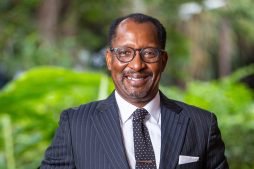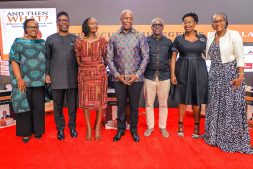
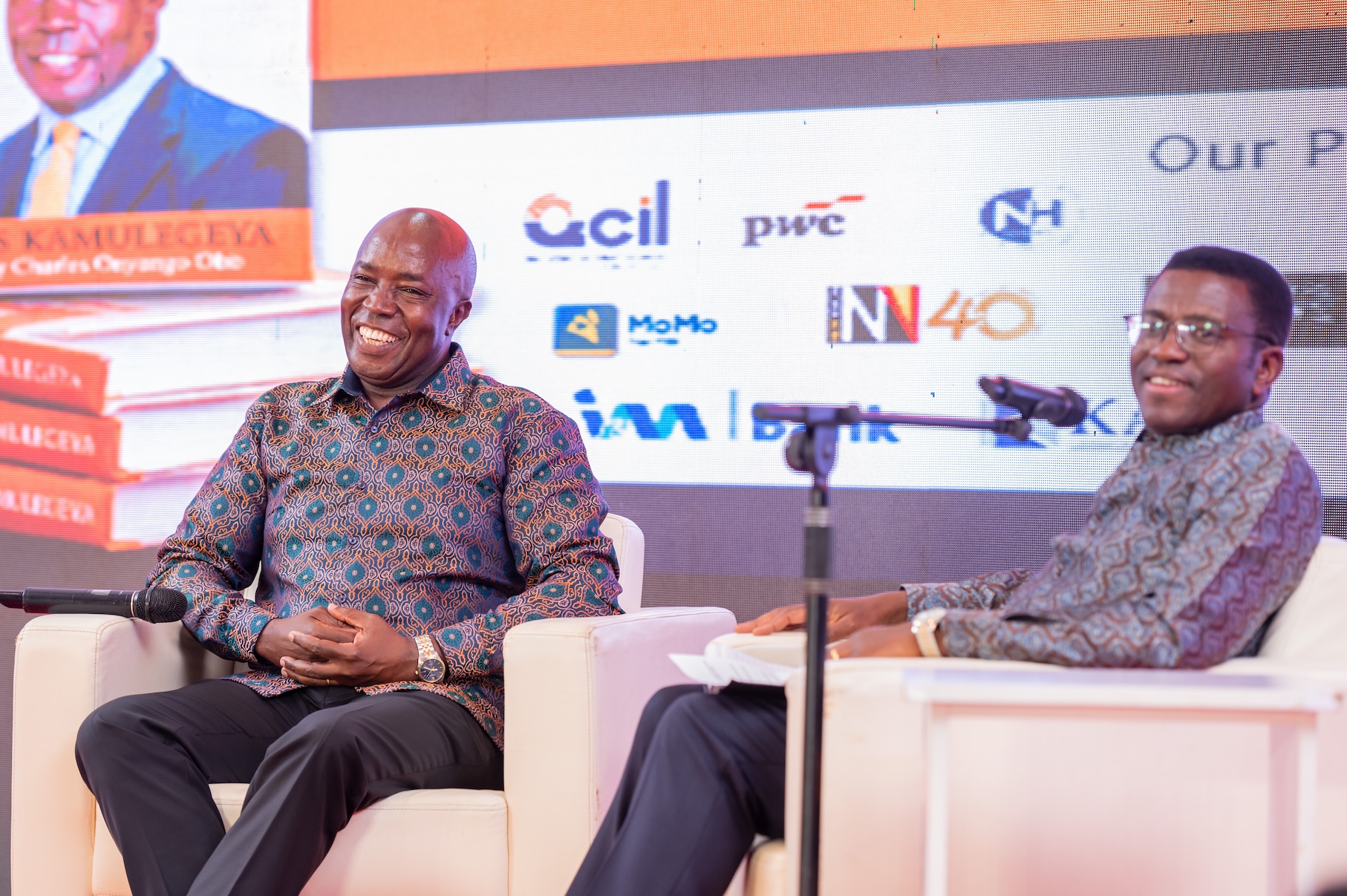
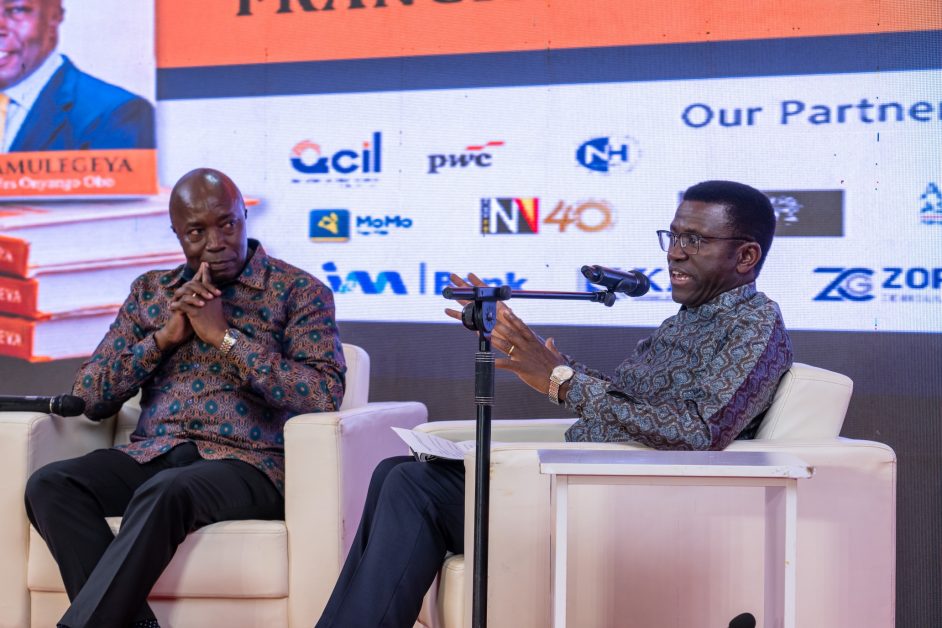
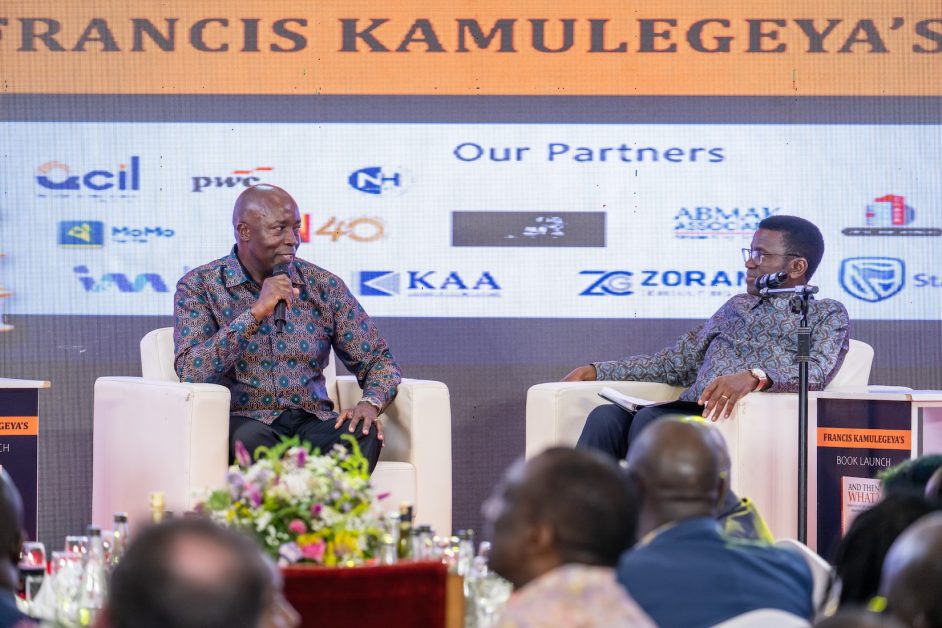
Seated across from his longtime friend was the Katikkiro of Buganda, Owekitiibwa Charles Peter Mayiga (CPM). He steered the evening less like a Guest of Honour and more like an old friend gently peeling back the layers of the man many know today as the Chairman of the Buganda Land Board, Chairman of I&M Bank Uganda, and a Non-Executive Director at MTN Uganda, Nakasero Hospital and Old Mutual Holdings Plc.
After an illustrious 27-year career with PwC spanning the United Kingdom, Uganda and Kenya — where Francis Kamulegeya (FK) rose from Senior Consultant in PwC UK to Managing Partner of PwC Uganda and a member of the PwC Governance Board- Kamulegeya transitioned from PwC in 2022 into what he calls his “second half.”
He prefers not to describe it as retirement, and as the conversation progressed, it was clearly evident that he is certainly not retired. Instead, he has redirected his experience and influence into non-executive director leadership roles, mentorship, private business, commercial farming, social entrepreneurship, education, social impact initiatives, and writing — a journey that has now culminated in his newest role as a published author.
Over nearly an hour, Kamulegeya spoke candidly about growing up in Kimaanya, Masaka, his mother’s influence, the unconventional choices that shaped his life, mentorship, transition, success, significance and the deeply reflective philosophy behind his new book — And Then What? — a question he believes every person must eventually pause and ask themselves.
CPM: We have already heard that Francis is not a man who likes too many titles or formalities, although where I work in the Buganda Kingdom, protocol is part of life. I had the privilege of reading this book before it was published, and what struck me most was the honesty and authenticity with which Francis tells his story. He doesn’t hide his beginnings or try to edit out the difficult parts of his journey.
Most people prefer the world to only see the finished product — the successful executive, the accomplished professional — without showing where they started from. But Francis openly writes about growing up in Kimaanya, brewing enguli, living through the 1979 war, and even sharing space with goats in his grandfather’s house.
Where do you get the courage to tell your story so openly and honestly, and why was it important for you to tell it that way?
FK: Thank you very much, Owekitiibwa, and good evening, ladies and gentlemen. I’m truly honoured and excited to see all of you here tonight.
Where do I get the courage to tell my story openly? Well, it is my story. And I believe authenticity begins with knowing yourself and being comfortable with who you are. If you know yourself, and you are at peace with your journey, then you owe it to yourself — and perhaps even to humanity — to tell your story honestly, especially if there is something others can learn from it.
I have always been very comfortable with my story because nobody knows me better than I know myself. Too often, when people pass on, others stand up and tell stories about them, sometimes stories they themselves never told. Yet many of us spend our lives trying to present only the polished version of ourselves, as though we appeared in the world already successful, already accomplished.
I wanted my children to know who I really am. Grace (my daughter) mentioned earlier that while reading parts of the book, she discovered things about me she had never known before. And honestly, I also wish I had known more about my own parents beyond simply seeing them as “mother” and “father.” I spent a lot of time with my mother, but there is still so much I wish I had asked her.
I love telling stories, and over the years, I have shared many of them with the many young people from PwC, ATC, Stanbic Bank, Lubowa Toastmasters, and many others who have come in large numbers to visit us at our home in Masaka to see what I have been up to after PwC. One evening, while hosting a group of young professionals from PwC, I found myself sharing stories from my childhood in Kimaanya, Masaka, my career journey, the unconventional choices I had made, and the values that have guided my life.
They listened with surprise and curiosity, and they said jokingly, “Francis, your life can fill a book.” I laughed and asked, “A book about what?” “About your life,” they said. “Your choices, your values, and the lessons from your journey.” That conversation stayed with me.
But the truth is, all of us have a story. Some people think they don’t, but they do. And if you don’t tell your story while you are alive, trust me, people will eventually tell one for you when they gather in Namirembe, Kibuli, Rubaga or wherever your final send-off will be, because that day will come for all of us.
So I thought I might as well tell my own story myself.
CPM: What strikes me about your story, Francis, is how liberating that honesty is for many people in this room. Many of us come from similar beginnings, but we often hide those stories once we become successful. Yet your story reminds us that it is not where you begin that defines you, but how you use those beginnings to become the person you want to be.
You write openly about growing up in Kimanya in Masaka, Central Uganda— you lived life as a real village boy, you share candidly about the struggles, the simplicity of those early years — and yet here you are today: a globally respected corporate leader who has lived and worked in many countries, serving on boards of global companies.
How did those early experiences in the village shape you into the person you eventually became?
FK: I was very fortunate to grow up under the influence of an incredible mother. Apollo Makubuya spoke about her earlier, and I want to take this opportunity to recognise my sister, Phina Nanyunja, who is here tonight. She took care of our mother in her later years with extraordinary dedication.
I was the youngest child, and there was almost a 40-year age gap between my mother and me. By the time she passed away at 89, I was about 49. Because many of my older sisters had already left home, I spent a lot of time with my mother. We did almost everything together, and only later in life do you realise how much those ordinary moments shape and ground you.
That upbringing taught me something very important — never to feel too important to do any kind of work.
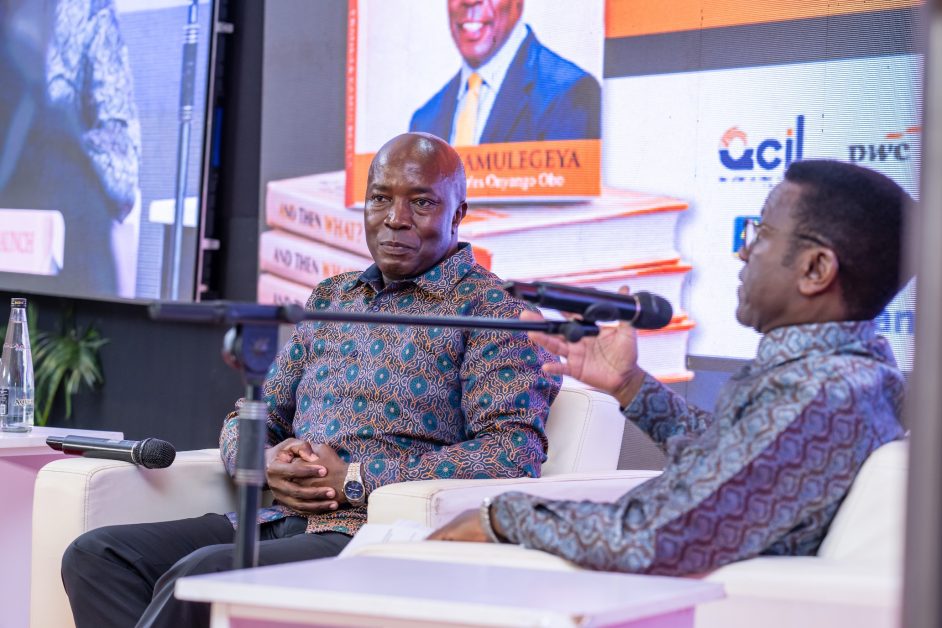
Many people here know Time2Play, our children’s recreation and daycare centre in Najeera. I remember speaking to our staff around 2009 when we started that business, and telling them that every single job at Time2Play, I had personally done myself. I’m talking about peeling potatoes, cooking food, cleaning classrooms and toilets, washing dishes, driving the school van, and even serving children food as the dinner lady. I did all these different jobs when I was in the UK in the early 90’s in order to raise money for my professional studies. I even once wore the mascot costume at Time2Play, as Sponge Bob — although I won’t say too much about that because it may eventually come up in a boardroom somewhere (laughs).
But the point is this: I have never looked down on any kind of work, so long as I know it is helping me move from point A to point B. No job has ever defined me. I simply do whatever it takes to keep moving forward.
CPM: And you believe that humility and willingness to do any kind of work came largely from your village upbringing?
FK: Exactly. When I was growing up, people like my good friend here, Robert Kabushenga, who grew up in places like Naguru Flats, probably dreamt of becoming lawyers, engineers or professionals of that kind.
Me? At six years old, I wanted to become a shopkeeper — what we called an owedduka in Masaka. In my village, the people who seemed successful were traders, shopkeepers and taxi drivers. Those were the people I looked up to because they appeared to have money and some level of financial independence.
I never dreamed of becoming a doctor. In fact, when I was young, I feared injections. Even today, I still don’t like them. And honestly, I had never even met a lawyer, a banker, an accountant, a board member, an engineer or any person of that kind of profession. So our ambitions are often shaped by the environment we grow up in and what we are exposed to.
CPM: I can relate to some of what you are saying because my home is also not very far from yours, in Kasanje near Masaka. My father was a teacher and a coffee farmer, while my mother had her own coffee garden. Whenever we worked in her garden — picking coffee, drying it or helping with anything — she would pay us from the proceeds of her coffee separately. So, in many ways, we learned enterprise and responsibility simply by observing our parents.
Listening to your story, it is clear that those early experiences shaped your entrepreneurial mindset. But what fascinates me is what happened next. You finish Makerere University, start trading maize, begin making some money and, by your own account, even buy yourself a double-deck cassette player to impress girls at campus.
At that stage, many people would probably have settled into that life. Even for me, when I started making some money after university, I never once thought seriously about leaving Uganda to pursue further studies abroad. Yet you made the decision to buy a ticket and go to London to study further and reinvent yourself.
Where did that level of ambition and intentionality come from at such a young age?
FK: I was about 23 years old then, in 1990. It’s actually a long story. When we finished university, there were public service interviews for government jobs, and I remember going with some of my classmates from Agriculture for those interviews. When I got there and saw the jobs posted on the notice board, I did not even bother to attend the interviews. Most of the jobs were for Agricultural research assistants and Extension Workers. They were all outside Kampala. I did not want to do that work.
And honestly, even how I ended up studying agriculture is a story in itself. I did not choose that course. But over time, I learned to enjoy it.
CPM: Because originally, you wanted to study medicine?.
FK: Yes, but as Robert Kabushenga was saying earlier, I was a very bright student — at least that’s what I like to believe. If you read the book, you’ll see the evidence.
CPM: In fact, they nicknamed you “Abbott” after the author of the well-known physics textbooks- A.F. Abbott (Arthur Frederick Abbott).
FK: Yes, I was a very bright student — and I still am, by the way.
At the time, good grades naturally pushed you towards certain courses. I was doing Physics, Chemistry and Biology — the science combination. Meanwhile, my good friends here, Robert Kabushenga and Apollo Makubuya, were very good at Literature, History, Economics and their life was a lot more enjoyable, much more than us, the scientists.
CPM: Careful now — I was also doing Literature.
FK: Yes, I know. My point is that the Arts combination subjects at our school had more free time than we, the science students. I actually, at times, wished I had done an arts subjects combination. Most of my best friends were doing arts, and in my view, they appeared to have a better life. They would sit under trees with mats and pillows, discussing Shakespeare for the literature lessons or the Cuban missile crisis for their History lessons, together with their course mates, the Namasagali ladies, many of whom are here tonight.
Meanwhile, some of us were in the laboratory cutting frogs and mice, or mixing acids and alkalines.
So I got grades good enough to take me to university, but not quite good enough for medicine, and that is how I ended up in agriculture. But even then, I honestly did not know what I wanted to do with agriculture after graduation.
The moment I finished university, I immediately went into maize trading. Around that time, six of my mother’s nine children were already living in England. Many people had left Uganda during the difficult Obote II years. So in my mind, the plan was always to join them in England and pursue further studies leading to a professional qualification. I did not know exactly what I wanted to study at that time.
I just wanted exposure. In those days, people who returned from England always looked very sophisticated — wearing glasses, with pocket squares on their jackets and speaking good English with confidence. So naturally, I also wanted to go and become clever like them.
CPM: Now, somewhere along the way, you move from agriculture and the sciences into accounting and consulting. You go to the UK, settle in Epsom, and then Sophia arrives during her vacation and stays near one of your sisters. The two of you meet, become friends, and eventually start building a life together.
But there is one story in this book that I think deserves special attention. At the time your first daughter, Gloria, was born, you still had not formally met Sophia’s parents. Most men would probably panic in that situation. But you, Francis Kamulegeya, decided to sit down and write a full CV about yourself and send it to your prospective mother-in-law, almost like you were applying for a job.
I have never heard of anyone doing that before.
What was going through your mind when you decided to send your CV to your future mother-in-law?
FK: That story has many layers to it. First of all, my future mother-in-law understandably wanted to know who this young man was who had suddenly diverted her daughter’s attention in London.
You have to remember the context of the late 1980s and early 1990s. Many Ugandans who had gone to the UK during those years were doing odd jobs — what we called kyeyo. A number of them had previously been forex money dealers at the California Bar on Luwum Street here in Kampala, and most of them ended up in East London, where the Ugandan community was most vibrant those days. That was the stereotype many people had about the Ugandan community in London at the time.
That is partly why I deliberately chose not to stay in East London, where my elder brother lived, and instead settled in Epsom.
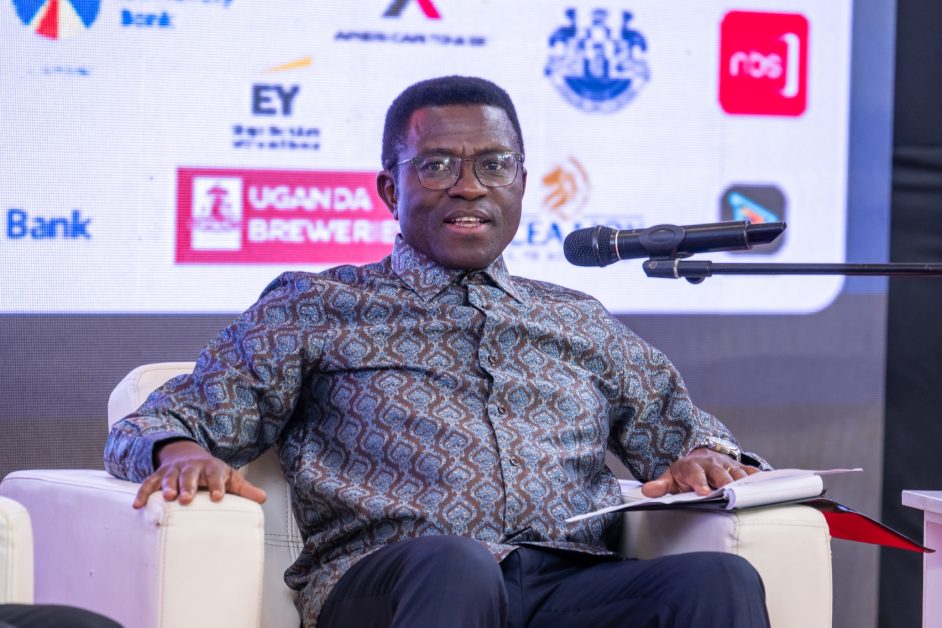
Now, Sophia’s mother had some very accomplished and well-connected friends, including one gentleman in this room whom I will not name. He was extremely brilliant — probably ten times cleverer than me — and had just completed his Master’s degree from Reading University before moving to work as an expatriate in Johannesburg. Naturally, because he cared about the family, he advised them to do some proper due diligence on this man called Francis Kamulegeya.
You see, in Uganda, names matter. Once people heard the surname “Kamulegeya,” the immediate assumption was that perhaps I belonged to the well-known Muslim Kamulegeya family headed by Sheikh Obeid Kamulegeya. But I was not from that branch of the family, although we share the same clan roots. So now people wanted to know: Which Kamulegeya exactly is this one?
By that time, Sophia and I already had Gloria, so understandably, her family wanted reassurance that I was serious and responsible.
I spoke to my good friend Apollo Makubuya and asked him to help explain who I was and how serious we were about our relationship. He did his part — as he mentioned earlier — but apparently that was still not enough.
Later, my late sister Sophie Kafeero, who knew Sophia’s mother, informed me that my prospective mother-in-law still wanted to know more about me. So I thought to myself, what better way to explain who I am than to formally introduce myself properly?
And that is how the CV happened.
CPM: (Laughing cheekily). But I have to ask — this CV you sent to your prospective mother-in-law, did it also include referees? Because normally every proper CV ends with references.
FK: If the number one referee I had physically sent in person — Apollo Makubuya — was not convincing enough, then I honestly did not know what other references I could possibly add from the UK.
So yes, I prepared a proper three-page document and mailed it, because those were the days before email became common. And I suspect that the gentleman I talked about earlier was probably part of the unofficial vetting committee as well.
But by then, we were already very serious. I had qualified as an accountant, we had bought a house, Gloria was almost three years old, and we were a proper family. So whether Sophia’s family fully approved at that stage or not, our life had already moved on, as we were already a family of three with our daughter. As we say in Luganda, nga tusimbudde — we had already taken off.
CPM: Thankfully, when you eventually met your future mother-in-law over lunch, she never even mentioned the CV, which probably means you did not need to send it after all. But clearly it worked out well because today you and Sophia have built a beautiful family together.
Now, there is another thing many people here know about you — you are not particularly comfortable with titles. Even Sophia mentioned it earlier. Today, you are Omukungu Francis Kamulegeya as Chairperson of the Buganda Land Board, yet whenever people refer to you by these titles, you almost seem uncomfortable with them.
Why is that?
FK: First of all, titles are important, especially in the world we live in today. Titles often reflect responsibility, experience, achievement, and the trust people or institutions have placed in you. They help create structure, clarity and accountability in organisations and society. So it would not be accurate for me to say that titles do not matter or that I dislike them completely.
My concern is simply that we sometimes overrate them and become too attached to them. A title should describe a role you occupy, not define your entire identity or value as a human being. Because eventually, every title changes hands — but character, relationships, impact and the way you treated people are the things that truly remain.
So what especially makes me uncomfortable is when people become overly attached to titles. I do not like it when a person loses their identity, and they become the thing they do. It is even worse when that thing goes away, and that person is now being referred to as a “former” something.
CPM: For example, one day when you leave the Buganda Land Board, they will probably start introducing you as Omukungu Eyawummula— the retired Omukungu.
FK: Exactly — in Uganda, we call it Eyali — “the one who used to be.”
Just yesterday, I was speaking at a workshop about retirement, annuities and planning for transition. In the programme, they introduced me as the “former Country Senior Partner of PwC.” I told them, “But there is already a current Country Senior Partner — Uthman Mayanja, who is actually here tonight. Why are you still defining me by a role that someone else currently holds?”
That is where my discomfort with titles comes from. Over time, we stop being people and become positions. We become CEO, Managing Director, Commissioner, Chairperson — as though our identity is tied entirely to a role.
Sometimes it even becomes ridiculous. I was once at a function when the master of ceremonies asked us to recognise Mr So and so, who was a “ former acting commissioner.”
Imagine that. He was not the substantive commissioner — but he was only acting as the commissioner — and now even that acting came to an end – and he was now a former acting commissioner. And we still had to recognise him.
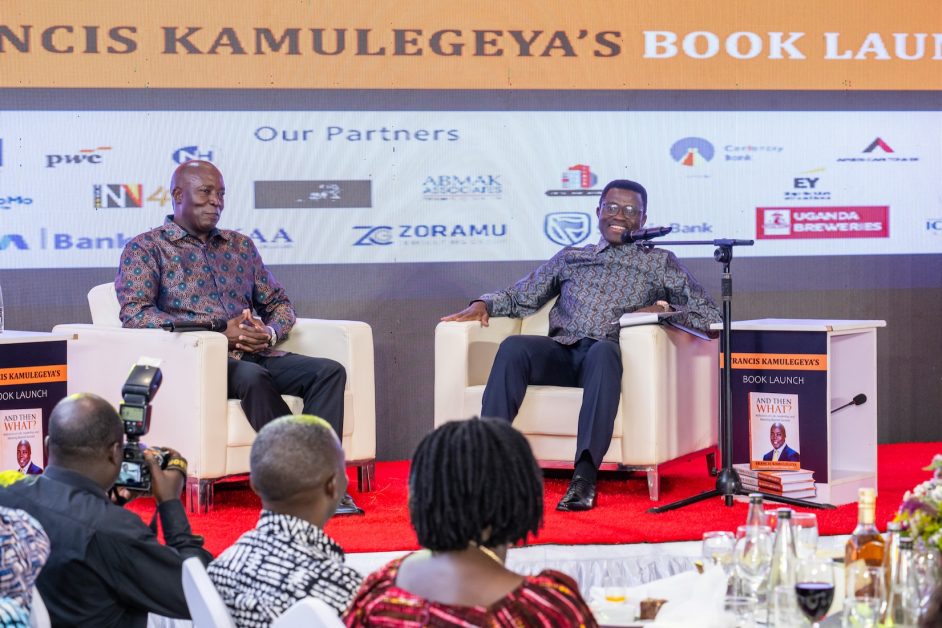
So for me, titles are useful for context, but they should never become your identity. I know who I am beyond any title. I know myself well enough not to depend on positions to validate me.
And perhaps that confidence also comes from my background — growing up in Kimanya, Masaka, where nobody knew or cared much about titles anyway. Working with the Deaf community has also taught me that titles do not matter that much. In Sign Language, there is not much difference between a CEO, Chairman, Executive Director, Commissioner, Honourable, Owekitiibwa, Omukungu, etc. The sign language – sign for all these titles is more or less the same.
CPM: So, in essence, you would rather be defined by your impact and contribution than by the title attached to your name?
FK: Exactly — because titles are temporary. Even your title of Katikkiro is temporary. Before Owekitiibwa Mayiga, there were other Katikkiros, and after him, there will be others.
What matters in the end is not the title itself, but what you did while you held it.
CPM: One thing many people associate with you is your ability to identify and nurture talent, especially among young women professionals. We have heard tonight from several women you mentored who have gone on to become influential leaders in their own right, confident enough to hold their own in boardrooms and executive spaces.
What did you see in them, and why have you been so intentional about investing in women’s leadership?
FK: A lot of that goes back to my upbringing — my mother, my sisters and the environment I grew up in. On my mother’s side, there were nine children: three boys and six girls. Some of my older sisters were old enough to almost be mother figures to me, so I grew up largely under the care and influence of women.
Today, I have four daughters myself, and I have tried to give them the best education and opportunities possible so they can become the best versions of themselves.
Even throughout my life, I have always found myself surrounded by strong women. In our study group at university, for example, apart from one male friend and me, the rest were women. So I became very comfortable working with and around confident, ambitious women. And I think they were also comfortable around me because I never felt threatened by strong women — unlike many men who become insecure in such environments.
Then, when I got into consulting at PwC, I realised many of the young women coming through the firm were exceptionally talented. They were diligent, detail-oriented, dependable and emotionally intelligent. Honestly, some of them were simply too good not to invest in.
People like Pamela Natamba, Crystal Kabajwara, Jackie Nampala, Daphine (to name but a few who I can see in the room) and many others made me very proud. You could see their potential very early.
And the truth is, the world of work has changed. In the last centuries of the industrial age, economies were driven largely by physical labour where men operated equipment and machines. Today we are in a knowledge economy characterised by provisions of services, and in this era, emotional intelligence, adaptability, agility, communication and collaboration matter enormously. What we once dismissed as “soft skills” are now actually the hard skills of leadership.
So for me, supporting women’s leadership was never charity or tokenism. It was recognising talent where it existed and helping it grow. And I’m proud of what many of these women have gone on to achieve.
CPM: I can relate to that completely. My mother gave birth to 15 children — 11 girls and only four boys — so I understand what you mean about the influence and strength of women.
But let me take you to another issue you discuss in the book: transition and leadership. Earlier, Gloria spoke about the candle eventually burning out. For leaders, especially, that can be a very difficult reality to confront.
This month marks 13 years since I became Katikkiro of Buganda. So the question is: how does a leader know when the candle is beginning to burn out? When do you realise it is time to prepare for transition?
FK: The truth is, I don’t even know whether leaders fully realise when the candle is burning out. But what is important is to understand from the very beginning that it will eventually burn out.
Every leadership role already comes with an expiry date, whether we acknowledge it or not. Contracts are written for three years, five years, maybe longer — but every single day within that contract is part of the countdown. And when the term ends, there is usually a discussion about renewal or succession. If renewal does not happen, you should not take it personally because the role was never truly yours. You were simply serving.
Sometimes we complicate these things with big leadership language, yet the reality is very simple: the moment you enter any role, the clock starts ticking. Organisations have strategic plans, performance indicators and succession plans. But many individuals never create personal plans for their own lives beyond the job.
That is where the problem begins. We spend so much time planning for the company’s future that we forget to plan for our own future after the company.
And ironically, many of us are investing heavily in living longer — going to the gym, eating healthier, running marathons, tracking everything we do with our fitness apps — which is wonderful because it means we may live far longer than previous generations. But if you are doing all this so that you have a long life, living into your eighties or nineties, then you must ask yourself: how are you preparing yourself for this long future and long life, after the end of your employment, public service or corporate role?
For me, that thinking shaped many of my decisions. Throughout my life, even while doing odd jobs, I always tried to imagine the future I wanted and what I call the “end point.” I would constantly ask myself: Where do I want to be five years from now? Ten years from now? What kind of life do I want beyond this current season?
That is why leaving PwC was a very deliberate and informed decision. People close to me knew about it years in advance. Some even thought the Covid lockdown should somehow extend my time there because, according to them, “we lost two years.” But I never felt I lost those years. In fact, many of the things I accomplished during that period are captured in the book.
So my message is simple: plan for transition before transition is forced upon you.
Because unless life itself ends — what insurers call “demise” — every one of us will eventually transition from one phase of life to another. And if you wait until 55 or 60 to suddenly start wondering, “And then what?” then you are already late.
CPM: So, in other words, no matter how important you think you are, you cannot outlive your job?
FK: Exactly. You cannot outlive the job.
CPM: That reminds me of advice my doctor once gave me during the early years of my tenure as Katikkiro. For almost three years, I barely took any real breaks. Even weekends and holidays were filled with speeches, meetings and official duties. Eventually, I became exhausted and went to see my doctor, convinced I was seriously ill.
He told me something I have never forgotten. He said, “We value you very much, but exhaustion kills. And when you die, people will mourn you for a few weeks, then they will simply look for someone else to do your job.”
That was a very sobering lesson about leadership and transition.
Now, one of the things you emphasise in your book is that you prefer leading people rather than managing or controlling them. What exactly do you mean by that?
FK: Let me start with a simple question: who wakes up in the morning and goes to work, hoping to be “managed”? Very few people do.
That is why I have always preferred the idea of leading people rather than controlling or managing them.
In professional services firms such as PwC, the business is not primarily built on physical assets. We are not selling products like water, furniture or beer. What clients are really paying for is human capability — the quality of thinking, professional judgment, technical competence, integrity, relationships and the ability to solve complex problems.
Clients come to firms like PwC because they trust the people. They trust the experience, insight and professionalism of the teams serving them. Which means the real engine of the business is human capital.
That is why talent development becomes so important. If your people are your product, then developing, mentoring, training and investing in them is not just a human resource function — it is a core business strategy. Strong institutions are ultimately built by growing strong people.
So the responsibility of leadership is to build competent, confident and trusted teams that can deliver quality work even when you are not physically present.
When young audit trainees walk into a client like Stanbic or I&M Bank wearing a PwC or EY badge, clients say, “The auditors have arrived,” even though those are young graduates or interns. The power is in the institution and the standards behind it, not necessarily the individual standing there.
That means your role as a leader is to train people, empower them, support them, guide them, reward them, challenge them and hold them accountable — but most importantly, help them become better than you were at their stage.
I remember Crystal mentioning how clients sometimes expected to see me personally whenever PwC teams arrived. Then she and a team of brilliant young women would show up instead, and people would ask, “Where is Francis?” But eventually they realised the work was being delivered exceptionally well without me needing to be there.
And that, to me, is leadership.
Because if the people working under you today are not significantly better than you were at their level five or ten years ago, then you are not truly succeeding as a leader.
CPM: What you are describing is closely tied to succession and planning your eventual exit as a leader. In many ways, it is a higher form of leadership — building people up to the point where they are capable of filling the gap after you leave.
So how do you view that aspect of leadership? Is preparing people to succeed you part of what defines true leadership?
FK: I think sometimes we make leadership unnecessarily complicated by trying to put labels on it — servant leadership, transformational leadership, command-and-control leadership and so on. I honestly don’t spend too much time trying to define my style in those terms. I simply try to do things in a way that feels authentic to me.
For example, when I worked with people like Crystal Kabajwara or Pamela Natamba, my mindset was very simple: I wanted them to become far better than I was at their age.
Take Crystal. She was at the London School of Economics pursuing her master’s degree and researching tax issues when she came across one of my articles and contacted me with questions. During our conversations, I immediately realised how brilliant she was. At some point, I simply asked, “Would you consider working with us?” I had not even met her physically at the time, but I knew talent when I saw it.
So for me, leadership begins with recognising potential and helping people grow into it.
And fundamentally, I believe leadership is a choice. You either choose to lead, or you choose to rely on power and authority to control people. Leadership is not a title. There are many people with titles that imply leadership, but they have failed to provide leadership. There are many people in positions of leadership, but they are not providing leadership. Then there are people with power and authority over others, but to those others, these people are not their leaders.
Very often, people rise into positions because they have demonstrated potential beyond their current role. You may be excellent at your present job, but leadership requires showing capacity for something bigger. And the reality is that when most people step into leadership roles, they probably only fully understand about 40 per cent of the job. The remaining 60 per cent is learned while doing it. And that is OK. The important thing is for you to learn and rise up to the leadership challenge.
That applies whether you are a CEO, a parent, a CFO or a head of HR. Even parenting teaches you on the job. We have four daughters, and each one is completely different.
So in the end, leadership is not about forcing people to follow you because you have authority over them. We all know the difference between power and leadership. There are people we obey simply because they have power over us. But true leaders inspire willing followership. People look at them, trust where they are going and choose to walk with them.
That, for me, is leadership. The rest — the labels and categories — I will leave to the readers of the book to decide.
CPM: Even before reading this book, most people already knew Francis Kamulegeya as a successful man — successful professionally, financially and socially. In many ways, he represents what many people aspire to become.
But one of the central ideas in the book is this transition from success to significance. That is a very interesting distinction because most people spend their entire lives chasing success.
So what does that shift mean to you? What is the difference between being successful and living a life of significance?
FK: Success is very important. It is about achievement, accomplishment and reaching goals you have set for yourself.
But the problem is that if success becomes the final destination, it can also become exhausting and deeply unsatisfying. The moment you think you have arrived, you look around and discover someone else has a newer car, a bigger house or the latest iPhone model.
Just this week, I was in an office looking for a charger for my iPhone 12, and some young people there laughed at me and said, “Francis, that phone is already old. Soon, you won’t even be able to update it with the IOS software. They are right. I explained to them that as of now, my iPhone 12 is working fine, and I have never had a desire or motivation to buy the latest iPhone 17. They were not convinced and thought and insisted that a person of “my status” should not be holding an iPhone 12. I listened.
All of them had newer iPhone models that use the c-cable for charging. So I sent one of them to go and pick up my charger from the car. Suddenly, I saw all of them outside taking selfies with the car. The conversation had suddenly changed from the iPhone 17 to the Mercedes-Benz S-Class 450 Grand Edition. They wanted to know everything about the car. In their view, my status that had looked rather dodgy and questionable with my iPhone 12 suddenly rose to the stratosphere when they saw my car.
That is the nature of success. There will always be something newer, bigger or more impressive. Which is why you must eventually define for yourself what – success – is to you, and most importantly, what is your “enough” Because if you never know what is enough, you will never truly be satisfied.
For me, success is what you do for yourself. Significance is what you do for the benefit of others.
Anything that is only about you will eventually end with you. The wealth, the titles, the possessions, the achievements — if they exist only for personal gratification, they end the moment you leave this world. But significance is different because it extends beyond you into the lives of other people.
That is why, after success, the next question must always become: And then what?
CPM: That is very profound. Please say that again.
FK: What I said is this: if you do not understand the concept of “enough,” you will never truly be satisfied. And if you are never satisfied, then no amount of success will ever feel sufficient.
That is part of the challenge we see in society today. Many people who engage in corruption or unethical behaviour are not doing so because they are starving or lack basic needs. Very often, they already have more than enough. But they have lost the ability to recognise it because they are constantly comparing themselves to someone else.
Someone was content until they saw the car another person was driving. Someone else was happy until they saw the lifestyle, phone or house their former classmate now has. Suddenly, what they already possess no longer feels sufficient.
That is why defining what “enough” means for yourself is so important. And having enough does not mean you stop being ambitious. It simply means you develop peace and clarity about what truly matters.
Once you reach that point, you begin to understand that whatever you have — wealth, influence, talent, opportunity — is not entirely yours to keep. You are really just a steward or custodian of it for a season.
If you look around this room tonight, the collective wealth, resources, influence and opportunities represented here could probably transform the lives of millions of Ugandans. There is nothing wrong with people having wealth or success if they earned it honestly. The real question is: what do you do with it?
That is where significance begins. Success is often about what we accumulate. It tends to be inward-looking and self-referencing. On the other hand, Significance is about what we contribute. Significance becomes other-centred.
Significance happens when your life stops being entirely about yourself and starts benefiting others. It is recognising that what you have was never meant to end with you. Because if you simply hoard everything for yourself, eventually it rots — materially, emotionally and spiritually.
It was never truly yours to keep forever.
CPM: One thing that comes through very strongly in this book is the deep love and respect Francis had for his mother. She raised her children through difficult circumstances, worked incredibly hard and shaped much of the person he eventually became.
At one point, she fell critically ill and was admitted to the intensive care unit at Nakasero Hospital. The doctors explained that her lungs had severely deteriorated — ironically, not from smoking, but from years of cooking with firewood smoke, which can have similar long-term effects.
Eventually, Francis asked the doctors a very direct question: “How much time does she have left?” And after hearing the reality of the situation, he began preparing for her funeral while she was still alive.
He started organising hymns, preparing the funeral service booklet and planning the arrangements because he believed that once she passed away, grief might overwhelm him and prevent him from giving her the farewell he felt she deserved.
In fact, one colleague even found him photocopying hymns at the office and assumed he had joined the church choir, only for Francis to calmly explain that he was preparing his mother’s funeral service.
Most people would struggle emotionally even to think that way about someone they deeply love.
So what was going through your mind at that moment?
FK: What was going through my mind was the painful acceptance that my mother was coming to the end of her life.
She was almost 90 years old — just a few months short of that milestone — and because I was the youngest child, I had spent a great deal of my life very close to her. We had shared so much of our lives together. So seeing her in the intensive care unit at Nakasero Hospital, surrounded by tubes, machines and monitors, was deeply difficult for me.
My sister Phina, whom I acknowledged earlier, was the one who stayed with her the most during those final days. ICU is not really a place where people come and sit with patients freely, yet many friends and relatives kept coming to check on her, sitting around anxiously, hoping for improvement.
Eventually, the doctors spoke to us honestly about her condition. They explained that her lungs had deteriorated significantly, and they asked us to sign a DNR — “Do Not Resuscitate.” That was one of the hardest decisions to confront emotionally because, in that moment, you are accepting that medicine has reached its limits.
But for me, signing the DNR also meant accepting reality with honesty and dignity. It was not about giving up on my mother. It was about recognising that we should not subject her to unnecessary pain when there was no realistic hope of recovery.
And once I understood that reality, I could not pretend otherwise.
I have always believed in preparing for difficult moments rather than running away from them. So I began organising the funeral arrangements while she was still alive — selecting hymns, preparing the Church service booklet and thinking through the kind of send-off she deserved.
Some people found that unusual, even shocking. One colleague saw me photocopying hymns and asked whether I had joined the church choir. But for me, it was a way of ensuring that when the inevitable happened, we would not be paralysed by confusion and grief.
Three days later, my mother passed away peacefully.
And because we had prepared, we were able to give her a dignified, beautiful and uplifting farewell. Family and friends gathered, we sang the hymns she loved, celebrated her life, prayed together and honoured her properly.
CPM: What I take from that story is the importance of accepting difficult realities with honesty and dignity. Death is painful, especially when it involves someone you deeply love, but it is also part of life, and sometimes wisdom lies in preparing emotionally and practically for what we know may come.
I must admit, this is the first time I have heard of someone calmly preparing a funeral service booklet for a parent who was still alive. But perhaps that also speaks to how intentional and organised you are as a person.
FK: If you compare it to the story of sending a CV to my future mother-in-law, that was definitely unconventional. But preparing for my mother’s funeral did not feel strange to me because, deep down, I already knew it was something I would eventually have to do.
At the time, I was in Uganda together with my sister Phina, while Sophie, Susan and Denis were in the UK. Ours is a very large extended family, and in families like ours, responsibilities naturally fall on particular people depending on who is present and able to act. In this case, responsibility for our mother largely rested with Phina and me.
And I have always believed that if you avoid difficult responsibilities or postpone them, eventually you end up handling them under panic, confusion and emotional pressure, and things may not be done properly. For me, preparation was simply a way of handling reality with dignity and order.
I will be turning 60 next year, and I am fully aware that I probably have fewer years ahead of me than behind me. And honestly, I have made peace with that reality. In many ways, this book itself is part of that reflection and accountability.
Because one thing I have realised is that many times, human beings do not fear death itself as much as they fear being forgotten.
That is why people become emotional about where they will be buried, whether roads or buildings will carry their names, or whether future generations will continue speaking about them. Yet the truth is, life moves on. People mourn you, honour you, celebrate you for a season — and then life continues.
Which is why I believe the more important question is not whether people will remember your name forever, but whether your life genuinely made a difference while you were here.
And because life is finite, I think it is important that we accept our mortality and plan responsibly — not necessarily for death itself, but for life with the understanding that it will eventually come to an end.
For example, many accomplished and educated people still do not have a will, despite having the means and knowledge to organise their affairs properly. Yet that is one of the greatest responsibilities you owe your family — ensuring there is order and clarity when you are no longer here.
Yes, lawyers and courts will eventually sort things out if you leave nothing organised. The law provides for that. But why leave confusion and conflict behind when you had the opportunity to prepare properly?
In Catholicism, we say life does not end; it changes. But it becomes very difficult for people to find peace — both spiritually and emotionally — when earthly affairs have been left in disorder unnecessarily.
So my message is simple: organise your life well, prepare responsibly, and make things easier for the people you love when your time eventually comes.
CPM: So, in summary, Francis is reminding all of us that life is temporary, responsibility matters, and one day people like me may stand up to speak at our funerals — which means we should probably organise our affairs properly while we still can.
Now, at the centre of your book is this simple but powerful question: And then what?
How has that question shaped the way you live your life, and what would you want everyone here to reflect on differently because of it?
FK: I discuss this more deeply in the final chapters of the book, but let me simplify it.
Whatever you are pursuing in life — your career, business, title, ambition, wealth or daily hustle — if that thing is not the ultimate destination of your life, then you owe it to yourself to occasionally pause and quietly ask: And then what?
Because the moment you ask that question honestly, it forces you to see beyond the immediate moment. It pushes you to think beyond today’s pressures, achievements and busyness.
Many of us are so busy being busy that we almost wear exhaustion as a badge of honour. People proudly say, “I’m too busy,” as though constant activity alone is proof of purpose or success.
But being busy is not the same thing as being intentional.
The question, and then what? helps you step back and ask yourself whether the life you are building is actually leading somewhere meaningful beyond the next deal, promotion, title or possession.
CPM: Are you directing that at me? Because everyone who tries to see me already knows my standard response: “My friend, I am extremely busy.”
FK: No, no — you genuinely are busy, and your work is important. But the point is that busyness itself cannot be the final destination.
You are busy because you are trying to achieve something bigger — to serve, to build institutions, to create impact, to leave things better than you found them. That is understandable.
And it is the same for many professionals here. There is nothing wrong with aspiring to become CEO, CFO, Chief Human Resource Officer or Partner. Those are worthy ambitions, and people should work hard for them.
But if life does not end at that title — and we know it doesn’t — then at some point we must ask ourselves what comes after it.
Because the reality is that many of us already know the retirement age in our organisations. We know that at 55 or 60, sooner or later, somebody else will take over. Yet at the same time, we are working hard to stay healthy, going to the gym, eating carefully, following all these wellness programmes and diets as advised by the famous dietician Dr. Kasenene.
Which means we are preparing to live much longer lives.
So the question becomes: if you are likely to live well beyond your formal career, what exactly are you preparing yourself for beyond the office?
CPM: In fact, Dr Kasenene seems determined to stop us from eating anything enjoyable altogether. (laughs)
FK: Exactly. If you are working so hard to stay healthy and live longer, then you had better have a meaningful plan for that longer life.
And that is really what And Then What? is about.
My question is very simple: you pursue one goal, achieve it, then move to the next one — and after that, what happens next? And after that? And after that?
It is similar to how children keep asking “why?” You tell a child, “Go to bed,” and they ask, “Why?” You say, “Because you have school tomorrow.” Then they ask, “Why do I need school?” And before you know it, the conversation has moved far beyond bedtime into the deeper purpose of the importance of education, future careers, and so many complex things thirty years from now.
That is what this question does. If you keep asking yourself, “And then what?” honestly enough, eventually you arrive at the deeper meaning behind what you are really pursuing in life.
So this book is not simply the story of Francis Kamulegeya. It is really an invitation to you to pause, reflect on your own life and gently ask yourself – what next? — and after that—then what? –And Then What?
Whatever you are doing in life — career, business, leadership, family — let it lead somewhere meaningful. And if you realise the direction you are heading is not taking you toward the life you truly want, then perhaps it is time for course correction.
Because you owe yourself a rich, meaningful and fulfilling life.
The truth is, our time alive is actually very short compared to eternity. We spend decades worrying, competing, chasing things and accumulating titles, yet life itself passes very quickly. Eventually, every one of us will die. That is inevitable.
So the real question is not whether we will die. The question is: how do we want to be remembered?
And whether we like it or not, people will remember us in some way. The only thing we really influence is how they remember us.
That is why the philosophy of And Then What? matters. It forces you to think beyond the immediate moment and ask where your choices, habits and ambitions are ultimately taking you.
Interestingly, we do this very well in business and strategy. Organisations create visions, objectives, milestones and long-term plans for institutions that are not even human beings. Corporations have strategic plans, yet they have no soul, no emotions, no mortality.
So my question is: if we can think that deeply about companies, why don’t we think that deeply about our own lives as human beings?
CPM: You have heard the man for yourselves tonight.
Every one of us has a story. And often, the value of our stories is not just in what we achieved, but in what others can learn from our experiences. Francis Kamulegeya has chosen to document his journey openly and honestly in And Then What?, and I believe many people will find lessons in it that go far beyond his personal life.
So the first thing I encourage all of you to do is simple: get yourselves a copy of the book and read it — not just for the story, but for the reflections and lessons inside it.
And I also want to challenge many of you in this room. When I look around here tonight, I see immense experience, knowledge and accomplishment — bankers, lawyers, auditors, executives, entrepreneurs and leaders from across different sectors. Yet when the authors in the room were asked to stand, only a few people rose.
Why don’t more of us write?
Why don’t we document our experiences, lessons and journeys so others can learn from them? Because when people do not write, they often also stop reflecting deeply on what they know and what they have learned.
Africa needs more people willing to record their stories, ideas and experiences.
So I want to thank Francis Kamulegeya for setting that example — for taking the time to reflect, write and share his journey with others. I also thank everyone who contributed to this conversation tonight, including the panellists and those who read and reflected on the book beforehand.
And finally, I hope this evening encourages more people not only to read, but also to think more intentionally about their own lives and the legacy they want to leave behind.
Thank you very much, and may God bless you all.