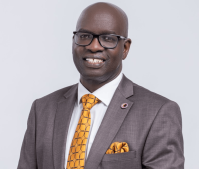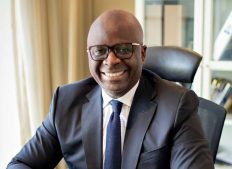

The long-awaited launch of And Then What?, a memoir of Francis Kamulegeya, finally arrived with all the stature and prestige one would expect of one of Uganda’s most respected corporate leaders. But beyond the high-profile guests, boardroom heavyweights and the presence of Buganda Kingdom royals such as Prince David Kintu Wassajja, and the Kingdom leadership led by Owek Katikkiro Charles Peter Mayiga and his Second Deputy Owek Robert Waggwa Nsibirwa, the evening evolved into something far more intimate and revealing.
It became a deeply personal portrait and reflection of Kamulegeya, the man behind the titles and accolades. Through emotional, humorous and reflective testimonies from lifelong friends, former protégés, colleagues, his wife Sophia and their daughters, guests spent the evening peeling back the layers of the man many know today as Chairman of Buganda Land Board, Chairman of I&M Bank Uganda, a Non-Executive Director at MTN Uganda, Old Mutual Holdings Plc and Nakasero Hospital; a commercial farmer, social entrepreneur, philanthropist, and now a published author.

Following a distinguished 76-year career at PwC that saw him rise from Senior Consultant with the firm in 1996 in London to Country Senior Partner in Uganda, and PwC Africa Board member; Kamulegeya has increasingly devoted his life to leadership, mentorship, business, education and social impact initiatives — a journey that the launch revealed was shaped as much by relationships, resilience and generosity as it was by corporate success.
Today Is About Friendship
What was meant to be a formal corporate-style book launch quickly transformed into something far more intimate, emotional and revealing.
Inside the Kampala Sheraton Hotel on April 30, Uganda’s corporate, governance and professional elite had gathered to celebrate the launch of And Then What?, the memoir of Francis Kamulegeya. The Guest of Honour was the Buganda Kingdom Katikkiro Charles Peter Mayiga. Around the room sat senior executives, board chairpersons, lawyers, bankers, his colleagues from the Big Four professional services firms, family members, mentors, protégés and lifelong friends.
But within minutes, any lingering sense of ceremony was dismantled by moderator Robert Kabushenga.
“As far as I’m concerned, today is about friendship,” Kabushenga declared, drawing loud laughter from the audience. “We are going to sit here and gossip about a friend we have known for so many years.”
It was the perfect opening to an evening that would ultimately become less about the book itself and more about the man behind it.
For nearly two hours, some of the people who have known Kamulegeya across different stages of his life — from childhood and university to corporate leadership and philanthropy — peeled back the layers of a man many in Uganda know as a polished executive, strategist and boardroom leader, but whom those closest to him simply call “Ikamu.”
There were stories of hardship, ambition, discipline, humour, reinvention, generosity and relentless standards. Friends teased him. Former protégés praised and mocked him in equal measure. His wife and daughters humanised him further. Through it all emerged the portrait of a deeply layered man: part disciplinarian, part hustler, part philosopher, part mentor and, above all, profoundly human.
“By the time we are done talking,” Kabushenga told Kamulegeya’s daughters seated in the audience, “we hope you’ll be very proud of your father.”
From Kimanya, Masaka to the Boardroom
One of the strongest themes running through the evening was Kamulegeya’s remarkable adaptability across different stages of life.
To many younger professionals in Uganda, Kamulegeya is known as one of the country’s most accomplished corporate executives — the former Country Senior Partner at PwC Uganda who rose to the summit of the accounting profession as a board member of PwC Africa, before transitioning into Non-Executive board leadership and governance roles, philanthropy and social entrepreneurship.
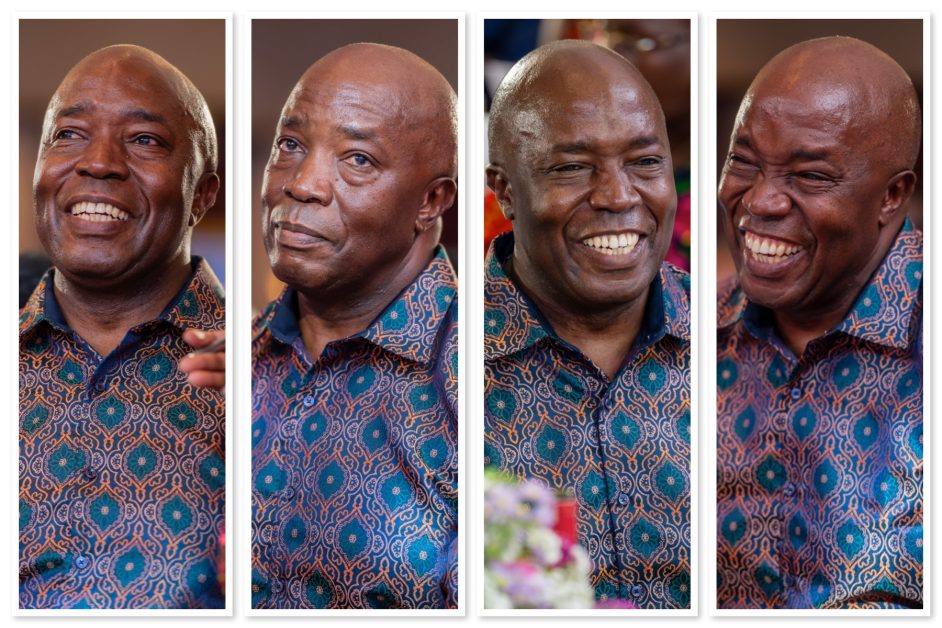
Today, he serves on the boards of several leading companies in Uganda and East Africa, namely, I&M Bank Uganda, MTN Uganda, Old Mutual Holdings (Kenya), Buganda Land Board and Nakasero Hospital. In addition to this, he also dedicates a significant amount of his time to his social enterprises, such as the Masaka School for the Deaf and Masaka Vocational Training Institute, as well as serving in various leadership capacities in the Catholic Church at his local Masaka Diocese in Kitovu. But those who spoke at the launch painted a much broader and more textured story — one beginning in his home village of Kimaanya, Masaka.
Gloria Byamugisha, the Head of Human Resources at Dangote, who flew in all the way from Lagos, was one of the evening’s most reflective speakers. He recalled first meeting Kamulegeya during her Airtel days.
“I do remember asking Francis about his parents, as we got to know more about each other professionally, in an attempt to connect the dots. Many a time we tend to think when somebody is making it, maybe that person has got a parent’s name that may have given him a head start,” she said. “Francis quickly put me to order and said, ‘Hey Gloria, I am from Kimaanya, Masaka, and I’m self-made.”
That self-made identity would become one of the evening’s recurring themes.
Apollo Makubuya reinforced the point with a humorous anecdote from a meeting at State House when he, Kamulegeya and various other business leaders were serving at the National Covid-19 Response Fund, which was hosted by President Yoweri Museveni.
“His Excellency came and asked us to introduce ourselves,” Makubuya recalled. “And Francis said, ‘I’m Francis Kamulegeya.’ So the President asked him, ‘Which Kamulegeya?’”
The room erupted into laughter as Makubuya paused before delivering Kamulegeya’s now-famous response.
“And Francis said, ‘This Kamulegeya.’”
This anecdote perfectly captured Kamulegeya’s comfort in his own identity and journey.
Byamugisha referenced a passage in the book describing Kamulegeya’s early maize trading days in Masaka, where he realised that although he understood the mechanics of agriculture and trade, true decision-making power sat elsewhere. In this case, the power sat in the office of the Accountant.
“This person (the Accountant) did not negotiate with the farmers or organise transport from Mbirizi to Kampala, yet everything revolved around his office,” she read from the memoir. “He was the one who determined when money moved. In that moment, I began to realise that while I understood how maize was grown and traded, I was operating at the outer edge of the business. The real decisions, the control and the direction of the enterprise sat somewhere else.”

For Byamugisha, that moment explained much about Kamulegeya’s later transition into accounting, finance, taxation, corporate leadership and business strategy.
“He had already connected the dots,” she said. “He understood very early where influence sat.”
The evening repeatedly returned to the contrast between Kamulegeya’s humble beginnings and the global professional life he would later build.
Kabushenga recalled their days together at Namasagali College in the early 1980s.
“It’s very difficult for us in Uganda that exists today to explain just how modest life was back then,” he said. “Many of us came from very simple backgrounds and had to navigate school life with very limited means.” And that required one to be very creative to survive.
Kabushenga then read a humorous excerpt from the book describing how the young Kamulegeya strategically befriended the school cook, Bita, to secure larger food portions.
“I used to give Bita soap, and in return, he would serve me large portions during meal times,” Kamulegeya wrote.
“You can now see how important it was for you to build strategic relationships where it mattered most,” Kabushenga joked. “The man knows which side of his bread to butter.”
Apollo Makubuya, one of Kamulegeya’s oldest friends, perhaps captured his lifelong adaptability best.
“Some people thought he was a kamunye (hawk),” Makubuya said humorously. “But as we have grown up, I think he is a cat. A cat is a strange animal that has many lives.”
From a science student in high school to an agriculture graduate, from a maize trader in Masaka immediately after leaving university, to emigrating to the UK and starting at the bottom of the ladder working as a cleaner. From doing various odd jobs to raise money for his studies, while in the UK, including working as a school meals delivery van driver and dinner lady, to qualifying as a certified chartered accountant, chartered tax adviser and becoming one of East Africa’s most respected tax professionals, Kamulegeya’s journey struck many speakers as remarkable precisely because it was never linear.
“Where many people wouldn’t survive,” Makubuya reflected, “Francis has thrived.”
If Kamulegeya’s story was one of resilience and reinvention, when those who worked shared their story, another defining trait quickly emerged: that of uncompromising demand for excellence.
The ‘Terrorist’ Boss and the Pursuit of Excellence
If one side of Kamulegeya that emerged during the evening was the resilient self-made striver, another was the demanding perfectionist who expected excellence from everyone around him.
No one illustrated this more vividly than Crystal Kabajwara, a former PwC colleague and now Chairman of the Tax Appeals Tribunal in Uganda.
“I think most of the people in this room know the cool professional Francis, always nice, humble and ever smiling,” she began mischievously. “But some of us who came into his life before Gabby, Francis, at that time was a terrorist.”
The room erupted in laughter.

Kabajwara described a workplace culture where staff first had to assess Kamulegeya’s mood before entering his office.
“We had code,” she recalled. “I would enter the office and come out, and people would ask me, and I’d say, ‘Today he is PIN.’ That was code when Francis was tough.”
She described his style of never driving to client meetings and URA offices near the office, but always insisting on walking, and very fast at that, while the younger staff struggled to keep up.
“He was like Road Runner,” she said. “You had to run after him.”
Yet even in describing his intensity, Kabajwara repeatedly returned to the fairness beneath it.
“It didn’t matter whether you were male or female, dog or cat,” she joked. “He treated all of you the same way.”
Makubuya similarly recounted how even during Kamulegeya’s early years in London — long before PwC partnerships and board appointments — he already demonstrated uncompromising leadership tendencies while supervising his fellow Ugandan and one of their cleaning jobs.
“Even then, Francis was terrorising us,” he laughed. “The quality of cleaning work we did, the time of arrival, and departure — everything he was in charge of.”
Another story from their Namasagali days prompted loud laughter from the audience. As a student judge responsible for disciplining peers, Kamulegeya once sentenced Makubuya to 25 strokes after a drunken escapade.
“The man sentenced me to 25 canes, yet we were together in that mischief the night before” Makubuya laughed.
But beneath the humour lay something deeper: a man deeply committed to standards, professionalism and accountability.
Kabajwara recalled one of Kamulegeya’s most repeated workplace questions:
“What is in it for the client?”
“The one you’re transacting with,” she explained. “If you don’t know what is in it for the client, or the other person, then there is no deal.”
That philosophy, she said, shaped how many younger professionals under him learned stakeholder engagement, shared ownership mindset, self-leadership, negotiation and value creation.
During difficult periods at PwC, Kamulegeya constantly reminded his teams:
“We are in this together.”
For Kabajwara, that ability to make people feel the shared ownership — even under pressure — became one of his greatest strengths as a leader.
The Mentor Who Built Other Leaders
Beyond the corporate success, technical expertise and boardroom reputation, perhaps the strongest portrait painted throughout the evening was that of Kamulegeya as a deliberate builder of people.
Kabajwara spoke emotionally about the role he had played in shaping her professional life since she joined PwC at just 23 years old.
“He pretty much moulded me professionally,” she said. “He picked me up and looked at this unruly child who needed to be moulded.”
Today, Kabajwara is the Chairman of Uganda’s Tax Appeals Tribunal — a trajectory she partly attributes to Kamulegeya’s mentorship and belief in younger leaders.
More importantly, she said, he never feared being outshone by those he mentored.
“Francis wasn’t afraid of being outshone,” she said. “He would tell you, ‘This is your thing. Go and do it.’”

At one point during her remarks, she asked all professionals in the room who had been mentored by Kamulegeya to stand. Around the ballroom, close to fifty people rose to their feet.
It was perhaps the evening’s clearest visual representation of the influence he has quietly had over people for decades.
Kabajwara linked that mentorship philosophy to a leadership chain she saw reflected in the book itself, where Kamulegeya speaks gratefully about one of his own mentors at PwC, Shaira Adamali, who invested time and energy into developing him.
“As a leader or just any ordinary human being, you can only give what you have,” she reflected.
Jackie Asiimwe, founder of CivSource Africa, highlighted another dimension of Kamulegeya’s leadership: generosity.
“Generosity,” she read from the book, “is not a matter of perfection or grand gestures. It is a daily choice, a conscious decision to give more than we take.”
For Asiimwe, Kamulegeya represented someone who had intentionally transformed professional success into broader significance.
“It is where success transforms into significance,” she quoted.
“Many people can be good at tax, accounting, audit or any other technical competence of their profession,” Byamugisha also observed. “But Francis has relationship skills, stakeholder management, and a very unique ability to continuously reinvent himself.”
Pamela Natamba, another former PwC colleague, said Kamulegeya consistently pushed people to think beyond immediate achievements.
“He encouraged me to think beyond the now,” she said. “To think beyond the next milestone and ask myself what’s next.”
And perhaps that question — “And then what?” — was ultimately the philosophical heartbeat of both the book and the man whose life inspired it.
The Francis His Family Knows
If Kamulegeya’s friends and colleagues revealed the strategist, disciplinarian and mentor, it was his family that revealed the softer, funnier and deeply personal side of the man.
By the time Sophia Kamulegeya finally took the microphone, the audience was already laughing in anticipation. Throughout the evening, several speakers had jokingly referenced the “other side” of Francis — the husband, father and home version of the accomplished executive many in the room knew professionally.
“I don’t normally get the opportunity,” Sophia began mischievously. “He doesn’t let me use the microphone a lot,” sending the audience into fits of laughter.

Then came one of the evening’s warmest and most revealing tributes.
“I met this man on the 3rd of June 1992,” she said. “And I am still here, and he is still there.”
Describing him as “a good man, a good friend, a good husband and a good dad,” Sophia painted the picture of someone whose brilliance and intensity are balanced by deep generosity and openness.
“He likes sharing his knowledge,” she said. “He is not selfish with it.”
She thanked the various organisations and boards that continue to engage him — I&M Bank, MTN Uganda, Old Mutual Holdings Plc, Buganda Land Board and Nakasero Hospital, and she said, jokingly, that they were helping “keep him out of the house” after his transition from PwC.
“When the man left PwC, I was worried,” she laughed. “‘Now he’s going to be at home the whole day doing what? He had a plan. I knew of it, but I was not sure how it was going to work. Now he’s even busier than when he was at PwC.”
Her remarks also revealed the playful side of Kamulegeya’s new identity as an author.
“One time I said, ‘Okay, Mr Author, what next?’” she recounted. “And then he said, ‘You have to add the word Published.’”
Yet beneath the humour was unmistakable admiration.
“He’s very clever,” she told the audience. “Please use him, and he is not afraid to be used.”
Their daughters, speaking through recorded messages played during the launch, added even more emotional depth to the evening.
Georgia Nassali described her father as someone who effortlessly takes over every room he enters.
“He’s really just one of those people who comes into a room, and it’s like he’s everybody’s dad,” she said. “He has a heart as big as his personality.”
Some of her fondest memories, she recalled, were moments when family outings unexpectedly turned into full-scale public events once her father arrived.
“He says we’re just going to greet people and hand over gifts,” she laughed. “Then all of a sudden he’s at the DJ booth, he has the microphone, and he’s emceeing the whole event.”
Grace Namuli, meanwhile, reflected on discovering new dimensions of her father while reading snippets of the manuscript.
“My dad has known me all my life,” she observed thoughtfully, “but I’ve only known him for maybe about a quarter of his.”
That realisation, she said, made her understand how layered and expansive his journey had been long before she was born.
“You’re never really done getting to know someone,” she added. “And you’re never done achieving anything.”

For daughter Gloria, books became one of the deepest connections she shared with her father.
“My dad and I always talk about books that we read together,” she said. “I think he definitely encouraged me to read more nonfiction.”
Her memories of family trips, bookstore visits and conversations revealed a father whose influence stretched far beyond professional success into curiosity, humour and storytelling.
“I feel like I could talk forever,” she said lovingly.
Together, the family testimonies added an emotional layer that transformed Kamulegeya from corporate titan into something more relatable: a husband teased by his wife, a father adored by his daughters and a man whose personal influence clearly extends far beyond boardrooms and business strategy.
Friendship, Loyalty and a Life Built Around People
Throughout the evening, one idea repeatedly resurfaced: Francis Kamulegeya’s enduring loyalty to people.
Kabushenga perhaps captured it most directly.
“Francis never, ever forgets his friends,” he said.
To prove the point, he reflected on a decades-old photograph from their Namasagali College days — a picture filled not with prominent executives or powerful figures, but with old school friends who had journeyed together through adolescence and early adulthood.
“These were Francis’s tights from S1,” Kabushenga said affectionately.
Jimmy Mugerwa, another longtime friend, described Kamulegeya as “more than a brother,” explaining that over the years the two had evolved into business coaches for one another.
“The essence lies in listening and asking deep probing questions,” Mugerwa reflected.
For him, the title And Then What? perfectly captured the conversations Kamulegeya constantly pushed people to have with themselves.
“You strive for something bigger and better,” he said, “yet after accomplishing it, you still ask yourself — and then what?”
Mathias Katamba similarly praised the memoir for its honesty and accessibility.
“It’s one of those books that from the moment you start reading it, you just don’t stop,” he said.
What many speakers seemed to admire most was not simply Kamulegeya’s success, but his refusal to become trapped by it. Again and again, they described a man who kept evolving — from Kimanya to Namasagali, from agriculture to accounting, from corporate executive to philanthropist, mentor and now author.
Apollo Makubuya’s metaphor perhaps captured it best.
“Maybe we should refer to him as Francis the cat,” he joked. “A cat is a strange animal that has many lives.”
Beyond Success, Towards Significance
As the evening drew to a close, the central message of And Then What? became increasingly clear.
This was not simply a memoir about career progression or corporate accomplishment. Nor was it merely a celebration of personal success.
Instead, the evening became a broader reflection on significance — on what remains after titles, milestones and achievements have been attained.
One of the excerpts read during the launch captured this philosophy powerfully:
“A life of significance is one that outlives you.”
Another passage challenged the audience even further:
“True success is not measured only by what we gain, but by what we leave behind.”
Those ideas echoed throughout the testimonies shared by family, friends, protégés and colleagues.
Jackie Asiimwe perhaps summarised it most succinctly when she described Kamulegeya as someone who had moved from success to significance through “the quiet, consistent and generous offering of his time, talent and treasure.”

And by the end of the evening, it was evident that the launch of And Then What? had evolved into something much larger than a literary event.
“It became a collective testimony about the lives one person can shape over time.
A story about a village boy from Kimanya who continuously reinvented himself, rose to the highest levels of corporate leadership, invested deeply in people, and, in the process, built a life whose impact now stretches across generations.
Perhaps that is the real answer to Francis Kamulegeya’s lifelong question.
And then what?
The answer, judging from the stories shared that night, is people. Lives changed. Leaders raised. Relationships nurtured. Significance built quietly over time.
As Kamulegeya says in his book, the purpose of success is not simply personal comfort; it is expanded capacity to serve.
The true measure of achievement is not how much we accumulate for ourselves, but how much of our experience, influence, and success becomes useful to others.
Perhaps that is the deeper meaning behind the question, “And Then What?”
After success comes stewardship. After achievement comes contribution. After leadership comes legacy. Because ultimately, the highest expression of a meaningful life is not simply personal success — it is leaving others better because we lived.
The book is now available at Aristoc, Bookpoint, Mahiri Books Online, Connect Shelf at Romo in Nairobi, and Amazon.