There is brewing discontent at the Uganda National Oil Company (UNOC) — the Government of Uganda’s commercial vehicle for managing the country’s petroleum interests — over a controversial internal push to potentially extend the contracts of several senior executives approaching the end of the company’s long-standing ten-year management tenure cycle.
The quiet but increasingly sensitive discussions have triggered growing debate around succession planning, governance transparency, institutional continuity, and whether UNOC risks becoming overly dependent on a small circle of founding executives at a critical stage of Uganda’s oil and gas development journey.
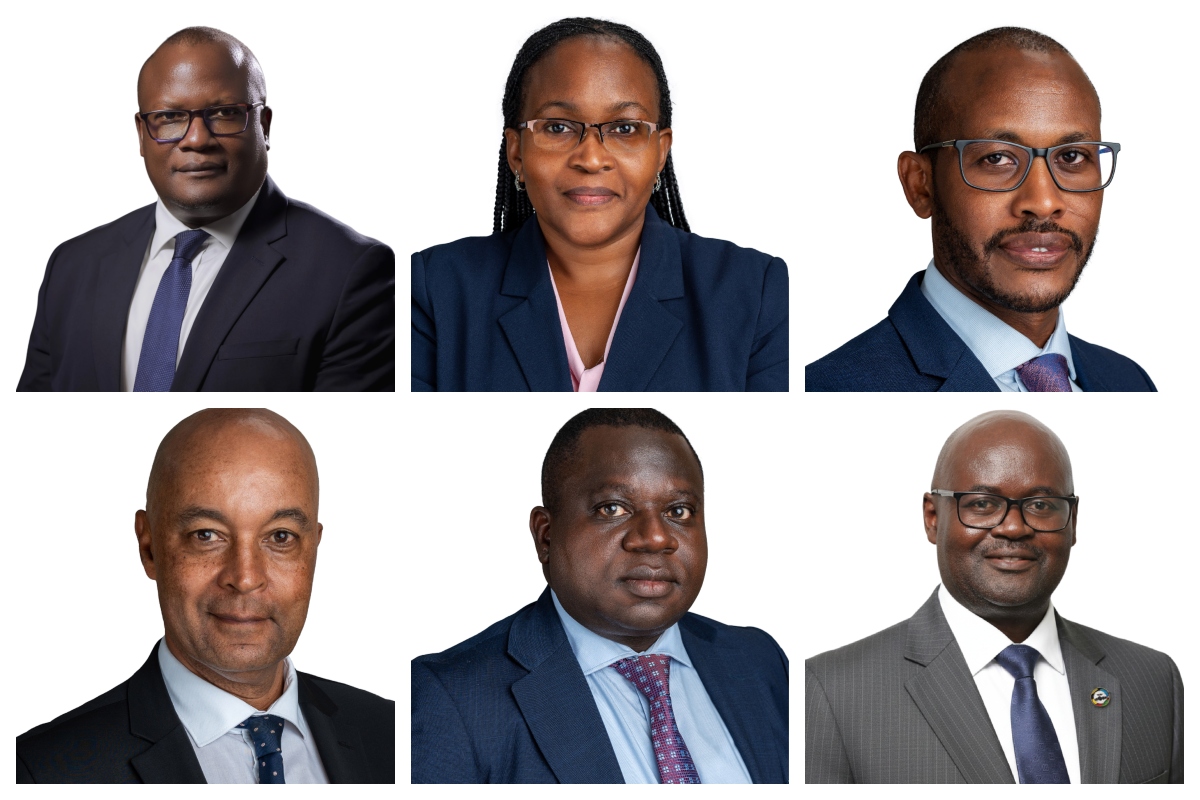
At the centre of the matter are four senior officials: Peter Muliisa, Chief Legal Officer and Company Secretary; John Bosco Habumugisha, General Manager of the National Pipeline Company Ltd and Deputy Managing Director at EACOP; Emmanuel Mugagga, Chief Financial and Administrative Officer; and Dr Michael Nkambo Mugerwa, General Manager of Uganda Refinery Holdings Company Ltd.
The four officials whose names repeatedly arise in discussions surrounding the issue are among the most experienced figures in Uganda’s petroleum sector.
The Executives at the Centre of the Debate
The controversy revolves around a group of senior UNOC executives who have collectively spent nearly a decade at the centre of Uganda’s oil and gas sector and are widely viewed as part of the institution’s founding management architecture. Most joined UNOC between late 2016 and early 2017, placing them close to the company’s internally prescribed ten-year senior management limit — a policy originally designed to promote innovation, performance renewal and leadership succession.
Among the officials at the centre of the discussions is Peter Muliisa, UNOC’s Chief Legal Officer and Company Secretary, who joined the company in November 2016. Under the ten-year management framework, his tenure would ordinarily be expected to run until around November 2026. Emmanuel Mugagga, the Chief Financial and Administrative Officer, joined UNOC in January 2017, meaning his expected ten-year threshold falls around January 2027. Dr Michael Nkambo Mugerwa, General Manager of Uganda Refinery Holdings Company Ltd, also joined in February 2017 and would similarly approach the end of the management cycle around February 2027. Meanwhile, John Bosco Habumugisha joined UNOC in July 2017 as General Manager of the National Pipeline Company, placing his anticipated ten-year limit around July 2027.
Over the years, the executives have occupied some of UNOC’s most strategic and technically sensitive positions, spanning legal affairs, pipeline infrastructure, project financing, refinery development, governance and commercial operations. Their careers prior to UNOC also reflect extensive experience across government, international energy projects, multinational oil companies, public administration and petroleum infrastructure development.
Collectively, they represent a significant concentration of institutional memory within Uganda’s petroleum sector, having participated in critical negotiations, infrastructure planning, financing structures and implementation processes linked to projects such as the East African Crude Oil Pipeline (EACOP), the refinery project, petroleum storage infrastructure and Uganda’s broader commercial oil development programme.
It is this deep institutional involvement that now sits at the heart of the internal debate. Supporters of possible contract extensions argue that Uganda’s oil sector remains highly specialised and that replacing experienced executives at such a critical implementation stage could disrupt continuity, delay execution and weaken institutional capacity. Critics, however, argue that if UNOC anticipated a strict ten-year management cycle from the outset, then robust succession planning should already have produced capable replacements, rather than creating a system that risks becoming dependent on a small founding executive circle.
Continuity or Entrenchment?
In a detailed written response to CEO East Africa Magazine, Tony Otoa, UNOC’s Chief Corporate Affairs Officer, confirmed that some members of the company’s senior management team were recruited in late 2016 and 2017 and “will be making 10 years at the end of this year, 2026.” He further acknowledged that UNOC’s original human resource policy required senior management staff “to work up to ten years and retire, whether they had reached retirement age or not.”
The admission is significant because it confirms that the tenure limit was not accidental or informal, but a deliberate governance mechanism embedded within the company’s original institutional framework. According to Otoa, the policy was specifically designed “to ensure innovation, high performance, and career progression for staff in the company.”
But nearly a decade later, UNOC now appears to be confronting the unintended consequences of the very system it created.
Otoa argued that shareholders and the Board now recognise that UNOC’s management has been “highly trained” and that strict enforcement of the ten-year rule risks weakening institutional capacity at a critical stage of Uganda’s oil programme. He defended continuity by pointing to the scale and complexity of the company’s operations, noting that UNOC is currently managing 22 strategic projects, including government interests in Tilenga, Kingfisher and EACOP, the refinery project, petroleum importation, LPG infrastructure, regional pipeline expansions, strategic storage facilities, the Jinja Storage Terminal expansion, the Tanga terminal project, biofuels blending initiatives, technical services, and the Kasurubani exploration block.
“All these projects are at a critical development stage and require support and delivery by a team that has been involved in their planning and execution,” Otoa said, adding that “there is a limited supply of specialised skills in the oil and gas sector, which impacts the ready availability of talent.”
UNOC also denied reports of widespread irregular contract extensions, stating that “none of the contracts referenced has either expired nor extended except for one, which was extended four years ago under special circumstances as provided for in the Human Resource manual.”
Otoa added that senior management performance is tied to the company’s corporate strategy, which is reviewed quarterly by the Board, and that any contract renewals are subject to satisfactory delivery of key performance indicators. He further noted that UNOC periodically reviews its succession plans to assess staff readiness to take over from senior management positions.
However, one aspect of the company’s response has particularly attracted attention. While acknowledging that one senior management contract was extended under “special circumstances,” UNOC did not disclose which executive benefited, the duration of the extension, the specific circumstances involved, the approving authority, or whether the Board and supervising ministry formally sanctioned the arrangement.
From an operational perspective, the continuity argument carries weight. Uganda’s oil sector remains highly specialised, technically demanding and heavily dependent on institutional memory accumulated over years of negotiations, infrastructure planning and regulatory coordination.
However, critics inside and outside the institution argue that this defence leaves one major question unanswered: if UNOC knew from inception that senior management would face a mandatory ten-year exit window, what exactly has the institution been doing about succession planning over the last decade?
Several sources familiar with the internal dynamics at UNOC told CEO East Africa Magazine that the company has, over the years, developed a relatively strong pool of technically competent middle and senior-level managers capable of stepping into leadership positions. According to the sources, the real concern may not necessarily be the absence of talent, but resistance from parts of the founding executive establishment to leave at what many internally describe as the “juicy stage” of Uganda’s oil and gas commercialisation cycle — the period when long-delayed projects are finally moving into implementation, financing, procurement and eventual production.
Some insiders argue that extending the tenure of the founding executive core risks demoralising and disorienting ambitious middle-management staff who joined the institution believing there was a clear pathway for progression under the company’s own succession framework. Others warn that it could entrench a perception that UNOC’s top leadership positions are becoming effectively insulated from transition despite the existence of formal governance rules.
The concerns become even more sensitive because some sources allege there is quiet high-level support for possible retention arrangements from sections of both the Board and supervising ministry structures, although no official evidence has publicly emerged to confirm such claims.
The controversy, therefore, extends far beyond ordinary contract renewals. At its core is a deeper governance question: whether Uganda’s national oil company is quietly moving to preserve its founding executive architecture beyond limits originally designed to promote renewal, succession and institutional evolution.
A Succession Crisis or a Failure of People Planning?
As a wholly State-owned enterprise managing some of Uganda’s most strategic petroleum assets, UNOC sits at the intersection of corporate governance, public accountability and national resource management. Any exceptional retention arrangements involving senior executives therefore carry implications far beyond ordinary staffing decisions.
But the emerging controversy also raises deeper and potentially more uncomfortable questions about the ability of both UNOC’s senior management and Board to effectively plan for the institution’s most vital resource — its people.
If the company knowingly adopted a ten-year leadership cycle from inception, critics argue, then succession planning, leadership development and talent grooming frameworks should by now have produced a credible pipeline of replacement leadership without triggering fears of institutional disruption. Instead, UNOC now appears to be confronting a scenario where the possible exit of a handful of founding executives is being framed internally as a potential operational risk.
That contradiction sits at the centre of the governance debate.
The timing makes the issue even more sensitive. In 2024, Government appointed a new UNOC Board now chaired by Mathias Katamba, a respected governance, leadership and strategy consultant. Mr Katamba and his relatively new Board now find themselves confronting an old but increasingly consequential management question: whether to strictly enforce the original tenure framework, quietly approve exceptional retention arrangements, or openly revise the policy to accommodate continuity concerns.
Each option carries consequences.
If the Board quietly extends senior executives without transparent disclosure, it risks reinforcing perceptions of managerial entrenchment and weakening confidence in the institution’s governance structures. If the ten-year rule is rigidly enforced without an adequately managed transition plan, the company risks operational disruption at a critical phase of Uganda’s oil development programme.
And if the Board chooses to formally revise the policy, it would need to do so transparently — with clear criteria, fixed timelines, succession benchmarks and governance safeguards — to avoid the perception that institutional rules are being adjusted primarily to accommodate individuals rather than protect the long-term interests of the company.
That is why the issue has evolved beyond an ordinary HR matter. It has become a broader test of whether Uganda’s national oil company can balance continuity, succession planning and governance credibility as the country edges closer to first oil.