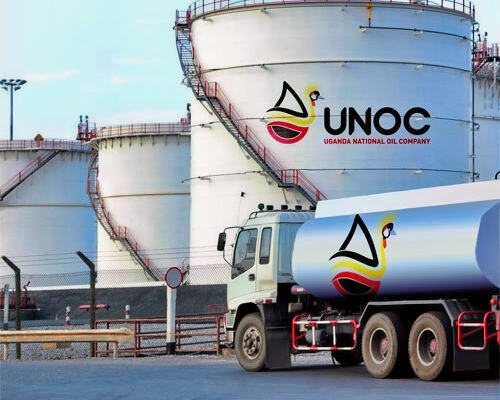
Uganda National Oil Company (UNOC) reported a net profit of UGX 359.7 billion for the financial year ending June 2025, its strongest performance since inception.
The result reflects a significant shift in the company’s role within Uganda’s petroleum sector, particularly following its designation as the country’s sole importer of petroleum products.
However, a detailed review of the Auditor General’s FY2024/25 reports shows that the profit is accompanied by rising liabilities, funding shortfalls and operational constraints that point to growing structural pressure within the state-owned enterprise.
The reports, which issued an unqualified audit opinion on UNOC’s financial statements, highlight multiple areas where financial growth is being matched by increasing obligations and incomplete execution of planned activities.
Rising Revenues, Thin Margins and Growing Liabilities
UNOC’s profitability in FY2024/25 was supported by increased revenue volumes, but the Auditor General notes that efficiency remains limited.
The company recorded an operating margin of 5.37 percent, significantly below the industry benchmark of around 15 percent.
Revenue performance also fell short of projections. UNOC realised UGX 387 billion against a target of UGX 573 billion, representing a shortfall of 32.46 percent.
The variance is linked to lower-than-expected trading margins, with actual margins averaging USD 39.4 per cubic metre compared to the projected USD 60.
At the same time, the company’s working capital position shifted sharply. Trade receivables increased from UGX 9.08 billion to UGX 31.12 billion, a rise of 243 percent, indicating a growing volume of unsettled payments from customers and partners.
More significantly, trade payables rose from UGX 15.0 billion to UGX 140.9 billion, an increase of 839 percent within a single financial year. T
his growth in liabilities far exceeds the increase in receivables and suggests that UNOC is increasingly relying on supplier credit to sustain its operations.
The Auditor General notes that while these changes are consistent with expanded operations, they require close monitoring given their implications for liquidity and financial sustainability.
Funding Constraints, Staffing Gaps and Delayed Execution
The audit findings show that UNOC’s expansion is being constrained by limited financial and institutional capacity.
The company’s strategic plan has a funding gap of UGX 358.65 billion, equivalent to 17.82 percent of required resources, while the annual budget shortfall stands at UGX 336.5 billion.
These constraints have affected the implementation of key projects, including petroleum storage expansion, refinery development and ICT systems.
Budget absorption was also below expected levels, with only 63 percent of allocated funds utilised during the financial year. The report attributes this partly to delays in procurement and recruitment.
Human resource capacity remains a major constraint. UNOC has filled only 56 percent of its approved positions, leaving a 44 percent staffing gap.
The unfilled roles are concentrated in technical and specialised areas, which are critical to project execution and operational oversight.
 Ugandan Banks Reject Sovereignty Bill, Cite Seven Grounds
 Procurement performance further reflects these constraints. Only 68 percent of planned procurements were implemented, and 63 percent of awarded contracts were completed.
In some instances, procurement processes took up to 17 months from initiation to contract signing.
Low bidder participation was also observed, with certain tenders attracting only one bidder despite multiple invitations. This limits competition and can affect value for money.
These factors contributed to gaps in execution. The Auditor General reports that only 44 percent of planned initiatives were fully achieved, while 36 percent were partially implemented and 20 percent were not achieved.
Infrastructure Limits and Emerging Upstream Obligations
The report also highlights constraints in infrastructure and future financial commitments.
UNOC-managed petroleum storage facilities have a capacity of approximately 30 million litres, compared to national daily consumption of about 6.5 million litres.
This provides an estimated four to five days of fuel coverage, indicating limited buffer capacity in the event of supply disruptions.
Efforts to expand storage infrastructure are ongoing but have been affected by funding and implementation delays.
In addition, logistical constraints such as vessel size limitations, currently at about 58,000 metric tonnes instead of the optimal 85,000 metric tonnes, increase transportation costs and reduce efficiency.
In the upstream segment, UNOC continues to participate in key oil development projects. The Auditor General notes delays in the Tilenga project, as well as slow progress in the Kasuruban exploration area, which stands at 10 percent completion without a secured joint venture partner.
The company also faces future financial obligations linked to these projects. Cash calls are estimated at USD 190 million for Tilenga and USD 45 million for Kingfisher, expected around the time of first oil.
The report further notes that land hosting key storage facilities has not yet been transferred into UNOC’s name, creating potential administrative and legal risks.
Meanwhile, the company continues to incur rental costs of about UGX 0.96 billion annually, amounting to approximately UGX 3.5 billion since 2018.
The Auditor General’s FY2024/25 reports present a company that has expanded rapidly in both scale and responsibility.
While UNOC has achieved its first major profit milestone, the findings show that this growth is accompanied by rising liabilities, constrained funding and operational gaps that require management attention as the company prepares for the next phase of Uganda’s oil development.