At the end of 2024, EADB reported total assets of approximately USD 506 million, but only about 30% of that balance sheet was deployed into customer lending. A significant portion remained in liquid assets and treasury placements, even as the region continues to face a well-documented shortage of long-term, patient capital for infrastructure, manufacturing, and industrialisation.
This disconnect—between available capital and actual deployment—has raised important questions about the Bank’s pace of execution. Is EADB being overly cautious? Are structural bottlenecks slowing disbursement? Or is the institution simply navigating the inherent complexity of development finance in emerging markets?
At the same time, the Bank’s performance metrics tell a story of prudence. Its Non-Performing Loan (NPL) ratio remains below 1%, far lower than the regional banking average, reflecting a highly disciplined risk culture. But that strength also feeds into a broader debate: whether such conservatism may be limiting the Bank’s ability to fully deliver on its development mandate.
It is against this backdrop that CEO East Africa Magazine’s Executive Editor, Muhereza Kyamutetera, sat down with Benard Paul Mono—Acting Director General since December 2024 and formerly the Bank’s Chief Financial Officer—to understand what he and the institution are doing to rebalance the equation and unlock greater development impact.
In this conversation, Mono speaks candidly about the Bank’s 2024–2028 strategy, the internal reforms underway, and the deliberate shift from a liquidity-heavy, risk-averse posture toward a more active and visible development financier. He addresses the persistent gap between loan approvals and disbursements, outlines the Bank’s sectoral priorities, and responds directly to the growing perception of EADB as a “sleeping giant.”
Most importantly, he makes a clear assertion: the giant is awake—and now, it is looking to deploy.
I’ve been looking at EADB’s financials, and one of the key questions that stands out is around capital deployment. As a development finance institution, your core mandate is to deploy capital into the real economy—yet historically, a significant portion of the balance sheet appears to have remained in liquid or low-risk assets, even when demand for long-term financing in the region is high.
While some of these figures relate to 2024—before you assumed office as Acting Director General—you were part of the leadership team as CFO. Now, 15 months into your tenure in senior leadership and at the helm, what concrete steps have you taken to accelerate lending, improve disbursement, and move the Bank closer to fully utilising its balance sheet in line with its development mandate?
Yes—maybe to begin with, we are working within a clear strategy, the EADB Strategic Plan 2024–2028, and that is really what is guiding everything we are doing. In my acting capacity, my role has largely been to ensure continuity and enable that transition as we await the appointment of a substantive Director General, while at the same time making sure that we remain firmly focused on executing that strategy.
Within the strategy, we have a number of key pillars, and one of the most important is around people and organisational effectiveness. At the end of the day, you can have a very good strategy on paper, but if you don’t have the right people, you will not achieve much. Even with all the enthusiasm around AI and technology, you still need capable and motivated people to drive results. So one of the areas we focused on early on was HR transformation. We secured a number of approvals from the Board to support this, including putting in place a new organisational structure that provides clarity on roles, responsibilities, and reporting lines. That clarity in itself is very important because it helps align people and improves performance.
We have also updated our staff rules and regulations so that everyone understands what is expected of them, and we have made improvements to staff benefits and compensation. This was quite deliberate because, previously, we were not always able to attract the calibre of talent we needed. So the idea has been to create an environment where people are motivated, enabled, and able to perform at a high level, because ultimately that is what drives the institution forward.
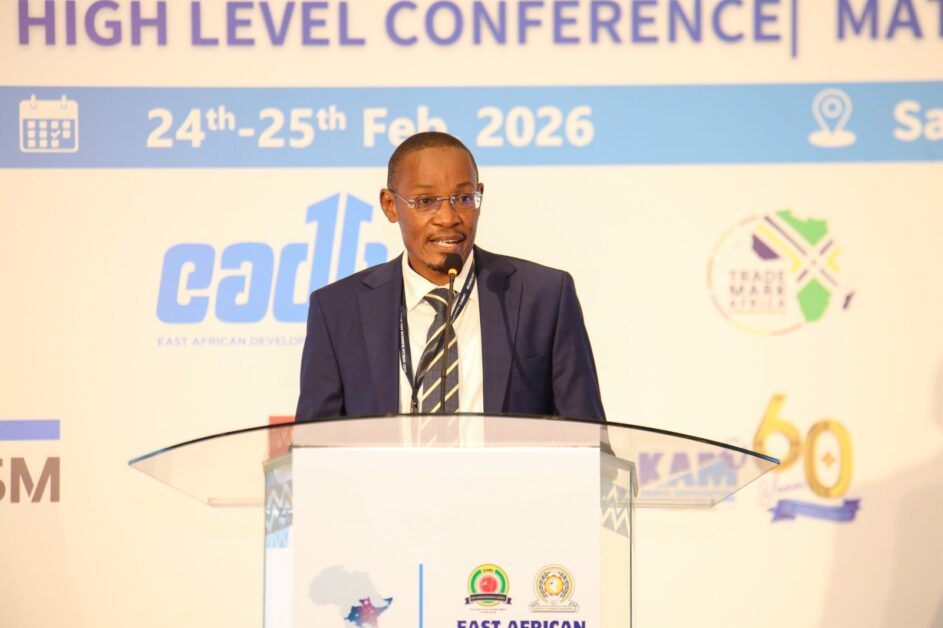
The second area we focused on is visibility and stakeholder engagement. If you look at where we were before, many people had heard about EADB, but they did not really see us or interact with us. In fact, at a recent event in Nairobi, someone told me they had heard about the Bank but had never been able to put a face to it. That was quite telling. So we have made a deliberate effort to improve our visibility, both through media and social media, and by actively participating in regional stakeholder events. We have organised engagements in Uganda, Tanzania, and Rwanda, and we are pushing our teams to be present in spaces where the business community is, whether it is manufacturers, investors, or other stakeholders.
But importantly, this is not visibility for its own sake. It is visibility aimed at driving business. We are strengthening our presence so that people know who we are, what we do, and how we can support them.
And we are beginning to see the results. As you rightly said, the numbers do not lie. Our loan approvals have gone up, and our disbursements have also increased significantly. In fact, loan disbursements grew by about 142 per cent in 2025. Now, we are not yet where we want to be, but it is a journey, and we are moving in the right direction.
The third area we have focused on is systems and technology. We have been operating on legacy systems, and in today’s environment, technology is a key enabler of efficiency and growth. So we have started the process of upgrading our systems to improve both internal processes and customer experience. Going forward, we want a situation where clients do not have to bring bundles of paperwork to us. They should be able to apply digitally, and we should be able to access the necessary information seamlessly. That transformation has started, but again, it is something that will take time.
So overall, what we have been doing has been quite deliberate. We are strengthening the institution internally, increasing our visibility externally, and improving our systems, all with the aim of driving more business and increasing our development impact.
Beyond the internal reforms, where is EADB actually deploying capital? Which sectors are currently at the core of your lending strategy, and how do these align with the Bank’s broader development mandate in the region?
In our strategic plan, we have identified five key sectors that guide our interventions. One of the primary areas is industrialisation, particularly manufacturing, because that is central to transforming our economies. But beyond that, we also recognise that industrialisation cannot happen in isolation—you need people, skills, and supporting systems to sustain it.
That is why social services form another important pillar. Within this, we focus on areas such as education and healthcare. On the education side, we finance institutions and infrastructure, including schools and universities. In healthcare, we have supported a number of hospital projects, and this is an area where we continue to see strong demand. In fact, even in our recent approvals, we had hospital projects coming through.
We also support affordable housing, which is becoming increasingly important across the region. We have done a number of transactions, particularly in Tanzania, working with institutions like the National Housing Corporation. In addition, we work with mortgage financing institutions that, in turn, support commercial banks to extend housing finance to individuals. So we are contributing both directly and indirectly to expanding access to housing.
Tourism is another sector we support, given its importance to many of our economies. It is not just about leisure, but also about attracting investment and generating foreign exchange, so we finance projects in that space as well.
Then, of course, there is agriculture, which is a major focus for us in this region. But when we talk about agriculture, we are really looking at the entire value chain—agriculture itself, agro-processing, food security, and rural financing. These are all interconnected. When you finance agriculture, you are also supporting rural development and strengthening food systems. In this area, we work extensively with SMEs, often through partner financial institutions, because we do not have a branch network across all regions. So instead of trying to reach every location directly, we leverage commercial banks and other partners who already have that reach.
All these sectors depend heavily on infrastructure, so infrastructure development is also a key area for us. This includes transport networks like roads and railways, energy generation and transmission, ports, and even digital infrastructure such as fibre networks.
At the same time, as we finance these sectors, we are very mindful of sustainability. We do not want to support projects that deliver benefits today but create problems in the future. That is why climate finance and environmental management are embedded across our work, ensuring that what we support is both economically and environmentally sustainable.
Would it be possible to get a clearer breakdown of how your lending is distributed across these sectors—perhaps in percentage terms or broad estimates—just to give a sense of where the Bank’s capital is most heavily deployed?
Over the last year or so, there has been a notable shift in the composition of the portfolio. The numbers give a clearer picture of how things are evolving. For instance, agriculture and rural finance—largely driven through SMEs and partner financial institutions—now accounts for about 57% of the portfolio in 2025, up from 42% in 2024. Social sector financing has also grown quite significantly, rising to 29% from just 5% the previous year, reflecting increased activity in areas such as education, healthcare, and housing. Agro-processing, while still a smaller share, has also picked up, moving from 1% to about 5%.
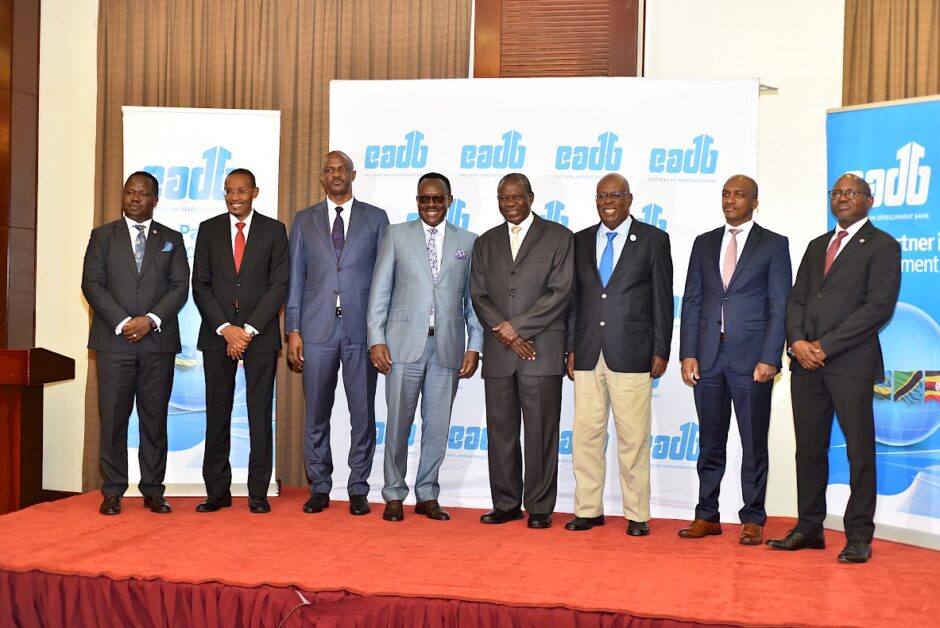
Now, it’s important to interpret these numbers in context. The higher share in SME-related financing is not necessarily because other sectors are less active—it is largely driven by the way these facilities are structured and disbursed. When we work through partner financial institutions, we are able to deploy capital relatively quickly. For example, if a partner bank requires a USD 10 million line, that can be disbursed upfront, and they then on-lend to multiple SMEs.
By contrast, larger projects—particularly in manufacturing or infrastructure—are disbursed in phases. A USD 20 million factory project, for instance, will not take the full amount at once. The client may initially draw down a smaller amount for site preparation, then additional tranches as construction progresses, and later for equipment and installation.
So the portfolio mix is not just a reflection of strategic focus—it is also shaped by disbursement dynamics. SME and agriculture-linked financing tends to move faster and in larger upfront amounts, while capital-intensive sectors build up more gradually over time.
Building on the visibility question, many businesses instinctively turn to commercial banks because that’s what they know. For those who may not yet understand EADB’s role, how do you differentiate yourselves from commercial lenders—and what makes EADB a more suitable partner for long-term, capital-intensive projects?
Let me start by being very clear—we do not compete with commercial banks. The space they operate in is quite different from ours, and equally, the space we play in is one that they rarely occupy. There is a clear gap between the two.
In fact, part of the challenge in our markets is that businesses sometimes go to commercial banks for solutions that are better suited to development finance institutions. You then end up trying to fit the wrong solution to the wrong need. For example, if someone wants to build a factory that requires a 10- or 15-year financing horizon, and they go to a commercial bank and take a 12-, 24-, or 36-month facility, they are essentially being set up for failure. The structure simply doesn’t match the nature of the investment.
That is where we come in. Our role is to provide long-term financing for long-term projects. We are patient capital. We understand that a project takes time—you need to construct, test, stabilise, and only then begin to generate returns and repay. Our financing is structured to support that journey.
We are also largely government-owned, and while we must remain profitable to be sustainable, profit is not our primary driver. We need to be self-sustaining so that we are not constantly going back to our shareholders for support, but at the same time, our objective is to support development. That is why, in general, our pricing should be more competitive over the long term.
Now, that said, we are also very clear about where we fit. If someone is looking for short-term working capital only, then they are probably in the wrong place. That is a space where commercial banks are more efficient. But if you are undertaking a long-term investment—say building a factory—and you also need working capital as part of that broader project, then we can structure that as part of a comprehensive financing solution.
The other thing that sometimes frustrates clients is our level of scrutiny. Because we are long-term lenders—our tenors can go up to 15 years—we have to ask deeper questions. A commercial bank giving you a short-term facility may rely on basic information and existing banking relationships. But if we are going to be with you for 10 to 15 years, we need to understand your business in much greater detail. We look at your financials, your compliance, your market position, your risk exposure, and even potential future scenarios.
For instance, if you are exporting to a particular region, we will ask: What happens if that market is disrupted? Do you have alternative routes? How resilient is your business model? These are not easy questions, and they take time to work through, which is why our processes can feel longer. But that depth of analysis is necessary to ensure that the project is viable over the long term.
I usually explain it this way: if you want something that grows overnight, then a commercial bank is the right place to go. But if you are building something more substantial and long-lasting, it takes time—and that is where we come in. Our role is to support that kind of long-term growth, even if it requires a more rigorous and deliberate process upfront.
You mentioned that, ideally, your pricing should be more competitive than that of commercial banks. Could you give us a sense of how your lending rates compare in practice—particularly against the best rates currently offered by commercial banks in the market?
While I may not have the exact figures offhand, the principle is clear—we aim to be competitive, and in most cases, we are. That said, it’s important to understand how to interpret pricing in our context.
Commercial banks typically offer shorter-term facilities—two to three years—whereas we provide financing that can extend up to 15 years. Naturally, there is a different risk and funding profile associated with that kind of tenor. So when you look at pricing purely at face value, there may appear to be a premium in some cases.
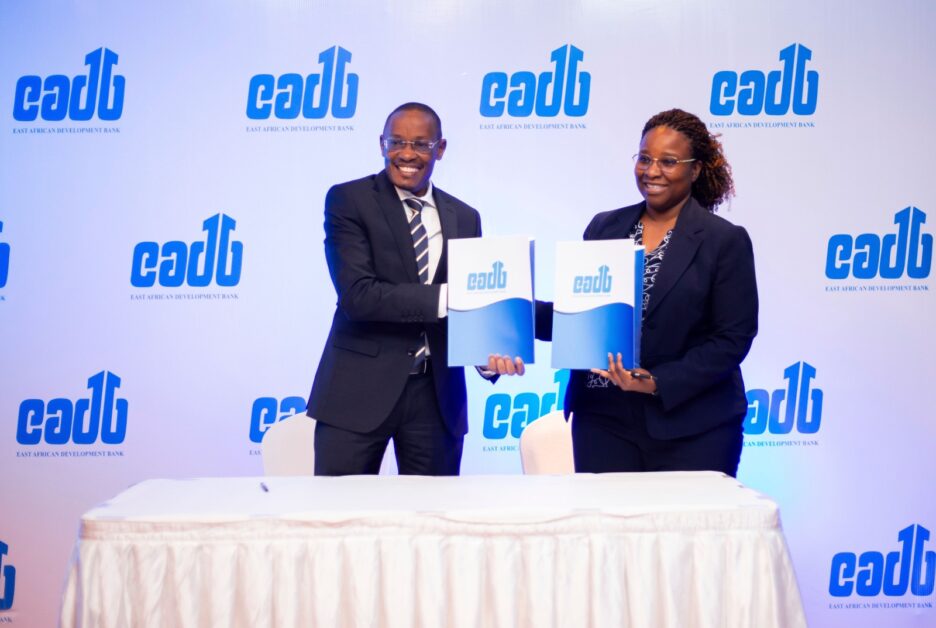
However, when you take a broader view, the comparison becomes more balanced. What we are offering is not just a loan, but long-term, patient capital that aligns with the nature of the investment. That means the pricing reflects not only the cost of funds, but also the duration and the risk we are carrying over that extended period.
So while headline rates may sometimes look similar—or slightly higher, depending on the structure—the real value lies in the tenor and the flexibility we provide. Ultimately, our objective is to ensure that the financing is both sustainable for the client and aligned with the long-term nature of the project.
EADB’s Non-Performing Loan ratio is currently below 1%, which is significantly lower than the commercial banking sector average in the region, where NPLs typically range between 5% and 10% depending on the market. To what extent is this strong asset quality a result of your more rigorous due diligence and longer approval processes, as mentioned earlier? And is there a risk that this level of conservatism could, in some cases, limit the Bank’s ability to take on higher-risk, higher-impact development projects?
Partly, yes—but it’s not just about the questions we ask. It’s also important to look at where we are coming from as an institution.
About a decade ago, we experienced relatively high Non-Performing Loan levels, and that period led to a deliberate shift in how we approach risk. As the African saying goes, once you’ve been bitten by a snake, you become cautious even when you see a rope. That experience made us more disciplined and more cautious in our lending approach, and that culture has carried through to where we are today.
Since then, we have strengthened our credit appraisal processes significantly. We ask deeper questions, we stress-test projects more rigorously, and we try to anticipate risks as much as possible. But even with that, the nature of development finance means you cannot foresee everything. You can do all the analysis, and everything looks sound, but external shocks—geopolitical events, market disruptions—can still affect a business.
Now, in terms of our current NPL levels, it’s important to put them in context. While we are currently below 1%, that is not necessarily a long-term target in itself. Our formal risk appetite framework actually allows for an NPL ratio of up to 12%, although in practice we would expect to manage it well below that level. Realistically, we do not expect it to move anywhere near that ceiling, but we also recognise that as we grow and take on more complex projects, some level of stress in the portfolio is natural.
Another factor is the structure of our portfolio. A significant portion of our exposure is through financial institutions, which are generally stable and well-performing, and that helps keep overall NPL levels low. At the same time, sectors like manufacturing and infrastructure tend to grow more gradually, and that also affects how risk shows up in the portfolio.
So overall, the low NPL ratio is a combination of improved risk management, lessons from past experience, and the current composition of the portfolio. We will continue to be prudent—we are not going to lend recklessly—but we also recognise that, as a development finance institution, some level of risk is inherent in what we do.
Let me come to what some would consider the elephant in the room. Based on the 2024 numbers, it appears that only about 30% of EADB’s balance sheet was deployed into customer lending, with a significant portion held in liquid or low-risk assets such as government securities and bank placements.
Do you believe the Bank should be deploying more of its balance sheet into active lending? And over the past 12–15 months, what concrete steps have you taken to shift that balance toward greater capital deployment in line with your development mandate?
Yes, we do believe we should be doing more. In fact, our Strategic Plan is very deliberate about increasing the share of our balance sheet that is deployed into lending. Everything we are doing—whether it is improving processes, strengthening teams, or enhancing visibility—is ultimately aimed at driving that shift.
And we are already beginning to see movement in that direction. For example, our loan disbursements increased by about 132% over the past year, which is a clear indication that we are accelerating deployment. But we recognise that this is just the beginning.
Looking ahead, our ambition is quite clear. We are targeting a significant expansion of the loan book, and that will require both increased approvals and faster disbursement. Internally, we have set ourselves a bold goal: by the time we celebrate 60 years in 2027, we want the loan book to exceed USD 600 million.
Now, that target is actually more ambitious than what is formally captured in the Strategic Plan, but it reflects the level of urgency and commitment we have as a team. So yes, we acknowledge the gap, and we are actively working to close it in a very deliberate and structured way.
You’ve pointed to a growing gap between loan approvals and actual disbursements. To what extent is this driven by structural or process-related bottlenecks within the Bank? And what specific steps have you taken to accelerate disbursement and improve the conversion of approved projects into actual lending?
There are really two sides to this. In many cases, it is not necessarily a bottleneck—it is simply the nature of how projects are implemented. Disbursements are often tied directly to project progress. For example, if we are financing a hospitality project such as a hotel in a national park, funds are released based on construction milestones. Once a certain phase is completed and certified, that is when disbursement happens. So in that case, the pace is driven by what is happening on the ground, not by delays on our side.
That said, there are instances where process-related factors can contribute to delays. When we approve a facility, there are what we call conditions precedent—requirements that must be fulfilled before funds can be released. These may include legal documentation, security arrangements such as mortgages, and compliance with environmental and regulatory standards. For larger and more complex projects, especially those involving infrastructure or environmental considerations, these processes can take time because there are multiple aspects that need to be properly addressed.
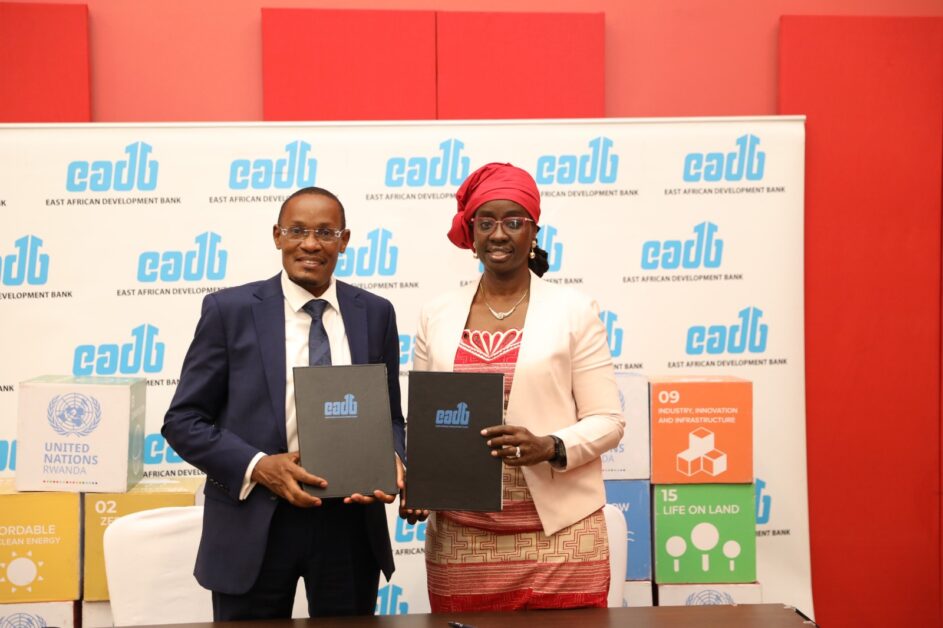
In addition, some of our projects are syndicated with other financial institutions. In those cases, coordination becomes a factor. When you have two or three lenders involved, aligning timelines, approvals, and documentation can naturally slow things down.
Related
 Bank of Uganda kicks off domestic gold purchase from licensed miners in three-year pilot programme
There are also situations where projects involve government entities, and certain approvals or actions are required on that side before implementation can proceed. All of this adds to the timeline.
Ultimately, the intention is to ensure that everything is properly structured before disbursement. If you release funds before key conditions are met, you expose both the client and the Bank to unnecessary risk. So while it may appear as a delay, it is often a deliberate process to ensure that projects are implemented successfully and sustainably.
From where you sit—as Acting Director General, but also as someone with deep experience in development finance—how do you see the opportunities in the region today? What, in particular, excites you about East Africa’s growth prospects?
You know, for me, it’s really everything. What many people see as challenges in this region, I tend to see as opportunities. The fact that we still have significant gaps in infrastructure, for example, yes, that is a problem, but from a development finance perspective, it is also a huge opportunity. Take something as simple as rail transport in Uganda. The fact that it is not fully developed is not just a gap; it is a clear investment opportunity.
The same applies across sectors. SMEs remain underserved, but that presents an opportunity to unlock growth. Agriculture is still largely unmechanised, and we are not adding enough value to what we produce. Our minerals are still being exported in raw form. All of these are areas where there is immense potential to create value, build industries, and transform economies.
Even when you look at global trends, there is a shift happening. The world is increasingly talking about diversification—of supply chains, of production bases, of trade routes. That creates a window for regions like ours. Africa, and East Africa in particular, is becoming more attractive in that context.
You can even see it in discussions around global logistics and energy. If we had more developed infrastructure—whether it’s refining capacity, transport corridors, or alternative trade routes—we would be less exposed to global disruptions. So again, what looks like a weakness is actually an opportunity for investment and growth.
At the regional level, we also have the advantage of a growing population and expanding markets. The African Continental Free Trade Area is creating a broader platform for integration, but even within East Africa, there is significant room for growth. For us as EADB, we are already operating in Uganda, Kenya, Tanzania, and Rwanda, and we are looking to expand into markets like South Sudan, Somalia, Burundi, and the DRC.
So when you ask what excites me, it’s difficult to point to just one sector. It really depends on where you look. In social services, you have a youthful population that needs education and healthcare. In economic development, you need power, infrastructure, and industrial capacity. In agriculture, you have opportunities across the entire value chain.
So for me, the reality is that the opportunity set is very broad. The region is still largely underdeveloped in many areas, and that, in itself, is what makes it so exciting.
For a business leader sitting in a boardroom today, actively considering financing options, would you say EADB is truly open for business? And what would you say to encourage them to consider partnering with you over more familiar commercial banks?
More fundamentally, given its strong capital base but historically cautious deployment, is it fair to describe EADB as a “sleeping giant”—and if so, what are you doing to awaken it?
Exactly—I don’t know how much louder I can say it. We are open for business.
That has been a very deliberate message internally and externally. And to your point about the “sleeping giant,” I would say yes—the giant may have been taking a nap, but it is now fully awake and ready for business.
Internally, we are driving that mindset quite aggressively. We keep challenging ourselves—why are you sitting at your desk when the business is out there? Our clients are not in the office; we need to go out, meet them, and engage with them directly. There is now a strong push across the institution to be more proactive, more visible, and more responsive to the market.
For business leaders sitting in boardrooms today, the message is simple: if you have a viable, long-term project, we are ready to partner with you. We are not here to compete with commercial banks—we are here to complement them by providing the kind of long-term, patient capital that many businesses in this region actually need.
We have also made ourselves more accessible. A client in Tanzania, for example, does not need to route their engagement through Uganda. We have a presence on the ground in all our key markets—Uganda, Kenya, Tanzania, and Rwanda—so businesses can engage with us directly within their own environments.
So yes, the Bank is open, the capacity is there, and the focus now is on deployment. The giant is awake—and it is actively looking to support businesses that want to grow and scale.
One of the practical questions business leaders often have is this: if they already bank with a commercial bank, they know exactly how to initiate a loan application—who to call, what to submit, and how the process works.
For EADB, how does that journey begin? What does a business need to have in place to start the process of applying for financing with you?
The starting point is a solid business plan. That is always the foundation.
But beyond that, we try to be very practical in how we guide clients. For smaller financing needs—say, anywhere up to around USD 100,000 or even USD 900,000—we typically advise businesses to work through our partner financial institutions and commercial banks. The reason is simple: those institutions are closer to the client, they have the local presence, and they are better positioned to monitor and support smaller-scale projects effectively.
For larger projects, however, that is where we come in directly. In those cases, we expect a more detailed level of preparation. In addition to a business plan, we look for a comprehensive feasibility study—something that demonstrates that the project has been well thought through. That includes understanding the market, the operational model, the risks involved, and how those risks will be managed.
For example, if someone is setting up a factory, we want to understand whether they have secured the right equipment, whether there is a clear market for the product, and how resilient the business will be if conditions change. What happens if demand shifts? What happens if input costs rise? These are the kinds of questions we engage in.
Our objective is not to make the process difficult—it is to ensure that we are financing projects that are viable and sustainable. We do not want to provide funding that sets a business up for failure; we want to support success.
We also look at environmental and social considerations. It is important that the projects we support deliver benefits today without creating negative consequences in the future. So issues such as environmental impact, labour practices, and broader social responsibility are part of the assessment.
Ultimately, if a business has done its homework, has a clear and viable plan, and understands its market and risks, then that is the right starting point for engaging with us.
Just to clarify eligibility—does a business need to be East African-owned to qualify for EADB financing, or can any business operating within the East African region apply?
Any business can qualify, as long as it is operating within our markets. The key requirement is not ownership, but where the business is legally registered and active.
However, we are limited to our shareholder countries. At the moment, we operate in Kenya, Uganda, Tanzania, and Rwanda, and we can finance any business within those markets regardless of ownership structure.
For countries that are not yet shareholders, such as South Sudan, we are unfortunately not able to provide direct financing at this stage. That will only be possible once they formally become members of the Bank.
So in summary, the door is open to both local and international businesses—as long as they are properly registered and operating within our member countries.
From a practical standpoint, how simple is it to engage EADB? Can a business owner walk into your office with a business plan and begin the process, or are there specific entry requirements they should be aware of?
When you come to us, the key thing is preparation. What would discourage us is if someone comes with just an idea—something they have not thought through. It cannot just be a dream. You need to have done your homework.
For example, if you are proposing a project, you should be able to explain it clearly. If it is a transport business, for instance, you should be able to show where it will operate, what demand exists, what kind of cargo you will be handling, and how the business will generate revenue. In other words, you need to demonstrate that the opportunity is real and that you understand the market you are entering.
We are looking for a well-thought-out business case. What are your projected revenues? What are the risks, and how will you manage them? What gives you confidence that this business will succeed? These are the kinds of questions we expect you to have already considered before approaching us.
Another important aspect is that we do not finance 100% of a project. There has to be a level of commitment from the investor. Typically, if we are financing 60% of a project, the client is expected to bring in the remaining 40%. If we are providing 70%, then the client should be able to cover the balance.
So, beyond having a strong business plan, you also need to demonstrate your own financial commitment to the project. That alignment is important because it shows that you have both the confidence and the capacity to see the project through.
I imagine there is a basic checklist or minimum set of requirements a business should meet before approaching EADB. What would you say are the key things a potential client should have in place before they walk into your offices?
Yes, there is definitely a structured checklist, and much of that information is typically shared by our business teams when a client begins the engagement.
At a basic level, we expect a client to come prepared with clear company information—things like their company profile, registration documents, and tax compliance status. Beyond that, the focus quickly shifts to the project itself. We look for a well-developed proposal or feasibility study, including details on the market, demand, and how the project will be implemented. For example, we would expect to see elements such as project plans, cost estimates, key contracts, and a clear implementation schedule.
On the financial side, we require a solid understanding of the numbers. That includes audited financial statements where applicable, a clear financing plan, and projections that show how the business will perform over the life of the loan. We want to see that the project is financially viable and that the assumptions behind it are well thought through.
We also place a strong emphasis on environmental and social considerations. Projects need to demonstrate compliance with environmental regulations and show a clear understanding of their broader impact, including any social and economic benefits.
That said, it is not about expecting perfection from the start. Some of these requirements are refined as part of the engagement. Our teams work closely with clients to guide them through the process and help them structure their proposals properly. But at the very least, a business should come with a clear idea, a solid business case, and the key building blocks in place.
I think for many businesses out there, the default option is still to go to the commercial bank they are familiar with—even if it means taking relatively expensive, short-term financing for long-term projects.
What would you say to those business leaders who may assume that EADB is either difficult to access or not meant for them? How do you change that perception and position yourselves as a viable alternative for financing long-term investments?
Yes—the giant is awake, and it is roaring. We are ready for business.
Our message is very clear: for those who are looking for a long-term financing partner, we are here and ready to engage. Our focus is not just on financing individual projects, but on supporting the broader growth of East Africa—growing businesses, strengthening industries, and ultimately contributing to the development of our economies.
There are many opportunities across the region. There are products we should not be importing because we have the capacity to produce them locally. There are resources we should not be exporting in raw form when we can add value and build industries around them. These are the kinds of opportunities the Bank is here to support.
We also do not operate in isolation. We work closely with commercial banks, national development banks, and state-owned institutions across the region, with collaboration forming a core part of our model—because development at this scale requires coordinated effort. In Uganda, for example, we partner with institutions such as Housing Finance Bank, dfcu Bank, FINCA Uganda, Centenary Bank, Finance Trust Bank, and Opportunity Bank. In Rwanda, our partners include Duterimbere IMF PLC Limited, AB Bank Rwanda PLC, ASA International (Rwanda) PLC, and Letshego Rwanda. In Kenya, we work with institutions such as Sidian Bank and Kenya Women Microfinance Bank. Through these partnerships, we are able to extend our reach, particularly in supporting SMEs and underserved segments across the region.
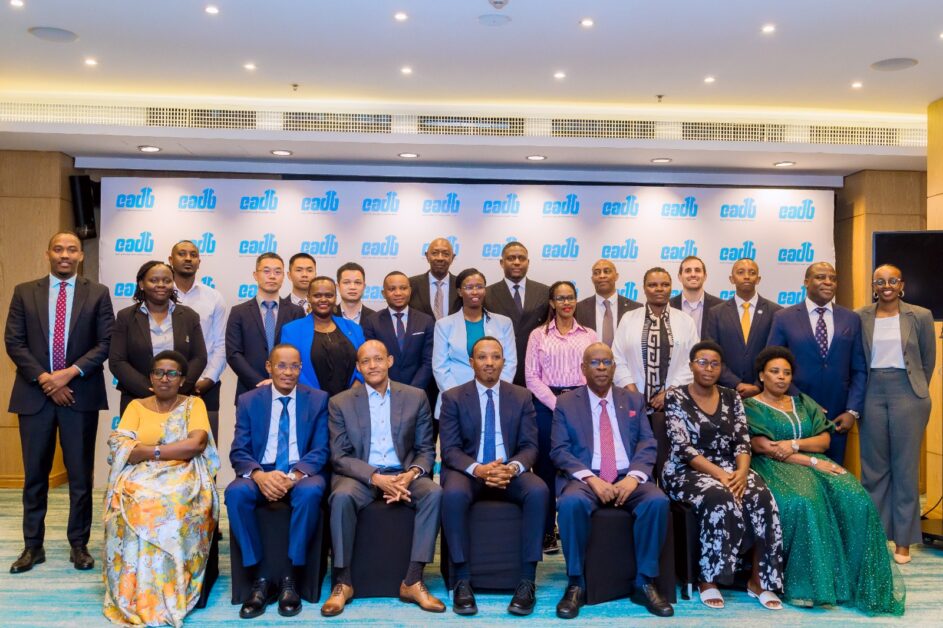
While we have identified priority sectors under our strategy, we are not rigid. We also align ourselves with the national development priorities of each country we operate in. When we developed our strategy, we took into account the development plans of Uganda, Kenya, Tanzania, and Rwanda, and we continue to adapt as those priorities evolve.
Ultimately, our commitment is to work with both the private and public sectors to unlock growth across the region. The opportunity is there, the need is there—and as a Bank, we are ready to play our part in making that growth happen.
I think we’ve covered the key areas I had in mind. Is there anything you feel we haven’t addressed that is important for our readers to understand about EADB or your current direction?
One point that is worth highlighting—and which many people may not fully appreciate—is that EADB is the only bank in the region with an investment-grade credit rating.
If you look at the individual credit ratings of our member countries—Uganda, Kenya, Tanzania—they are typically in the “B” category, which is considered below investment grade. But EADB itself is rated Baa3 by Moody’s and A by Standard & Poor’s, which places it firmly in the investment-grade category.
That difference is significant. It speaks to the strength of the institution, but also to the power of regional integration and synergy. When these economies come together under one institution, supported by strong governance, sound risk management, and financial discipline, the result is a much stronger credit profile than any single country on its own.
It also reflects the work that has gone into building the Bank—ensuring that our risk management is robust, our liquidity is strong, and our overall operations are well governed. These are the fundamentals that give confidence to investors and partners.
So I think it is important for the region to recognise that it has an institution that is not only development-focused, but also trusted and credible at an international level. That is a significant asset, and one we intend to leverage even more going forward.