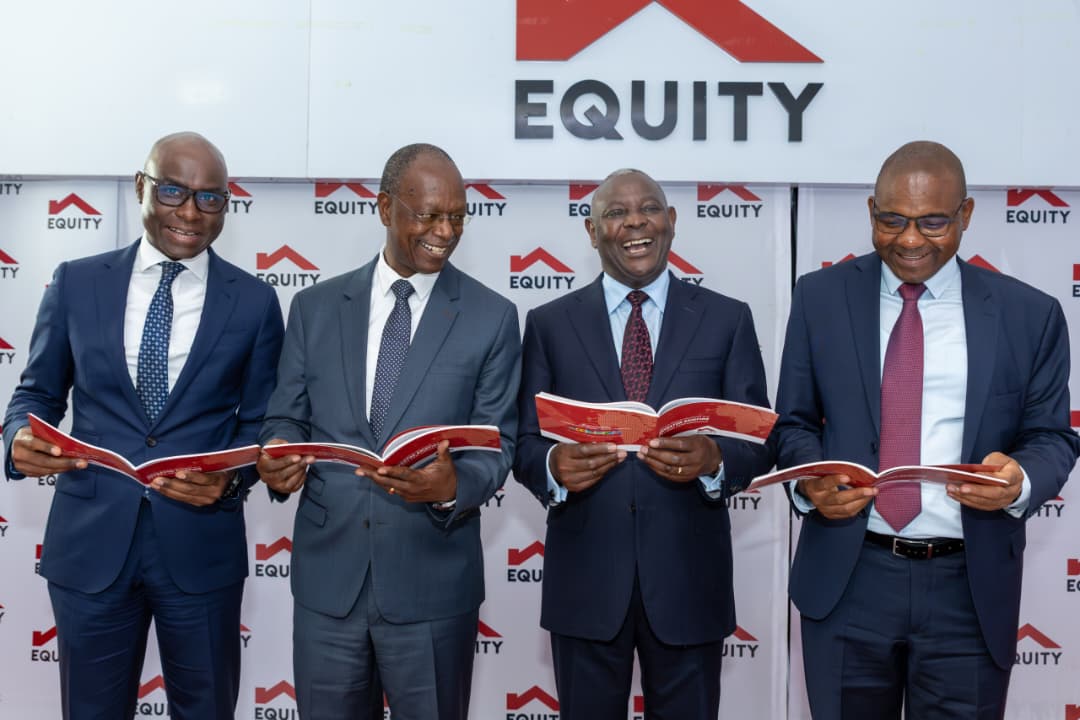
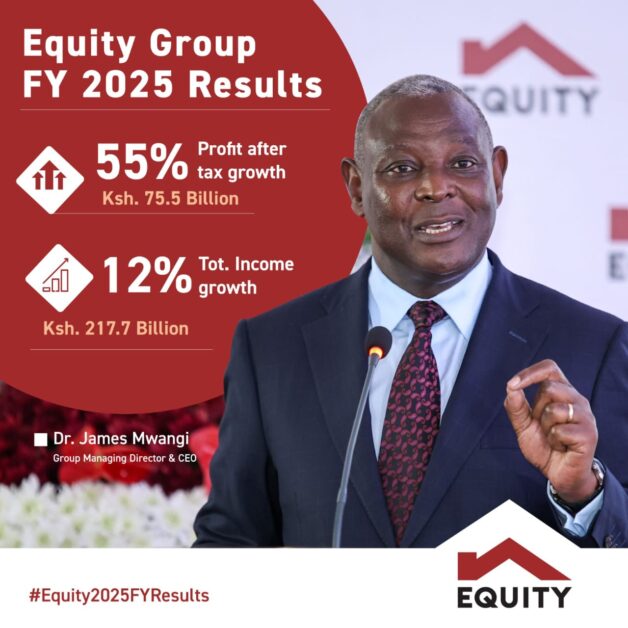
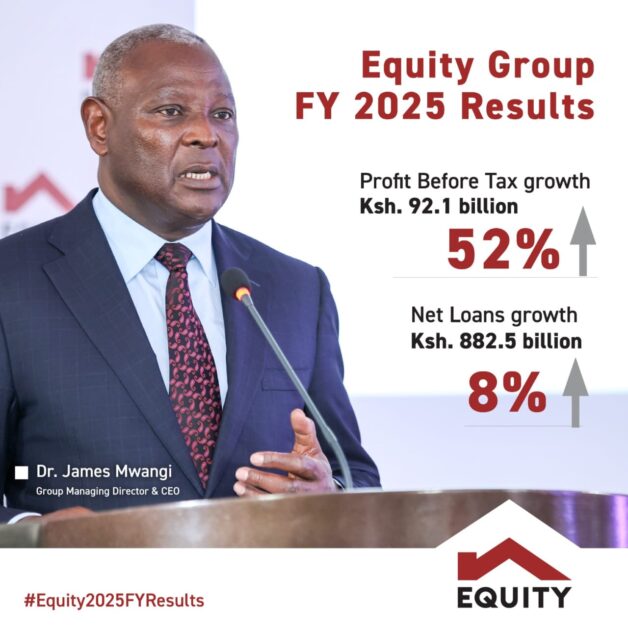
Equity Group Holdings has delivered one of the most remarkable financial performances in East Africa’s banking history, posting a 55% surge in profit after tax to KSh75.5 billion in FY2025, up from KSh48.8 billion the previous year.
The results underscore the success of the Group’s strategic transformation into a diversified, pan-African financial services powerhouse, driven by strong regional contributions, improved efficiency, and sustained revenue growth.
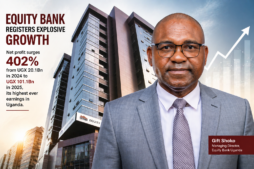
Yet beyond the headline numbers, one story stands out: Uganda’s dramatic return to profitability, with a staggering 500% increase in net profit.
This makes it the fastest-growing subsidiary across the Group and signals a powerful turnaround under Managing Director Gift Shoko.
Uganda’s comeback
Equity Bank Uganda reported a profit after tax of KSh3.6 billion (UGX 104.7 billion), marking a fivefold year-on-year increase and a decisive turnaround after a period of turbulence.
The scale of this rebound becomes clearer when placed in context. The bank had recorded a UGX18.8 billion loss in 2023, ending a 13-year profitability streak due to digital fraud incidents, rising non-performing loans, and operational weaknesses.
By 2024, the bank had returned to profitability, posting UGX 20.1 billion in profit after tax, a strong recovery from the 2023 loss and a clear signal of early stabilisation.
However, this recovery was not yet underpinned by balance sheet strength. Customer deposits declined by UGX 172.3 billion (-5.8%) to UGX 2.80 trillion, loans and advances contracted by UGX 300.7 billion (-18.7%) to UGX 1.31 trillion, and total assets fell by UGX 358.9 billion (-9.6%) to UGX 3.39 trillion.
Total income remained largely flat, dipping slightly by 0.7% to UGX 565.8 billion, suggesting that the return to profitability was driven more by cost containment and balance sheet clean-up than revenue expansion.
Crucially, while Equity Group’s latest announcement offers a glimpse into Uganda’s performance, highlighting a sharp surge in net profit, it remains only a partial view.
Equity Bank Uganda is yet to release its full financial results, which will provide deeper insight into performance across core fundamentals such as deposits, lending, asset growth, and income diversification.
Even so, the turnaround is significant. Before the fraud incident, Equity Bank Uganda was on a rapid growth trajectory, firmly positioned among the country’s top five banks and increasingly challenging for a higher ranking.
The recent rebound raises an important question: not just whether the bank has recovered, but how far it can climb.
As full results emerge, the market will be watching closely to see whether this resurgence can restore its standing within the top tier, or even propel it into contention for a top-three position in Uganda’s competitive banking landscape.
A defining first year for Gift Shoko
At the centre of this recovery is Gift Shoko, whose leadership has coincided with one of the most critical transitions in the bank’s recent history.
Shoko was brought into Equity Bank Uganda in July 2024 as executive director at a time when the bank was navigating operational instability and reputational challenges.
He was later appointed substantive managing director in January 2025, formally taking over leadership of the bank.
This makes 2025 his first full year in charge as managing director, and the results position him as a key figure in the bank’s stabilisation and turnaround journey.
His appointment came amid multiple pressures, including a UGX65 billion digital fraud incident, governance gaps, and elevated non-performing loans, all of which had eroded profitability and confidence.
The sharp rebound in performance suggests that early interventions around risk management, internal controls, and operational discipline are beginning to take effect.
Regional strategy delivers, Uganda Leads
Equity Group’s regional diversification strategy is now clearly paying off, with subsidiaries contributing 48% of Group profit after tax and 51% of profit before tax.
While other markets delivered strong growth, DRC at 58% and Tanzania at 125%, Uganda’s 500% surge stands out as the most dramatic performance across the network.
This signals a shift in the Group’s regional dynamics, with Uganda emerging as a key growth engine rather than a recovery outlier.
Strong Group fundamentals support the turnaround
The Group’s broader performance provides a strong foundation for subsidiary growth.
Equity recorded total income growth of 12% to KSh217.7 billion, while net interest income rose 17% to KSh126.9 billion. Efficiency also improved, with the cost-to-income ratio falling to 51%.
Digital transformation continues to reshape operations, with over 98% of transactions conducted outside branches and 88.4% processed through digital channels, driving both efficiency and scalability.
Kenya remains strong, but the region gains weight
Equity Bank Kenya, the Group’s anchor subsidiary, posted a 63% rise in profit after tax to KSh39.2 billion, maintaining its leadership position.
However, the growing contribution from regional subsidiaries highlights a structural shift, from a Kenya-dominated model to a more balanced, multi-market African banking group.
Beyond banking: Expanding the ecosystem
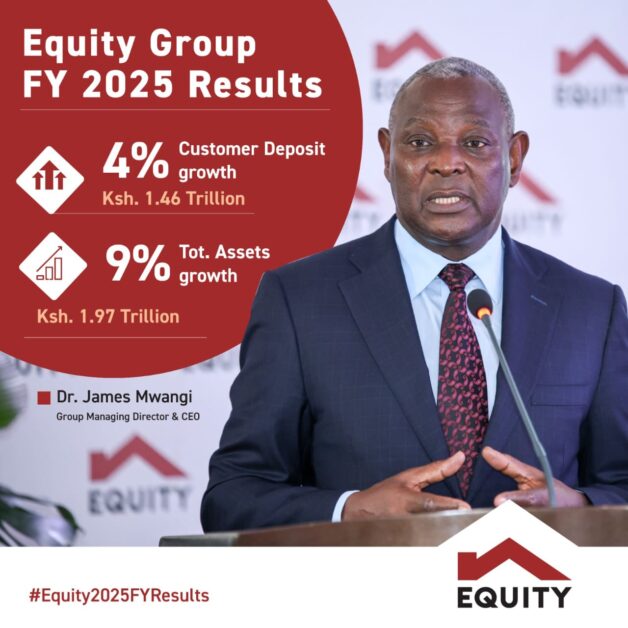
Equity is also accelerating its diversification beyond traditional banking through its insurance arm, which reported 75% growth in gross written premiums and 36% growth in profit before tax.
This expansion aligns with the Group’s ambition to evolve into a Transformation Finance Institution, offering integrated financial services across banking, insurance, health, and enterprise support.
The road ahead for Shoko and Uganda
For Shoko, the 2025 results represent strong validation of his early leadership, but they also set a higher bar.
Sustaining this momentum will require continued improvement in asset quality, expansion of lending while managing risk, strengthening customer trust after past governance issues, and driving consistent growth across deposits, loans, and non-funded income.
The challenge now is to ensure that the turnaround is not temporary, but structural and enduring.
Uganda’s rising strategic importance
Equity Group’s long-term strategy, anchored in its Africa Recovery and Resilience Plan, targets expansion to 15 countries and 100 million customers by 2030.
Within this vision, Uganda is rapidly transitioning from a recovery market to a strategic growth pillar.
The 500% surge in profitability is not just a headline; it signals that the bank has turned a corner.
At the centre of that shift is a leader who arrived at a moment of crisis, stepped into full command at a critical time, and, within his first full year as managing director, is beginning to deliver results.
For Equity Bank Uganda and for Shoko, this may well mark the beginning of a new chapter—one defined not by recovery, but by sustained growth and renewed ambition.