If Uganda had built a proper advertising pipeline, this story would be very boring. There would be brochures in Senior Six career offices defining “account management.”
Parents would nod proudly when their children said, “I want to be a copywriter.” Makerere would have a Faculty of Integrated Communications and Creative Strategy. There’d be a predictable path: degree, internship, junior role, promotion.
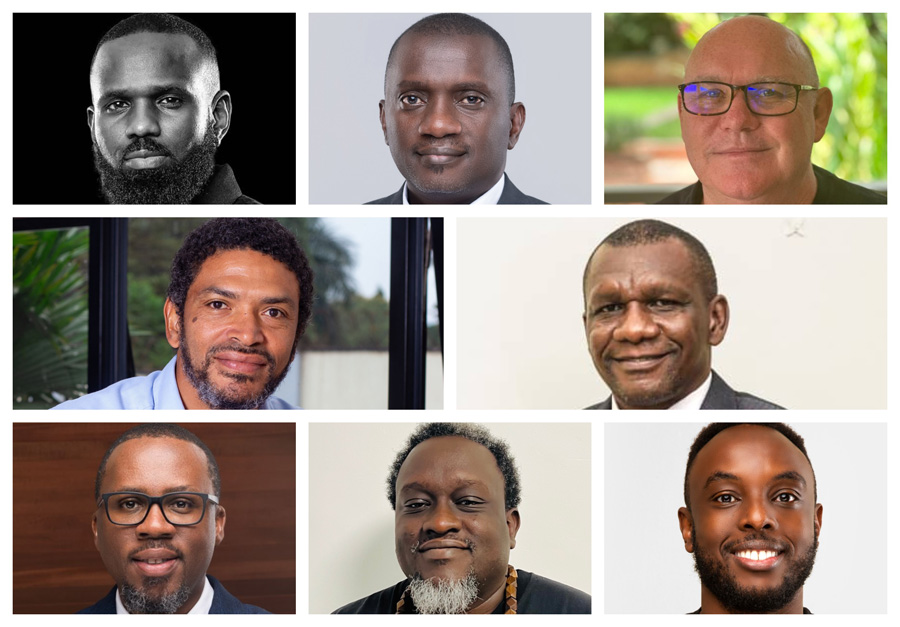
Instead, the people who built this industry came in through side doors. One thought “copywriting” was about copyright law. Another was meant to be a pharmacist. One was headed for law before veering into fine art.
Another walked into an office, not even sure what job he was interviewing for. One simply answered a call from a sports official and found himself handling some of the country’s biggest media budgets.
None of them was looking for advertising. And yet, advertising found them.
This is the story of the accidentals, the men who stumbled into a business with no roadmap, then stayed long enough to become its architects.
A country with no word for “adman”
For most of the generation now leading agencies, advertising was not a career; it was a thing on television. Parents wanted doctors, lawyers, priests, maybe engineers.
If you were “artistic,” people hoped you’d at least become a teacher. Writing radio scripts about airtime bundles or drawing elephants for bank campaigns wasn’t on anyone’s vision board.
Even across the border, the story was similar. Kenyan creative and agency founder Jeffrey Amani of Zeus The Agency remembers that his parents expected something more traditional.
He was on track to study law—a respectable, legitimate choice—before veering into art school to study Fine Art and advertising. Even then, the plan was hazy. He just knew he wanted to create, not sit in a courtroom.
In Uganda, Adris Kamuli, co-founder and managing director of Maad McCann, took what looked like the safer route for a talented artist: a Bachelor of Industrial and Fine Arts at Makerere University. Most classmates saw one logical future.
“While most of my classmates wanted to go into teaching and pursue the Postgraduate Diploma in Education, I knew that wasn’t for me,” he recalls. “My passion was graphic design, so I chose that path instead.”
Even that didn’t translate, in his mind, into a career called advertising. After learning computer graphics downtown, his first job was at Graphic Systems, a printing business; a bridge, not yet the destination.
So how do people who never saw an agency inside a classroom end up running them? The short answer: by mistake.
Phone calls, fields and side doors
Almost all the original stories in this series begin with a scene that doesn’t look like “career planning.”
For Daniel Ligyalingi, one of Maad’s co-founders and a defining voice in media investment, the story starts on a cricket pitch.
He completed his economics degree in 1997, hoping for a bank job, like many ambitious graduates.
“Our ambition was to work in banks,” he says. “But unfortunately, a banking job didn’t come along.”
While waiting, he kept playing cricket. One day, the late Abbey “A.K.” Lutaya, then General Secretary of the National Council of Sports, called and told him to pass by an office: MCL McCann.
He went, interviewed with founder Mike Daugherty, and walked out a media executive. Within three months, he was a media manager.
“That’s how I found myself in the media industry,” he says. “Through a sports connection.” It was a phone call.
For Peter Magona, now managing director of TBWA Uganda, it was sweat and conversation after rugby training.
“I literally stumbled into advertising,” he says. He had already discovered pharmacy wasn’t for him; too prescriptive, too boxed in, and flirted with ACCA before finding the Chartered Institute of Marketing.
While combining his pharmacy internship with CIM exams, he decided that once he finished, he’d knock on an agency door and ask to intern unpaid.
Then rugby intervened. Over drinks after training, he told teammates his plan. One of them was David Case, founder and chairman of TBWA Africa.
“He said, ‘I have a small outfit. Why don’t you come and try it out?’ And that was it. I walked in, did a three-month unpaid internship, and got hooked.”
Magona didn’t chase advertising. He chased something that wasn’t a pharmacy. Advertising was simply the room next door.
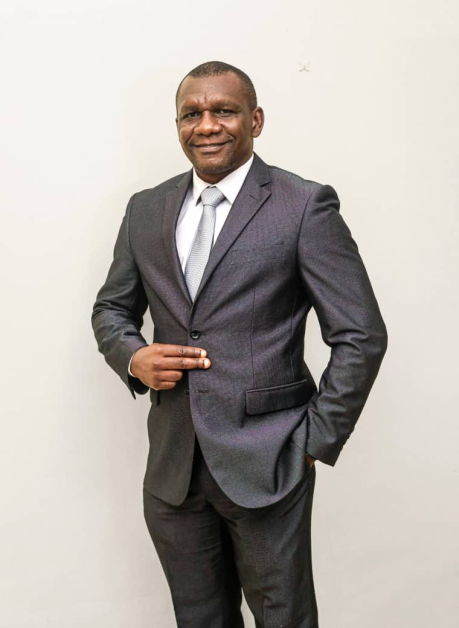
For Rommel Jasi, managing director of Saladin Media and chair of the Uganda Advertising Association, the door looked like networking, not employment.
With a Bachelor of Commerce (Finance) and a CCNA diploma, he imagined himself in IT or running a franchise because “the internet was just starting to pick up.” After a short entrepreneurial stint, he realised he wanted corporate exposure.
“So I pursued that for a few months,” he recalls. “Then one day I walked into Saladin, a Kenyan company recruiting at the time. I figured, why not? Let me see if I can expand my network.”
He didn’t even know which job he was interviewing for. “I just winged it,” he says. A few days later, the phone rang: he’d made probation. “And here I am, 18 years later.”
For many, the path into advertising wasn’t an escalator. It was a corridor they wandered into while looking for something else.
The flip-flop revelation
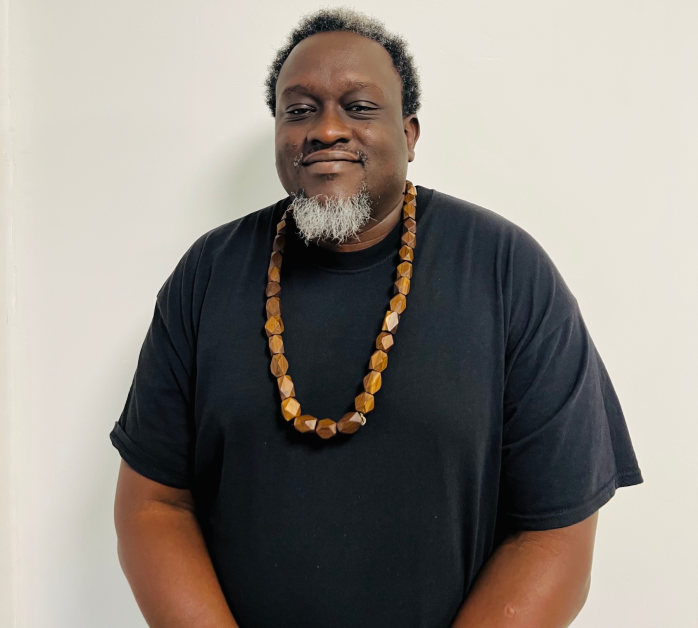
No story captures the absurdity and seduction of advertising’s side door better than Alemu Emuron’s.
Today, he’s a multiple Cannes Lions winner, founder and Chief Creative Officer of The Quollective Africa, and a reference point for African creative ambition.
But his first brush with advertising was a misunderstanding and a pair of sandals.
“Honestly, my entry into advertising was completely accidental. I didn’t even know what a copywriter was,” he says.
In 2007, he was headed to Rock Catalina in Ntinda when his friend, the late Timothy Kasirivu, called. Kasirivu worked at Ignition Advertising.
“He told me there was a job opening, a copywriter position,” Alemu recalls. “I laughed and told him, ‘Bro, I didn’t study law. I know nothing about copyright.”
Kasirivu had to point at a billboard and explain that somebody writes those words, that’s copywriting. Even then, Alemu didn’t fully get it. He turned to go back to the bar.
Then he noticed Kasirivu’s clothes. “While we waited for my boda, I noticed something that completely shifted my mindset,” he says. “Timo was wearing shorts and flip-flops.”
Alemu asked if he was on leave. Kasirivu said, “No, this is how I go to work.” That blew his mind.
It wasn’t a portfolio review that sold him on advertising. It was the idea that you could be paid to think, dressed like you were on holiday.
Across these stories, people are pulled in first by atmosphere, freedom, energy, chaos, and only later by craft.
The accident isn’t just how they arrive, but what convinces them to stay.
Mascots, parks and the first client you don’t understand
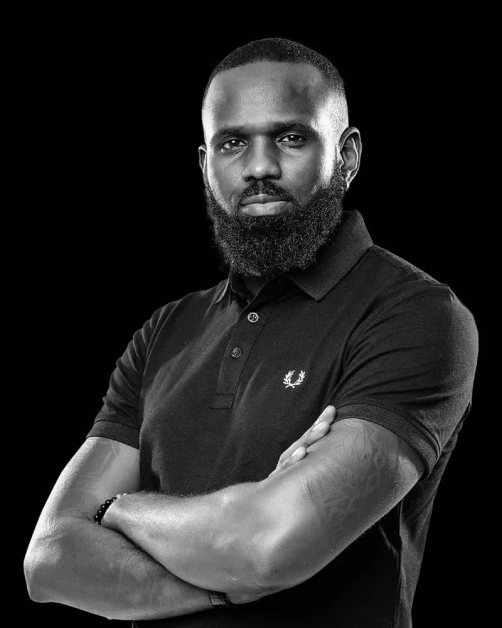
If Alemu’s flip-flops were a small shock, Jeffrey Amani’s entry was an earthquake.
First, there was a competition: a national contest in Kenya to design a mascot for the IAAF World Championships. Studying Fine Art and advertising, Amani submitted three designs, sharing two with classmates so they could enter too.
Just before the winners were announced, he got a phone call. The caller, one of the judges, and an agency owner had seen his work and offered him a job before the results came out. Amani accepted.
Months later he was told to dress smartly for an event. That’s when he discovered his mascot had won.
“My mascot design had come out on top,” he says. “That’s how I found myself in advertising.”
The job itself was disorienting. “I walked straight into a mainstream advertising agency where serious, high-level work was going on,” he recalls.
“There was so much jargon and marketing lingo that I had no clue what half of it meant. It felt like being caught in a whirlwind.”
Then came the twist: the mascot’s name, Tsavo, after Kenya’s famous national park. The name sparked international curiosity.
People kept asking, “What is Tsavo?”, and that curiosity drove traffic. Kenya Wildlife Service flew him to the park as a thank you. During that visit, they offered him their account.
“They said, ‘You’re a designer, can you work with us?’ So without fully understanding how agency business worked, I suddenly had my first client.”
He did what accidentals do instinctively: he asked for help. He brought senior creatives into the deal, learned the ropes by doing, then registered his first agency, Mosaic Concepts, mostly to handle the paperwork.
A mascot, a park, a phone call, and suddenly, a business.
From “I’ll just try it” to “this is my life”

Listen closely, and you’ll hear a second moment in every story, the point where curiosity hardens into calling.
Sometimes it happens when the work escapes the agency and enters public life. Alemu remembers the first time he felt he’d truly arrived, not in title but in impact. It was around his time at Fireworks, after a formative stint on Warid Telecom.
“You know that feeling when your work is out there, and people are talking about it; in taxis, bars, at the kaduka?” he says. “You overhear strangers repeating a radio advert you worked on.”
That’s a second baptism. You stop seeing advertising as a job. It becomes a way of leaving fingerprints on culture.
For others, the click is internal; when the work finally fits their temperament. Magona found advertising because he wanted unpredictability and new problems each day. What scares some people told him he’d found home.
Then there are those like Joshua Kamugabirwe, regional manager at TROI Media, whose “accident” was less about entry and more about timing.
He began in 2008; by 2016, he had the experience to register TROI, but left it dormant. The shove came from Covid-19. In 2020, after multinationals exited and his employer, Havas Media, shut its Uganda office, he reignited TROI.
“I wasn’t sure clients would trust a new agency in that chaos,” he says. “But I was confident of one thing: anyone who chose us would get unmatched service and true value for money.”
For Kamugabirwe, the accident was a crisis. TROI became his answer.
Building agencies out of thin air
At some point, many accidents stop riding in someone else’s vehicle and start building their own.
For Kamuli and Ligyalingi, that vehicle was Maad Advertising. By the mid-2000s, Kamuli had realised advertising was more than design; it was ideas for radio, TV, outdoor, everything. It fitted him so perfectly, he knew he’d found a calling.
But Maad didn’t begin as a polished machine. It began at UMA Showgrounds: second-hand laptops, thin savings, a prepaid lease, and faith. Each founder brought their own computer.
“What we did have was ambition, second-hand laptops, and a figure-it-out mindset,” Kamuli recalls.
Clients were non-existent. Suppliers doubted they’d survive long enough to honour post-dated cheques. They paid six months’ rent up front just to buy time. Unknown, underfunded, untested.
The breakthrough came when they pitched Warid Telecom, six people in a makeshift office, daring to chase a telecom. Winning Warid wasn’t just their first big account. It was proof that belief, hustle, and bold thinking can open doors no matter how small you are.
From there Maad became a paradox: scrappy, but disciplined. Ligyalingi, shaped by watching MCL wobble under shaky finances, made one rule non-negotiable: never eat supplier money.
If a plan was agreed, client money was spent exactly as committed, based on research and insight.
“I refused to compromise on that,” he says. “Once a client loses confidence in you, you’ve lost everything.”
Kamugabirwe’s TROI was built in a different era but from the same cloth. Its proposition is in the name: Total Return on Investment.
Accidentals who become founders rarely build agencies as vanity projects. They build them as arguments, responses to what they’ve seen go wrong.
Learning an industry that didn’t exist
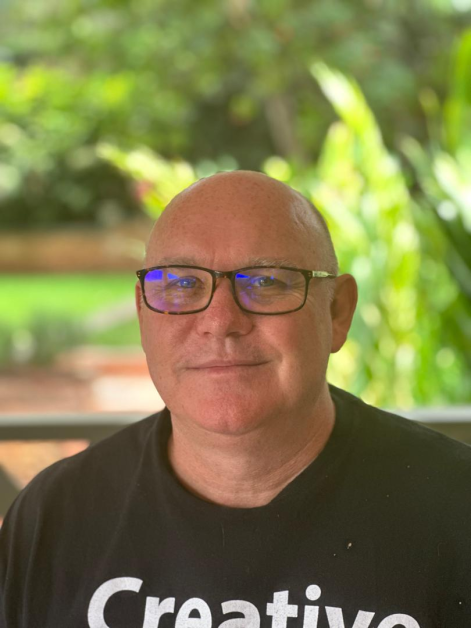
Because none planned to be in advertising, they entered with a strange mix of naivety and hunger. That combination has consequences.
First, humility. Rommel remembers joining Saladin without even knowing the industry existed in the way he would later understand it.
His idea of advertising was simple: you went to a radio or TV station, they produced the ad, and then ran it. What he found instead was an intricate value chain; strategists, copywriters, art directors, planners, an ecosystem behind what he thought was just airtime.
Amani calls his early months a crash course. He was thrown into serious work and jargon he barely understood. The glamorous “cool-kids” vibe masked a grind he had to learn on the run.
Second, the absence of formal training forced experiment. In the absence of schools, agencies became classrooms. At MCL, Ligyalingi watched a small Kampala office become an incubator for the sector.
MCL alumni went on to populate Scanad, Saatchi, Ogilvy, Moringa, and client organisations. What Mike Daugherty built, almost by accident after coming to cover a boxing match, became a talent factory.
Maad later adopted a similar role. Kamuli speaks with pride about seeing how many of today’s leaders once passed through Maad.
They institutionalised mentorship through initiatives like Iron Sharpens Iron, where students and freelancers bring work to be critiqued by Maad’s team.
“In a country with no advertising school, we have to be professors,” he says in effect. They built the syllabus by living it.
From brand love to numbers: the accidentals grow up
If the early years were about accidental entry and improvised learning, the last decade has been about accountability.
Alemu has lived that transition from both sides. “As a creative, you now have to understand business a lot more than you did before,” he says.
“You have to think strategically, not just creatively.” Briefs now arrive with clear financial KPIs attached, and brand managers carry that pressure daily.
Kamugabirwe’s entire TROI philosophy is built for this world. It’s not enough for a campaign to be popular; it must prove it moved revenue, market share, or another agreed metric.
Magona reframes the conversation from return on investment to something more human: return on relationships.
Agencies should chase sales, yes, but also the long-term health and meaning of the brand, the soul behind the metrics.
This is what growing up looks like. The same people who once took jobs for flip-flops or rugby conversations are now preoccupied with systems, finance, and sustainability.
Ligyalingi, who stumbled in through cricket, talks more about money management than media spots. He learned to save in good days to survive tough ones.
That’s why when Maad lost Warid in 2010, then Orange/Africell later, they didn’t lay off staff or cut salaries.
The accidental adman had become a deliberate steward.
The human fault line: new generations, new frictions
The sharpest tension in the accidental stories isn’t between agencies and clients. It’s between people.
Kamugabirwe, whose TROI team skews young, describes Gen Z as both challenge and advantage: unpredictable, sensitive to tone, quick to label leadership “toxic,” but also bold, energetic, and digitally fluent.
Ligyalingi admits his early management style, shaped by MCL’s long nights and Mike Daugherty’s perfectionism, was aggressive. It worked for Gen X peers, but “millennials and Gen Z often found it uncomfortable.”
Alemu recalls feedback culture that would be unthinkable now: being told in a meeting, “We will not proceed until you accept you’re an idiot.” Today that language earns HR visits or Twitter firestorms.
The accidentals who once survived on adrenaline have had to learn a new skill: gentler leadership. Kamuli describes his shift from creative director to managing director as learning to see with an eagle’s eye, not just the work, but the people and systems that carry it.
The men thrown into the deep end with no explanation are now trying to build swimming lessons for others.
Standards, shortcuts and the slow work of repair
Accidentals understand fragility. They’ve seen agencies rise on charisma and collapse on undisciplined behaviour.
Rommel has watched how unsustainable practices, fee-cutting, backdoor deals, undercutting fellow agencies, erode standards.
“If they had played fair… we might all still be thriving,” he says. He points to unstructured freelance work and strange billboards that leave you wondering who approved them.
His answer, as UAA chair, is to use platforms like the Silverback Awards not only as trophies but as benchmarks, a shared idea of what good looks like.
Ligyalingi’s answer is quieter but equally stubborn: systems. Maad designed governance where shareholders doubled as board, forcing transparency in payments and decisions.
Even after stepping out of day-to-day management, he still watches accounts, not to micromanage, but to keep discipline from fading.
The accidental admen have become guardians of a house they didn’t plan to move into, but can’t bear to see fall apart.
The accidents that now matter
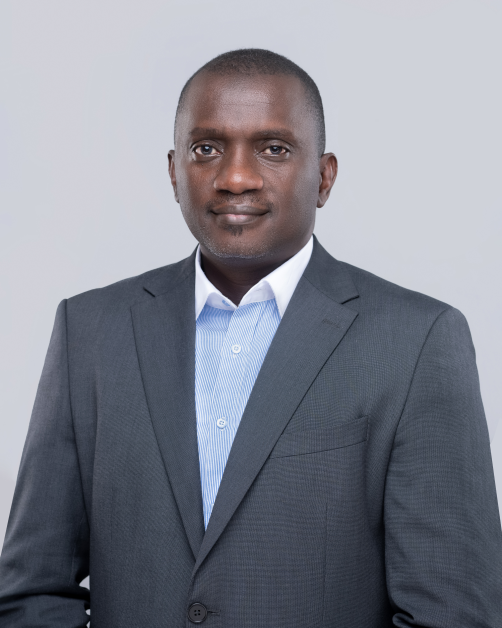
You can tell these stories as individual hero arcs: a pharmacist who became a strategist, a law student who became a creative entrepreneur, a cricketer who became a media director, a Fine Art graduate who became a managing director, a guy in flip-flops who walked another guy away from a bar and into a career.
But together they reveal something larger about Uganda’s advertising industry.
First, it was built on possibility rather than permission. Nobody waited for a curriculum to say they were allowed to make adverts. They watched, tried, failed, learned.
Second, lived experience became the syllabus. The accidentals brought the discipline of sport, the curiosity of science, the structure of finance, the hustle of entrepreneurship, the mischief of street culture. That mix gives Ugandan work its flavour.
Third, because the beginnings were chaotic, systems matter more now. Having stumbled in, they are obsessed with making sure the next generation doesn’t have to.
That’s why you hear Ligyalingi’s financial discipline, Kamugabirwe’s performance doctrine, Kamuli’s mentorship drive, Rommel’s standards crusade, Magona’s push for brand soul, Amani’s focus on craft, Alemu’s mantra that you don’t rise to ambition, you fall to systems.
These accidents also carry a hopeful message to the next wave. You don’t need the perfect job title in Senior Four. You can come from a pharmacy, a cricket field, a networking class, a rural school, a Bachelor of Commerce that bored you, a side hustle that failed, or a law track you abandoned.
What you cannot do is stay casual once you enter.
The accidental admen may have stumbled into this business, but they stayed by choice, through layoffs and pitch losses, shrinking retainers and brutal feedback, the rise of in-house teams, and the threat of AI.
They stayed long enough to realise the miracle isn’t that they found advertising. The miracle is what they did with it.
They turned accidents into institutions, confusion into craft, hunger into systems. And now, standing on the edge of a dashboard-driven, Gen-Z-powered, AI-accelerated era, they’re asking a different question:
How do we make sure the next generation’s path is still open for beautiful accidents, just less dependent on luck?
Because if the industry keeps that door open, the one from the rugby field, the art class, the Ntinda bar, the Tsavo park, the cramped UMA office with second-hand laptops, Uganda’s most unlikely machine will keep moving.
Not because it was perfectly planned, but because it has always been perfectly alive.