For generations, Kagogwa mango trees have carpeted homesteads and hillsides across West Nile, dropping fruit in golden heaps that often ended up as animal feed or rotting on the ground.
During peak season, the loss was so normalised that few spoke of it. Yet behind every spoiled mango was a silent ledger of missed income, wasted nutrition, and unrealised opportunity.
That is the waste Nilezilla set out to confront.
From “unprocessible” fruit to a breakthrough
The story did not begin in a factory, but in a laboratory at Makerere University. There, Prof William Kyamuhangire and his colleagues challenged a belief long held in the food industry: that Uganda’s small, fibrous “rock mangoes” could not be processed into quality pulp.
Yumbe Woman MP Huda Abason says that for years, people in the district had abandoned hopes of meaningful income from their mangoes, locally known as Kasingiri. But Prof Kyamuhangire says the lab results told a different story.
“The pulp yield, sugar levels, fibre characteristics, and colour were promising. We just needed to prove it beyond the test tube,” he said.
In 2010, the team established the Food Technology and Business Incubation Centre to move innovations from research to reality. One idea stood out: a mobile fruit-processing unit capable of handling five metric tonnes a day.
By 2013, the unit was deployed to Yumbe. Farmers were invited to bring mangoes. The team bought the fruit, processed it, and produced about 40 tonnes of pulp.
Back in Kampala, the pulp performed well in trials. When one industrial buyer rejected it, the scientists read it not as failure but resistance.
“Innovation always steps on established interests,” Prof Kyamuhangire noted. “We knew the science was sound. So instead of giving up, we went bigger.”
The leap from science to industry
In 2015, the scientists produced a feasibility study and business plan and presented it to the National Agricultural Advisory Services (NAADS).
The financing needed was far beyond NAADS’ usual agro-processing scale. The proposal therefore, moved upward to the Ministry of Finance and eventually to State House.
President Museveni backed the idea, seeing in it not just a factory but a demonstration of what can happen when scientific research, government support, and farmer participation align.
He advised the researchers to form a company, similar to the bureau model he had admired in the former Soviet Union, and assured them of government backing.

That advice gave birth to FONUS, the consortium of scientists behind the innovation.
Turning the plan into a plant
Even before full funding was secured, the scientists bought land in Yumbe and began construction. Prof Kyamuhangire recalls an uneasy stretch when some sought to frustrate the initiative through intimidation and blackmail.
“We are thankful to Hon Matia Kasaija, the Finance Minister, who believed in our work and stood firm when the winds blew hard against us,” he said.
NAADS later approved financing. Dr Samuel Mugasa, a former NAADS executive director, recalls the process with pride.
“We had never built a factory before. But we accepted the challenge, and I insisted that Prof Kyamuhangire walk every step with us, from specifications to procurement and installation. His technical guidance is the reason we have a world-class facility today,” he said.
Uganda Development Corporation (UDC) later picked up government investment where NAADS stopped.
Today, Nilezilla, the parent company of the Yumbe Fruit Factory, is jointly owned by the Government of Uganda through UDC, FONUS, and the Aringa Farmers’ Cooperative Society representing farmers.
“We are a living example of what happens when scientists, government and farmers come together with a common purpose,” said Dr Ruth Aisha Biyinzika Kasolo, chairperson of the Nilezilla board.
Built at a cost of about UGX13 billion, the factory has the capacity to process six metric tonnes per hour, about 60 metric tonnes a day if run for 10 hours.
The project started in 2019, was completed in 2023, and handed over in 2024 after Covid-19 delays.
Farmers step into the frame
As construction progressed, farmers were encouraged in 2016 to organise into a cooperative. Aniku Saidi, chairperson of the Aringa Farmers’ Cooperative Society, says they began with 15 pioneers. Today, the cooperative has more than 3,028 farmers across all 26 sub-counties and 202 parishes in Yumbe.
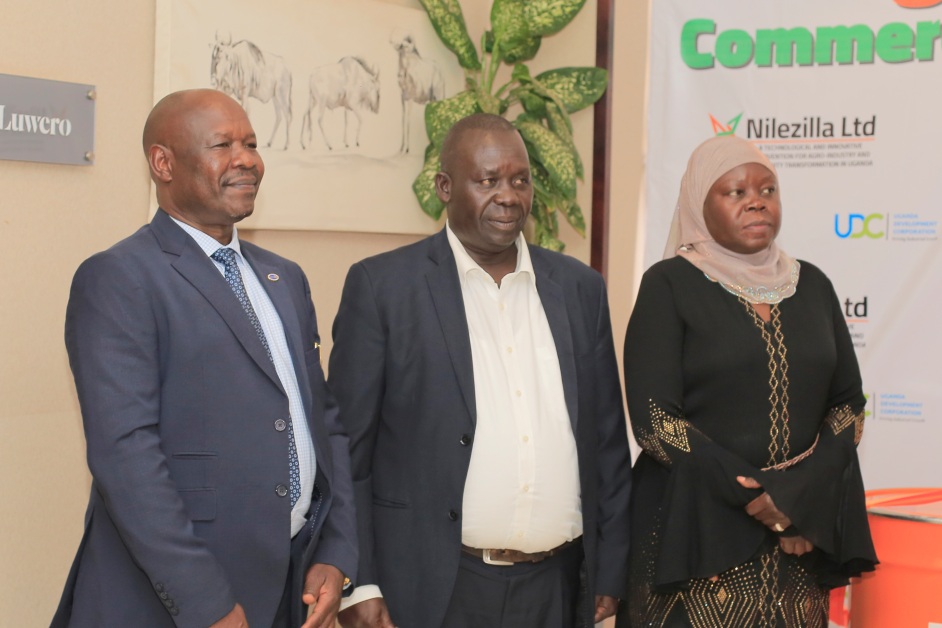
“Last season, more than 2,000 farmers supplied mangoes to Nilezilla,” Aniku said. “The benefits were not only cash in hand. People got work at collection centres and at the factory. It has started to change how we see mangoes.”
The cooperative sees mangoes as a potential replacement for crops like cotton and tobacco that once anchored West Nile’s economy but later collapsed.
“We believe mangoes can replace those crops,” Aniku said. “But only if we have reliable buyers like Nilezilla and more private-sector partners willing to procure locally.”
The factory is projected to create about 200 direct jobs and more than 1,500 indirect jobs, injecting over UGX1.5 billion annually into the local economy through fruit purchases.
Still, challenges persist: few lorries to transport fruit, patchy roads, and the constant risk of post-harvest losses if mangoes cannot reach the plant in time.
Britania backs the idea
One of the strongest commercial endorsements for Nilezilla has come from Britania Allied Industries, a fruit processor with more than two decades’ experience in Uganda.
“Local processing capacity in Uganda is still very low. That leads to huge post-harvest losses and lost export revenue. Plants like Nilezilla are crucial to changing that reality,” said Mr Ajith Prasad, Britania’s GM, Foods.
Britannia has placed a major order for Nilezilla mango purée and offered technical support to ensure the pulp meets international standards.
“This is not just a commercial transaction,” he emphasised. “It is a shared mission to build a resilient, locally anchored agro-processing ecosystem.”
He noted that sourcing locally also improves quality.
“When pulp is imported, it spends weeks or months in transit, often under harsh conditions. When we source near the orchards, the time from harvest to processing is shorter. That means better flavour, better nutrition and a better product for Ugandan consumers,” he said.

His message to other processors is blunt: Uganda no longer needs to import mango pulp while its own fruit rots in villages.
A call to buy local and expand
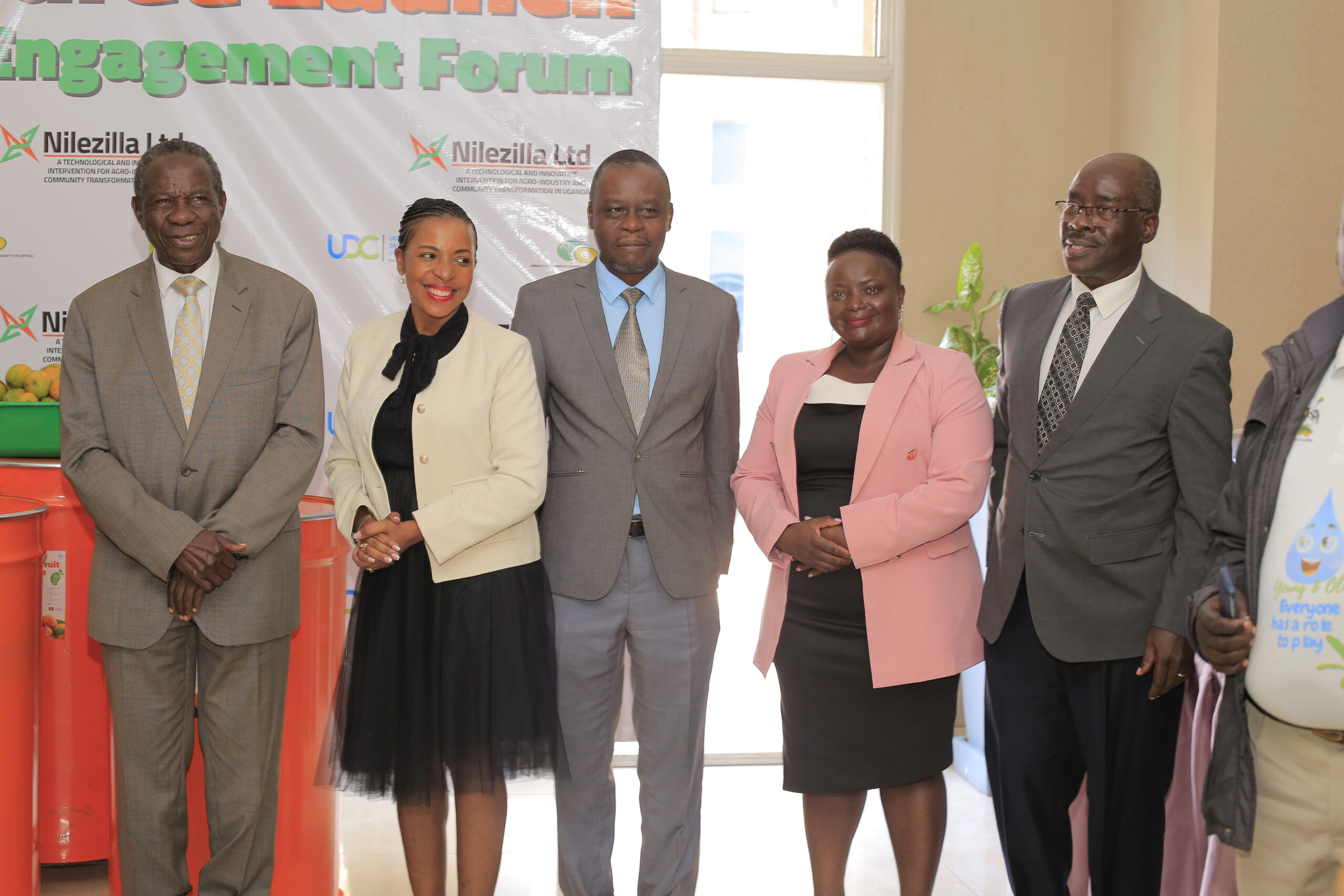
At the launch, Finance Minister Matia Kasaija, the chief guest, said the factory should be the start of a wider strategy to fight poverty and build industrialization in the region.
“We need more fruit processing factories to fight poverty among our people. These factories must also tap the DR Congo market because we have the resources to power them,” he said.
State Minister for Veteran Affairs and MP Huda Oleru Abason echoed the call, urging big buyers, such as Coca-Cola, hotels and other food companies, to procure Nilezilla pulp.
She also appealed for collaboration with the Agriculture Ministry to develop propagation materials and promote large-scale cultivation, noting that the mango variety has one major and one minor fruiting season.
Toward a zero-waste value chain
For now, Nilezilla packages purée in 200-litre drums targeting factories, hotels and institutions. But the company’s ambition is to move beyond bulk supply into wider consumer access.
“Our key message is simple: the mango purée is ready for purchase,” Dr Kasolo said. “There is no justification for Uganda to continue importing mango pulp when we have a superior local product. Every purchase directly benefits the people of Yumbe.”
Nilezilla plans to introduce smaller two to five-litre consumer packs for households, explore bag-in-box packaging for supermarkets and hotels, and develop by-products such as mango-seed butter for cosmetics and fertiliser from peels.
“We are aiming for a zero-waste value chain,” Prof Kyamuhangire said. “Nothing from the mango should be thrown away.”
The mangoes of Yumbe will still fall every season. The difference now is that, with Nilezilla’s tanks humming and trucks rolling, far fewer will rot quietly on the ground, instead becoming income for farmers, raw material for industry, and a symbol of what can happen when science, state support and local communities pull in the same direction.