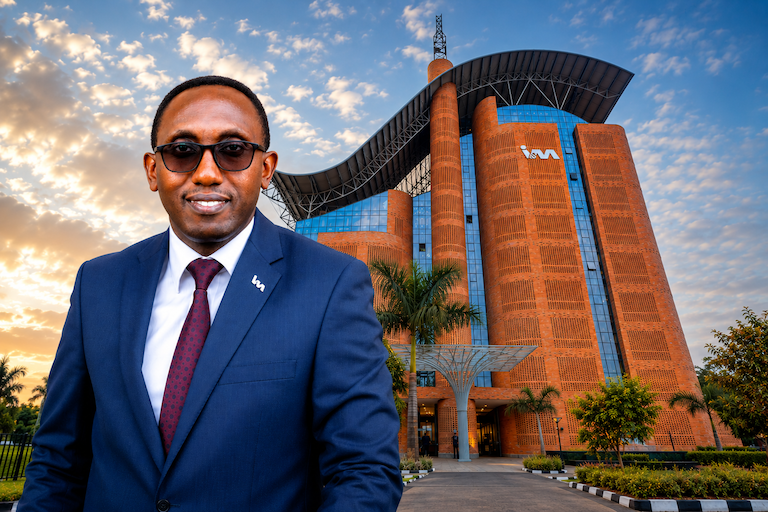
In this conversation, Muhereza Kyamutetera sits down with Benjamin Mutimura, CEO of I&M Bank Rwanda, to explore the bank’s transformation, the rise of cross-border banking solutions such as I&M Brisk, and how Rwanda’s fast-evolving financial ecosystem is positioning itself at the heart of East Africa’s next phase of growth.
Before we delve into the story of I&M Bank Rwanda, let’s start with you. You’ve built a nearly two-decade career in banking, spanning credit, retail, and corporate leadership. What first drew you into the industry, and what has kept you committed to it over the years?
Thank you very much, and welcome to Kigali—the cleanest city in Africa.
I’m Benjamin Mutimura, a career banker with close to 20 years of experience in the financial sector. My academic background is in economics, specifically development economics, which has strongly shaped my outlook on the role of finance in driving impact. At the core of my career has been a desire to contribute to meaningful economic and social transformation.
I have spent the last 16 years with I&M Bank Rwanda, having previously worked with another bank for three years. Over this period, I’ve had the opportunity to grow within the institution and contribute across different roles. Interestingly, I began my professional journey in education, where I spent over six years—an experience that continues to influence my passion for people development and long-term impact.
What initially attracted you to banking, and what has kept you in the industry for so long? At a time when many young professionals move frequently across sectors in search of new opportunities—and banking is sometimes perceived as routine—what has sustained your passion and long-term commitment to the field beyond the impact you’ve mentioned?
There is certainly more to banking than the suit and tie—it is actually a very dynamic and rewarding industry. I started my career as a junior officer, initially expecting to spend just two or three years in the field. But along the way, I found myself deeply engaged and, ultimately, committed for the long term.
From customer experience and Gen Z leadership to seamless regional transactions and Rwanda’s digital future, this is a conversation about where East Africa is headed next — and the institutions helping shape that journey.
▶️ Watch the full interview here:
https://drive.google.com/file/d/17jN96amn7u4HsbgZRNmSEUDFbz_oWCav/view?usp=sharing
One of the things that kept me here is the opportunity to grow across different areas. I have worked in finance, credit, retail banking, and corporate banking, which has given me a well-rounded perspective of the business. But more importantly, banking allows you to create real, tangible impact. You are dealing with something that is central to people’s lives—finance—and you can directly see how your work supports businesses, empowers individuals, and contributes to economic growth.
That ability to see the results of what you do, and the difference it makes in society, is what makes banking both meaningful and fulfilling.
For many young professionals, the journey to leadership—especially becoming a CEO—can feel unclear or even out of reach. Having risen through the ranks across multiple functions, what key lessons have shaped your journey, and what would you say it truly takes to reach the top?
I would say there are three key principles that have guided my journey. The first is discipline, the second is focus, and the third is passion.
Discipline is about consistently improving yourself—building knowledge, sharpening your skills, and staying committed to your work. Focus, on the other hand, is about being clear on what you want and dedicating your energy to it over time. Too often, we rush success, but real success comes when you remain disciplined and focused over the long term.
The third element is passion. Many people pursue paths they are not truly passionate about, and that makes it difficult to sustain effort. When you are passionate about what you do, discipline and focus come naturally, and your chances of success increase significantly.
If you combine these three—discipline, focus, and passion—you not only achieve success, but you can go even further than you initially imagined.
Building on those principles, how has your leadership philosophy evolved over time? What core ideas now guide how you lead people, shape culture, and deliver results within the organisation?
My leadership philosophy is centred on playing to people’s strengths. I believe that everyone has talent and potential, but not everyone has had the opportunity to fully discover what they are passionate about or where they can contribute most effectively.
As a leader, my role is to help people uncover those strengths and align them with the right responsibilities. When individuals are placed in roles that match their abilities and passions, they are more engaged, more productive, and ultimately deliver better outcomes.
In my experience, once people understand their strengths and are given the right environment to apply them, they are able to make meaningful contributions—not just to the organisation, but to their own growth as well.
That’s an interesting perspective—particularly the idea that performance often depends on whether people are placed in roles that align with their strengths. In your experience, how can leaders better identify and unlock the potential within their teams, especially when it may not be immediately obvious?
I believe one of the most important things leaders must do is allow people the space to fail. Leadership is not about achieving results at all costs—it is about helping people discover themselves, understand their strengths, and recognise their weaknesses.
I recall an experience early in my career as a manager. I had a team member who was struggling in a sales role, yet it became clear over time that his real strength was in writing. We gave him time to try and adapt, but when it was evident that sales was not the right fit, we made a deliberate decision to pivot. Once he was moved into a role that aligned with his strengths, he began producing excellent work.
Today, he has grown into a leadership role himself and supports others in developing strong credit papers. That experience reinforced for me that when people are placed in the right roles—and given the space to learn, adapt, and even fail—they can unlock their full potential.
Let’s turn to the bank’s performance. Since your appointment as CEO in July 2023, I&M Bank Rwanda has delivered strong growth across key metrics. How would you describe the bank’s transformation journey over this period, and what has defined this phase of growth?
I would describe it as a continuation of the strong foundation that already existed within the bank. It is important to remember that this is an institution with a long legacy, having opened its doors in Rwanda as the country’s first commercial bank in 1963. We have a strong brand, deep client relationships, and an excellent team.
My role, therefore, has been less about reinvention and more about unlocking and aligning that existing value—bringing together our people, our clients, and our capabilities to consistently deliver results.
At the core of our strategy is a simple principle: customer delight. While we have a comprehensive strategic framework, everything ultimately comes down to understanding what our customers need and executing effectively to meet those needs.
Our progress has also been supported by a few key enablers. We operate within a strong and supportive regulatory environment. The market itself is open to innovation, with a willingness to embrace new ideas and solutions. Rwanda has also made significant investments in digital and public infrastructure, which we leverage to deliver our products more efficiently. And importantly, we have built strong partnerships that have supported our growth—we do not walk this journey alone.
Rwanda’s banking sector is becoming increasingly competitive, with several strong players in the market. If you had just a moment to make the case for I&M Bank Rwanda—what would you say are the key strengths or differentiators that set the bank apart from its peers?
I would highlight three key differentiators.
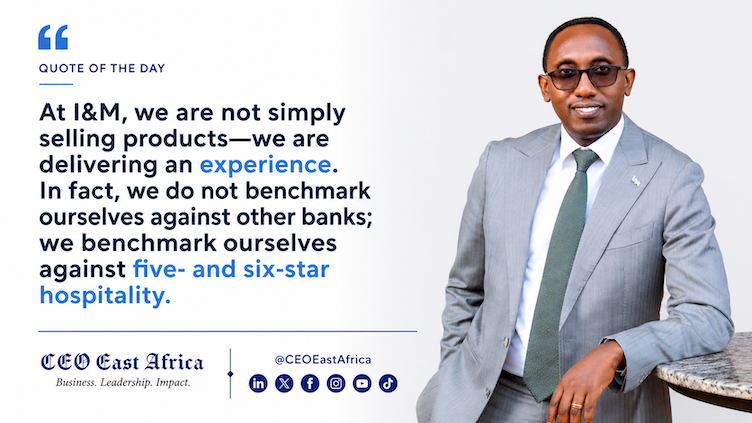
First is customer experience. At I&M, we are not simply selling products—we are delivering an experience. In fact, we do not benchmark ourselves against other banks; we benchmark ourselves against five- and six-star hospitality. The standard we aim for is the kind of service you would expect in a world-class hotel.
Second is our strength in relationship management. We place a strong emphasis on building personalised relationships with our clients. Every customer who walks through our doors has a dedicated connection within the bank, ensuring they are understood, supported, and served in a tailored way.
Third is our use of technology. We leverage technology to bring our products and services closer to where our clients are. While solutions like I&M Brisk are a key part of this, they are just one element of a broader digital ecosystem that includes robust mobile and internet banking platforms, as well as trade finance solutions.
Ultimately, our approach is simple: we listen to the market, understand our customers’ needs, and design solutions that respond effectively to them.
In telling the I&M story across different markets, one theme that consistently emerges is the importance of people and culture. From your experience, how has culture shaped leadership, performance, and the bank’s transformation journey in Rwanda?
It all starts with people—and it ends with people. You can have the best products and strategies, but without the right people in place, success is difficult to achieve.
At I&M Bank Rwanda, we have built a culture that is open, supportive, and collaborative. Historically, we referred to ourselves as the “I&M family,” and while the organisation has evolved, that sense of connection and mutual support remains at the core of who we are. When you have that internal cohesion—when people trust and support one another—it becomes much easier to deliver value to clients.
I would describe our culture as open, fair, and people-centric. We work as a team, we grow as a team, and we celebrate as a team. That sense of belonging is one of the reasons many of us have stayed and built long-term careers here. Personally, I joined with the intention of staying for just two years, yet over 16 years later, I am still here.
It is a place where people feel valued, where there is room to grow, and where we take time to celebrate both individual and collective achievements. Ultimately, that strong internal culture is what enables us to consistently serve our customers better.
Does that philosophy underpin the bank’s “On Your Side” mantra?
Yes, it does. We believe that people should find fulfilment in the work they do, especially considering how much of our time is spent in the workplace.
That starts with helping individuals connect with their passions—ensuring they are engaged in roles that are meaningful to them. Equally important is fostering strong relationships among colleagues. We emphasise teamwork, collaboration, and a shared sense of purpose.
When people are passionate about what they do and feel supported by those around them, it creates an environment where both individuals and the organisation can thrive. In that kind of setting, success becomes a natural outcome.
For leaders stepping into new roles—particularly as CEOs—transformation is often a key expectation. Drawing from your experience over the past few years, what are the most important lessons you’ve learned about leading and delivering organisational transformation?
There are a few key lessons I have learned about driving transformation.
First, you need to be a great listener. No leader can transform an organisation alone—you rely on your team. By listening closely, you begin to understand their challenges, their passions, and their ideas, and that is often where the best solutions come from.
Second is leading with empathy. When people feel that you genuinely care about their growth, their ambitions, and their well-being, they are more likely to align with your vision and support the organisation’s goals.
Third is stakeholder management. An organisation does not operate in isolation—we are part of a broader ecosystem. In our case, we are part of a regional group, and collaboration across markets is critical. Leveraging group synergies and working closely with partners creates strength and accelerates progress.
Finally, innovation is essential. You cannot continue offering the same solutions to an evolving customer base. In Rwanda, more than 70% of the population is young, and this generation is constantly seeking new, faster, and more flexible ways of doing things. To remain relevant, you must continuously innovate—developing products and services that engage and respond to changing customer expectations.
Managing Gen Z has become a defining challenge—and opportunity—for today’s leaders, not just as employees, but also as customers. From your experience, how do you engage and manage a younger generation with different expectations, while ensuring they remain motivated, productive, and aligned with organisational goals?
There are a few important things I have learned from working with the younger generation, particularly Gen Z.
First, they are purpose-driven. For many of them, work is not only about earning an income—they are looking to connect with a deeper sense of purpose and meaning in what they do.
Second, they are highly productive when given the right environment. You don’t need to tell them how to do something—just be clear on what needs to be achieved. They are quick to find solutions, often in ways that can be more efficient than traditional approaches.
Third, they value engagement. They are less comfortable in rigid, bureaucratic environments. They want accessibility, regular feedback, and a voice in how things are done. They want to be heard and to contribute actively.
Overall, I see working with Gen Z as an opportunity rather than a challenge. They bring a different energy and perspective, and when you adapt your leadership approach, they can be incredibly effective.
While Gen Z brings new energy and perspectives, it also requires a shift in how organisations are managed—especially for more experienced leaders. How do you help senior managers adapt, understand this generation better, and ultimately get the best out of them?
It requires a very deliberate and intentional approach. Managing people is about continuously learning, and we must create space for open conversations around how to lead effectively in a changing environment.
At I&M, we have institutionalised this through regular leadership engagements. Every month, we hold leadership sessions where we discuss emerging trends—ranging from artificial intelligence to evolving workforce dynamics, including how to manage Gen Z.
One insight that stood out to us is that, for many in this generation, the workplace is the first place where they encounter structured instruction and accountability. Their earlier environments—whether at school or at home—often offer more flexibility. So when they enter the workplace, there can be an initial friction. Understanding this helps us respond more effectively as leaders.
What this means in practice is that we must be willing to unlearn some traditional management approaches and adapt to new realities. With Gen Z making up a significant portion of the population, building a productive and future-ready organisation requires embracing how they think, what motivates them, and how they engage.
We also place strong emphasis on feedback and continuous improvement. Through regular staff engagement surveys and structured dialogue, we actively listen to what is working and what needs to change. This is supported by ongoing training and deliberate efforts to keep our teams engaged.
Ultimately, it comes down to being intentional—creating the systems, conversations, and mindset shifts needed to lead people effectively in today’s evolving workplace.
Rwanda’s financial sector—and the broader East African banking landscape—has become significantly more integrated in recent years. From your vantage point, how has the sector evolved, and what key shifts have defined this transformation?
Over the past two decades, Rwanda’s banking and financial sector has undergone a significant transformation. One of the most notable shifts has been the rapid adoption of digital financial services—today, more than 90% of transactions are conducted digitally, which is a remarkable milestone.
This progress has been strongly supported by government investment in digital infrastructure. Internet access is widespread, and key processes—such as collateral registration—have been digitised, reducing the need for physical interaction and improving efficiency across the system.
At the same time, the sector has continued to expand steadily, with consistent growth in deposits, lending, and overall financial activity. We have also seen increased innovation, including strong partnerships between banks and telecommunications companies, which have further accelerated access to financial services.
Perhaps most significantly, financial inclusion in Rwanda now stands at approximately 96%, leaving only a small portion of the population outside the formal financial system. While challenges remain, particularly around access to credit and deeper financial participation, the progress made—especially in payments and basic financial access—has been substantial.
Overall, the sector is growing at a strong pace, supported by a combination of policy, infrastructure, and innovation.
Over the years, regional trade in East Africa has shifted from being largely corporate-led to being increasingly driven by SMEs and individual traders who move across borders with greater ease. How is I&M Bank responding to this shift, and what role is it playing in enabling more seamless and secure cross-border trade?
Not long ago, small traders would typically withdraw cash, carry it physically—often in envelopes—and travel across borders to purchase goods. It was inefficient and, in many cases, risky.
As a first step in addressing this, we introduced prepaid cards, allowing traders to load funds and travel more securely. But the real shift has come with more advanced solutions that now enable customers to effectively move with their bank account.
Today, if you hold an account with I&M Bank in Rwanda, you can seamlessly transact across our regional markets—Uganda, Kenya, and Tanzania—without the need to carry cash or even a physical card. Through mobile and internet banking, you can access your funds wherever you are.
More importantly, you can walk into any I&M branch within the region and deposit, withdraw, or transfer funds as if you were in your home country. That level of convenience and integration is transforming how individuals and SMEs engage in cross-border trade.
Let’s turn to I&M Brisk. At its core, the platform speaks to this idea of living, working, and transacting seamlessly across East Africa. For someone unfamiliar with it, how would you simply explain what I&M Brisk is and the problem it was designed to solve?
I&M Brisk is a platform designed to facilitate seamless trade and transactions across the region by addressing some of the key challenges people have traditionally faced.
In the past, cross-border transactions often required carrying hard currency, particularly US dollars, which was both inconvenient and inefficient. With Brisk, that need is eliminated. Customers can deposit in their local currency—such as Rwandan francs—and withdraw in Ugandan shillings, Kenyan shillings, or Tanzanian shillings across our network.
The second key benefit is speed. Customers can access their accounts instantly through mobile or internet banking and transact in the local currency of the country they are in, without delays.
Third is convenience. Brisk removes many of the traditional frictions in cross-border banking, particularly the delays associated with correspondent banking systems. There are no intermediaries involved, which significantly reduces transaction time.
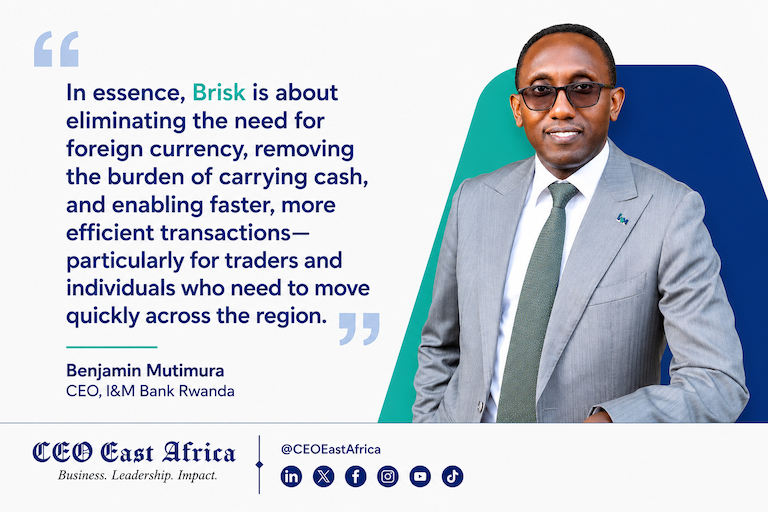
In essence, Brisk is about eliminating the need for foreign currency, removing the burden of carrying cash, and enabling faster, more efficient transactions—particularly for traders and individuals who need to move quickly across the region.
To bring this to life, could you share a practical example of how Brisk is used on the ground? Who is the typical customer you had in mind when designing the platform, and how does it support their day-to-day transactions?
Brisk was primarily designed with small and medium-sized enterprises, as well as individual traders, in mind.
Take a simple example: a trader travels to Tanzania to purchase goods. Upon arrival, they may find that prices have changed or that they need additional funds. Traditionally, this would create delays or require prior arrangements. With Brisk, however, they can instantly access their account back home and make payments in Tanzanian shillings in real time.
This means they no longer need to pay in advance or carry excess cash. Instead, they have the flexibility to first assess the quality of goods, negotiate, and then complete the transaction immediately from their account.
While large corporates often have access to structured trade finance solutions, smaller traders typically lack that flexibility. Brisk was designed specifically to bridge that gap—giving SMEs and individual entrepreneurs the convenience, speed, and control they need to operate more efficiently across borders.
To access Brisk, a customer needs to have an I&M account. But how flexible is the system when it comes to receiving funds—can someone, for instance, walk into any I&M branch within the region and deposit money directly into your account?
The beauty of Brisk lies in its flexibility. Once you have an I&M account, you can seamlessly access your funds across the region whenever you need them.
For example, if you are travelling, someone back home can deposit money into your account, and you can immediately access those funds in the local currency of the country you are in. This eliminates the need for prior arrangements, foreign exchange handling, or carrying cash.
For new customers, opening an account is straightforward, and once onboarded, they can begin using Brisk right away. Ultimately, the platform is designed to give customers greater convenience, flexibility, and control over their finances as they move across borders.
Since its launch, what feedback have you received from early adopters of Brisk? Are there any standout stories or usage patterns that illustrate how customers are benefiting from the platform?
One moment that really stood out to me was when a client—a trader—called to report what he thought was an issue with Brisk. He told me he had paused all his transactions because the platform wasn’t working on his end. When we investigated, it turned out to be a minor operational issue, which we quickly resolved.
But what struck me most was what he said next: he could no longer go back to traditional transfer methods. He was willing to wait until Brisk was fully functional again before proceeding with any transactions. That, for me, was a powerful testament to the value the platform is delivering.
Beyond individual traders, we are also seeing strong adoption among businesses operating across the region. For example, companies with distributors in multiple countries can now receive payments in one market and access funds in another—without the need for foreign exchange or complex transfer processes.
A distributor in Rwanda can deposit in Rwandan francs, and the business owner can access those funds in Kenyan or Ugandan shillings almost instantly. This level of flexibility is transforming how businesses manage their cash flows across borders.
Does that mean a business owner—for example, a manufacturer in Uganda with distributors in Rwanda—can receive payments directly into their Ugandan I&M account without opening a separate account in Rwanda?
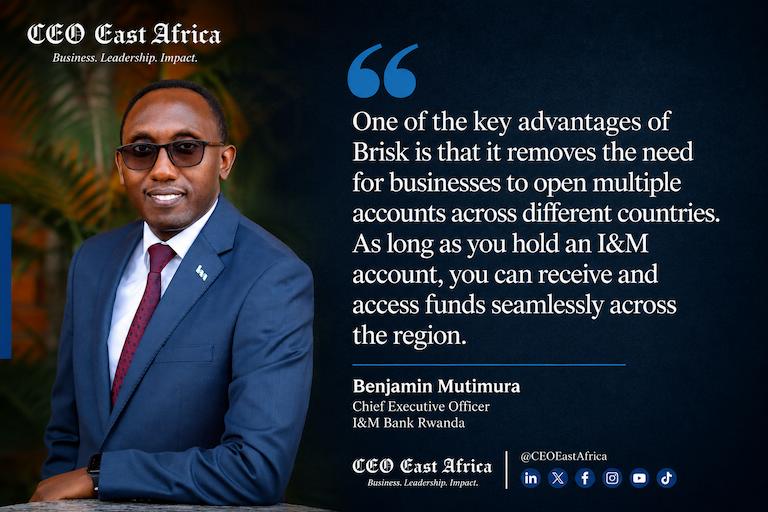
Exactly. That is one of the key advantages of Brisk—it removes the need for businesses to open multiple accounts across different countries. As long as you hold an I&M account, you can receive and access funds seamlessly across the region.
How competitive are your exchange rates within the Brisk ecosystem, particularly compared to traditional cross-border transfer options?
We have been very deliberate about ensuring that our exchange rates are highly competitive. In fact, within the Brisk ecosystem, we have structured our rates to be more attractive than traditional transfer rates.
The intention is simple—to make it both convenient and cost-effective for our customers to transact across the region. By offering better rates, we encourage adoption and ensure that clients fully benefit from the efficiency and flexibility that Brisk provides.
Beyond Brisk, what other products and services does I&M Bank offer that leverage its regional footprint—particularly for customers who are active across multiple East African markets?
Beyond Brisk, we offer a range of solutions designed to support customers who operate across the region. For the purpose of this conversation, I would highlight two in particular.
The first is trade finance. For many businesses—especially SMEs—access to financing is critical when purchasing stock, managing logistics, or clearing goods. We provide tailored trade finance solutions that enable our clients to move goods more efficiently and scale their operations.
The second is digital lending. There are moments when customers need quick access to funds, particularly when they are away from their home market. Through our digital loan platforms, we are able to provide instant approvals, ensuring that clients can access liquidity when they need it most.
Brisk, therefore, is not the end solution—it is the entry point. Once customers are within the I&M ecosystem, they can seamlessly access a broader suite of products, including trade finance and digital loans, to support and grow their businesses.
Beyond business, Rwanda is also a destination for lifestyle, tourism, and experience. For readers who may be considering visiting, what would you say makes Rwanda worth exploring—and how does that connect to the broader idea of living and transacting seamlessly across the region?
I would certainly encourage people to visit Rwanda—#VisitRwanda truly captures the spirit of what the country offers.
When you come here, you experience more than just a destination. You experience order, cleanliness, and a sense of calm that is quite unique. But beyond that, Rwanda offers incredible attractions—from the world-famous mountain gorillas to beautiful lakes and a wide range of tourism experiences.
Importantly, the experience goes beyond tourism. Whether you are visiting for business or leisure, solutions like Brisk allow you to move and transact seamlessly, making your stay even more convenient.
What makes Rwanda truly unique, however, is its forward-looking mindset. It is a country that encourages you to think beyond borders, to innovate, and to try new ideas. Events like the Inclusive FinTech Forum, which recently brought together leaders from across Africa, reflect that ambition.
So whether you are an entrepreneur, a business professional, or a traveller, Rwanda offers a compelling mix of opportunity, experience, and innovation—it is a place where you can come to explore, connect, and grow.
Looking ahead, how do you see the financial system—and the broader economic landscape in Rwanda and East Africa—evolving over the next five to ten years? And what role do you see I&M Bank playing in shaping that future?
There are several key developments that will reshape the future of financial services in Rwanda.
One of the most significant is the introduction of a national digital ID system. This will allow individuals to have a unified digital identity—bringing together information such as education records, social security details, driving licences, and financial data into a single, accessible platform. For financial institutions, this creates an opportunity to design more precise and responsive products. For example, with better visibility into income patterns or savings behaviour, we can make faster, more informed lending decisions and offer more tailored financial solutions.
The second major shift is the continued investment in digital infrastructure, particularly the development of a digital marketplace where data and services can be integrated. This will further enable innovation, allowing banks and other players to build new products on top of this shared infrastructure.
With financial inclusion already at around 96%, the next phase will be about deepening that inclusion—moving closer to full coverage while also expanding access to more sophisticated financial services. Rwanda is well-positioned to leverage artificial intelligence and advanced technologies to accelerate this progress.
Looking ahead over the next decade, I expect the financial sector to become even more central to economic growth, contributing more significantly to GDP. The foundations are already in place: strong policy direction, investment in infrastructure, and a collaborative environment between public and private sectors.
Ultimately, this will transform how we serve customers. We are moving towards a future where processes are fully digital, decisions are data-driven, and the need for physical paperwork is largely eliminated.
Given these developments, how is I&M Bank positioning itself internally to take full advantage of these opportunities? What preparations are you making to ensure the bank remains ahead in this rapidly evolving landscape?
With the advancements taking place—particularly around digital infrastructure—we are seeing a significant increase in available data. As is often said, data is the new oil, and for us, it presents a powerful opportunity to design more innovative and relevant financial solutions.
Our approach is guided by a simple principle: listening to the market. We focus on understanding customer needs and then developing products that respond directly to those needs.
Looking ahead, we expect most of our offerings to be delivered digitally. This will allow us to reach a much wider customer base while significantly reducing the cost of service delivery. As a result, we will be able to offer products that are not only more accessible but also more affordable and scalable.
Ultimately, our goal is to leverage data and technology to create solutions that are efficient, inclusive, and aligned with the evolving needs of our customers.
Amid this strong progress, how is the bank performing from a financial perspective? How would you describe your growth trajectory in terms of profitability, market share, and key performance indicators?
While we are mindful of disclosure timelines as a regulated institution, I can share that our performance has been strong. Year-on-year, we have been recording growth of over 30% across key metrics—including deposits, loans, and profitability.
We started from a relatively modest base, with a single-digit market share in some areas, but we have since made significant progress. Today, we are in double digits across most of our key performance indicators, and the trajectory remains positive.
That said, beyond the numbers, we place equal—if not greater—importance on the impact we are creating. One of our key focus areas has been supporting small and medium enterprises. Over the past three years, our exposure to SMEs has grown nearly fourfold, which we consider a major achievement in terms of driving economic activity and job creation.
We are also intentional about inclusion. For example, we recently launched a dedicated value proposition for women, offering collateral-free loans and more affordable financing options, including single-digit interest rates. These initiatives are designed to expand access and support underserved segments of the market.
So while our financial performance is strong, the true measure of our success is the impact we are making—supporting businesses, empowering individuals, and contributing to broader economic growth.
As we wrap up, is there anything you feel is important to highlight—perhaps something we haven’t touched on—that you would like to share with our readers?
I believe we have covered the key areas. Ultimately, the most important question in business is purpose—why we do what we do.
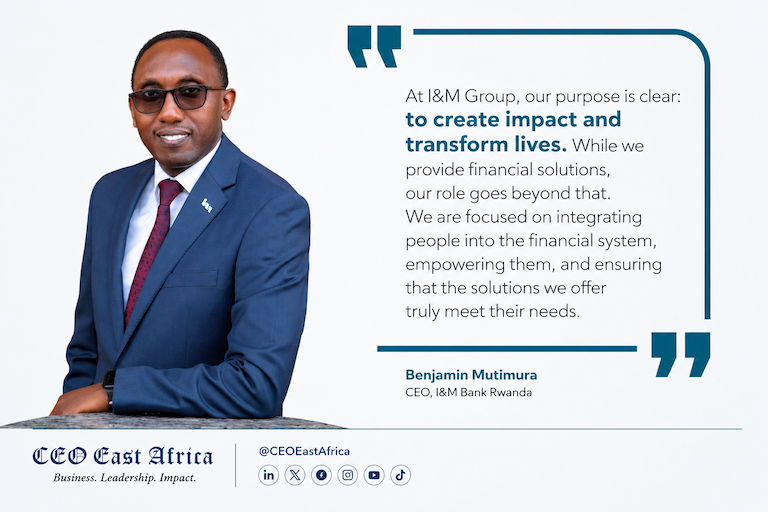
At I&M Group, our purpose is clear: to create impact and transform lives. While we provide financial solutions, our role goes beyond that. We are focused on integrating people into the financial system, empowering them, and ensuring that the solutions we offer truly meet their needs.
That commitment to impact is what drives us, and it is what will continue to guide us as we serve the communities in which we operate.