Once the lifeblood of commerce and connectivity, Uganda’s railway network is undergoing a significant transformation, fueled by ambitious plans to revitalise existing infrastructure and introduce a modern standard gauge system.
The government signed a €2.7 billion contract in November 2024 to construct the Eastern Route Standard Gauge Railway (SGR) line.
This construction will span 272 km between Tororo and Kampala, with works expected to take 48 months.
The initial phase, connecting the key border point of Malaba with the capital city Kampala, is progressing, marked by ongoing land acquisition and construction.
This renewed focus aims to unlock the railway’s potential as a powerful accelerator for trade, a crucial solution to Uganda’s growing transport challenges, and a relevant mode of transport in the 21st century.
However, the substantial financial investment and complex logistical hurdles require scrutiny.
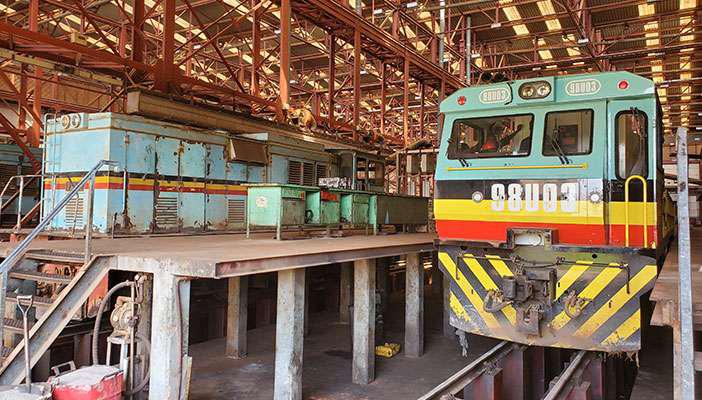
For decades, Uganda’s meter gauge railway, the existing narrow-gauge network, has suffered from underinvestment, resulting in limited operational capacity primarily focused on freight.
Businesses relying on the predominantly road-based transport system face escalating costs and protracted delays, exacerbating the notorious traffic congestion, particularly within urban centres like Kampala.
Kampala grapples with a worsening traffic congestion crisis, significantly degrading residents’ quality of life, impeding economic output, and threatening environmental health.
The World Bank places Kampala as having the second-worst traffic congestion in Africa, just behind Cairo.
Currently, vehicles in Kampala crawl at an average speed of only 11 km/h, illustrating the dire state of traffic flow.
Commuters endure an average of 2.5 hours daily trapped in their vehicles. This daily ordeal accumulates to a staggering 240 hours wasted annually per Kampala resident.
Economically, this lost time translates to approximately 4% of the city’s Gross Domestic Product (GDP) vanishing due to decreased productivity and lost financial resources.
The economic burden of these traffic jams is further highlighted by a 2017 World Bank study, which estimated Uganda’s annual congestion costs at over $800 million, roughly equivalent to UGX2.8 trillion in lost GDP.
This substantial loss manifests in approximately 24,000 person-hours wasted in Kampala traffic each day.
Adding to this, a study by the International Growth Centre in 2020 estimated the daily cost of congestion in the Greater Kampala Metropolitan Area (GKMA) at around $1.5 million, representing about 4.2% of the region’s daily GDP.
This considerable economic impact is compounded by wasted fuel, increased pollution, and elevated stress among commuters, underscoring the critical need for a strategic and sustainable approach to urban transportation in Kampala.
The SGR
The SGR has the potential to promote sustainability alongside economic benefits by significantly reducing carbon footprints and supporting net-zero targets.
With optimised design and operation, it can minimize emissions throughout its lifecycle.
Using recycled materials, renewable energy sources, and efficient train designs all contribute to lowering greenhouse gas emissions.
Additionally, extending the lifespan of railway components and embracing circular economy principles further reduces environmental impacts.
The SGR’s design promises higher speeds and the capacity to handle significantly heavier loads, offering the potential for reduced transit times and lower costs for businesses engaged in both domestic and international trade.
When President Museveni launched the construction of the SGR on November 21, 2024, he said: “Our transport system is irrational. We are going to rationalize it. Everyone is on the road. Secondly, the cost and the wastage. Roads are getting damaged [when we build the SGR], cargo will remain on the railway and water. For petroleum, we will make pipelines. Now that the economy is growing, it is high time to remove these irrationalities.”
“This is a big transformation; we will lower the cost of doing business. Once we have cheap transport and cheap electricity, we still have cheap labour. Transporting a 20-foot container from Mombasa to Kampala costs about $3,200 currently, but with SGR, it will cost about $1,600 – almost 50% cheaper. We are here to further our actions towards a transformative journey that will reshape Uganda’s and the region’s future,” he noted.
In a recent interview, Eng Perez Wamburu, SGR Uganda project coordinator, said: “A functional railway system is not merely about tracks and trains; it’s about laying the foundation for sustained economic growth. By offering a more efficient and cost-effective mode of transport, we can enhance the competitiveness of Ugandan goods in regional and global markets and alleviate the immense pressure on our road infrastructure.”
In an era dominated by advancements in road and air transport, the relevance of investing heavily in a railway system warrants examination, however.
Proponents argue that rail offers a more environmentally sustainable and economically viable solution for transporting large volumes of cargo over extended distances.
Furthermore, the development of a modern passenger rail network presents an alternative to the increasingly congested road networks, promising improved commute times and an enhanced quality of life for citizens.
A key aspect of Uganda’s railway strategy is the recognition that the meter gauge and standard gauge systems are not mutually exclusive.
Instead, the vision is to create a complementary network where the rehabilitated meter gauge lines can serve shorter distances and specific freight needs, while the SGR forms the backbone for high-volume, long-haul transportation.
Effective coordination and potential interoperability between these two gauges will be crucial for maximising the overall efficiency and reach of the railway network.
Impact of the SGR
In neighbouring Tanzania and Kenya, modern railway lines have acted as catalysts for growth and significant improvements in transport efficiency.
In Kenya, the SGR has drastically reduced travel times and freight costs between key centres such as Mombasa and Nairobi, streamlining trade and lowering business expenses.
This enhanced connectivity has not only boosted domestic commerce but has also facilitated regional trade, serving landlocked neighbours and fostering economic integration within the East African Community.
The benefits of Kenya’s SGR extend beyond economics. By offering a faster and more reliable alternative for both passengers and freight, it has alleviated congestion on vital road networks, reducing wear and tear on infrastructure.
The project generated substantial employment during construction and continues to provide jobs in its operation.
Furthermore, the improved accessibility has spurred domestic tourism and attracted investments along the railway corridor, contributing to a notable increase in Kenya’s overall GDP.
Tanzania’s ongoing SGR project mirrors this potential for transformative change.
The modern electric railway is poised to dramatically cut travel times and transportation costs, particularly between major economic hubs like Dar es Salaam and Dodoma.
It is expected to stimulate industrial growth, attract investment, and establish Tanzania as a key regional logistics hub by facilitating seamless cross-border cargo movement.
Beyond economic gains, the SGR promises environmental benefits as a more sustainable mode of transport while creating significant job opportunities and encouraging the development of local industries due to increased demand for construction materials.