Leadership is evolving, from control and authority to empowerment, continuous learning, and collaboration.
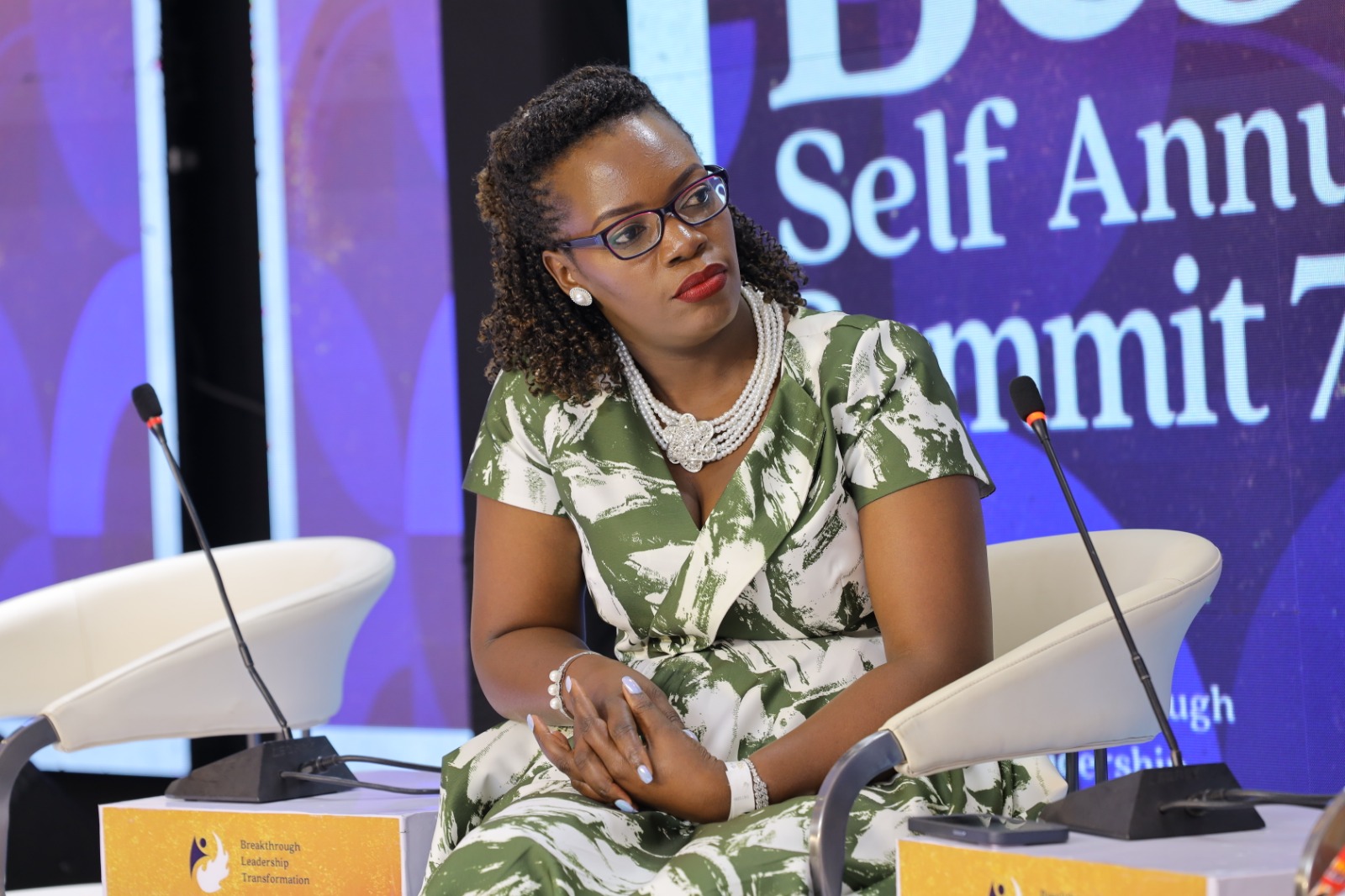
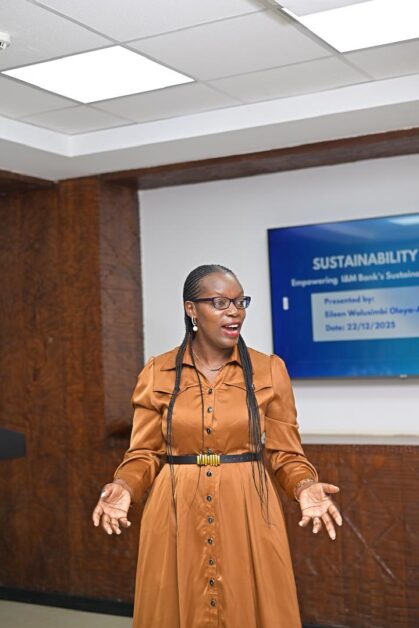
Today, it is less about short-term wins and more about building legacies that outlive the leader. Eileen Walusimbi Oloya, Founder of Linkit Management Solutions. She has spent years guiding leaders on a deeper journey, helping them understand who they are, how they lead, and how they can become more effective.
From boardrooms to one-on-one conversations, her work has shaped decision-makers across sectors, enabling them to lead with clarity, align diverse stakeholders, and drive meaningful, lasting impact beyond the boardroom.
In this #WomenFixingUganda feature by CEO East Africa Magazine, Eileen shares her perspective on what it truly means to lead in today’s complex world.
Who is Eileen?
At heart, I am deeply curious about people and institutions, how they grow and become the best versions of themselves.
My work today sits at the intersection of leadership development, organisational transformation and sustainability strategy. I partner with leaders, boards and institutions to help them align their strategy, culture and systems to perform effectively today while preparing for the future.
Beyond my professional titles, I deeply believe in human potential. My work is not built in large gatherings, but from very quiet conversations with a leader. These suddenly helped them see things differently, recognise an overlooked strength or gain clarity to lead better.
Such moments remind me that leadership is not only about strategy or performance, but growth, reflection, and the courage to lead with intention. That perspective continues to shape the way I work and support leaders and organisations across sectors.
Walk us through your career journey and the key moments that shaped who you are as a leader today.
My journey has been shaped largely by working alongside leaders and organisations who are navigating complex change. Over the years, I have had the opportunity to observe how institutions operate from the inside. This is how decisions are made, how teams interact, how structures and processes within support, and how strategy is translated into everyday practice.
Earlier in my career, I often noticed how organisations had capable leaders, strong technical expertise and well-developed strategies, yet slow progress than expected. That sparked a deeper curiosity about what truly drives organisational performance. I remember sitting in one leadership session years ago, listening to executives discuss a major strategic initiative, but something felt incomplete.
Then I realised that strategy alone does not transform organisations, leadership alignment does. From then on, I became deeply interested in leadership development, coaching and organisational systems. I also put effort into understanding how leaders can align people, culture and strategy to allow institutions to thrive.
With time, the aspect of ESG naturally became part of my work. Because when leaders start thinking about long-term future value for the organisations, questions about responsibility, impact, and sustainability inevitably arise. Then leadership is no longer about performance, but building institutions that last.
What initially inspired you to move into leadership, coaching, and organisational development work?
It was seeing the untapped potential within leaders and teams because I often encountered highly capable leaders operating under enormous pressure, yet with very little space to pause and reflect.
That’s the area that largely informs the work that I do because coaching creates that space. It allows leaders to step back, examine assumptions, and reconnect with what truly matters.
I believe that great leadership really comes from having all the answers, which stems from creating a space to ask better questions.
With that reflective capacity, leaders improve their decision quality, their influence increases dramatically, and the results they create for themselves, the teams, and the organisation change.
Looking back, what were some of the biggest challenges you faced in your career? How did they shape your approach to problem-solving and growth?
One of the biggest challenges early in my career was realising that meaningful organisational change rarely happens as quickly or as neatly as we expect. I initially believed that if you introduce the right ideas or solutions, progress would naturally flow.
But working closely with organisations taught me a more nuanced lesson that institutions are complex human systems, shaped not only by strategy but also culture, relationships, incentives, and deeply held assumptions about how things should work.
There were moments when I saw a clear forward path for an organisation, yet progress was slow because people needed time to reflect, build trust with each other, and even adjust their thinking. At first, it was very frustrating, but over time, it became one of the most important lessons in my career.
I came to appreciate that sustainable change does not happen when we impose solutions but when people begin to see their work and leadership differently.
With that, instead of focusing on technical solutions, I also help leaders understand the system they are operating in; the culture, incentives at hand, and the behaviours that influence outcomes. When leaders begin to see those connections clearly, transformation becomes inevitable.
You’ve worked across complex organisational environments. How do you typically assess the gap between an organisation’s current state and its desired future state?
My first step is to listen before looking at data or frameworks. It is to understand how leaders see the organisation, how employees experience it, and how the stakeholders interact with it.
These perspectives often reveal far more than any formal report could ever give. In many cases, organisations already know where they want to go (through the strategy), but the real question is what the roadblock could be.
That pushes me to assess three interconnected dimensions – leadership alignment, organisational culture, and the operating systems. For example, a strategy may call for innovation, collaboration and sustainability. But if incentives, behaviours, and decision-making structures are not aligned with that vision, progress is stifled.
That is why I often approach organisational transformation as an alignment process. When leadership prioritises culture and systems reinforce each other, organisations move forward with greater clarity and momentum.
So the real work of transformation is in helping organisations bring their strategy, culture and leadership into the same conversation.
How would you describe your coaching philosophy, and how does it go beyond traditional coaching methods?
My coaching philosophy is grounded in the belief that leadership development is both an inner journey and a systemic responsibility. Traditional coaching often focuses on an individual, their goals, behaviours, and personal effectiveness.
However, leaders do not operate in isolation. That is why their teams are always part of the conversation because every decision they make influences the culture, relationships, and the system within the organisation. Therefore, in my work, the first part is the leader’s inner clarity (their values, beliefs, assumptions, fears, how they interpret the world, and how they interpret challenges).
The second is the broader system they are shaping. That includes how their leadership influences the team, culture and the organisation’s ability to perform. Often, when leaders gain deeper self-awareness, they begin to recognise how their leadership style either enables or unintentionally constrains teams and systems around them.
The latter usually gives light bulb moments. So my coaching approach goes beyond solving immediate problems to helping leaders think more clearly, lead more intentionally, and create environments where others can contribute or bring their best selves forward. Most effective leaders are not only those who control outcomes but those who create conditions in which excellence can emerge.
When leaders begin to see their role that way, the impact of their coaching extends far beyond themselves.
In your experience, what are the most common performance barriers facing executive teams and boards today?
One of the most interesting observations is that a lack of intelligence or technical expertise rarely causes performance challenges. That is because most leadership teams are highly capable and deeply committed to their organisations. But some of the things they struggle with are misaligned priorities, unspoken assumptions, and, at times, the absence of open and honest dialogue.
These are often less visible barriers, yet they have far more impact because, despite the hard work, they are not moving in the same direction. These slow down decision-making and, at times, even create friction within teams.
So when leaders feel able to express different perspectives without being judged, the decision quality improves greatly.
Therefore, performance at the executive level is usually shaped not just by the leaders or what they know, but also by how effectively they can align together, communicate, make decisions as a collective and also learn together.
Can you share an example of how your coaching or training has helped an individual or team unlock higher performance?
I once worked with a highly capable and deeply committed leadership team, yet there was a growing sense that the organisation was not moving forward as cohesively as was expected.
While every department was focused on achieving its targets, the broader strategic priorities were not always interpreted in the same way across the team. As such, collaboration sometimes felt very fragmented, hence anxiety and conflict. Through a series of facilitated leadership conversations and alignment sessions, we created a space for the team to step back and reflect together on their shared goals.
Leaders began to openly discuss assumptions, expectations, and the pressures each was experiencing. Over time, the team redefined their shared priorities and agreed on clearer ways of working together. Decision-making became faster, collaboration improved over time, and the sense of collective ownership across the team strengthened significantly.
When leaders genuinely listen to one another, clarity begins to emerge. Additionally, when leaders see the same destination and understand their role in reaching it, momentum follows. Experiences like this reinforce in me that many organisations don’t need more effort but greater alignment.

You emphasise a systemic approach to excellence. What does that mean in practice for leaders and organisations?
In many organisations, leaders focus on solving individual problems or individual departmental problems, introducing a new strategy or implementing a new initiative. While those actions can be helpful, they often overlook how different parts of the organisation influence one another.
However, a systemic approach to excellence is understanding that organisations function as interconnected ecosystems rather than isolated departments or initiatives.
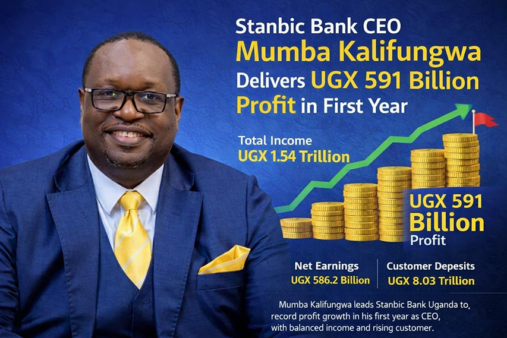
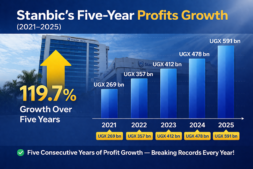 Stanbic’s Five-Year Scorecard: How Profit Growth, Deposits, Lending and Dividends Reshaped Performance
In practice, the approach asks leaders to step back and look at the whole picture. How do leadership behaviours influence culture? Can their incentives shape decision-making? How do structures either support or constrain collaboration and innovation?
For example, an organisation may say it values innovation, but if its performance systems reward only risk avoidance, employees quickly learn that experimentation is not encouraged, hence they avoid innovating.
Organisations do not always behave according to their stated values but according to the systems that reward certain behaviours. Excellence, therefore, emerges when leadership, culture, incentives, and strategy reinforce one another rather than work in silos.
For leaders, this requires a shift in perspective to see themselves as designers of the organisational environment. Effective leaders are not only decision makers but architects of the system that shapes how people work and succeed.
When leaders take that broader view, organisations become far more capable of sustained performance and creating meaningful impact.
Sustainability and ESG are increasingly important. How do you help leaders embed sustainability into strategy rather than treating it as a compliance exercise?
I help leaders recognise that sustainability becomes powerful only when it is at the centre of an organisation’s strategy. That is because, in many organisations, sustainability initially appears as a compliance or reporting requirement.
While reporting and standards are important, they are only the starting point. The real opportunity lies in understanding how sustainability influences risk, innovation, resilience, and long-term competitiveness. When leaders begin to ask “How do we create long-term value while operating responsibly?” rather than “How do we comply?” the conversations shift.
For example, sustainability influences how organisations design products, how they manage resources, how they engage with communities, and how they think about future markets. It also strengthens trust with stakeholders, which is becoming an increasingly important currency for organisations.
The moment leaders recognise sustainability as a driver for long-term value, it gains ground.
Therefore, as I work with leadership teams, we often explore how sustainability can be integrated into strategic decisions, performance systems, and leadership accountability. When those elements align, usually sustainability becomes part and parcel of daily organisation operations rather than a side initiative.
Ultimately, sustainability is not just about protecting the environment, but building institutions that are resilient, responsible and capable of thriving in a changing world. Then an organisation that understands that responsibility and performance are not competing priorities but mutually reinforcing.
What role does change management play in successfully implementing sustainability and performance initiatives?
Change management plays a central role because sustainability and performance initiatives often require organisations to rethink how they operate. It is not about introducing new policies or frameworks but shifting mindsets, behaviours, and even sometimes long-standing assumptions about how decisions are made.
One of the lessons I have learned is that change does not happen simply because a strategy has been announced. People need to understand why change matters, how it connects to their work and what it means for the organisation’s future. This is where leadership becomes critical by actively communicating the purpose behind a change situation and then modelling the expected behaviours.
Therefore, while policies may introduce change, leadership behaviour makes change credible by creating environments where people feel both supported and accountable as they adapt to new ways of working.
In real practice, this means engaging teams in a very meaningful dialogue, getting them to align incentives with desired outcomes. That is also reinforcing the behaviours that support the organisation’s long-term goals. Sustainable change only happens when people understand it.
How do you support organisations in balancing operational efficiency, cost savings, and ethical responsibility?
One of the things I often discuss with leadership teams is the assumption that operational efficiency, financial performance, and ethical responsibility are competing priorities. Most forward-thinking institutions have discovered that these goals reinforce one another.
For example, when organisations improve resource management, reduce waste, strengthen governance, and invest in responsible supply chains, they are not only addressing ethical considerations but also improving efficiency and reducing long-term risk.
Therefore, the key is in helping leaders shift from seeing responsibility as a constraint to a part of good strategy.
There is a myth in business that profitability and responsibility are opposites. In my work with institutions, we explore how ethical considerations can be integrated into decision-making processes, operational systems, and performance metrics. When these elements are aligned, usually leaders begin to see that responsible practices often enhance resilience, reputation, and long-term value creation.
Another important aspect is transparency. Organisations that are open about their challenges and progress usually build stronger trust with employees, customers, and stakeholders.
Therefore, trust has become one of the most valuable currencies in modern organisations. When leaders approach performance and responsibility as interconnected goals rather than competing demands, they suddenly position their organisations to thrive in the future.

What mindset shifts do leaders need to make to truly lead sustainable and high-performing organisations?
One of the most important mindset shifts is moving away from short-term performance thinking to long-term value creation. For many years, leadership success was often measured primarily through quarterly results and immediate financial performance. While these remain important, the environment within which organisations are operating today has become far more complex.
Leaders are expected to consider not only financial outcomes, but also the long-term impact of their decisions on people, communities, and the environment. This requires a broader perspective on leadership because leaders who will shape the future are those who understand that performance and responsibility are inseparable.
Another important shift is moving from control to stewardship. Effective leaders recognise that their role is not simply to direct outcomes, but also to create the conditions within teams to thrive. This means investing in trust, developing people, and aligning the organisation around a shared purpose. I believe that the most effective leaders are not those who control every decision, but those who build systems that consistently produce decisions.
When leaders adapt this mindset, sustainability, performance, and organisational resilience begin to reinforce one another. Instead of viewing responsibility as an additional burden, leaders then suddenly start to see it as part of building institutions that can succeed over the long term.
How has working with both public and private sector organisations influenced your perspective on leadership and impact?
Working in both spaces has been a blessing because it has given me a deeper appreciation of how leadership operates within different institutional contexts. Granted, the private sector often focuses on market competitiveness while the public sector focuses on policy, service delivery and public accountability.
Nonetheless, many of the underlying leadership challenges are remarkably similar to leaders navigating complexity, balancing competing priorities and working to mobilise people around shared goals. It becomes clear that effective leadership is less about authority and more about the ability to build trust among people, creating clarity and aligning diverse stakeholders.
Therefore, one of the gleaned lessons is that the scale of impact often depends on how well leaders understand the systems they are operating within. I can confidently say that leadership becomes powerful when it connects people, purpose and systems in a meaningful way.
Within the public sector, this often means thinking about long-term societal impact and public value. In the private sector, it involves balancing performance with responsibility and long-term sustainability.
Ultimately, both sectors play important roles in shaping societies, and meaningful progress often happens when leaders and institutions from these different sectors collaborate and learn from one another, working together towards a shared future.
These experiences have really strengthened my belief that leadership is not just about managing organisations but contributing to the broader systems that enable societies to thrive.
What advice would you give to emerging leaders who want to grow professionally while also creating meaningful impact for others?
I encourage emerging leaders to remain deeply curious. The most effective leaders I have encountered are those who never stop learning. That is not only about their profession but also about people, systems, and the broader world around them. Leadership development is not a destination but a continuous process of reflection and growth.
I would encourage them to invest in self-awareness. Understanding your values, motivations, beliefs, worldviews and leadership style allows you to lead with greater authenticity and clarity. When leaders understand themselves well and have purpose, they are better able to navigate complexity and make thoughtful decisions.
Another important lesson is to think beyond personal success. Leaders who leave the greatest mark are those who recognise that leadership is fundamentally about service. That it is about creating environments where others can grow and contribute meaningfully. The most fulfilling leadership journeys are those where personal growth and the growth of others happen together.
And finally, I often remind emerging leaders that leadership influence grows over time. It is built through consistency, integrity, and the ability to build trust with others. While people may initially follow a title, they stay only because they trust the leader behind it. When leaders focus on learning, authenticity, and contribution, I believe that their impact then grows naturally over time.
Looking ahead, what legacy do you hope to leave through your work in leadership development, coaching, and sustainability?
It is when leaders are aligned in how they lead and are more conscious of the long-term consequences of their actions. Then I would consider that a very, very meaningful contribution.
Over the years, I have become increasingly convinced that leadership carries a profound responsibility. The decisions leaders make today shape not only the success of their organisations. They also shape the opportunities available for future generations. The true measure of leadership is not the momentary results, but the institutions they leave behind.
Throughout my work in leadership development, coaching, and sustainability strategy, I hope to improve or contribute to organisations that are both high-performing and responsible, creating value for their stakeholders, while also contributing positively to society.
In many ways, the future of leadership will depend on how well leaders learn to balance both performance and responsibility. That is because leaders ought to be helped to build institutions that are more aligned, more resilient, and more conscious of their broader impact.
That would be a legacy I would be grateful to leave.