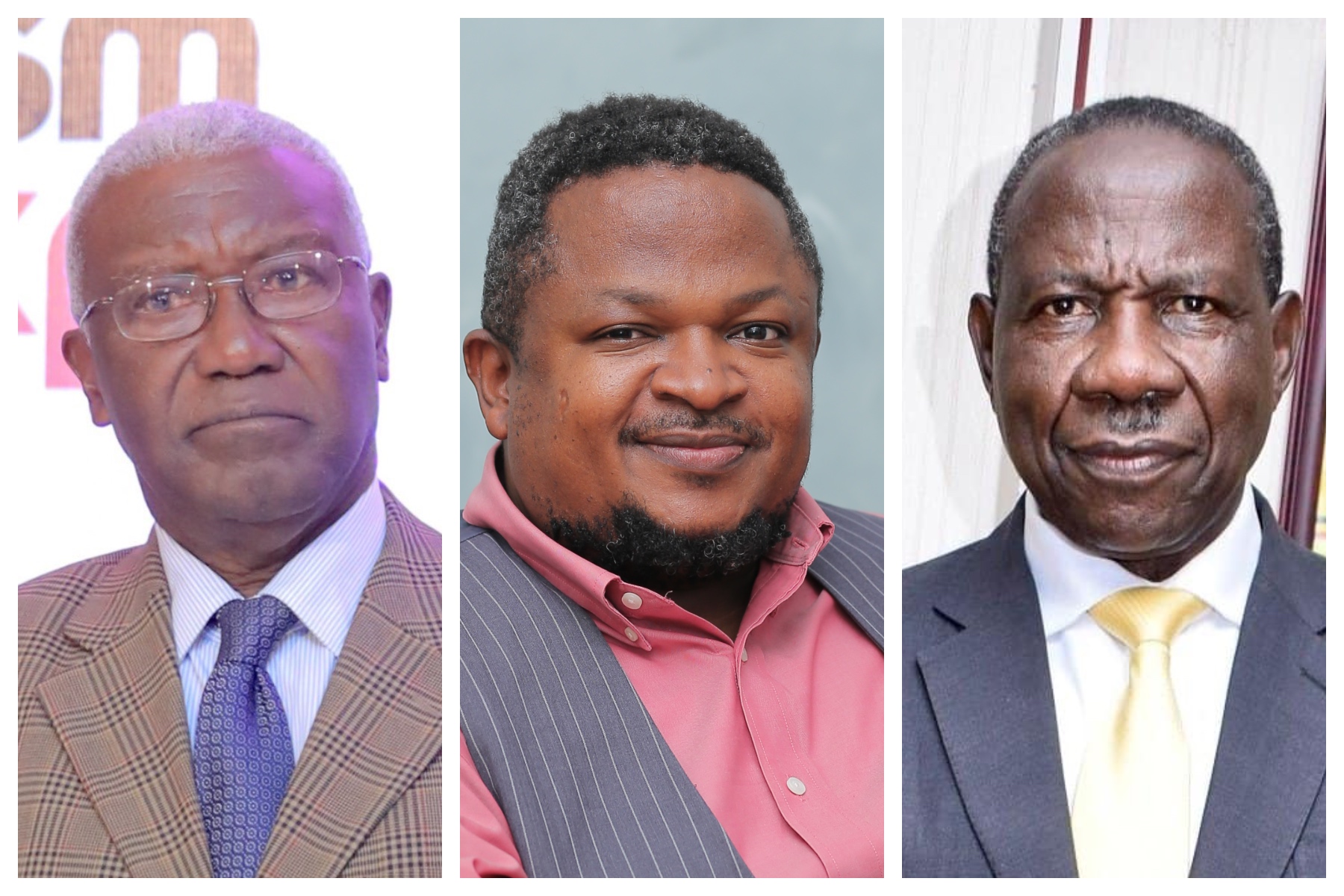
Tourism Minister, Hon. Rtd Col. Tom Butime (left) and Uganda Tourism Association (UTA) CEO, Muhereza Kyamutetera (centre) have asked Finance Minister, Matia Kasaija to allocate more resources to the tourism sector to unlock its potential fully.

Uganda’s tourism industry faces a critical setback as the government slashes its budget by 40%, sparking outrage among stakeholders. With fears of stagnation, industry leaders warn that reduced funding could cripple growth, conservation, and international competitiveness in the coming years.

In a move that has left industry key players both concerned and uncertain, Uganda’s government has reduced the tourism budget for the fiscal year 2025/26 by a significant 40%. This cut, which leaves a funding gap of Ushs 288 billion, has drawn mixed reactions, as tourism plays an increasingly vital role in the country’s economic recovery and growth.

Tourism has long been one of Uganda’s key economic drivers, contributing significantly to both GDP and foreign exchange earnings. According to the Minister of Tourism, Wildlife and Antiquities, Tom Butime, tourism contributed 5.5% to Uganda’s GDP in 2023, with foreign exchange earnings from the sector seeing a remarkable 48% increase from Ushs 2.5 trillion in 2022 to Ushs 3.8 trillion in 2023. The recovery from COVID-19 has been swift, with international tourist arrivals up 56% in 2023, reaching 1.27 million visitors. This growth has been vital in rejuvenating the economy, and expectations are that the sector will surpass pre-pandemic levels by 2025.

However, despite the positive trends, the proposed reduction in funding for tourism in FY 2025/26 has raised alarms. The Ministry’s planned budget of Ushs 175.98 billion is far below the required Ushs 464 billion outlined in the National Development Plan (NDP IV), a gap that could significantly hamper progress. Critics argue that the government is falling short of its responsibility to fully support tourism development, which is crucial to Uganda’s long-term economic ambitions.

Minister of Tourisms Concerns

During a meeting with the Parliamentary Committee on Tourism, Trade, and Industry, Minister Tom Butime expressed concern about the insufficient allocation of funds. He highlighted that the current provision is significantly below the Ushs 291 billion appropriated for the 2024/25 fiscal year.

“It is our prayer and hope that the Committee on Tourism, Trade, and Industry will approve the Budget Framework Paper for this Ministry and its Agencies. Additionally, we appeal for an increase in the Tourism Development Budget by Ushs 288 billion. Of this increase, Ushs 124.5 billion will come from the Wildlife Fund, based on UWA’s projected NTR for FY 2025/26,” he remarked.

Butime also emphasized that the funding shortfall would negatively impact tourism infrastructure development, wildlife conservation efforts, and promotional activities. He noted that without adequate funding, maintaining Uganda’s 22 protected areas, including national parks and game reserves, would become increasingly difficult.

Industry Concerns and UTAs Opposition to Budget Cuts

The Uganda Tourism Association (UTA) has strongly opposed the proposed budget cuts to the tourism sector as outlined in the National Budget Framework Paper FY 2025/26 – FY 2029/30. UTA CEO Muhereza Kyamutetera emphasised that the proposed 40% reduction in funding—from UGX 298 billion in FY2024/25 to UGX 176 billion in FY2025/26—poses a significant threat to Uganda’s ability to realise its ambitious economic transformation goals under the Fourth National Development Plan (NDP IV).

“The Budget Cut Jeopardizes Ugandas Tourism Potential”

Kyamutetera argues that Uganda’s tourism sector is one of the most underfunded industries despite being a major contributor to the economy. The sector accounted for 5.5% of Uganda’s GDP in 2023 and provided over 610,000 jobs. Yet, the tourism industry has consistently received insufficient public investment. He asserts that the proposed budget cut will further weaken the sector’s ability to attract high-value tourists, grow revenues, and meet key NDP IV targets, such as increasing forex earnings from USD 1 billion to USD 4 billion by 2029/30.

Private Sector and Tour Operator Perspectives

The private sector, especially tour operators, have also expressed disappointment with the budget cuts. Gloria Adyero, owner of Loremi Tours, emphasised the critical role of government funding in tourism promotion. “Private actors can only do so much with limited resources. Without efficient resource allocation and utilisation, the full potential of the sector is not tapped into,” she said.

Parvin Nantumbwe, a tour operator based in Kampala, highlighted that the cuts would impede the development of new tourism products and the promotion of lesser-known destinations. “We cannot solely rely on private investment to grow Destination Uganda; the government must fulfill its responsibilities, which require full funding,” she stated.

Nancy Okwong, the Public Relations Officer of the Association of Uganda Tour Operators (AUTO), adds: “A budget cut of this magnitude could slow the industry’s growth and development. Tourism contributes significantly to employment and foreign exchange earnings, and without sufficient funding, it is challenging to achieve the growth we expect.”

Competitive Disadvantage and Regional Context

Uganda’s tourism industry is also facing increased competition from other African nations that are stepping up their efforts to attract more visitors. Andwaanaho Kanyonyi of Hygge Relax Adventure Travels noted, “When we compare ourselves to our competitors across the continent, it’s clear that they are increasing their budgets to attract more travelers. In contrast, we have been lagging behind, which I believe the cut will hinder the little progress we’ve made since the end of the COVID pandemic.”

Call for Increased Sector Funding and Performance-Based Budgeting

UTA proposes that the government increase the tourism budget to at least 1% of the national budget by 2030 to ensure adequate resources for tourism marketing, infrastructure, and skills development. Currently, Uganda allocates only 0.4% of the national budget to tourism, compared to the 5.5% of GDP that the sector contributes. The association insists that the planned 40% budget cut in FY2025/26 should be scrapped, arguing that more investment is needed to accelerate the sector’s post-pandemic recovery.

Furthermore, Butime, UTA, and tourism stakeholders have urged the government to establish a dedicated tourism development fund that would help provide long-term financial support for conservation, training, and tourism expansion initiatives.

Conclusion: Invest More, Not Less

In conclusion, stakeholders warn that the planned budget cuts threaten Uganda’s ability to realize its tourism potential and could derail the ambitious targets set under NDP IV. Instead of reducing sector funding, the government should:

  • Increase investment to at least 1% of the national budget.
  • Scrap the proposed 40% budget cut.
  • Fast-track the Tourism Development Levy.
  • Enhance destination marketing and product diversification.
  • Improve infrastructure and workforce training.
  • Establish a long-term tourism development fund to ensure consistent and sustainable financing.

By implementing these measures, Uganda can attract more high-value tourists, create more jobs, and significantly boost foreign exchange earnings. Tourism is not just an industry—it is a powerful driver of economic transformation. Failing to invest adequately in the sector is a missed opportunity for Uganda’s long-term development.

Tagged:
About the Author

Trevor Lutalo is a features writer and storyteller with a strong interest in topics such as business, taxation, and climate issues. He has explored the connection between environmental sustainability and economic growth, while also delving into subjects like travel and agriculture.

beylikdüzü escort