KAMPALA, April 24th, 2020; Yesterday, eleven (11) new COVID-19 (Corona Virus) cases were reported; 6 Tanzanian truck drivers who arrived into Uganda, via the Mutukula border post and 5 Kenyan truck drivers- 3 arrived via Malaba entry point and 2 arrived via Busia border.
Yesterday double-digit number has driven, the cumulative number of confirmed COVID-19 cases to 74. The last time Uganda registered 11 cases- the highest number of cases registered in a single day, was on March 31st. The difference is that all the 11 then, were Ugandans, including 5 children from Watoto Children’s Suubi village.
The fact that we have 11 new cases and all of them non-Ugandan is new. In fact, the cumulative number of foreign truck drivers who have tested positive for COVID-19 in Uganda is now nineteen (19) i.e. nine (9) Tanzanian and ten (10) Kenyan nationals- just about 26% of all confirmed cases. The influx of 19 ‘imported’ cases by road, in just under a week, is now threatening to overturn Uganda’s previous efforts in flattening the curve in just a month after patient zero.
Nonetheless, that does not dampen Uganda’s impressive statistics to date. Out of the 74 cases, Uganda has had 46 recoveries- a recovery rate of 62% and no death!
The biggest question in everybody’s mind today is: to shut or not to shut Uganda’s borders, not to the valuable cargo but rather to the foreign drivers. Sections of the public on social media have even come up with a term, relay-driving- a suggestion that foreign drivers should be allowed to drive up to the borders, have their trucks sanitised and then passed on to Ugandan drivers. How practical that is a story for another day, but President Museveni still remains unyielding- at least for now, that truck drivers can be managed. But until that changes, the drivers will have to be meticulously screened, tested and their particulars captured and therefrom tracked with military precision, such that, should they test positive, they can be zeroed in on and enrolled for the various treatment protocols prescribed by our ministry of health.
A very delicate operation, by all means.
One man, Maj. Gen Apollo Gowa Kasiita, the Director of the Directorate of Citizenship and Immigration Control (DCIC) is the man heading that operation to keep Covid-19 out of Uganda’s borders.
DCIC is under the Ministry of Internal Affairs and its core role is to facilitate the legal and orderly movement of persons to and from Uganda; regulating the residence of immigrants in Uganda and enforcing national and regional immigration laws.

This is probably Gowa Kasiita’s most mission-critical assignment since he was appointed to the job by President Yoweri Kaguta Museveni in December 2018. Before his appointment to head DCIC, he was Uganda’s Military Attache in Washington. Also appointed with Gowa Kasiita was Brig. Johnson Namanya as the Commissioner for Citizenship and Passport Control as well as Col. Geoffrey Kambere, previously the Director for Intelligence Collection in the UPDF, as the Commissioner for Immigration Control.
Before Col. Namanya’s appointment, he was the administration officer in charge of UPDF’s Luwero Industries.
The trio’s appointment was greeted with mixed feelings with critics viewing it as militarisation of civil service, but the disciplined and high performing officers, have proved their worth.
The officers, who are known for their strong discipline and work ethic have easily jelled in at the Ministry of Internal Affairs and working together with the technical wing, led by the Permanent Secretary, Benon Mugisha Mutambi are transforming the immigration function in the ministry. For example, the trio who are also known workaholics, have been instrumental in the rolling out of e-passports. Today, more than 212,000 e-passports have been issued since launch on 9th November 2018. They have also been at the centre of the rollout of the fully automated passport service delivery process- that was launched on 19 December 2019. As of 27th January 2020, just a month after launch, 83,233 passports had been issued; an impressive growth of 455% above the normal average of 15,000 passports a month.
Operation anti-Coronavirus
But Covid-19 presents a different animal altogether and the officers know it too and the officers are already on the ground.
Lest we forget, Uganda’s patient zero, a 36-year-old Ugandan male, arriving from Dubai at 2 a.m. on Saturday, March 21st (2300GMT), aboard Ethiopian Airlines was first identified and isolated by a combined team from Ministry of health and DCIC, tripping off a meticulous operation to identify all the other travelers who had entered the country in the previous days.
Over the next number of days, several travelers through the airport would be tracked down as well as those they had been in contact with, for quarantining and testing.
Thanks to the Directorate of Citizenship and Immigration Control’s efforts, to date, 18,123 high-risk travelers, since March 7th, 2020 have been compiled. Working with security and health officials 4,568 have been identified and those whom they had gotten in contact with traced and tested. To date, Uganda, on top of having no death and the lowest cases of infection amongst the four major East African Community economies, Uganda also has the highest number of cases tested- 17,388.
 Paul Mwesigwa’s First Year: UEDCL Hits UGX 1.71 Trillion in Revenue, Rolls Out $994m Grid Recovery Plan After Umeme’s Exit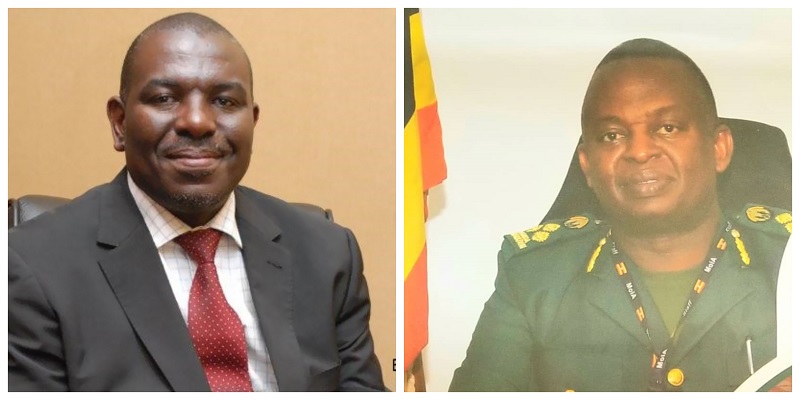
The fact that most of Uganda’s new cases are imported, for DCIC, it is literally still wartime. In fact, the DCIC has been in combat mode, right from March 18th when President Museveni announced the first set of guidelines and restrictions in which, among many other moves, a partial lockdown of Entebbe International Airport was announced to what was then known as category 1 risk countries. But three days later, the president would impose a total lockdown- of all of Uganda’s air, water, and land entry points.
With the borders closed, except for the special category of travelers the country looked up to the ministry of health to track, identify and treat corona patients and quarantine the suspected cases, just as it looked up to DCIC to keep the Coronavirus outside of Uganda’s borders a role that they have played well, so far.
Business unusual: Inside the anti-corona war room at DCIC
Following the presidential directives, which shut down most border operations and significantly reduced most port-of-entry traffic, one would have expected most of the DCIC’s over 600 ‘army’ of men and women would go on leave- but not under Gowa Kasiita’s watch.
Instead, the DCIC teams were reconstituted into a special war-like anti-Coronavirus operation. The country’s entry points were zoned into 7 special operation areas, each manned by a senior immigration official.
On a normal day, immigration officials let in or out people, but this time, their roles were scaled up a little.
First of all, team presence was beefed up- all cluster managers were directed to be physically present in their areas of operation, during the 32 days of the border closure directive and as well as ensure that all borders within their cluster are manned 24/7. To execute this, station managers were required to keep station diaries where all staff would sign their attendance 24/7.
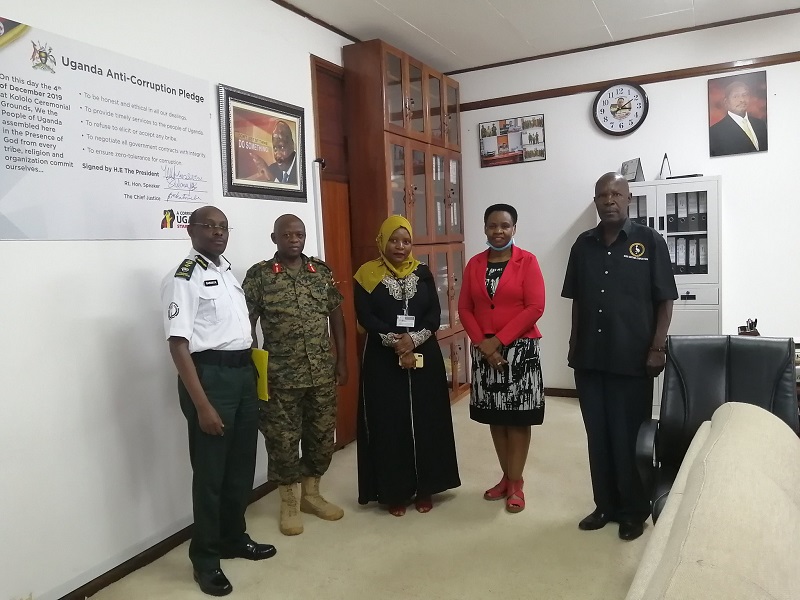
A stricter records management regime was also enforced. Immigration officials were to keep records of all trucks entering the country- right from keeping manifests of all the trucks, ensuring that each of the trucks is carrying a maximum of three people as per the presidential directive. Above all, it would now be the duty of immigration to liaise with the ministry of health officials to ensure that health checks are done on all the persons aboard the cargo trucks before they proceeded for immigration formalities.
At Entebbe International Airport DCIC teams would ensure that pilots of all cargo planes, do not leave their planes before returning back. Pilots of UN and other emergency flights, on the other hand, would be tested and checked into mandatory quarantine, to follow the ministry of health quarantine protocols.
In either case, immigration officials must keep all the records of persons entering the country- their addresses in Uganda, telephone numbers and truck owners’ numbers.
For those to be quarantined, records too must be accurately maintained such that quarantined people’s records must tally with the number of passports held by the respective border stations from where the quarantined persons entered the country. All quarantined persons must present their quarantine discharge certificates to claim their passports.
To keep on top of things, all station managers are required to send daily situation reports to the ministry’s situation room at least twice a day. To minimize any bureaucracies, any incidences outside the presidential guidelines, especially those that require policy guidance are to be relayed to the ministry in real-time for guidance and action.
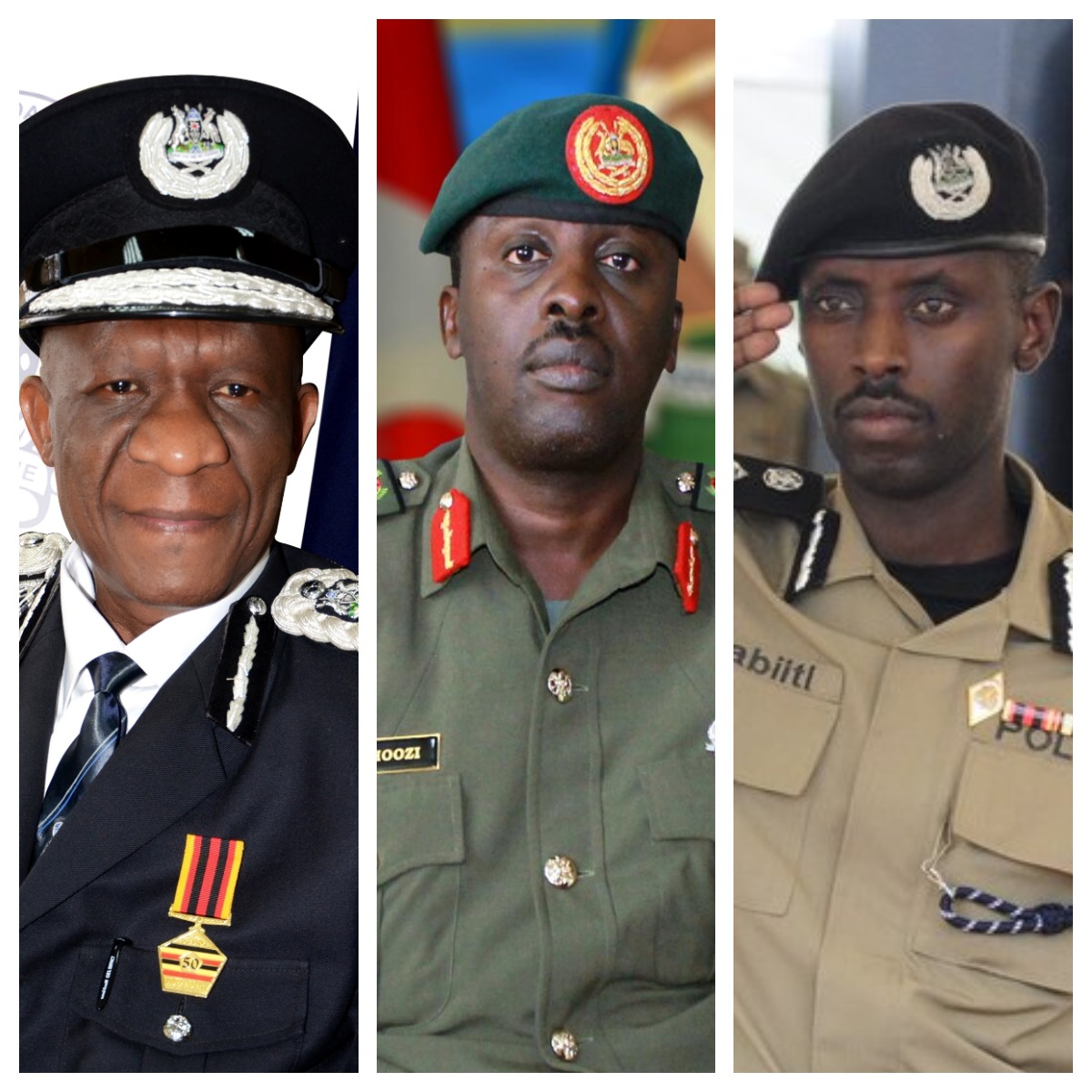
The team, is also under special instructions to work very closely with the Uganda People’s Defence Forces, Uganda Police Force, Chieftaincy of Military Intelligence, External Security Organisation, and Uganda Revenue Authority to ensure properly coordinated border control operations. These, include snap checkpoints at strategic points as well as providing information to UPDF and other stakeholders on the vulnerable areas susceptible to illegal entry and whenever deemed necessary, immigration staff is to join other sister security agencies, to patrol the borders.
But the operation has not been enforcement through and through- it also has a behavioral change element. A special unit made up of the ministry’s public relations team, was also drafted to join the Ministry of Health’s communications teams in crafting and dissemination of community education messages on the disease, but more importantly on the importance of keeping unauthorized travelers out of Uganda.
But with the sudden jump in cases- most of which, if not all, are truck drivers arriving from Kenya and Tanzania, that are legally going through DCIC’s net, is Uganda about to score an own goal?