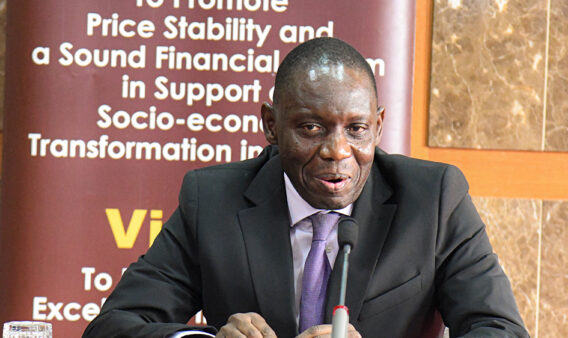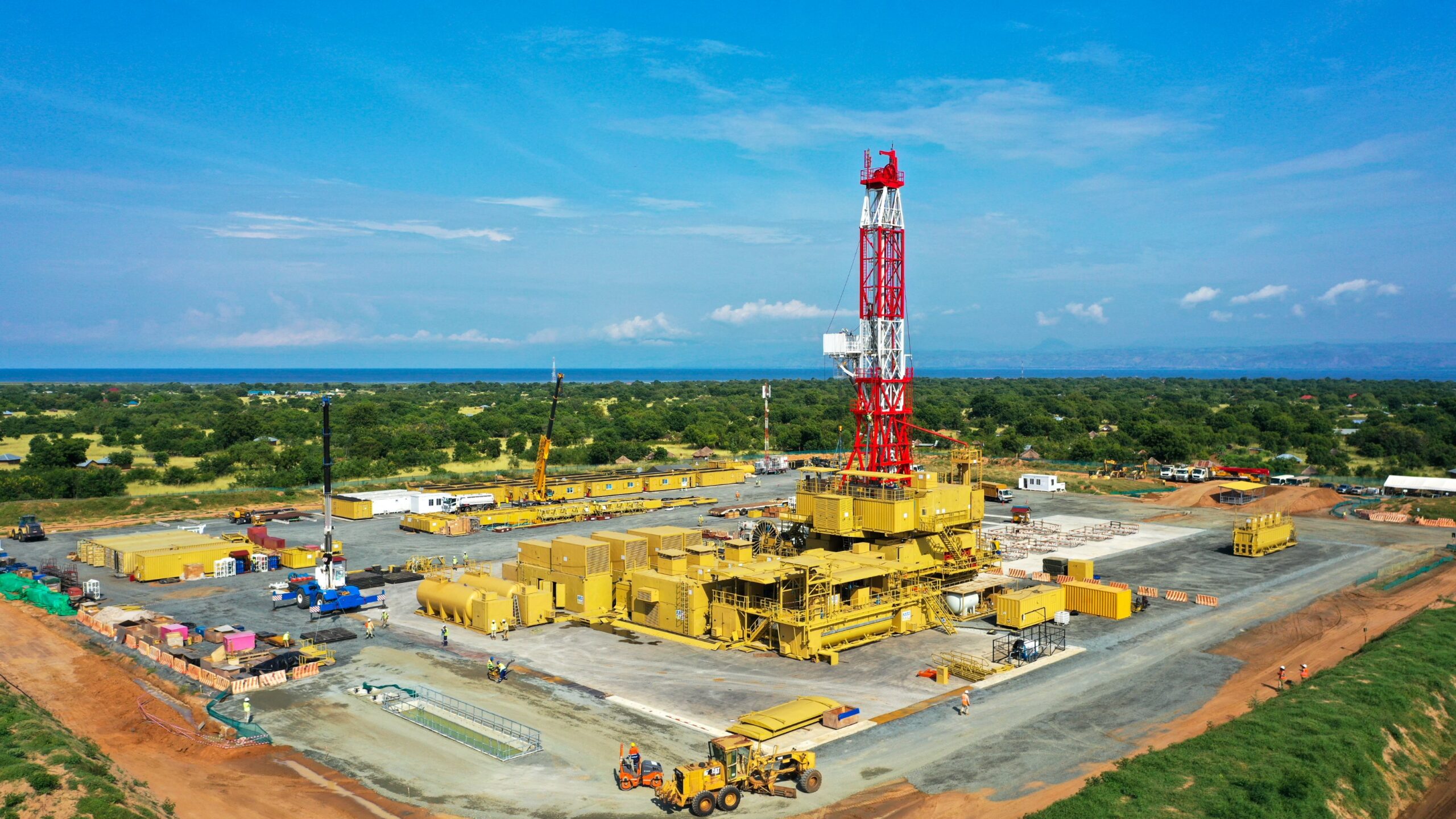
The Auditor General, Edward Akol, has noted with concern that the Tilenga and KingFisher Development Area oil projects in western Uganda are behind schedule in hitting completion targets, with some activities also facing a funding crisis.
The Auditor noted that whereas the Uganda commercial oil production plans had set a target of drilling 451 oil wells, the Field Development Plan (FDP) designated only 177 (approximately 39%) as necessary for the initial phase of oil production targeted for November 2025, and which was later projected to 2027. However by the time of the compiling of the Auditor’s report in November 2024, only 94 (53%) wells out of the designated number had been drilled for both projects.
In terms of the construction of the enabling facilities, the Tilenga and King Fisher Development Area (KFDA) projects had not achieved the planned targets. By November 2024, Tilenga’s actual progress was 42% compared to the planned 51%, while for KFDA, the actual progress was 88% compared to the planned 91%.
An analysis of the components contributing to overall progress revealed that most of the progress related to procurement of materials, engineering and site logistics, while actual construction works were at 8.5%.
Mr Akol has warned the delays risks the extension of development phase costs into the production phase.
The Auditor also said the compensation of Project Affected Persons (PAPs) under the East African Crude Oil Pipeline project (EACOP) was substantially complete and construction works had commenced. However, the project implementation was at 40% of planned progress (42%) by September 2024, with delays in pipeline and marine terminal construction.
Mr Akol has faulted the Petroleum Authority for lacking a consolidated regulatory oversight on the progress and readiness of supporting infrastructure managed by other government entities like Kabale International Airport managed by Ministry of works, the Kabalega Industrial Park by the UNOC and an electricity substation by Uganda Electricity Transmission Company Limited (UETCL).
Mr Akol also noted that the Petroleum Authority had an approved budget of UGX.89.55 billion out of which UGX 66.18 billion (74%) was warranted. The shortfall of UGX.23.36 billion affected the completion of National Petroleum Data Repository Infrastructure Project (NPDRI Project), and operationalization of a Petroleum Authority of Uganda regional office in Buliisa District.
The establishment of a National Petroleum Data Repository Infrastructure (NPDRI) is essential for efficient and effective management of petroleum data relating to exploration, development, production, and utilization of oil and gas resources in the country. The total funding required for NPDRI is UGX 133.5 billion, but to date, the government has only allocated UGX 7.5 billion. The under funding has stalled the project progress, currently at 37%. Only the seismic data tape, storage and transcription system are complete.
The development of the NPDRI was at 37% progress due to underfunding, leading to lack of efficient and effective petroleum data management.
The compensation of Project Affected Persons (PAPs) for the East African Crude Oil Pipeline (EACOP) was substantially complete and construction works had commenced. However, implementation progress by September 2024 was at 40% compared to the target of 42%, with delays noted in pipeline and marine terminal construction.
The Kabalega Industrial Park electricity substation which had a schedule for completion on December 15, 2025 lacked the original design of a 132 kV line bay, required by EACOP to provide electricity for heating the oil during transportation.
The Auditor hailed the completion of the airport runway by November 2024 as a major milestone. However, critical infrastructure like the cargo terminal and a 240 Megawatt power substation were still incomplete at the compiling of the report.
Meanwhile the Accounting Officers responsible for the various projects, indicated that good progress was being made albeit with logistical challenges as well as complexities in design works, procurements and funding constraints.
 Inside Uganda’s Gorilla Permit System: Where Does a Gorilla Permit Shilling Go?
Progress
However, there seems to be more progress since the Auditor General’s findings was authored based on recent information obtained from the Petroleum Authority.
An article authored on January 16th, 2025 by Mr. Ali Ssekatawa, the Director Legal and Corporate Affairs at Petroleum Authority shows the most notable achievements of 2024 was the continued advancement of EACOP which made strides in land acquisition, securing over 99% of the required land.
Additionally, more than 800 kilometres of line pipes were delivered, with approximately 90 kilometres welded in Tanzania, while Uganda closed the year with over 10 kilometres already welded.
Mr Ssekatawa revealed how Tanzania exceeded expectations, with significant advancements in the construction of key sites. These include the thermal insulation facility in Nzega, launched in March 2024, which is now operating at full capacity with an insulation rate of approximately 100 kilometres per month. The marine storage and export terminal in Tanga is over 60% complete, while the jetty and load-out facility, extending 2.1 kilometres into the Indian Ocean, has reached 68% completion. The terminal and load-out facilities form critical components of the project, poised to serve as a central hub for exporting Uganda’s crude oil.
The upstream development projects of Tilenga and Kingfisher also recorded notable progress in 2024 with overall progress of 45% and 58% respectively as of mid-December 2024.
For the Tilenga project, operated by TotalEnergies, over 90 wells of the 420 have so far been drilled. Similarly, for the Kingfisher project, operated by CNOOC Uganda, 13 wells out of the planned 31 have been drilled. Construction of the critical infrastructure including the Central Processing Facilities (CPFs) on both projects are advancing steadily with the erection of pipe racks, installation of Gas Turbine Generators and construction of buildings among other things. Progress has also been made on feeder lines and flowlines connecting well pads to the CPFs.
Recommendations
Even with some progress, Mr Akol has asked the Ministry of Energy to formulate a contingency plan that will address potential delays and prioritize timely completion of all projects so as to safeguard the financial viability of the sector and ensure the realization of first oil targets.
The Accounting Officer of PAU has been to task to enhance regulatory oversight to ensure timely and cost-efficient completion of all critical projects, including the drilling operations, oil extraction facilities, the EACOP, and the supporting infrastructure managed by other government institutions.
The Accounting Officer of Uganda National Oil Company is also expected to engage relevant stakeholders to secure additional funding for the Kabalega Industrial Park and other supporting infrastructure.
“Coordination with relevant entities should be enhanced to fast track the completion of critical facilities, including the cargo terminal and power substation, to ensure readiness for first oil,” the Auditor noted.
Mr Akol also asked the Finance Ministry to allocate additional funding for the establishment of the NPDRI to ensure timely completion of all critical components.