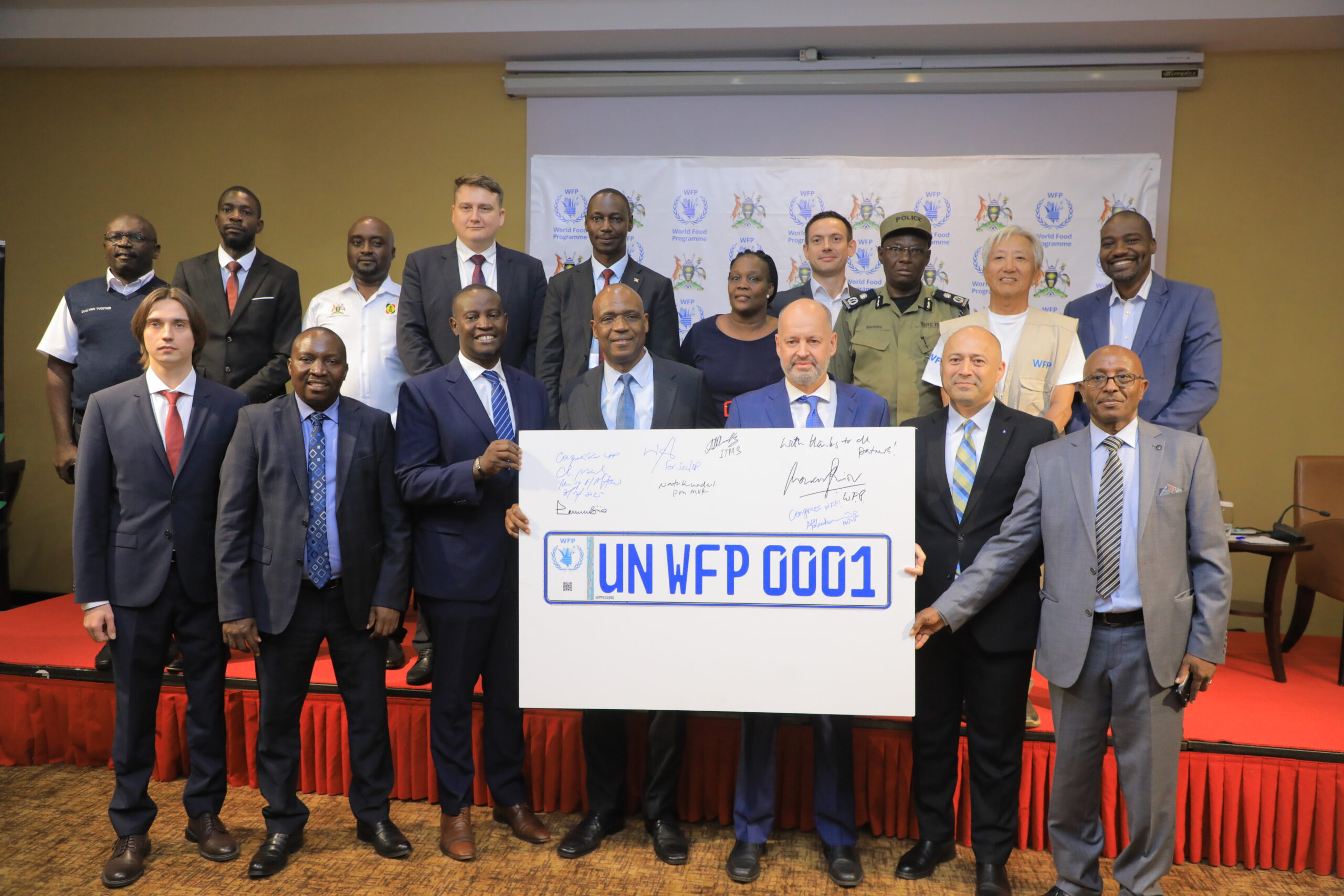
The Government of Uganda and the United Nations World Food Programme signed a landmark agreement Wednesday that establishes Kampala as the home of the WFP Global Fleet Hub, a strategic base designed to accelerate humanitarian aid distribution across Africa.
The agreement authorizes the WFP to deploy an Emergency Response Fleet bearing unique UN/WFP license plates. This is intended to eliminate lengthy bureaucratic procedures and significantly reduce delays often encountered when humanitarian vehicles cross African borders.
Chief of Protocol, Amb. Charles Ssentongo, representing the Minister of Foreign Affairs, emphasized that the decision validated Uganda’s regional leadership in humanitarian action and integration efforts.
“By hosting the WFP Global Fleet Hub, we are extending our humanitarian leadership beyond our borders,” Ssentongo said. He noted that removing bureaucratic barriers and investing in logistics infrastructure ultimately saves lives across the continent.
Ssentongo projected that the establishment of the hub, which is expected to utilize about one thousand trucks, will generate domestic economic benefits by creating jobs for drivers and mechanics and providing skilling opportunities in the supply chain. He attributed the selection of Uganda to the country’s continued peace and stability.
Apollo Kashanku, acting commissioner of Transport Regulation and Safety, said Uganda’s strategic geographic position at the heart of East Africa, coupled with its robust transport infrastructure, made Kampala the logical choice for the continental logistics hub.
The primary logistical advantage is the new plate system. Previously, emergency vehicles could be delayed for weeks or months waiting to be deregistered in one country and re-registered in another. With the distinctive plates recognized across the region, the process is expected to be reduced to hours or minutes.
 Pearl Bank Supports IUIU Students with Water Tanks and Food During Ramadan and Women’s Month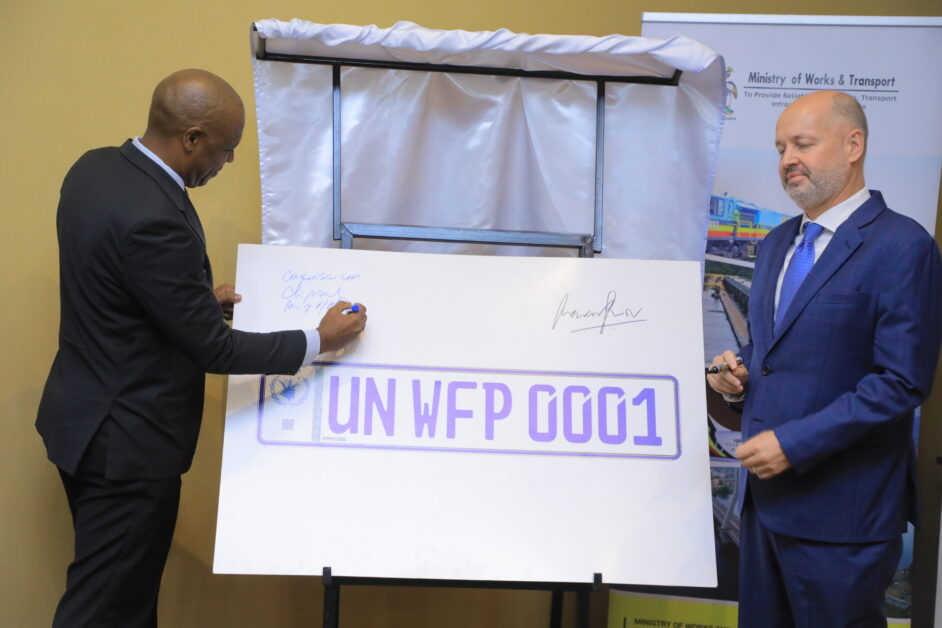
Marcus Prior, WFP country director for Uganda, confirmed the plates are “instruments of life-saving action.”
“When conflicts displace populations in the Great Lakes region, Kampala will be the launch point for a coordinated response,” Prior said. “We will ensure that when a crisis strikes anywhere in Africa, help will arrive faster, reach further, and save more lives.”
Uganda was selected for the hub based on its status as an Authorized Economic Operator, its demonstrated record of rapid deployment, its strong government partnerships and its established infrastructure, which includes nearly three thousand square meters of humanitarian warehouse space.
The WFP already plays a significant regional role from Uganda, having delivered 173,745 metric tons of food assistance to more than two million people in 2024. The organization also facilitated 33,000 metric tons of deliveries to five neighboring countries, including South Sudan and Ethiopia. The new hub is expected to expand this regional export capacity.
Prior stressed the WFP’s commitment to the local economy, noting that 80% of the food the WFP delivers in Uganda is purchased from Ugandan farmers. He added that the WFP is currently assisting about 700,000 refugees in the north and southwest, though resource constraints led to cutting assistance for nearly one million refugees earlier this year. The WFP also runs significant programs in the less-developed Karamoja region, focusing on school feeding and addressing undernutrition.

Damir Makhmutov, project manager for the company providing the special number plates, praised the government’s strategy in developing the transport sector, noting Uganda is taking a “leading position” in this development trajectory.