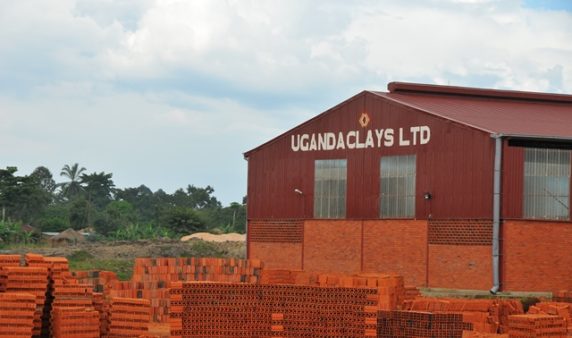
Uganda Clays Limited (UCL) has fired George Inholo over poor performance, CEO East Africa has exclusively learned.
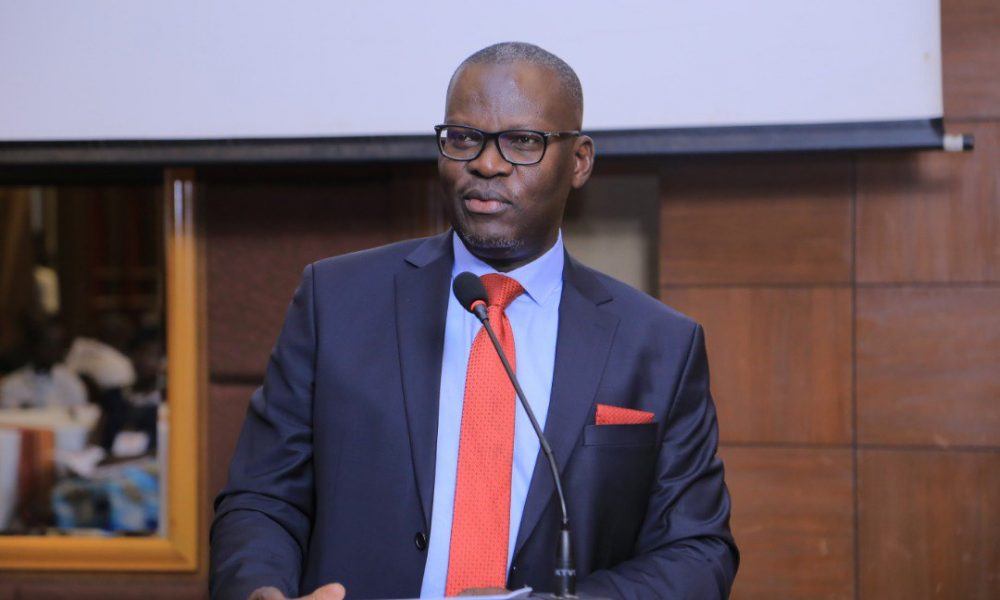
Inholo, who joined the company in August 2014, was relieved of his duties alongside the Head of Production and Head of Human Resources and Support Services, effective March 6th 2020.
“The trio were sacked over big-time performance issues. Wait until you see the numbers- it is embarrassing,” said sources at the company, familiar with board proceedings.
“They failed to do anything to turn around the company; they were just bickering. There were big fights amongst the team” further said the source who requested to remain anonymous.
The Company’s Board Chairman, Eng. Martin Kasekende, however put out a mild statement in the papers today saying the trio and the company had parted ways “by mutual consent.”
Inholo was replaced by Ms Jacqueline Kiwanuka, the Head of Finance but in acting capacity and according to Eng. Kasekende, “the Company is immediately commencing a recruitment process to fill the above positions.”
Who is George Inholo?
Inholo was tapped from Unilever the British-Dutch transnational consumer goods company, where he had worked for nearly 16 years, rising to the level of Country Manager for Uganda, Rwanda and Burundi. He replaced Charles Rubaijaniza, the Company Secretary turned Managing Director, who served from November 2010 to April 2013 when he was apparently made to resign as pressure for better numbers mounted.
When George Inholo arrived at Uganda Clays Limited (UCL) at the fold of 2014- August 2014 to be exact, it was literally a company with a feet of clay, with falling turnover and UGX5.3 billion in accumulated losses. But that was not all, the company had huge debts, as it had borrowed heavily to finance the Kamonkoli project. Such was the indebtedness that in 2014 alone interest repayment alone was UGX3.9 billion.
The biggest creditors were, Standard Chartered Bank, East African Development Bank and National Social Security Fund (NSSF).
Inholo restructured the business, sent 40 staff home. He managed to pay off the commercial loan and NSSF accepted to cap interest and principle at UGX20.6 billion as negotiations for a debt-equity swap went on. This would reduce the cost of financing from UGX4.2 billion to UGX121 million. He switched the Kamonkoli plant from the expensive furnace oil to coffee. With increased production and some cost-cutting, he managed a 9% growth in turnover from UGX22.1 billion in 2014 to UGX24.1 billion. He managed to reduce the losses from UGX5.2 billion to UGX1.2 billion.
 Tanzanian Executive Justin Mollel Named Incoming EABL Group Chief Financial Officer
2016 was even much better- turnover further grew by 7.8% to UGX26 billion and UCL became profitable again, turning in some UGX2.4 billion. The company also for the first time in years, announced a UGX 1 per share, a total of UGX900 million to dividend-starved shareholders.
In 2017 turnover improved slightly by 4.6% to UGX27.2 billion but profit did not change, remaining at UGX2.4 billion. Again, the company paid out UGX1 in dividend per share- another UGX900 million in total. 2018 was good on the turnover front, experiencing a 10.7% growth to UGX30.1 billion and for the first time in years, revenue registered double-digit growth!
However, profit took a 16.7% hit reducing to UGX2 billion; the board recommended another UGX1 dividend per share- again UGX900 million.
A bad 2019 and Inholo’s sacking
In September 2019, after Inholo had posted a UGX722 million half-year loss we predicted that if he can’t solve the Kamonkoli gridlock and permanently keep Uganda Clays on a profitable growth path, his days at Uganda Clays were numbered.
In the six months to June 2019, turnover grew marginally; 3.5% compared to 10.7% in 2018 full-year results- from UGX14.4 billion to UGX14.9bn.
UCL’s Managing Director, Mr. George Inholo stated that the higher cost of sales was attributed to low production capacity in the period due to scarcity of firing fuels (Coffee husks), a justification that stock brokers Crested Capital thinks is “a well-worn excuse the company has blamed ad nauseum for over a decade.”
Ad nauseam is a Latin term for an argument or a discussion that has continued to the point of nausea.
It is therefore not surprising that he has been shown the exit.