By Patricia Ojangole
The second wave of the COVID pandemic has led to record infections and an increasing number of deaths. In response the government has instituted new restrictions on movement and gatherings and urged Ugandans to follow the recommended procedures to break the chain of infections. It is unclear when these measures will take full effect. Uganda Development Bank urges its customers, clients, partners, and the public to choose to vaccinate and follow the Standard Operating Procedures put in place by the Ministry of Health.
The Economy: Outlook and Projections.
In the Financial Year (FY) 2020/21 the Ugandan economy demonstrated resilience growing by 3.3 percent despite the effects of the COVID pandemic. However, this growth was lower than the projected rate of 6.3 percent and 6.2 percent for the FY 2019/20 and FY 2020/21 respectively. According to the Background to the Budget 2021/2022 during this period the economy lost an estimated 100,193 formal jobs with the impact on the informal sector significantly higher. The impact of containment measures for the new wave will likely slow down the fragile recovery of the economy.
In the FY 2021/22 the economy is projected to grow by 4.0 to 4.4 percent on the back of domestic demand, improved global economic performance and the Final Investment Decision on the East African Oil Pipeline Project. The government has announced a budget focused on industrial and job growth aimed at supporting the recovery process. The 2021/22 budget targets increased production, expanded market access for Ugandan produce and products, boost in aggregate demand amongst others. Planned spending on agro-industrialization and manufacturing are Ugx 1.4 Trillion and 54.4 Billion respectively for example. The government also plans support to address vulnerability and regional economic inequalities with impact investment in job preserving areas such as infrastructure and skilling.
Investing in the Recovery
As Uganda’s sole Development Finance Institution, these mandates comprise UDB’s core mission and business. With improved capital investment from the government, the Bank guided by its strategic plan will continue to invest for impact to achieve poverty reduction, build a sustainable food system, support industrialization, and pursue Uganda’s import-substitution program.
At the onset of the pandemic, the Government committed to capitalize UDB to a tune of Ugx.
1trillion to facilitate production, processing, and manufacturing of essential items. As of
June 2021, the bank approved credit of Ugx 706 Billion in various projects aligned to the overall recovery strategy. UDB expects the projects in their full life cycle will create over 104,839 jobs and generate tax worth Ugx 11,921 Billion with the associated socio-economic impact from the firms financed. The Bank’s investment shall attract foreign exchange earnings of Ugx 2,996 Billion.
 Vivo Puts Two Downtown Kampala Shell Stations up for Sale Amid Congestion Concerns
Despite the pandemic; in 2020 alone, UDB’s investment created 24,103 jobs 62% of which were full time jobs. The bulk of these jobs, 72%, are held by youth and increasingly by young women.
UDB figures of disbursements as at June 2021 stand at Ugx 366 Billion. The disbursed sums have gone 29.01% to Manufacturing, 21.72% to Agro-industrialization, and 27.53% to Primary Agriculture. A significant amount has also been disbursed to the Tourism sector. Investments in manufacturing have indicated a strong catchment for resilient jobs, able to withstand some of the disruptions due to COVID-19.
Looking ahead
The Bank looks to support private sector led development agenda which should go a long way to boosting domestic revenues. Major focus will be on enterprise development, SME development and provision of financial and non-financial interventions.
Now a Sustainability Certified Financial Institution, the Bank will continue to implement its sustainability strategy and undertake initiatives that will maximize benefits for the economy and the society.
By 2022, the Bank targets to lift over 200,000 Ugandans out of poverty and start earning more than $1.9 a day, while increasing incomes for those already above the poverty line. To promote sustainable agriculture, the Bank intends to construct 25 valley dams, 25 small holder and one large holder irrigation schemes. In addition, the Bank investments will prioritize increasing reducing post-harvest losses, supporting skilling for youth and women enterprises plus assistance to Small, Medium Scale Enterprises (SMEs) for the acquisition of modern energy/ resource efficient technologies. Already the Bank’s engagement has seen the reduction in post-harvest losses by 10% from 30% with improvements in storage and therefore increased, sustained food supply, one of the hallmarks of overall stable cost of living in Uganda. Meanwhile projected industrial output from UDB investments will top Ugx 3.6 Trillion with technological transfer to 3,796 people in line with quality growth in human capital especially innovation amongst women and youth.
In turn UDB shall also target support for the development of infrastructure while providing business advisory and project preparation services to customers to scale its interventions.
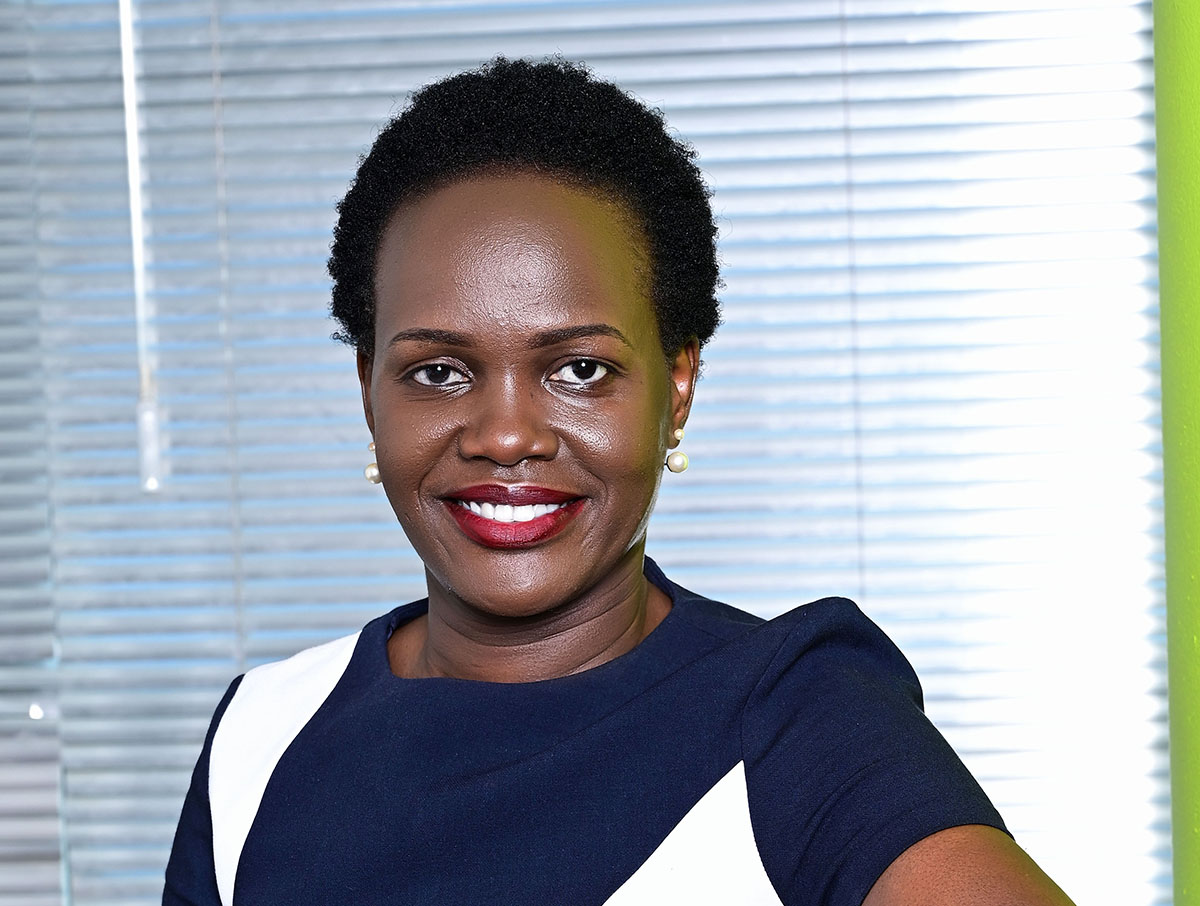
Patricia Ojangole is Uganda Development Bank Managing Director