In the age of fibre optics, mobile money, and the explosive promise of artificial intelligence, the Uganda Communications Commission (UCC) sits at the epicenter of a digital revolution from telecom licensing and data security to rural connectivity and tech innovation.
But beneath this sweeping mandate, the Auditor General exposes a sobering reality – one riddled with enforcement lapses, delayed projects, uncollected revenue, and missed opportunities in a sector central to Uganda’s transformation ambitions.
The report for the year ended June 2024, steeped in detail and accompanied by sharp recommendations, draws a portrait of a regulator that is technically capable but, at times, hesitant and struggling to keep pace with the sector it is meant to steer.
Billions of shillings uncollected
At the heart of the report lies a powerful indictment: the Commission failed to collect billions in revenue from television and radio broadcasters, despite a clearly spelled-out legal requirement.
According to the audit, a 2% gross annual revenue (GAR) levy established in UCC’s licensing framework under General Notice No. 977 of 2017—has never been enforced.
“I noted that UCC has not enforced the payment of a 2% gross annual levy on the licensed television and FM radio operators,” Auditor General Edward Akol wrote.
Worse still, none of the operators had submitted the required audited financial statements for assessment, effectively denying the Commission the data it needed to calculate the tax.
“This failure deprives the Commission of revenue,” the report notes, “hence affecting the implementation of certain activities.”
In short, it’s not just UCC that loses but also the nation’s broader budget, starved of potential contributions to the Consolidated Fund.
The Commission’s defense? Broadcasters appealed the levy to the Minister of ICT, and the matter remains unresolved.
“The Commission is currently reviewing the UCC Act,” the report notes, “and a proposal for a separate levy tier for broadcasters has been incorporated.”
Yet, for the Auditor General, this is not enough, advising “the Accounting Officer to comply with the provisions of the law and institute a mechanism to levy a charge on the GAR of these operators.”
Regulating without authority
Equally unsettling is the revelation that two key public agencies—NITA-U and the Uganda Broadcasting Corporation (UBC)— have been operating outside the regulatory framework, without licenses from UCC.
This, according to the report, violates Section 27(1) of the UCC Act, which states that no person or entity shall install or operate a television station, radio station, or broadcasting apparatus without a license.
By turning a blind eye to this requirement, the Commission has, in effect, undermined its own legitimacy.
“This undermines the authority of Communications as a sector regulator,” the Auditor General warned.
The Commission has acknowledged this compliance gap and claims to be engaging with the two entities. But the recommendation is firm: “All operators must be issued with licenses before they are allowed to operate.”
Uganda’s AI blind spot
While countries around the world rush to create ethical and legal frameworks for artificial intelligence, the UCC remains dangerously silent. The report reveals that no guidelines or regulations have been developed to govern AI technologies in Uganda.
“I noted that with the emergence of Artificial Intelligence, the Commission has not come up with any regulations or guidelines to guide the use and development of AI tools in the country,” the Auditor General notes.
This vacuum, he warns, is more than a missed opportunity—it’s a risk: “Without these guidelines, there is a risk of ethical concerns, especially in data privacy and security.”
To its credit, UCC formed a 14-member task force, including representatives from academia and its technical teams. But little has been said since the committee was unveiled in June last year.
The urgency of regulating AI, the report implies, cannot be overstated. “I advised the Accounting Officer to ensure that guidelines are put in place to mitigate the risks.”
Infrastructure sharing in disarray
Driving through Kampala or the metropolis and other cities, it’s impossible not to notice the ‘spaghetti’ of wires, poles, and cables twisting through the skyline, some even entangled with power lines.
 Vivo Puts Two Downtown Kampala Shell Stations up for Sale Amid Congestion Concerns
The audit describes this vividly. “Various operators were erecting different poles in almost the same locations… cables were observed running haphazardly along the roadside,” it reads.
The result? “A visually unappealing landscape and a perception of poor infrastructure planning.”
The consequences go far beyond aesthetics. Disorganized cabling poses physical safety hazards, increases the risk of service outages, and contributes to environmental degradation.
Though UCC has infrastructure sharing guidelines, they apply only to underground fibre backhaul, not to the growing clutter of wooden and cement poles above ground.
The Auditor General’s fix: “Engage all players to ensure sharing of infrastructure … and conduct an assessment to consolidate cables within secure conduits or underground installations.”
Big budget, big delays
Of the UGX 207.6 billion approved for UCC activities in 2024, only UGX 182.2 billion was disbursed, leaving a UGX 25.5 billion hole that derailed several high-impact projects.
Notably, UGX 15.7 billion meant for equipping communities with ICT skills and expanding internet connectivity under the Uganda Communications Universal Service and Access Fund (UCUSAF) was received too late, resulting in incomplete rollouts.
Out of 41 planned activities assessed—worth UGX 133.1 billion—only seven were fully implemented. The rest faced delays or were in progress.
One standout case: The UGX 7.6 billion project to install ICT labs in 85 secondary schools, had by the time of the audit, only installed 38 labs.
“The remaining 47 were still under implementation,” the report notes, with completion dates pushed to early 2025 due to “lengthy shipping of solar batteries that could not be airlifted.”
Other delayed projects include: ICT labs in 30 public libraries, market power assessment of Uganda’s telecom sector, procurement of cyber threat intelligence systems, and telecom testbeds at the Uganda Institute of Communications Technology.
These delays, the report noted, “imply that beneficiaries will not receive the intended services in time.”
A parallel Value for Money audit found that UCC and Uganda Revenue Authority (URA) were failing to fully utilise the Telecommunications Intelligent Network Monitoring System (TIMS) and the Data Monitoring System (DMS) for revenue assurance.
The systems did not capture key revenue streams like postpaid services and agent commissions. More alarmingly, discrepancies between TIMS/DMS data and tax returns ranged up to 32% in some cases.
For instance, MTN: Mobile Money Transfer Fees revenue variance equals +32%, while Airtel: International call revenue variance equals –25%
“These variances were mainly attributed to delayed and non-provision of business operation rules and applicable charges used by the operators,” the audit notes.
The Auditor General also warned that “there were no clear mechanisms by URA to guard against base erosion and profit shifting (transfer pricing)”, highlighting UGX 2.4 trillion in payments to related companies over three years with no corresponding audit trail.
Bright spots
Despite the flaws, the Auditor General commended UCC for its internal financial controls, noting there were no material misstatements in the financial statements, no evidence of fraud, and no overpayments.
Physical inspections of procured items ranging from quality-of-service vehicles to high-tech laptops and tablets showed consistency with contract specifications.
All inspected machines and systems were functional at the time of audit.
“I commended the Accounting Officer for the effective management of the contracts,” the report concludes.
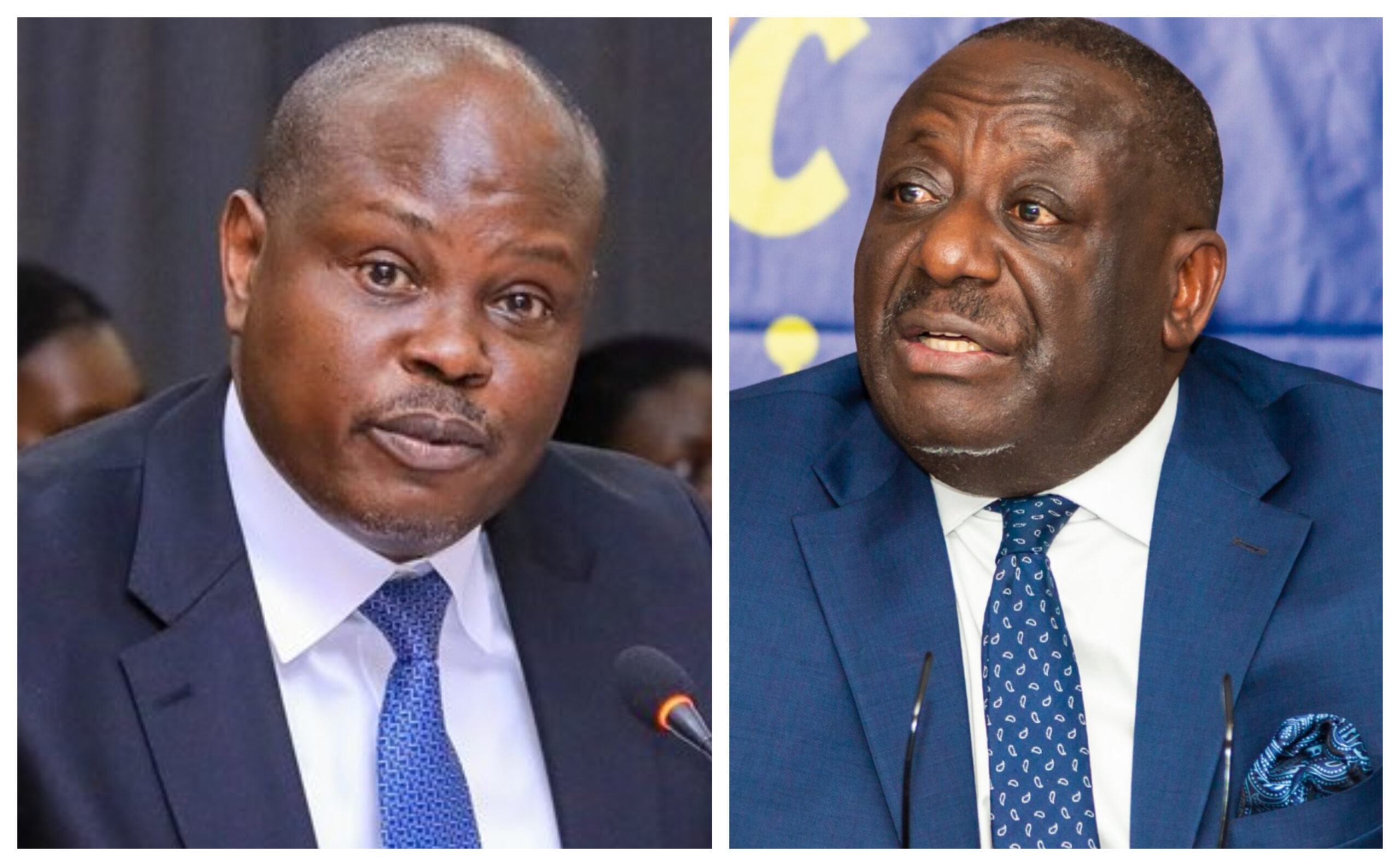
Nyombi Thembo is currently the UCC accounting officer. He was substantively appointed in November 2023, replacing Irene Sewankambo Kaggwa, who had held the executive director position in acting capacity for almost two years.
The UCC audit is not just an administrative review- it is a wake-up call. At a time when Uganda’s Vision 2040 hinges on digital transformation, the Commission must evolve from a competent administrator into a bold, forward-leaning enforcer and innovator.
The message from the Auditor General is clear: “There is adequate technology to ensure reliable assessment and assurance of revenue… However, several bottlenecks have hindered government’s potential to fully harness the benefits.”