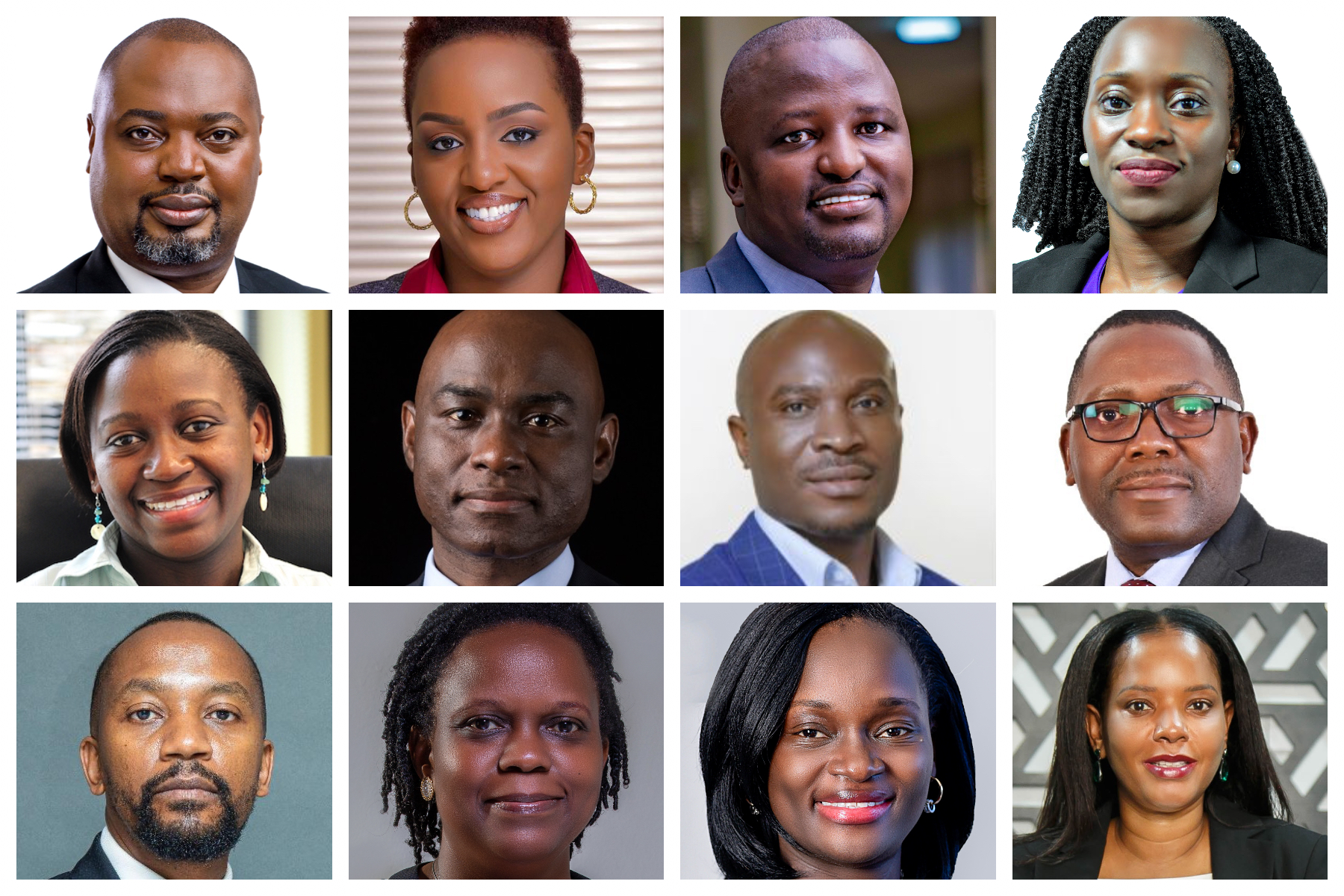
The year 2022 was a great year for the Ugandan Executive. More than 10 Ugandans rose to become Chief Executives of some of Uganda’s largest and most influential companies, as well as at the multinational level.
Anthony Kituuka, who was in November 2022 appointed by Equity Bank Uganda Managing Director job, was in December 2022 approved by the Bank of Uganda to take on the job. A little before that, Mark Muyobo was also given the green light by the Central Bank to take on Managing Director/CEO job at NCBA Bank Uganda.
In January 2022, Richard Yego was tapped to lead MTN Mobile Money Uganda, the fintech arm of MTN Uganda, the largest telco in the country. In June 2022, Ruth Namuli was elevated from the General Manager role to become the Chief Executive for Sanlam General Insurance, one of Uganda’s largest insurance companies.
In the not-for-profit space, BRAC International in December 2022 appointed Spera Atuhairwe, as its Country Director for Uganda.
Dorothy Kabagambe Ssemanda, in July 2022, became the CEO of ATC Uganda, the largest telecommunication infrastructure provider in Uganda. She was previously the Chief Finance Officer. Dorothy replaced Michael Magambo, another Ugandan, who was tapped by South Africa’s Vodacom Group to head Vodacom Tower Co, a new infrastructure subsidiary that will own and run towers owned by the telco. Again, in South Africa, Dr. Bridget Ssamula a Ugandan engineer appointed the Chief Executive Officer of The Engineering Council of South Africa (ECSA).
In neighbouring Tanzania, Uganda’s Phillip Besimiire, who had spent 15 years with the MTN Group, starting in Uganda as a Senior Manager, Consumer Marketing, was appointed Chief Executive Officer and Managing Director for Vodacom Tanzania Plc, the country’s largest telco. 2022 also saw Claver Serumaga another Ugandan appointed as the Managing Director/ CEO of NCBA Bank Tanzania. In Tanzania, Phillip and Claver join other seasoned Ugandan CEOs- Mark Ocitti Ongom (Serengeti Breweries) and Herman Kasekende (Standard Chartered Bank).
Back at home, over the last 5 years, there has been a steady stream of Ugandan executives ascending to the Chief Executive role such as Grace Muliisa, who was appointed Managing Director for Ecobank Uganda in September 2021, Henry Lugemwa, Chief Executive Officer for Exim Bank Uganda in September 2021 and Anne Juuko, Managing Director for Stanbic Bank, appointed in March 2020.
In fact, as of the end of December 2022, 16 of Uganda’s 25 licensed commercial banks were headed by Ugandans. 20 years ago, it was a whole different story. More importantly, there are hundreds of many other youthful ready-to-lead Ugandans in the pipeline in senior management positions.
Fortune favours the brave and prepared
But it has not come by luck. There’s been a lot of work both at the individual and organisational levels to prepare for this mission-critical role.
Take Anthony Kituuka for example.
He has spent 15 years in the banking industry, working for some of the region’s best banking brands. Before being appointed Managing Director, he was Executive Director since April 2016 and before that, he was the Executive Director, Regional Subsidiaries at the Equity Group, between October 2014 to March 2016. He also worked for Kenya Commercial Bank where he was the Head of Global Banking, based in Nairobi, between February 2014 and October 2014 as well as Head of Corporate Banking at KCB Bank Uganda between October 2008 and February 2014.
He also worked at Barclays Bank of Uganda (now Absa Bank Uganda) as the Head of Business Banking, Commercial Division, between March 2007 and August 2008.
Before joining the banking industry, he worked for the LafargeHolcim-owned Hima Cement in Uganda, as a Sales Manager (November 2003 and June 2006) as well as Business/Commercial Controller from March 2002 to October 2003. He also played various audit roles at Deloitte & Touche, between 1998 and February 2002.
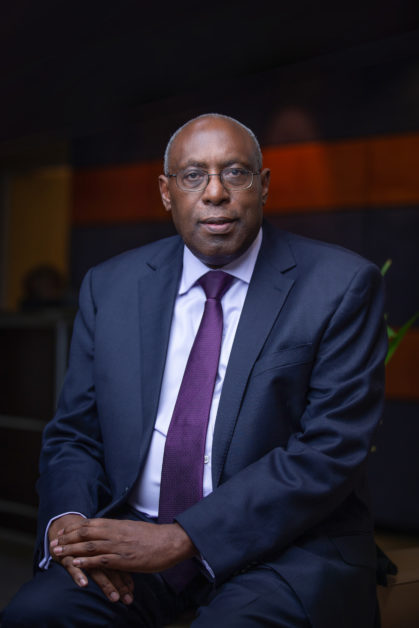
He has also put in a good amount of time furthering his skills at school. Kituuka, holds an MBA (Oil & Gas) from Middlesex University, Business School and a Bachelor’s Degree in Statistics & Applied Economics from Makerere University, Kampala. He is an FCCA Fellow and a Member, of Professional Accountants of the Association of Certified Chartered Accountants. He is also a member of the League of East African Directors, as well as the AIESEC Uganda, Chairman, Board of Advisors. He too is a Member of, Board of Directors, of The Innovation Village and a tutor at the Strathmore University Business School (SBS).
He has among many other programmes, attended the Harvard Business School’s Board of Directors Program on Governance, Strategy and Leadership as well as the Harvard Manage Mentor. He also completed the Strathmore Business School’s Advanced Management Program; Senior Management Leadership Development Program and Effective Director Program.
Kituuka has also completed the Executive Management Development Programs at INSEAD, Paris, France and the Gordon Institute of Business Science, University of Pretoria, South Africa. He also attended the Financial Euromoney Training EMEA on Strategic Asset, Liability Management and Capital as well as on Energy Project Finance: Oil, Gas and Power. He also attended the IFC Trade Operations Training in Kampala, a global trade finance programme to refresh senior bank executives on the latest best practices in trade finance and its related operations.
Dennis Kahindi, Chief Executive Officer at Liquid Intelligent Technologies – Uganda, says that the steady stream of Ugandans rising to the top was “only a matter of time”.
“The new crop is all CEOs under the age of 50 and hungry to prove that we Ugandans have the DNA of leadership. This crop has garnered experience in the region and further out and is better equipped with the benefit of understanding the indigenous customer, for they have ALL been that customer. It was always a matter of time,” he says.
Richard Mugera, Associate Partner, Ascent Rift Valley Fund 2 and Board Member, FINCA MicroFinance also agrees.
“Ugandans taking up the leadership roles speaks to the crop of professionals that have been trained over the years to lead in the sectors that were new to Uganda, but also multinational corporations have come to realise that a high degree of local knowledge is valuable in running institutions,” he reiterates.
Judy Rugasira, Managing Director at Knight Frank Uganda, says the rise of Ugandan CEOs is timely, as well as important for inspiring the younger generation.
“It bodes very well for the younger generation by giving them role models to emulate, and real hope that their dreams can be realised,” she says.
 Inside Uganda’s Gorilla Permit System: Where Does a Gorilla Permit Shilling Go?
The importance of succession planning
We asked Japheth Katto, Board Chairman, Stanbic Holdings Limited and Uganda Breweries Limited, what it takes to become a Chief Executive.
“ I am delighted that the number of Ugandans taking up CEO positions is increasing rapidly in the financial services sector and banking in particular. The pipeline is also good if you look at the number of Ugandans in Executive Committee (Exco) positions. This does not happen by chance but through deliberate efforts by Boards focusing on CEO succession planning, one of the main roles of any board,” says Japheth Katto, who is also a corporate governance consultant.
“It is important to emphasise that the leaders we are seeing today are not in those positions because they are Ugandans but because they are the best people for the job. They have been prepared for future leadership positions. This involves, in addition to technical training, leadership training, corporate governance, coaching, mentoring and exposure to other markets outside Uganda. The trend is not only in financial services but we are also seeing it in other sectors,” he adds.
And Japheth Katto is not just theoretical. The organisations he chairs are walking the talk. Stanbic Bank has just had its second Uganda Chief Executive- Anne Juuko succeeded Patrick Mweheire, who is now the Standard Bank Regional Chief Executive. Additionally, all four Chief Executives of Stanbic Holdings’ subsidiaries are locally bred talent.
Joram Ongura heads SBG Securities Uganda; Joel Muhumuza heads Flyhub; Tony Otoa is the Chief Executive of Stanbic Business Incubator Ltd, while Stanbic Properties is led by Sabiiti Spencer.
Uganda Breweries Limited (UBL) has in the recent past had a mix of Ugandans and other East Africans in the Managing Director position. Mr. Katto says, that among the East African countries, Uganda has the largest number of expatriates working in Diageo companies.
“We have a Ugandan MD in Tanzania (Mark Ocitti) and until recently in Nigeria (Baker Magunda). We have senior executives in the UK, Kenya, Nigeria, Hungary, and Japan to mention but a few. These are in the pipeline for MD positions as and when the opportunities arise in Uganda or other parts of the world where Diageo operates. Of course, they may also take leadership positions in other companies in Uganda,” Mr. Katto, who is also a Corporate Governance consultant emphasises.
Allan Joshua Mwesigwa/Director of Strategy & Corporate Affairs at Uganda Development Bank Limited also agrees with Katto on the importance of succession planning and mentoring.
“The rise of the Ugandan CEO is a testament to the success of various institutional arrangements to deliberately groom internal talent for emerging leadership roles. It confirms that succession planning works. But more importantly, Ugandans are also increasingly investing more in themselves and readying themselves for these opportunities by honing their skills, exposure, and competencies required for these jobs,” he affirms.

One such programme is The CEO Apprenticeship Program run by the CEO Summit Uganda, a Ugandan leadership and corporate governance think thank. Running since 2013, The CEO Apprenticeship Program is an executive program for CEOs-in-waiting drawn from selected Tier One Corporates in Uganda. The programme is conducted in partnership with East Africa’s leading Business School, Strathmore both at their Kampala and Nairobi Campuses. CAP has also partnered with Africa’s Leading Business Schools such as the Gordon Institute of Business Studies (University of Pretoria) and Graduate School of Business (University of Cape Town) to enrich both exposure and strategic insights.
To date, the CEO program has been hugely successful in producing an authentic crop of corporate leaders (including CEOs, members of the C-Suite and Board Memberships of several organizations within Africa.
Some of the executives that have gone through the programme include Selestino Babungi, Managing Director, Umeme; Michael Mugabi, Managing Director, Housing Finance Bank; Anne Juuko, Chief Executive Stanbic Bank; Julius Kakeeto, Chief Executive Officer, Postbank and Tony Otoa, Chief Executive, Stanbic Incubator. Others are Mark Muyobo, Chief Executive Officer, NCBA Bank Uganda, Dr. Twinemanzi Tumwebweine, Executive Director Supervision, Bank of Uganda; Patrick Ayota, Ag. Managing Director, National Social Security Fund and David Nahamya, Secretary General, National Drug Authority.
“Due to CAP and other initiatives, the transformation of Uganda’s competitive corporate leadership talent pipeline has solidly and across the board picked up pace- from 15% indigenous occupants of the C-suite in 2007 to 80% occupants of the C-suite in 2022,” says Peter Kimbowa, Board Chairman, NSSF, Team Leader of CEO Summit Uganda.
He also says that the CEO Summit through the CAP program has given birth to the League of East African Directors(LEAD), a now independent entity whose cardinal mission is to prepare internationally competitive board directors.
“LEAD designs, develops and deploys bespoke programmes and an inexhaustible case study pipeline for serving and ready-to-lead board-level candidates,” Kimbowa explains.
Doris Akol, former URA Commissioner General and now Technical Assistance Advisor at the International Monetary Fund, in Washington, DC, United States the rise of the age of the Ugandan CEO is a combination of factors- “competence, experience and knowledge of our local circumstances, as well as and nuances of what the Uganda market needs and what responses the Uganda economy requires”.
“They have done an excellent job already so now they are taking their rightful place…at the helm of the institutions whose trajectory they have been,” she says adding that Ugandan CEOs shouldn’t rest on their laurels but rather should immediately start aspiring to rise even higher.
“Ugandan professionals should embrace an agile mindset, one that inquires into global challenges and what skill sets are needed to address these challenges. Ugandans have proven their ability to use their rich experience in Uganda to add value to addressing global challenges. There are many examples of such success stories to draw from,” she advises.
And Japheth Katto is confident that “the trend of Ugandans taking leadership position in companies in Uganda is going to continue”.