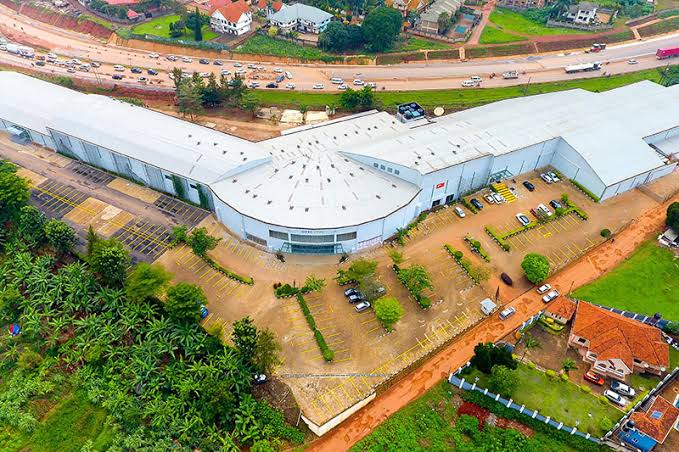
For quite a long time, the sprawling and magnificent Metroplex Shopping Mall, in the upscale Naalya suburb along the Kampala Northern By-Pass highway on the outskirts of Kampala city, has raised a lot of questions about its viability as a major real estate investment.
A recent online debate on the X social media platform placed the shopping mall into a critical spotlight with some commentators voicing their concerns about the ’emptiness’ of the mall as a proverbial white elephant.
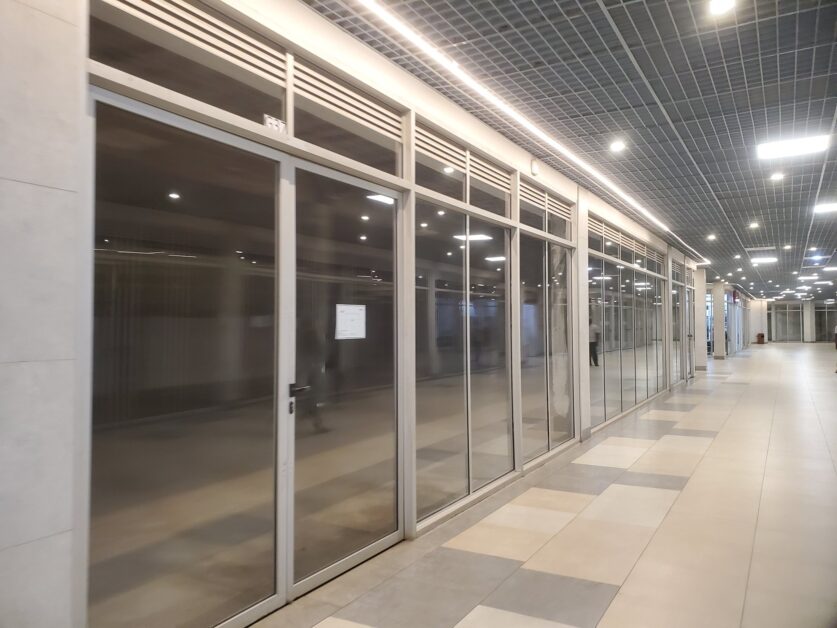
A tour of the mall reveals some vacant space, low foot traffic, and a lack of vibrancy in shopping and entertainment experienced in other malls such as Acacia Mall in the upscale Kololo suburb, or even the new Arena Mall in the Nsambya suburb, which is a short drive to the Kampala central business district.
The history of Metroplex Shopping Mall has not been so rosy with previous high ticket anchor tenants such as Shoprite and Nakumatt supermarkets having occupied the mall but eventually packed and left the country, turning the mall into a shadow of its former self.
MTN which is Uganda’s largest telecom was once a tenant packed, left, and eventually returned after Covid- 19.
Metroplex Mall previously owned by Somani family of Metropole Properties had also faced similar troubles to attract tenants and traffic to the building.
For the uninitiated, Mauritian-based Gateway Delta company invested over USD 20 million in the acquisition of Metroplex Mall and started renovations and re-development of the mall in the third quarter of 2019.
Gateway Delta is a private real estate development company, with a permanent capital structure resident in Mauritius, specialising in the turnkey construction of accommodation for multinational corporates and retailers wishing to expand their operations on the African continent.
Gateway Delta noted that it had identified the mall, “as an asset with significant development potential.”
The plan was to position the mall as the primary destination shopping, dining and entertainment hub for typical middle-class and high-networth families.
The re-development comprised 13,000 square meters of gross lettable area that entailed a supermarket, coffee shops, restaurants, cinemas and a diverse array of fashion among others.
It was also set to positively impact the retail landscape of not only the primary catchment areas of Naalya, Kiwatule and Namugongo; but greater Kampala as well.
A visit to the mall shows new access roads were constructed to improve mall accessibility from all directions.
Metroplex catchment population
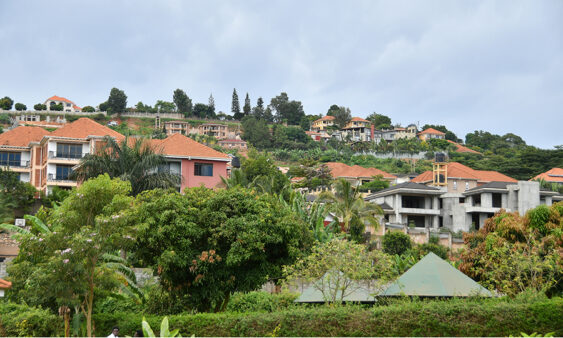
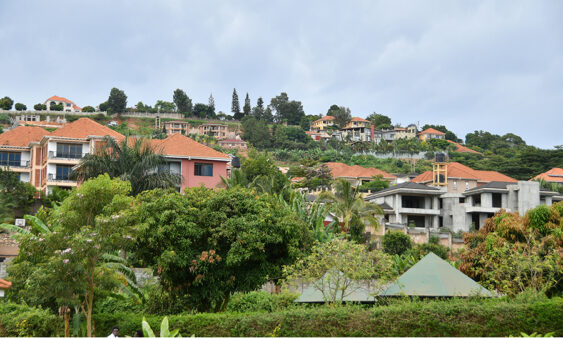
According to Gateway Delta’s re-development plan, it identified the mall’s natural catchment area has a moderate population density and mainly includes middle to high-income households which are generally young households with high purchasing power and modern shopping patterns.
Therefore, for investors, Metroplex Mall made investment sense as the main shopping destination for residents living in this part of Kampala city.
Even so, the Northern Bypass acted as a conduit to accessing a wide catchment area that includes over 40% of the greater Kampala population.
The architect, Batley Partners International, identified that the existing mall building presented itself with a “factory aesthetic” which was juxtaposed against its forested location, along the Kampala Northern Expressway at the Naalya roundabout.
The Architect’s intention, then, was that the factory aesthetic would be upgraded and modernised to become more urban in context, with new finishes being applied to the roof and facades.
New Signage screens and entrance features would be added also to increase the visibility and presence of the centre and consequently raise the profile of its tenants.
In addition to this, the outdoor experience of the mall would feature restaurants, coffee bars, play areas and external seating to complement the redesign of the mall interiors.
The interior of the mall itself would receive a major revamp, including realignment of the mall for improved visibility.
A new food hall offering would also be a cornerstone of the new development, which would feature the main “holding area” of the mall to encourage people to extend their stays to “see and be seen”. The overall retail environment would be designed to be for young, active and vibrant urban ‘Kampalians’ in a modern, energetic retail space.
Indeed, everything almost went according to plan, based on the new design and look of the mall.
Attracting new tenants post- Covid
Just like any investment, there are always unforeseen risks that might affect its economic fortunes.
In 2020, Covid-19 struck, crippling the financial base of the would-be retail tenants who had been expected to return after the mall’s re-development.
Most of these tenants later took up space in neighbouring suburbs such as Namugongo, Kyaliwajjala and Najjera. Worse still, the mall faced fierce competition from Village Mall in the Kyaliwajjala suburb which is more accessible.
It is against this backdrop that Metroplex embarked on a new campaign in 2023 meant to attract new tenants who would eventually be retained.
Knight Frank, a real estate multinational firm which is the centre management company for Metroplex took up the herculean task to develop a new strategy with a growing variety of anchor tenants that was set to enhance the shopping experience at the mall.
This new strategy fell on the shoulders of Marc Du Toit, Knight Frank’s Head of Retail, a man with considerable experience having previously managed and grown the Nelson Mandela Square shopping centre between 1999 and 2004 in Sandton, the commercial hub of Johannesburg in South Africa.
In May 2023, Knight Frank hosted a broad spectrum of retailers to a business breakfast at the mall dangling over the 13,135 square metres of gross lettable area to the retailers.
With the key access roads and refurbishments complete, the shopping centre was set to serve the fastest growing catchment area that comprised Bweyogerere Division, Kira Division (Naalya as a village within Kira), Namugongo Division, and a portion of Nakawa Division, with a combined population of 650,000 people.
Knight Frank set out to invite both former and prospective tenants to present and discuss the opportunities that await retailers looking to establish or expand their brands into the node.
Furthermore, Knight Frank used the opportunity to announce some retail brands with plans to open at Metroplex Shopping Centre, further complementing the existing set of anchor tenants; Carrefour, Woolworths and Century Cinemax.
Some of the new brands that were set to enhance the mall as a community hub for convenience to residents in and around Naalya included: Numero Uno – a fashion reseller for Inditex products that was set to open a 758sqm2 store, and Sweetly Defined Restaurant – a 225 sqm2 restaurant.
“We are now ready for business,” Marc Du Toit, the Head of Retail, Knight Frank Uganda told journalists in short at the tour of the mall last year.
The changing face of Metroplex
Juliet Nalukwago, a resident of Kyaliwajjala suburb, has seen the mall evolve for the last 10 years. She worked at the mall in 2014.
Nalukwago shares her experience, noting that she enjoyed shopping when Shoprite supermarket was still housed at the mall, but stopped because she feels service has dropped with the entrance of new tenants.
She still enjoys visiting the mall to watch movies at Century Cinemax.
Nalukwago notes that perhaps the main issue is still accessibility and the mall largely favours local residents living within the Naalya area.
One of the tenants who preferred to spoke on condition of anonymity noted that they acquired space at Metroplex mall in 2018, and have pushed their business until to date.

He says, their business has been able to survive through a mix of marketing strategies such as price discounts, advertising and other similar anchor businesses in other malls though they haven’t been able to attract enough clients, compared to the other malls.
By then, the tenants said Metroplex had a number of businesses operating within the mall, but most left after COVID-19 struck, and never returned.
He says most businesses which have tried setting up within the mall fail to figure out the right marketing strategy given the mall’s location.
“When people come here and see empty rooms, they lose confidence because they assume they may not attract as many customers to their shops, or can’t make enough money to cover up the rent costs,” he says.
Moses Lutalo, the Managing Director of Broll, a real estate firm, observes that before COVID-19, Metroplex Mall had shown promising growth due to its strategic location and the rising middle class in the surrounding suburbs.
However, the pandemic significantly impacted foot traffic and occupancy levels due to lockdown measures and economic uncertainty.
Additionally, the mall underwent major renovations that coincided with the COVID-19 pandemic, which greatly slowed down the letting of the mall post-renovation. The spillover of this impact is still felt today, as evidenced by the low occupancy levels.
Post-COVID-19, there has been the observation of a gradual recovery, with businesses adapting to new consumer behaviours, including a greater emphasis on health and safety measures within the mall.
But still, the mall faces an acute shortage in occupancy levels with several factors contributing to this matter.
For instance, Lutalo still points to the same issue of stiff competition from other established shopping malls in and around the Naalya/Namugongo area, such as Quality Shopping Mall, which offers additional services like a water park and high-end restaurants like Caramel, making a more attractive shopping destination compared to Metroplex.
“The initial tenant mix and marketing strategies may not have fully aligned with the expectations of the target demographic,” says.
Even so, the overall sluggish economic environment and macroeconomic factors such as high inflation continue to affect consumer spending power post-pandemic.
Perhaps, the mall is yet to solve the puzzle of accessibility issues even after the construction of an access road that is closer to the Northern By Pass, shoppers especially those using the Nothern ByPass are yet to fully appreciate such a development.
Mr Du Toit explains that Metroplex was impacted by the Ebola crisis, and road works at the Northern ByPass caused a major setback for the mall in 2022 and came at a time when major international retailers were entering the market.
“When there’s a breakout of Ebola in Uganda, foreigners don’t come to Uganda, so international traders had to put some halt, and its not that Uganda is such a vibrant market that they are rushing to come in. Its a hard sale to get these guys here,” he says.
All these factors have impacted the delay between one and two years to get the shopping mall up to speed.
“Metroplex is starting to pick up, the supermarket is trading well, Cinema is trading well, we have all the big anchors in place to create the sustainability of the shopping centre for the next 20 years,” Mr Du Toit says with a ray of hope.
He adds:- “Its now to bring the local retailer into the small space to create the vibrancy and that’s what were are going to see roll out in the next 18 months.”
 Standard Chartered Kenya Targets Nakumatt Properties in $14.3 Million Debt Recovery Battle
Business before Covid.

Mr Du Toit says Metroplex had good business before Covid at 60 per cent tenanted with small shops, but what lacked was an anchor supermarket.
However, Metroplex at that stage, was very difficult to access from a convenient point of view.
“The superment didn’t work, there was the Nakumatt and Shoprite failure, which all related to convenience access. But the local small retailers had a good business because they had a dedicated destination market,” he says.
With the re-development of the property and the delays occasioned by Covid and Ebola, the bigger international retailers and businesses such as Carrefour, Woolworths and Century Cinemax who take a long-term view in their investments, took two years to open.
The local retailers who once occupied Metroplex Mall couldn’t wait for the two-year delay and many opted to move on.
“The property developers were quick to move and create formal and informal retail, and people have moved in . Now as their leases are expiring, they’re moving back to Metroplex and that’s the evolution we’re seeing now,” he says.
Impact of exit of international retailers.
Mr Du Toit admits that every investment is impacted by a closure or an exit, and in this case, it was the exit of international retailers.
“One of the things we must clarify is the exit of Nakumatt was based on its failure, and the exit of Tuskys was based on Tuskys’ failure. Same thing with Uchumi. The exit of Shoprite was based on a sale,” he explains.
Those failures, he notes, had a big impact on property development throughout East Africa, because a lot of the shopping malls were developed around the anchor tenant such as supermarket chains, and the anchor tenant failure had a huge negative impact on the investment return.
For instance, when Nakumatt failed, Shoprite was ready to occupy the space but it took Knight Frank, and developers almost a year to reconfigure and build the store to be a sustainable logistical development chain for the tenant.
“Developers by then didn’t know any better, and built around what was needed, but it wasn’t sustainable. To bring Shoprite in, we had to go back and reconfigure those spaces to suit the retailers’ requirements,” he says.
Anchor tenants
However, Mr Du Toit dismisses what the public sees as Metroplex being a white elephant considering that it is already occupied by Carrefour, Woolworths and the Cinema.
“Those are the three big box anchors that you need to anchor the different parts of the mall,” he says
“If there are hundred shops in the mall, and you’re seeing 75 shops empty, and you think it doesn’t work, but what you’re not realising is that 65 percent of the mall is let because the supermarket is 4000 square meters, the Cinema is 1000 square metres, Woolworths is 1000 square metres and other shops,” he explains.
Mr Du Toit says just like Metroplex, Acacia Mall faced a similar crisis when it opened a decade ago in 2014, and only had the Cinema, Nakumatt supermarket, and Cafesserie and nothing else. But two years later, it had sold out and remains one of the most vibrant malls in Kampala city.
Is it expensive?
Mr Du Toit demystifies what some retailers have questioned as the rental fees being expensive at Metroplex, and he insists in his argument that, the rent is cheaper according to market rates, however, what makes it difficult for the local retailer is the expectation of the shop fitting, and the design of the store that are at a much higher level. It’s expensive from a capital investment point of view, not from a rental point of view.
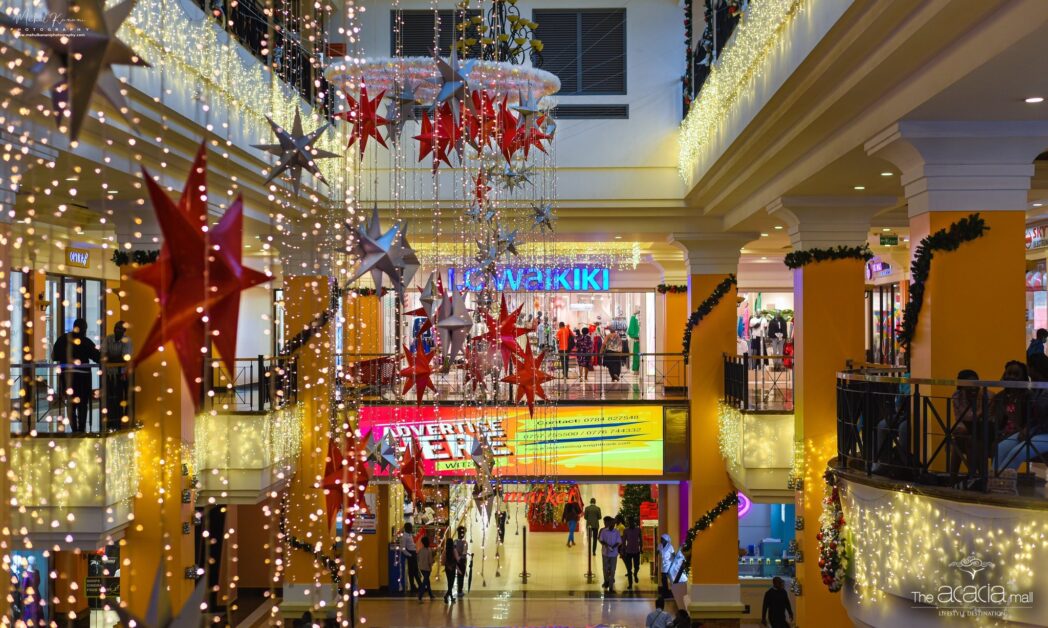
The retail stores at Metroplex are built just like the stores of Arena, Acacia or Village Malls, which according to Du Toit have scientific philosophical ethos of retail from shop fitting, design and location, making them more sustainable for a lively shopping experience for families, and cannot be compared with the Duka system of retail shops line up along Ugandan highways.
“Metroplex is at the same level where it has to create the same sustainable environment long term. We’re not in for a short term, property investment is long term, you can’t have a short term attitude to a long term investment, you will destroy it,” Marc says, expressing his optimism.
Return on investment
The elephant in the room is how Gateway intends to recover an investment of USD 20 million in the acquisition and re-development of Metroplex Mall, and how long it may take.
Lutalo provides a sneak peek of how such an investment could pan out explaining that, “Typically, such transactions are structured with a mix of equity and debt financing. The return on investment is achieved through a combination of rental income, lease agreements, and strategic tenant partnerships.”
He notes that the payback period can vary but generally ranges between 7 to 10 years, depending on occupancy rates and market conditions.
“Active management and ongoing marketing efforts are crucial to maximizing returns,” he quips.
With the percentage vacancy being less than occupancy, Du Toit says the mall is almost at break-even point because of the big anchor tenants, but it’s not as profitable as it should be, partly attributed to high property tax.
“No property development at the moment in Uganda from opening day 100 percent-let doesn’t show a profit in return for the first 9 years, everybody loses money. That’s why if you look, construction is not happening in the private sector,” he says.
As we wind up the interview, his prediction is, that Metroplex will get full like other malls in a 2-3 year period.
Making Metroplex attractive
Mukiza suggests several strategies that can be deployed in making the mall attractive such as attracting a diverse range of tenants, including popular brands and unique local businesses that can draw more visitors.
This can be coupled with the introduction of more crowd-pulling activities to the mall and offering long-term incentives to potential tenants.
Enhanced marketing with aggressive marketing campaigns and community engagement activities can increase visibility and foot traffic coupled with hosting events and promotional activities to create buzz and attract visitors.
Growth factors for malls
Uganda has experienced the growth of several malls over the years. Several factors are attributed to the growth of these malls such as urbanization which continues to drive demand for modern shopping facilities, especially in neighborhood areas that have seen exponential growth in residential populations.
Foreign Investment remains a central factor driving retail and real estate sectors and continues to play a key role in the growth of better residential facilities in areas neighbouring shopping centres.

With improved economic conditions and a growing middle class, there’s a boost in consumer spending and this has subsequently led to changing consumer behaviour with more preference for one-stop shopping destinations.
Lutalo also attributes the enhanced transportation and infrastructure around shopping malls that has improved accessibility such as the Northern Bypass, Kampala-Entebbe Expressway, and the Greater Kampala Development Plan (GKDP) that is being implemented.
Lutalo observes that the modern mall is about fit-for-purpose space, but the biggest challenge the industry has been facing especially in emerging markets is that high ultra-net-worth individuals want to develop shopping centres from an ego point of view, to say, “I have one!”
“So they go ahead and get an architect, and they tell them, I want to develop this, and then they come to us the retail experts to advise. The problem is that the building is not fit for purpose for the end user,” he shares.
But the dynamics are changing. In the last 5 or 6 years, Mr Du Toit says developers are engaging end users such as the retailer and the consumer.
Better-developed malls around town such as Acacia Mall, Village Mall, Victoria, Arena, and Metroplex are more open to trade, and more sustainable because they’re designed around the tenants’ ability to trade.
The future of malls
The rise of e-commerce and the development of commercial buildings in city suburbs has a major impact on the operations of malls, and the future of these multifaceted shopping centres remains uncertain.
Globally, Core Research, a research consultancy firm, in their research, the State of the American Mall, notes that dying shopping malls have become cultural symbols in the US, evoking nostalgia among Americans who reminisce about their experiences in these once vibrant centres.
However, the reality of the American mall landscape is more nuanced than the popular narrative suggests. While headlines and media coverage have focused on the decline of malls, top-tier malls are actually thriving.
Since the lifting of restrictions and consumers’ gradual return to more normal ways of living, physical retail has bounced back, with 2022 seeing more store openings than closures for the first time since 2016, and retail sales at malls grew more than 11% in 2022 to nearly USD 819 billion. The situation seems not so different on the African continent.
An article published by Broll Property Management in November last year, titled, ‘South African Shopping Malls Continue to Thrive, Despite Contrary Views,’ expounds on the matter.
The article noted that recent suggestions of large shopping malls in South Africa w dying or becoming redundant were simply not accurate. While malls may be changing hands, those being sold within the property industry are undergoing revamps to meet evolving shopper needs.
Surine Griffin, Chief Operations Officer at Broll Property Management, quoted in the article says, while it is true that the South African shopping landscape is evolving, this does not mean shopping centres are dying or becoming white elephants any time soon.
“Recent reports in the media have drawn comparisons with the retail environment in the United States, where shopping behaviour and trends differ significantly from SA. Our shopping centres may not be trading at the same levels they were prior to the pandemic, but they are still trading – and trading well.”
“Shopping for necessities is the largest driver of e-commerce in SA. For tenants, however, overall turnover from online shopping accounts for less than 5% of their total sales, a figure that has grown by about 40% since Covid,” notes Griffin.
In addition, Griffin notes that malls continue to be built in South Africa, mostly in the 20,000 square metre to 30,000 square metre category. “There has definitely been a decline in the construction of mega malls, but the number of mid-sized malls being built is on the rise. And, numerous older centres are being revamped, a trend that is evident in all provinces throughout the country. To add to this, some property owners are expanding overseas.”
She says South Africans continue to enjoy visiting centres for the experience of eating out or shopping, particularly fashion items. “Many people who live in outlying and rural areas look to community shopping centres to get unique experiences.
“In this respect, landlords are creating a greater number of ‘experiences’ for their visitors, increasing the number of activations and other activities aimed at enticing and entertaining visitors to malls,” she says.
The future of shopping malls according to Lutalo lies in adapting to changing consumer behaviours and integrating digital experiences. This includes omni-channel retailing which combines online and offline shopping experiences to offer convenience to customers.
Additionally, Lutalo says proprietors should employ experiential shopping focusing on providing unique and engaging experiences that cannot be replicated online, as well as, integrating residential, office, and entertainment spaces within shopping malls to create vibrant communities.
“Landlords should focus on engaging professionals from the onset when carrying out any form of development. These experts help to future-proof the investment by providing unbiased market information to guide decision-making,” Lutalo says, providing his five cents on what he believes will sustain the future of shopping malls.